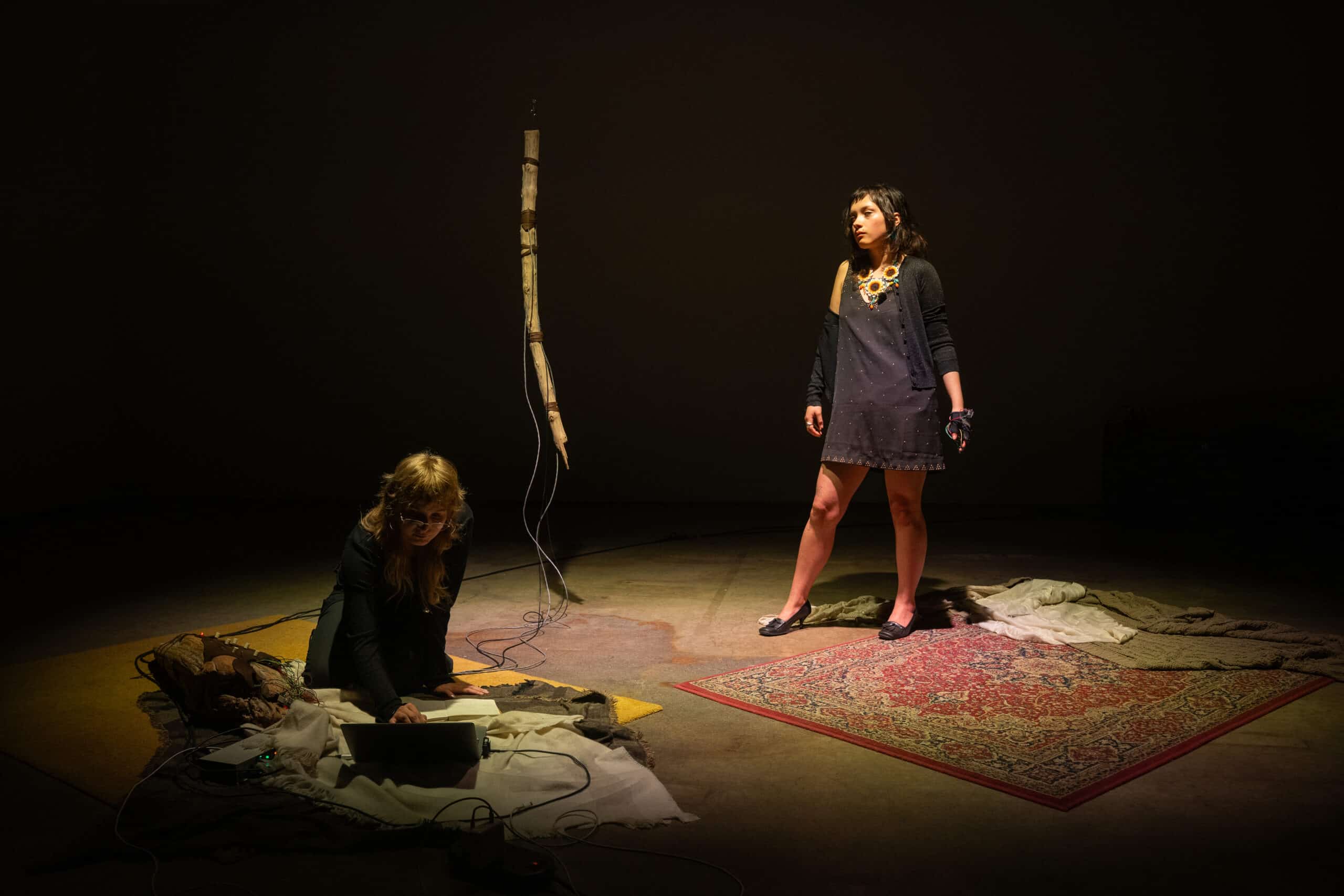
As part of a project led by faculty members Peter Bussigel and Lauren Marsden, the students drew on months of work in the archives to create a performance for a live audience.
A recent project saw artists and Emily Carr University of Art + Design (ECU) students miranda firmston (BMA 2026) and Leo Martinez (BMA 2026) create a performance at VIVO Media Arts Centre after a research residency in VIVO’s archives.
The pair spent months organizing and digitizing VIVO’s archival materials, which reflect the artist-run centre’s decades-long support for independent media arts, experimental video and community-based creators. From this work, miranda and Leo created As Per Our Last, a live sound and media performance which took place at VIVO in May.
“There are so many artworks and stories in the archives that we could have engaged with, but our performance was specifically inspired by the correspondence files, which people might say are arguably the most boring part,” says Leo, who, through fall 2025 and spring 2026, worked with miranda in VIVO’s Crista Dahl Media Library and Archive (CDMLA), which houses an expansive collection of more than 8,000 works spanning over 50 years.
“Materials like VIVO’s meeting minutes felt very personal, very intimate,” Leo continues. “They made time feel thin because we were seeing the interpersonal connections and human dynamics that shaped the ways the archives appear today.”
“The logbooks in particular collapsed the feeling of time in our research,” miranda adds. “These relationships existed across decades, but they’re right next to each other physically in the archive. Being able to work through time in that form is a very tactile feeling. We wanted to bring that tactility to light in our performance.”
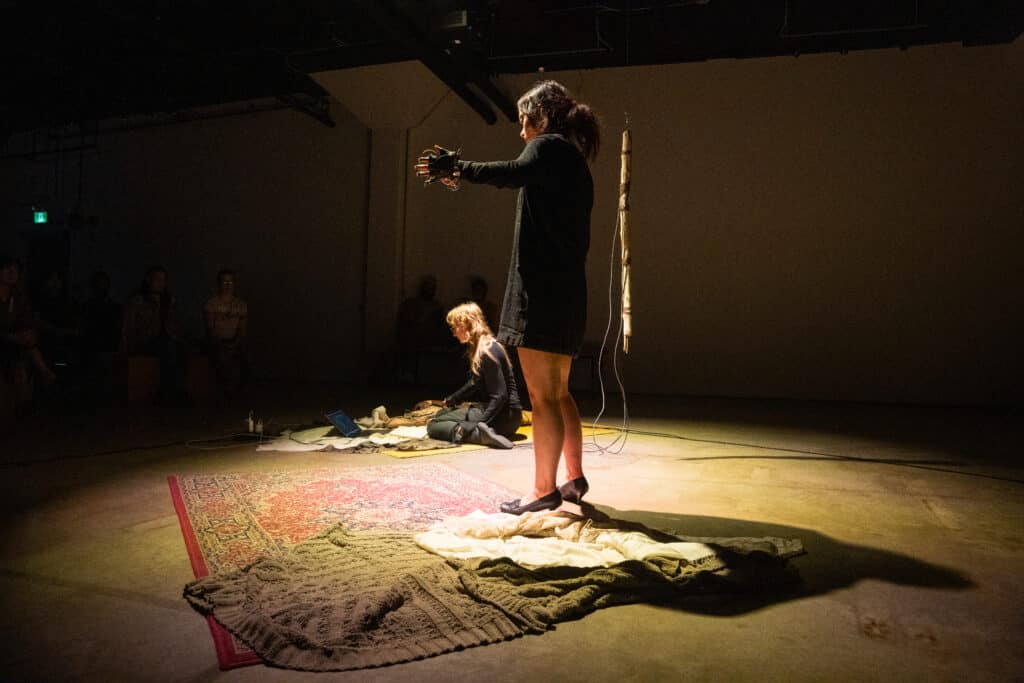
As Per Our Last forms a part of Reanimating the Archive, a research project led by ECU faculty member and Basically Good Media Lab co-director Peter Bussigel in collaboration with VIVO program manager and ECU faculty member Lauren Marsden. Reanimating the Archive is funded by a Natural Sciences and Engineering Research Council of Canada (NSERC) Mobilize grant from ECU’s Research Office.
Peter notes VIVO and ECU have a long history of collaboration, and says the project aimed in part to help rebuild the bridge between media art practices at the two organizations.
“Reanimating the Archive engages with the CDMLA collection by supporting archival work while bringing these materials into new cultural conversations through exhibitions, writing and creative sampling,” he says. “The project also creates opportunities for emerging media artists to work with earlier generations of practitioners, helping to preserve an important media arts collection while fostering dialogue across time.”
He adds that the project aligns squarely with degree learning at ECU, where students springboard from classroom learning to develop self-directed projects reflecting their artistic interests and research.
“miranda and Leo have been exceptional students, demonstrating both strong technical skills and thoughtful conceptual approaches to their work,” he says. “This project gave them the opportunity to extend that experience beyond the university and engage with a professional media arts institution that operates quite differently from an academic environment.”
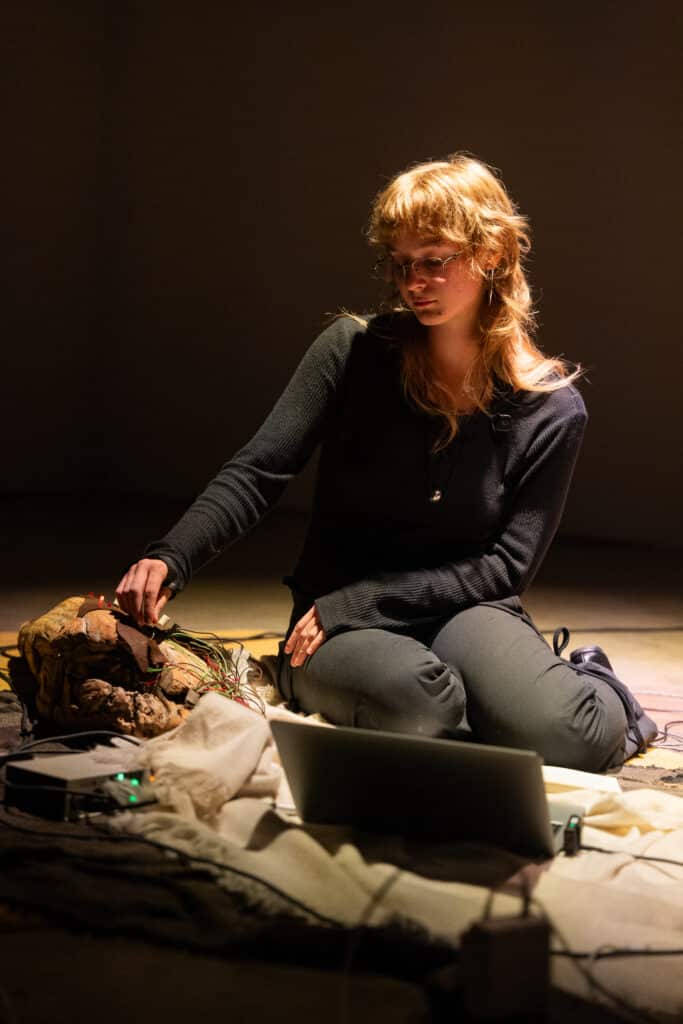
Leo and miranda worked for months in VIVO’s archives on administrative tasks both to assist with VIVO’s internal goals and to familiarize themselves with the materials. In the spring, they began synthesizing that work into As Per Our Last, which takes its name from salutations commonly found in the organization’s correspondence logs.
“The discussions that arose from this work were relevant to them as artists but also for the archivists. They always showed up and were respectful in the space. It was a great pleasure to spend that time with them,” says VIVO archive manager Karen Knights.
“Their final decision to activate the infrastructure of the archive itself was an interesting one, and perhaps an outcome of their positionality: doing labour in the space while ingesting the thoughts and decisions of staff contemporaneously and across three decades. Their immersion prompted unique connections.”
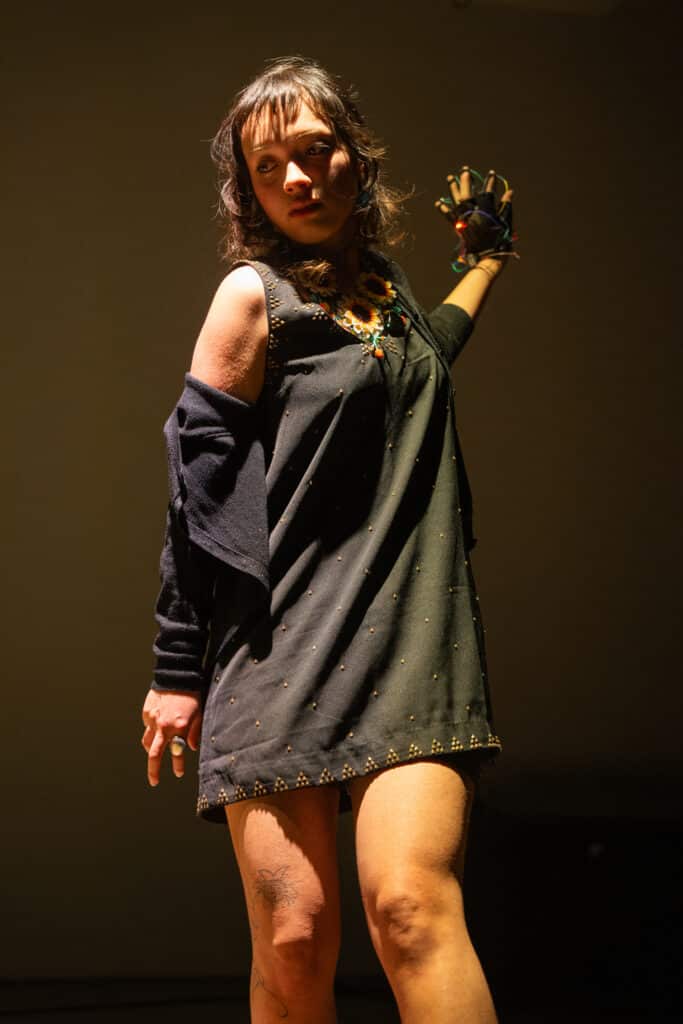
The pair built handmade electronics for the performance, including a wearable glove and driftwood interfaces that responded to the movements of the performers or the audience. During the performance, Leo and miranda used the devices to broadcast live sounds including words scripted from the archive and recordings from the room. Together, they created a shifting, evolving soundscape which drew history into the moment of performance, staging a temporal collapse reflective of the experience of working in the archive.
“The staff had visceral responses to the performance hearing the quoted material and literally experiencing the intended breaking of the veil between past and present,” Karen says.
“The fact that the performance itself will then find its way into VIVO’s archives creates a weird, satisfying little loop,” Leo adds. “Staging it at VIVO was important to us as well. We wanted to bring people into that space and show them the history it holds. It’s such an important space for the Vancouver art world and we really wanted to emphasize its significance.”
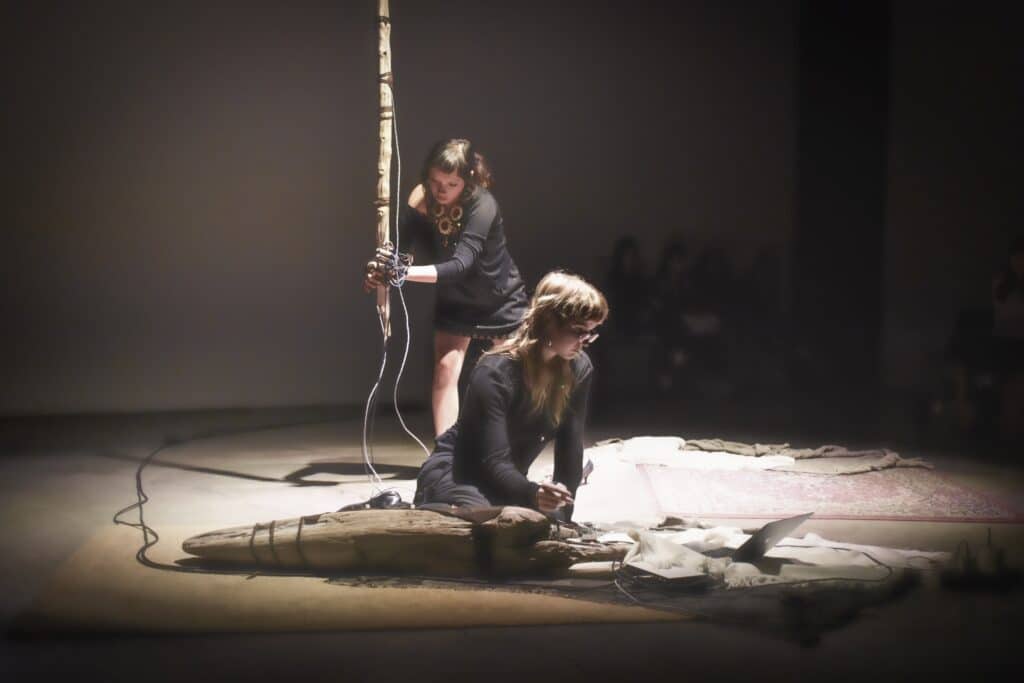
miranda adds that the work was not intended to direct the audience toward a singular interpretation.
“I think the mark of any meaningful work is that it sticks with you for a while once it’s finished,” they say. “I hope people were a little weirded out by the performance, but also that they were able to just listen and be open. And I would love for people to walk away feeling a little more familiar with VIVO as a space that can be a part of their lives.”
Peter says the project was a remarkable success, both in terms of strengthening ties between ECU and VIVO and with regards to the students’ experiences.
“I was thrilled with the outcome and deeply appreciative of Lauren and everyone at VIVO for partnering on this project,” he says. “It was a meaningful opportunity for our students to engage with an important media arts institution while contributing something genuinely new to the archive’s ongoing life.”
Want more stories like this delivered twice a month to your inbox?
Subscribe to our FREE Emix newsletter today!