
Administered by the federal government, the Canada Graduate Research Scholarship — Master’s program and Research Travel Supplement provide more than $35,000 in financial support to students demonstrating high standards of achievement.
Emily Carr University of Art + Design (ECU) Master of Fine Arts (MFA) students Paloma Dawkins (MFA 2027) and Janine Sindrey (MFA 2027) are among the 2026 recipients of scholarships from the Canada Graduate Research Scholarship — Master’s (CGRS M) funding program.
“It’s a game changer,” says Paloma, a digital artist, animator and game designer living in Montreal, QC.
“Studying at ECU and getting to know my cohort has been hugely inspirational. Receiving this scholarship is incredibly affirming, and means I can take my research to new places. It feels like I’m on the right track and what I’m doing has meaning.”
The CGRS M supports outstanding graduate students and postdoctoral researchers in developing their research skills and provides the funding and flexibility needed to support their contributions to building world-class research capacity and to Canada’s prosperity and competitiveness. Valued at $27,000, the scholarship is administered by the Canadian Institutes of Health Research (CIHR), the Natural Sciences and Engineering Research Council of Canada (NSERC) and the Social Sciences and Humanities Research Council (SSHRC).
Both Paloma and Janine, who study in ECU’s Low-Residency Critical Ecological Practices (CEP) MFA stream, also received a Research Travel Supplement, which provides an additional $9,000 for research travel.
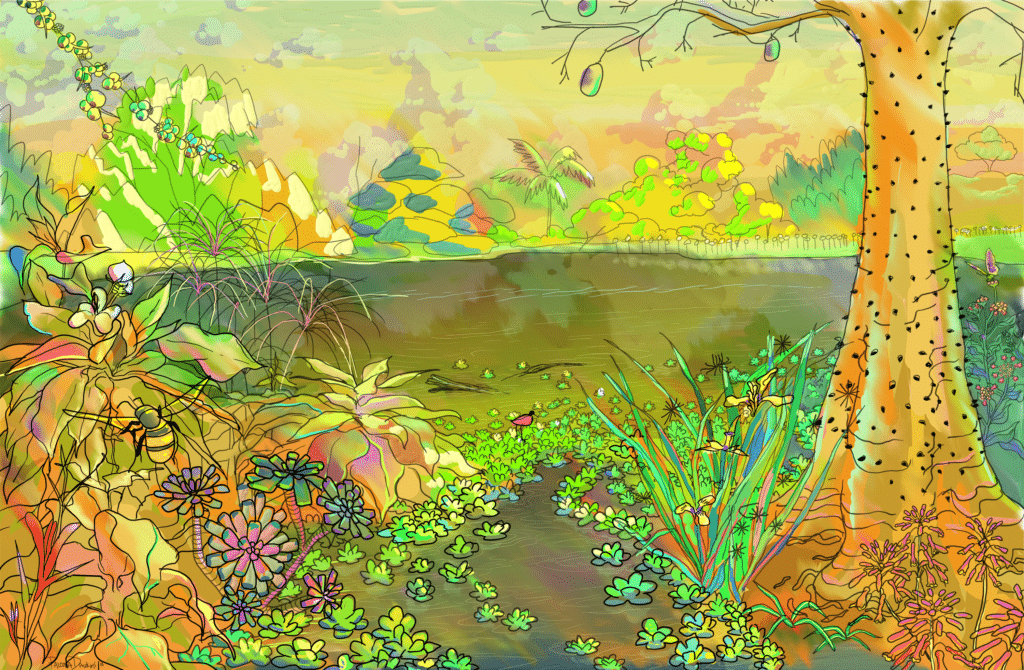
Paloma will travel to the University of California, Los Angeles (UCLA), where she will conduct research with Eddo Stern at the UCLA Game Lab. Paloma’s current focus turns a critical lens on digital systems, including video games. Her practice, which spans an ecosystem of interactive digital environments, explores how digital systems affect, educate and transform human beings and relational dynamics.
“Digital worlds can lend themselves to escapism, and I want to combat that, because that’s not the fault of the digital system or video game. That’s the fault of the humans who made it,” she says. “I think the future of our digital systems is games that bring out our vulnerability and our humanity. And Eddo Stern was a huge inspiration for me starting my MFA in the first place, so I’m excited to take my research to his university.”
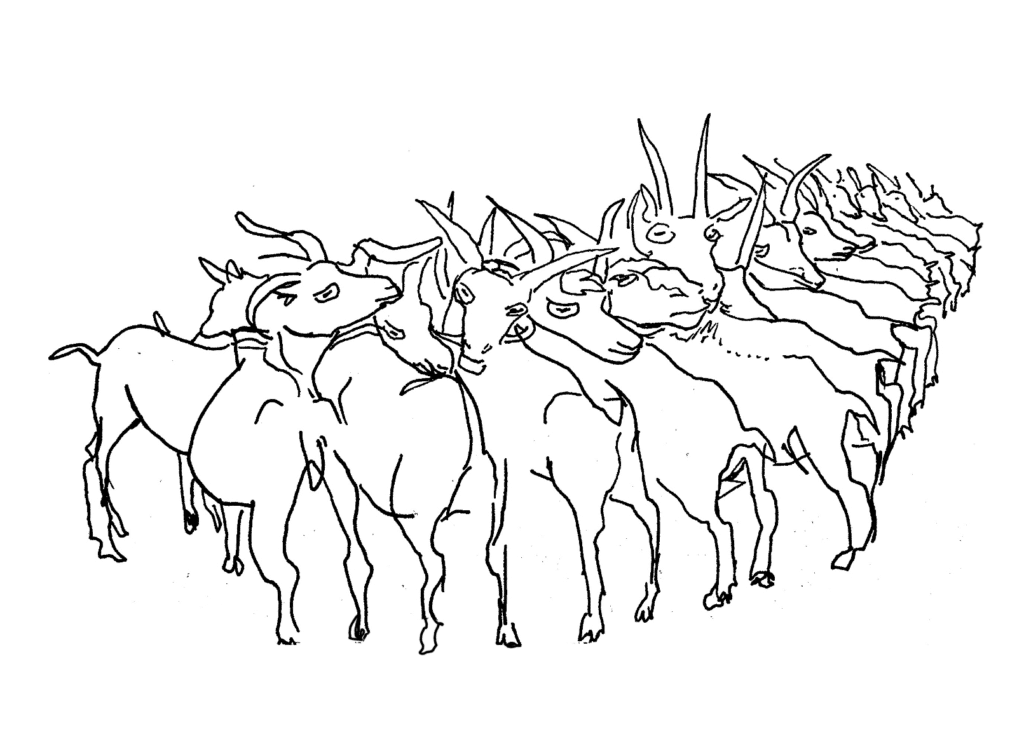
Janine is an artist and designer living outside Hamilton, ON. Her work spans installation, digital media, design and architecture, and includes a current research focus on developing biodegradable migration habitats for the Jefferson salamander, an at-risk species living in the Carolinian Zone. The moisture-retaining way stations offer respite for the vulnerable animals, whose territories are threatened by habitat fragmentation and loss.
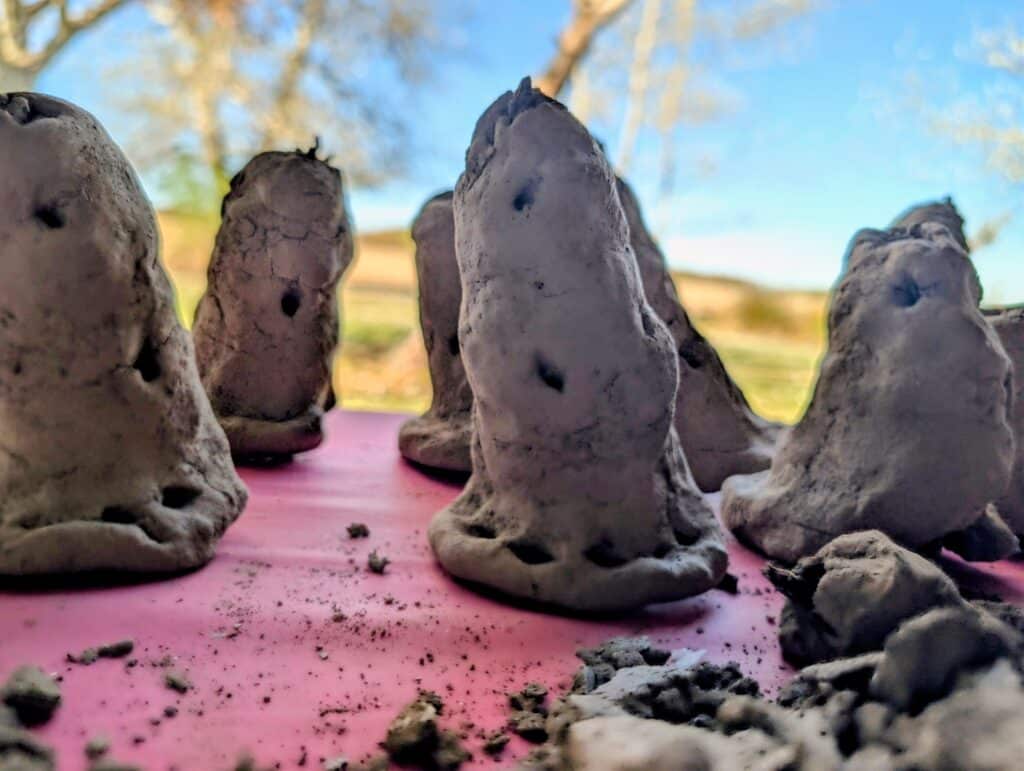
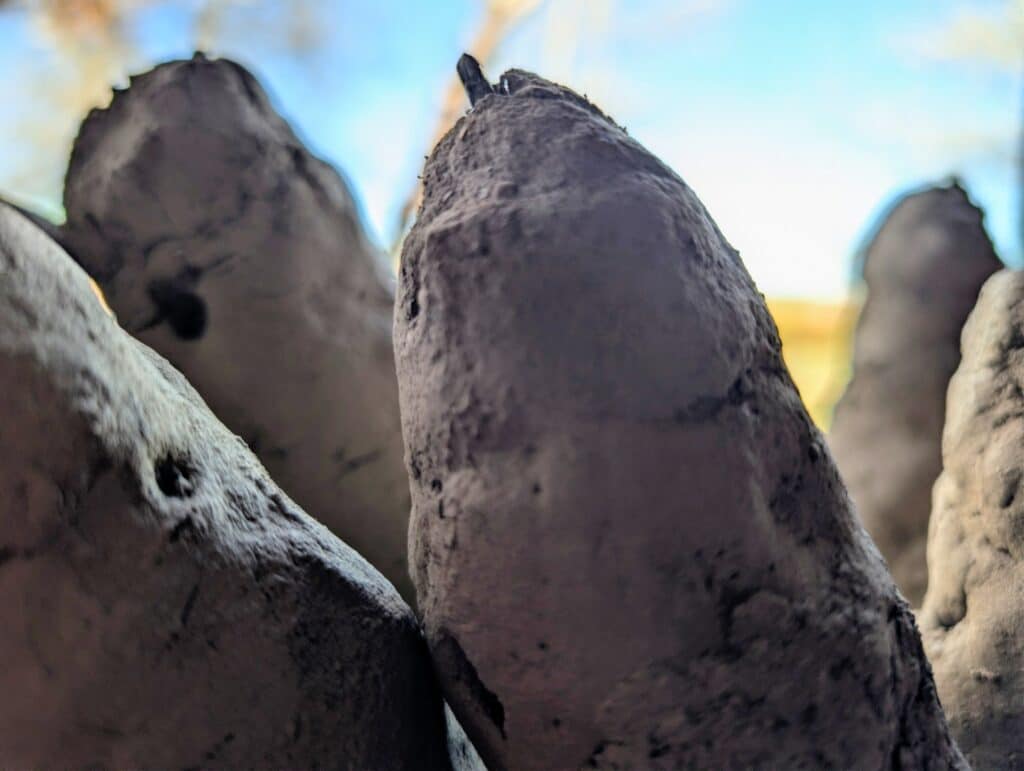
Currently in the prototyping phase, the habitats will eventually intersect with Janine’s experimental film and video practice. Built from local wild clay and fired at low temperatures, they also turn a critical eye on assumptions underpinning the practice of architecture.
“Architecture tends to view permanence as an ideal state, without acknowledging that materials are always in a life cycle. They decay and return to the earth,” she says. “My clay is porous and fired under 500 degrees, so over the course of months, it will start to soften and slump and eventually return to the earth. It’s my way of discussing some of those material assumptions through art practice.”
With her scholarship funding, Janine will travel to Basel, Switzerland, to conduct her research at Institut Art Gender Nature (IAGN) at the Basel Academy of Art and Design, meeting with IAGN faculty and other artists and architects researching multi-species architecture.
“As a mature student with a disability, it’s financially difficult to attend school full-time and commit yourself to an intensive project,” she says.
“To me, this support is huge because it means I don’t have to scale back. I want to pour all of myself into this work, and these awards give me space to do that. They allow me to realize the potential of the project and set me up for success as I plan for my PhD. Plus, CEP is a brand-new program for ECU, and we’re on the leading edge of this kind of work. So, it’s validating to be acknowledged by a federal scholarship committee.”
More About the Low-Residency Critical Ecological Practices Master of Fine Arts program at ECU
ECU’s MFA in Critical Ecological Practices is for artists and creative practitioners exploring ecological topics through research-driven art.
The program challenges anthropocentric ways of thinking, embracing critical reflection and nurturing models of kinship built on empathy, compassion and mutual reciprocity with the more-than-human world.
The low-residency format combines synchronous online learning with two immersive summer residencies in Vancouver, where students pursue independent and collaborative research, build connections and access ECU’s world-class facilities.
Learn more on ECU’s website.
Want more stories like this one delivered twice a month to your inbox?
Subscribe to our free Emix newsletter today!