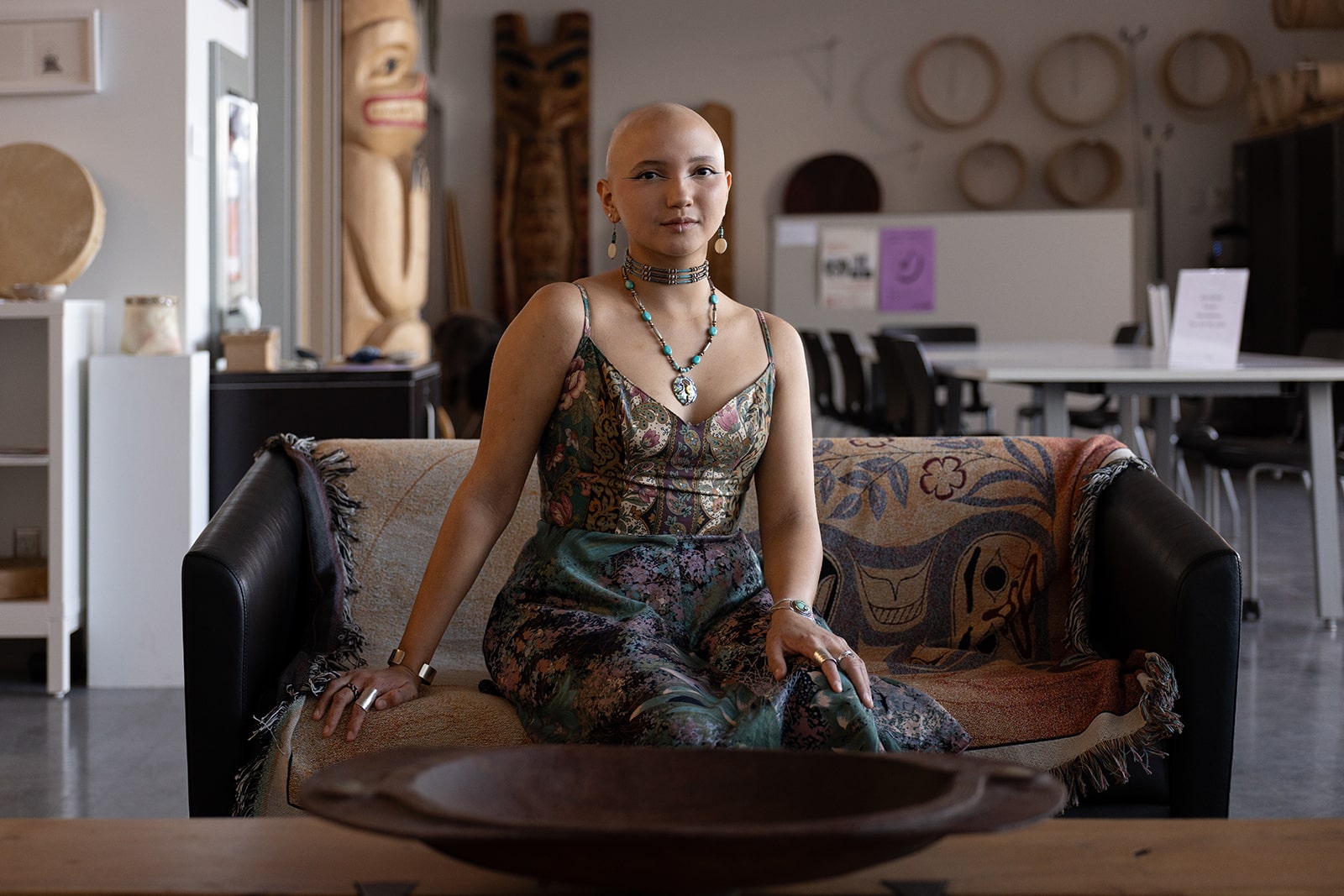
The artist and ECU Master of Fine Arts student will travel to New Zealand to explore a potential location to pursue a doctorate degree.
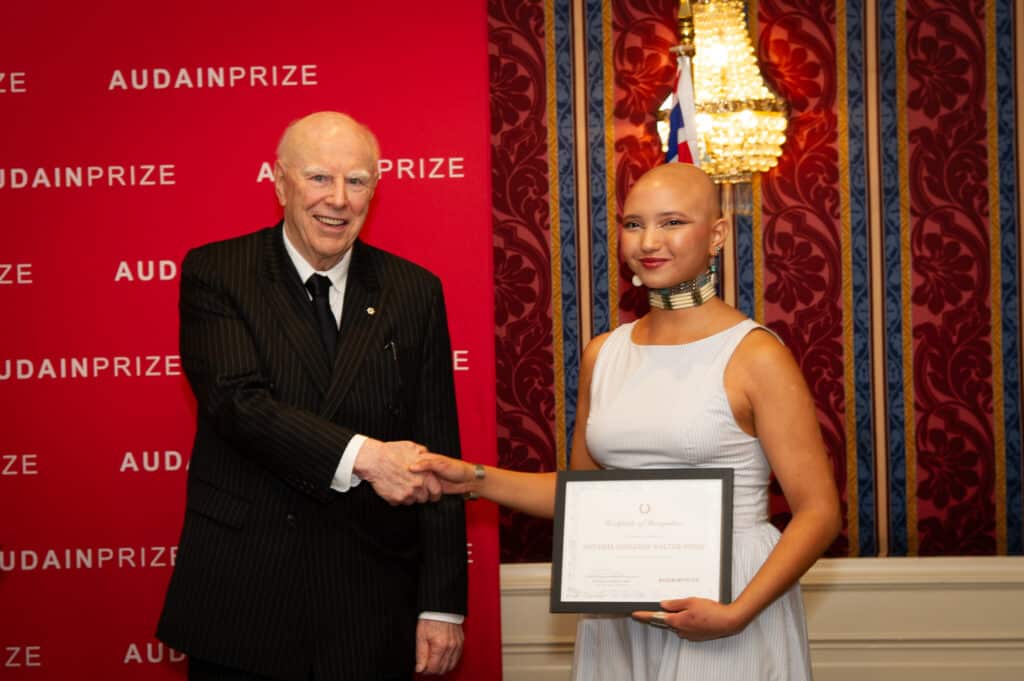
Artist and Emily Carr University of Art + Design (ECU) Master of Fine Arts (MFA) student Natasha Walter-Pinay (MFA 2027) is the recipient of a 2026 Audain Travel Award.
The multidisciplinary artist says she intends to travel overseas to begin planning for life after graduation.
“I’m grateful to be supported in my practice and research as an artist,” Natasha says. “I am looking forward to going to New Zealand where I am considering doing my PhD to continue my research.”
Awarded annually to student artists enrolled in a full-time fine arts program, the prestigious Audain Travel Award provides $7,500 to encourage travel for art experiences. Past recipients include Naimah Amin (MFA 2026), Sun-Nam Manuel (선남) (BFA 2024) and Caitlin ffrench (MFA 2023).
Natasha, who is Nêhiyaw (Cree) from the Peepeekisis Cree Nation No. 81 on Treaty 4 territory in Saskatchewan, works across painting, textiles and jewelry. She says she views her practice as branches on a tree.
“The trunk is the main curiosity — my research question, which is ‘Who are the homelands?’” she says. “And then there are branches that explore this question in different ways.”
Natasha’s research is deeply informed by her “nomadic” childhood, which saw her living all over Canada and the U.S., she adds.
“I am questioning what knowledge I should or should not have access to, especially as someone who didn’t grow up in community and who has lived so far away from home pretty much my entire life,” she says. “The traditional crafts, textiles and jewelry, are a reconnection to culture and language and knowledge.”
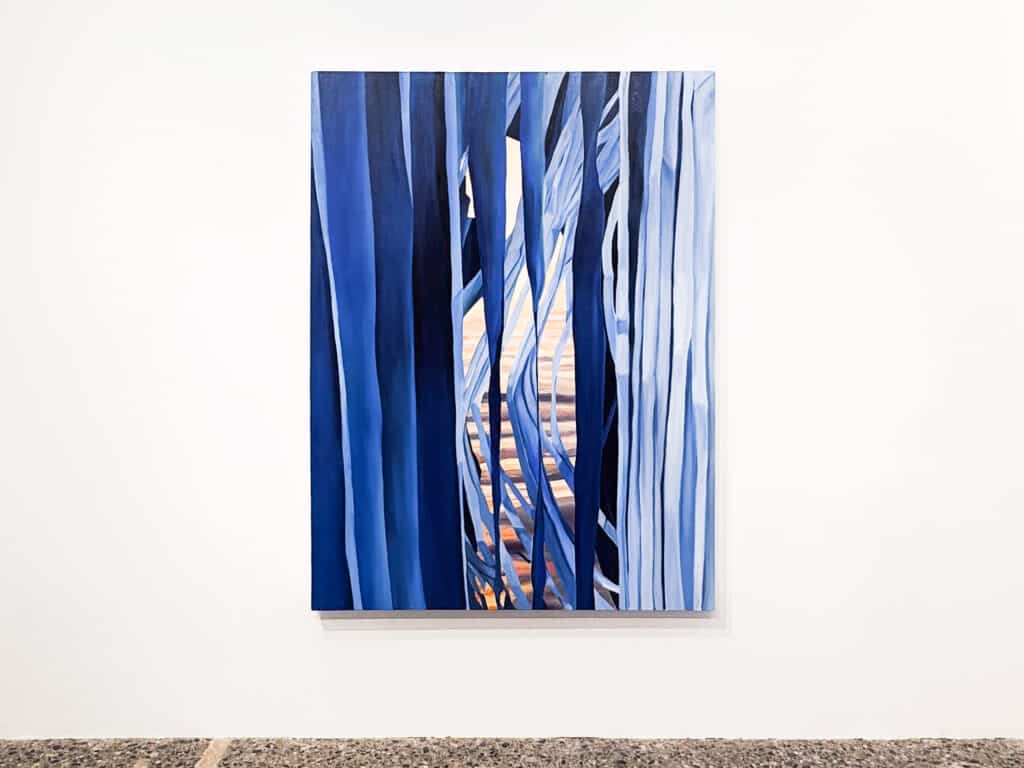
Painting, meanwhile, is a forum for processing her lived experience.
“I’ll go into the studio and paint what I’ve seen or felt the previous day,” she says. From things she sees during time spent outdoors to things she sees in her dreams, Natasha’s choice of subjects is guided by a subtle intuition that she has learned to observe.
“Usually, a project starts when I can’t get an image out of my head. Making a painting is about trying to get it out in the best way possible.”
Her work is also informed by an animist philosophy, which views the world and everything in it as possessing a spirit.
“When I ask, ‘Who are the homelands,’ I’m hoping to acknowledge them as alive, which I want to bring into my work,” Natasha says. “When creating the Chest Piece, it felt alive, like it had a life before in thought and in teachings I’ve learned. As an artwork, it lives as a form of protection and is there when I call, when I need it.”
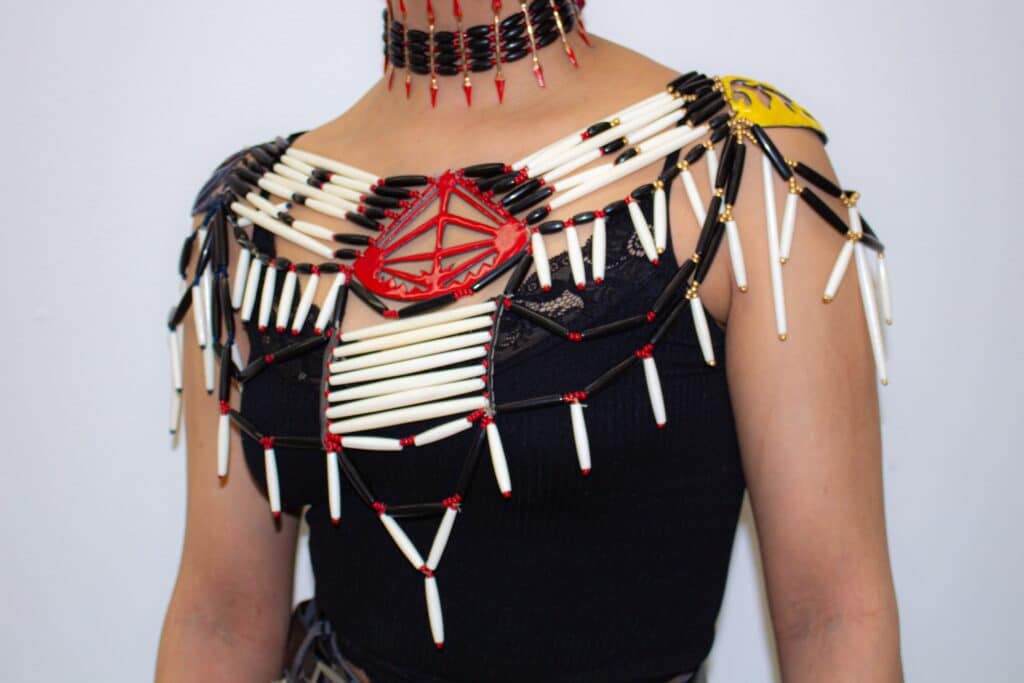
Protection, Natasha adds, can also come from spending time outside or with loved ones — both of which she also wishes to protect. Fostering a relationship of reciprocity with this community of human and non-human beings is one of Natasha’s guiding lights.
“I want to do what I can for the people that love and support me and who I love and support,” she says. “So, I feel conflicted about being so far away from home. I asked my Kokum, ‘Should I come back?’ She said, ‘Please do not do that.’ And I wondered how I would share what I’ve learned with people. She told me, ‘You’re already doing that. You’re making art. You’re doing what we unfortunately could not do.’
“So, my work is about trying to connect interpersonal relationships with the land and keep up those relations, but then also recognizing that they’ll still be there even if I’m somewhere else in the world.”
More about the Master of Fine Arts program at ECU
Enhance your artistic practice and critical inquiry with our two-year Master of Fine Arts programs, featuring innovative and flexible pathways. Immerse yourself in contemporary art production through an interdisciplinary curriculum that bridges methods and ideas in a supportive and challenging environment. Choose between a full-residency option for year-round, on-campus engagement or our two low-residency programs combining online learning with on-campus intensives.
Visit our website to learn more.
Want more stories like this one delivered twice a month to your inbox?
Subscribe to our FREE Emix newsletter today!