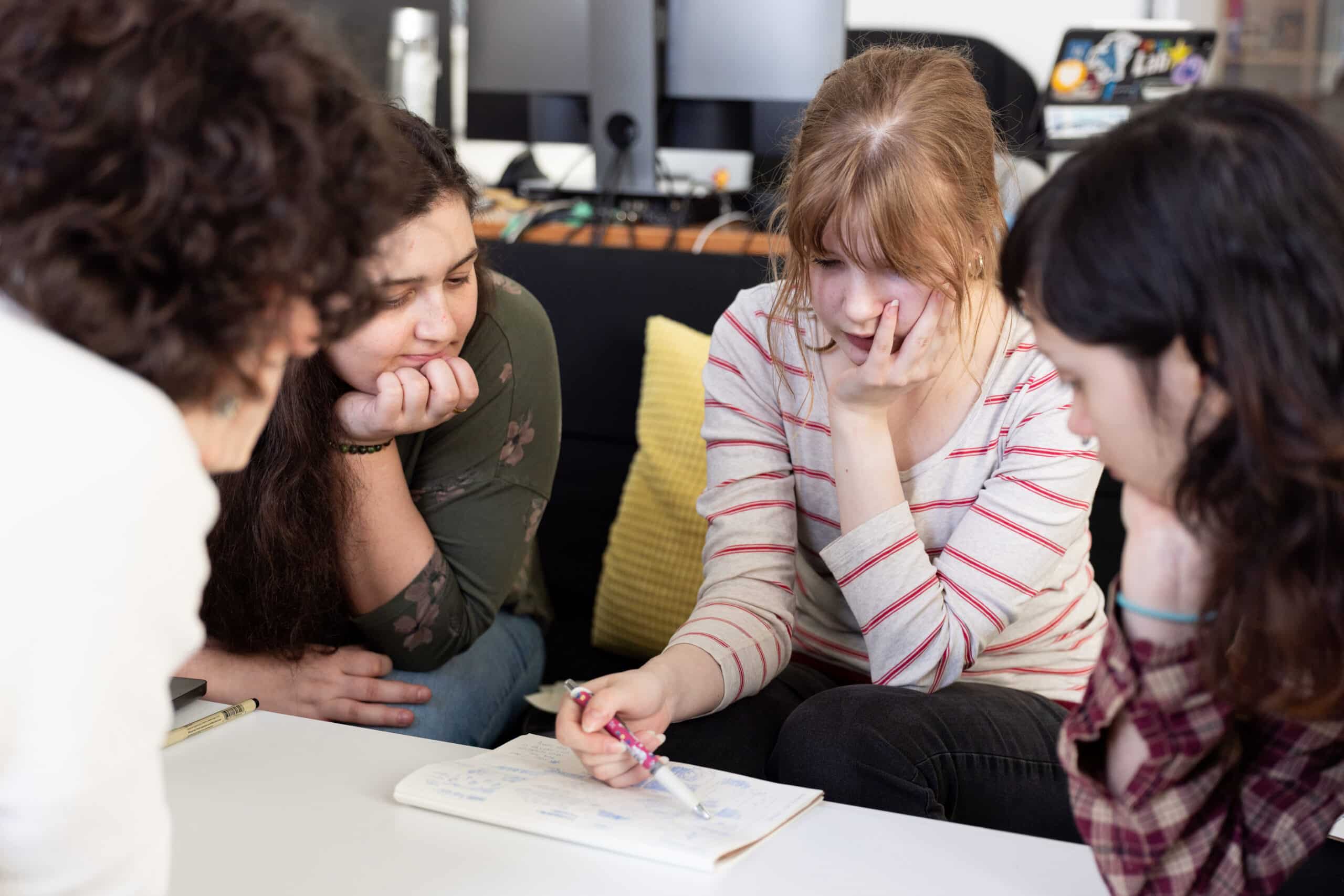
Over six months, ECU students worked with faculty member Éléonore Goldberg to develop materials gathered by writer and educator Duncan McCue for representation via an interactive website.
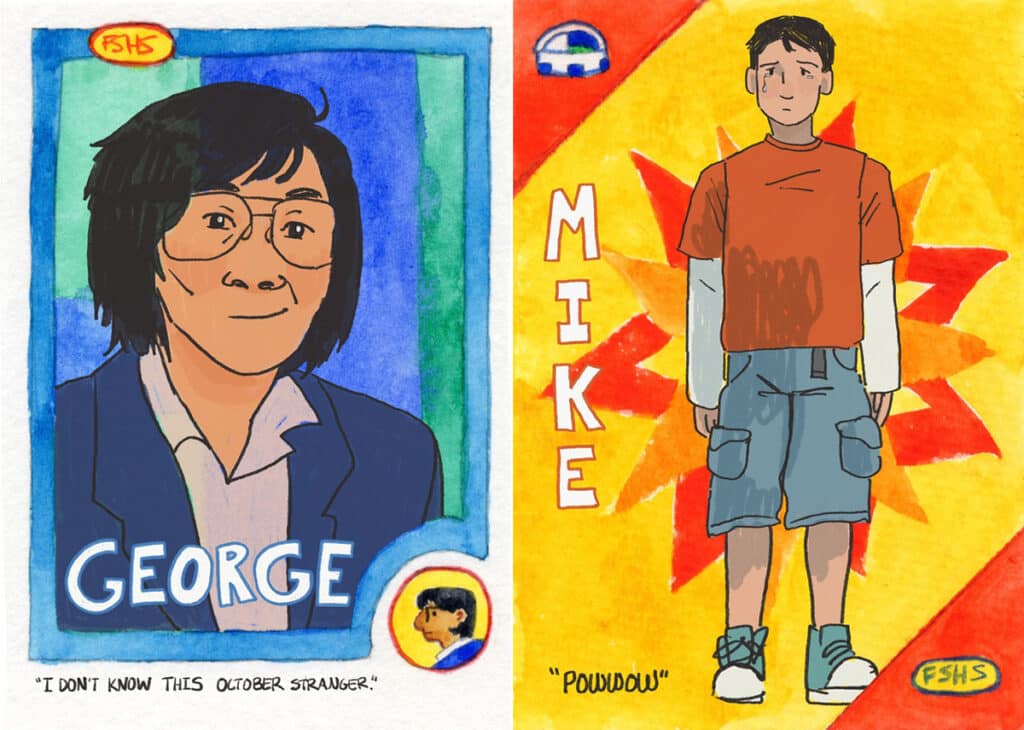
A new project led by artist and Emily Carr University of Art + Design (ECU) faculty member Éléonore Goldberg uses interactive media to animate the stories of George Kenny, an author, journalist and residential school survivor, and his son, athlete and doctoral student Mike Auksi.
Currently titled Hockey Survivor Stories, the project was developed with ECU student research assistants Inanna Cusi (MFA 2027), Leo Martinez (BFA 2027) and Hannah Strocel (BFA 2027), and facilitated by ECU Industry Liaison Alan Goldman.
“One of the great things about this experience has been witnessing the research assistants develop their identities as artists,” Éléonore says. “I try to bring social justice topics into my classrooms and encourage my students to develop projects around family and cultural traditions. It can help an artist open themselves and their minds.
“In this project, I saw the team begin to open in these ways; I saw them believing in themselves, in their ideas and beginning to develop their goals in terms of career. It felt successful, and this project would make a great classroom example for how students can make an impact with their work.”

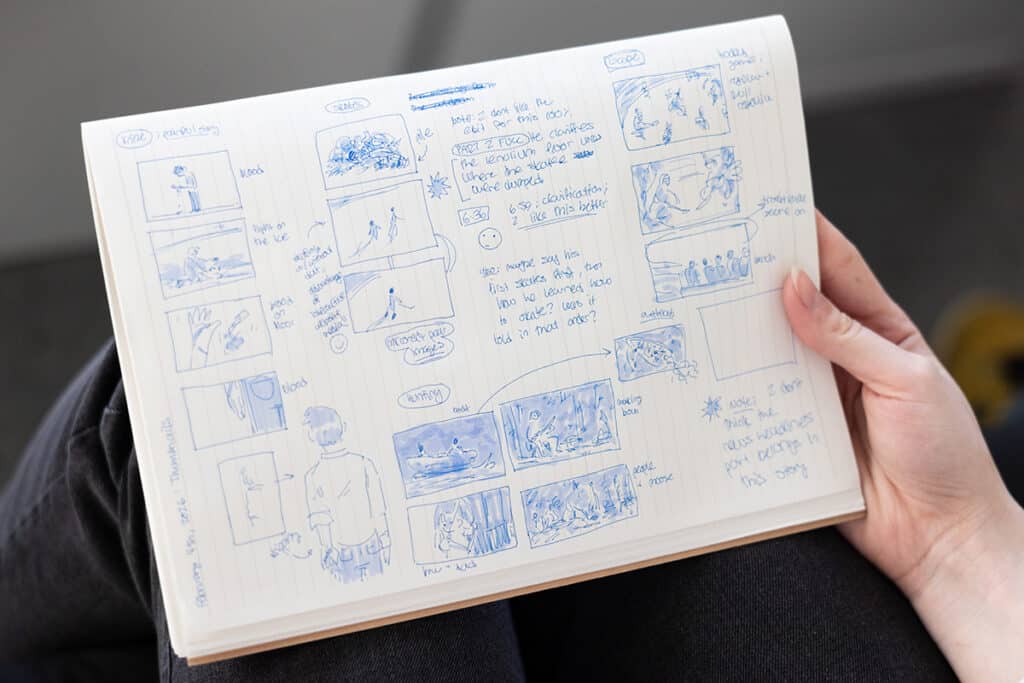
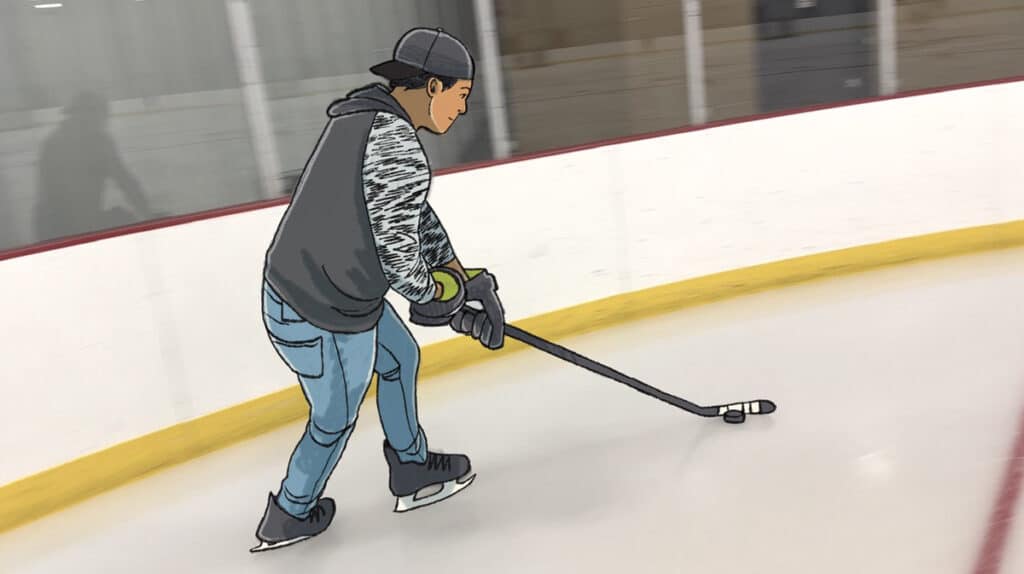
Hockey Survivor Stories is based on Indians Do Cry: A Father-Son Hockey Story, a forthcoming graphic novel funded by the Social Sciences and Humanities Research Council of Canada (SSGRC) abd Canada Council for the Arts, and written by journalist and Carleton University faculty member Duncan McCue with artwork by Mangeshig Pawis-Steckley. The book recounts the story of George and Mike’s relationship, the devastating impacts of residential schools, and the healing power of hockey.
Indians Do Cry forms a part of the Survivor-Centred Visual Narratives Project led by Dr. Charlotte Schallié at the University of Victoria and funded by a seven-year SSHRC Partnership Grant. The project proposes new, arts-based ways of gathering, understanding and sharing the experiences of genocide and mass-atrocity survivors, and aims to restore agency to survivor narratives. Working with a trauma-informed approach, the project facilitates the collaboration of survivors and artists to develop graphic novels, a documentary film and accompanying educational resources. In lieu of a documentary film, Duncan is collaborating with ECU on the development of an interactive website that will accompany and enhance a graphic novel scheduled for publication in the fall of 2027.
Over six months, Éléonore and her team worked with archival images and audio interviews gathered by Duncan to identify narratives for adaptation, create a visual identity for an evolution of the graphic novel, and develop a model for how these materials could be brought to life through an interactive website. They also worked closely with Duncan to ensure their adaptation reflected his vision and was respectful to George and Mike’s stories.
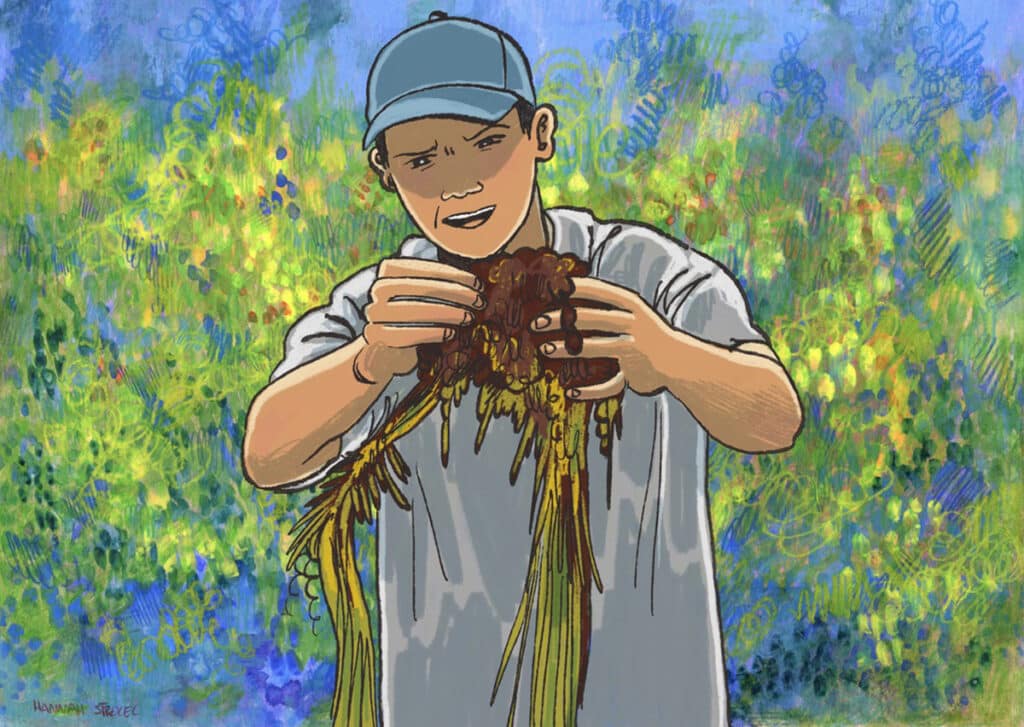
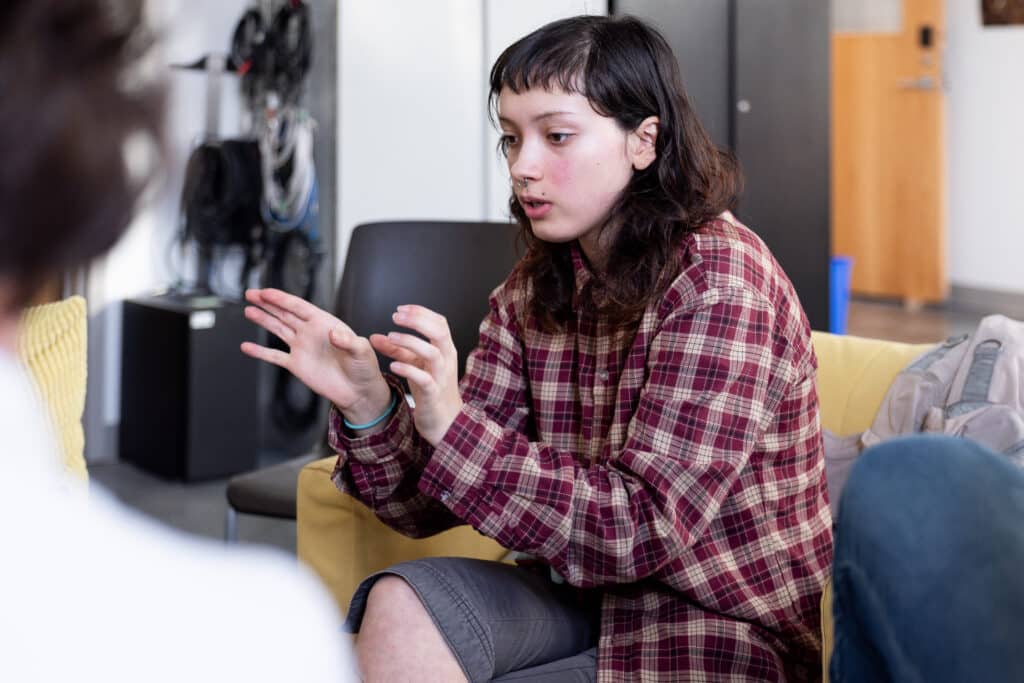
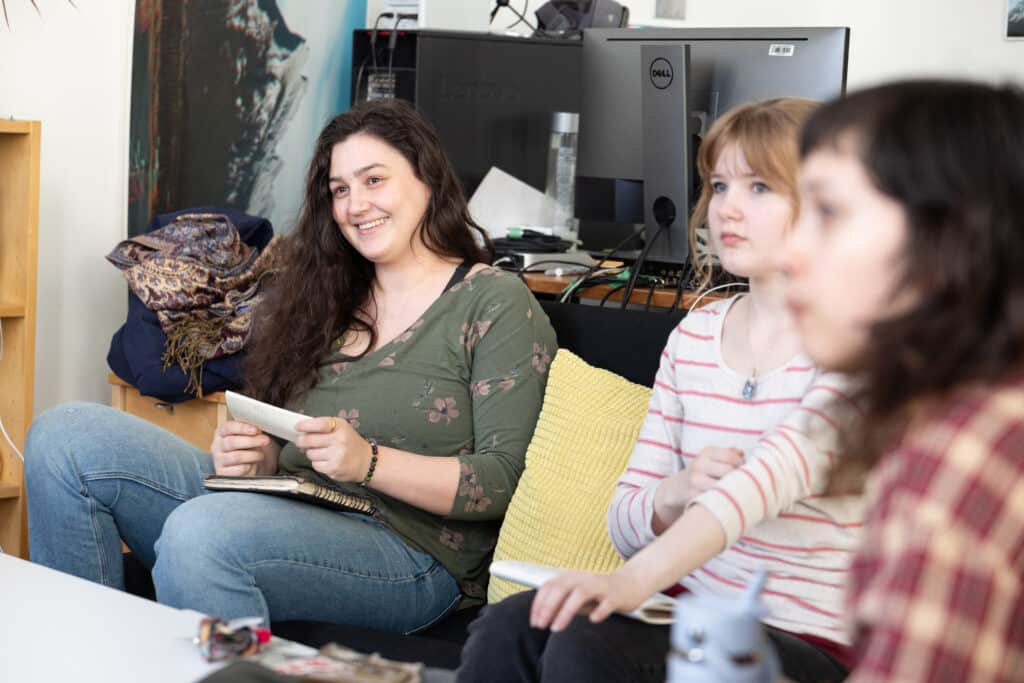
Leo, a New Media + Sound Art student, worked closely with Inanna, a Master of Fine Arts student, to develop a concept for presenting Duncan’s materials in a new form and with unique emphasis. They paid close attention to their own personal emotional responses, using them as a guidepost for which elements might be most impactful for an audience.
“We felt very connected to these stories and very moved by the archival images, too,” Leo says. “We wanted to recreate that experience of discovery for people while ensuring we were as respectful as possible. The three of us felt really driven to do the best we could, and working professionally as part of a team on something that felt so important was new for me. It’s an experience I’ll take forward into my practice.”
Alan says the students rose admirably to the challenge of translating sensitive materials through creative practice.
“As Éléonore suggested, students can have an impact at the same time as making art,” Alan says. “This team truly engaged with their full selves, which was not easy because these are deeply personal and traumatic stories. They took a very deep dive, they communicated clearly, and what they’ve produced reflects that commitment and intentionality.”
Hannah, an Illustration student who will enter her fourth year in September, created a visual identity for the project. She worked with Mangeshig to align her illustrations with his original work, and created dozens of images as her teammates developed their narrative.
“I’m an illustrator and I am Métis, but I hadn’t yet bridged the gap between the two,” she says. “My last semester was about figuring out what it means to be making Indigenous work and how I can represent myself and my people. At the same time, I was working on this project and learning from an Indigenous illustrator, which felt supportive and helped me feel confident in my abilities. I’m honoured that I got to be a part of this work and excited to see where this project goes, but I also feel like it was a good steppingstone for my future career.”
Hannah adds that for her generation, the story of residential schools is one many people are familiar with from a young age. For that reason, Duncan’s aim of advancing survivors’ stories beyond accounts of foundational trauma felt especially relevant and gave her a real sense of purpose.
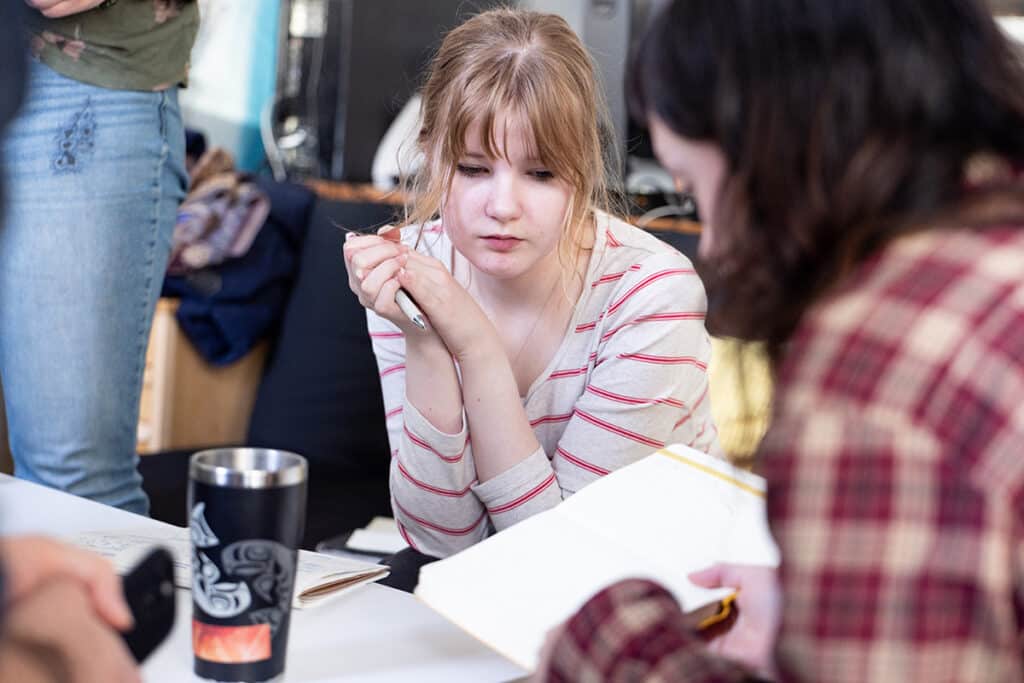
“Most of my friends have known about residential schools since we were children, but what about everything that’s happened since?” she says. “A lot of people no longer need that eye-opener moment. So, if your eyes are already open, what else can you see?”
Éléonore and Alan were recently awarded an NSERC Mobilize Grant to begin the next phase of research and development in partnership with Duncan and Education Without Borders. They hope to launch the Hockey Survivor Stories interactive site in September 2027, to coincide with the launch of Indians Do Cry.
Visit the Survivor-Centred Visual Narratives Project’s website to learn more about Indians Do Cry and many other projects currently underway.
More about Research at ECU
As one of the most research-intensive art and design universities in Canada, ECU connects art, media, and design practices with some of the most pressing questions of our time. At ECU, we believe that our research can help to transform the world, build healthier and more vibrant futures, and cultivate cultural resilience throughout our local and global communities and industry partners.
Visit our website to learn more.
More About Illustration at ECU
Illustration brings ideas to life, turning concepts into compelling visuals that inspire, inform and communicate.
Explore traditional and digital techniques, refine your artistic voice and experiment with new approaches in ECU’s Illustration program. Hands-on projects and critical studies open doors to diverse opportunities, from art exhibitions to media careers.
Visit our website to learn more.
More about the Master of Fine Arts program at ECU
Enhance your artistic practice and critical inquiry with our two-year Master of Fine Arts programs, featuring innovative and flexible pathways. Immerse yourself in contemporary art production through an interdisciplinary curriculum that bridges methods and ideas in a supportive and challenging environment. Choose between a full-residency option for year-round, on-campus engagement or our two low-residency programs combining online learning with on-campus intensives.
Visit our website to learn more.
Want more stories like this delivered twice a month to your inbox?
Subscribe to our FREE Emix newsletter today!