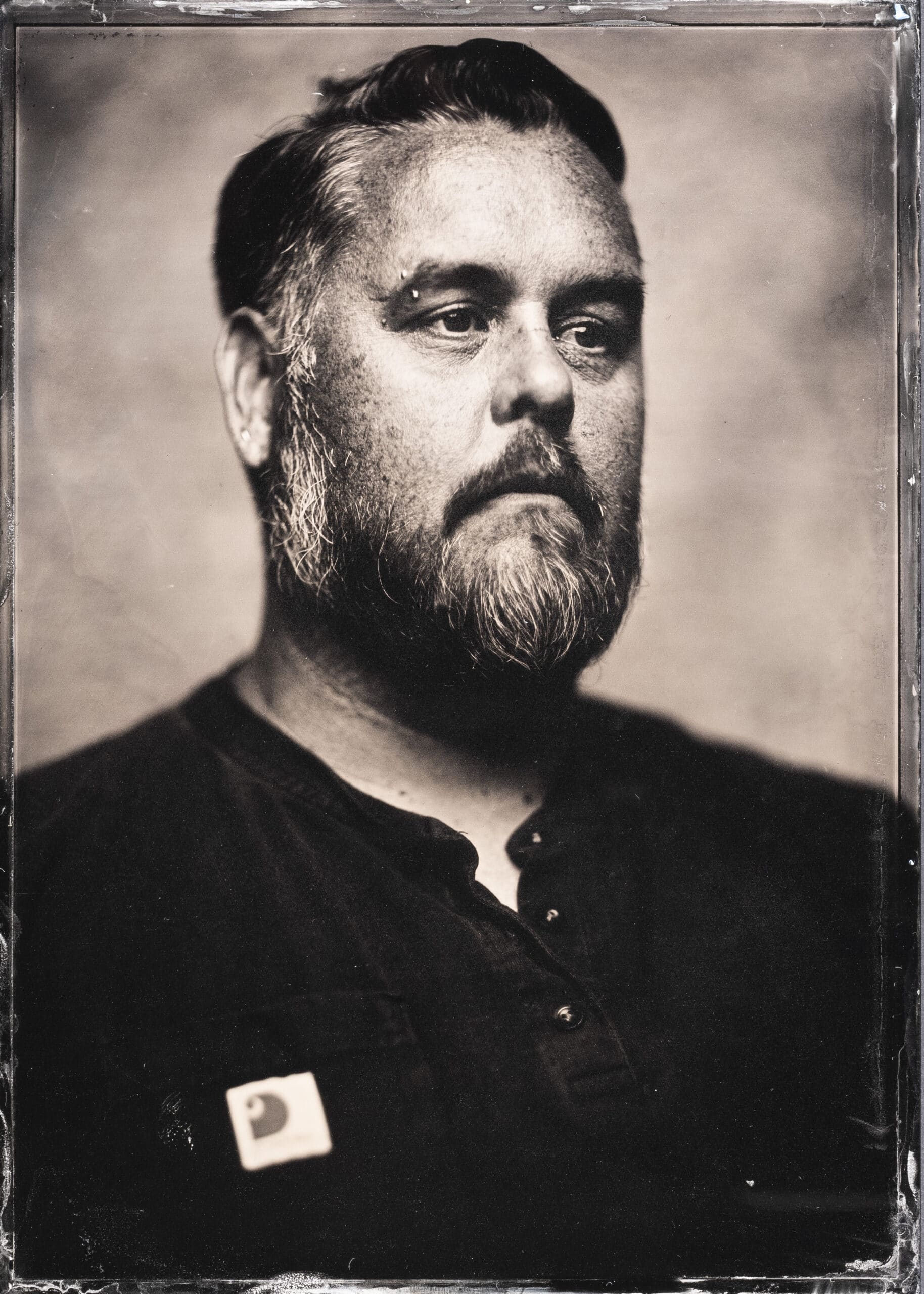
The lauded artist and ECU alum talks pop culture, personal inspiration and the people and places that shaped him.
Spend any amount of time wandering Vancouver’s Mount Pleasant neighbourhood, and you’ll inevitably encounter the iconic Triangle building. Standing at the centre of the area’s “heritage heart,” the building’s second storey has long provided a warren of studio spaces for artists and cultural organizations.
More than a decade ago, some years after graduating from Emily Carr University of Art + Design (ECU) with a BFA in Printmaking, Digital Arts and First Nations Studies, Sonny Assu (BFA 2002) was one of those artists.
At the time, he was working on the Longing series, which repurposes discarded cedar off-cuts from a log-home developer, employing museum-quality mounts to spotlight their resemblance to Northwest Coast masks. The simple gesture foregrounds themes, including cultural and resource extraction, consumerism and Indigenous land rights.
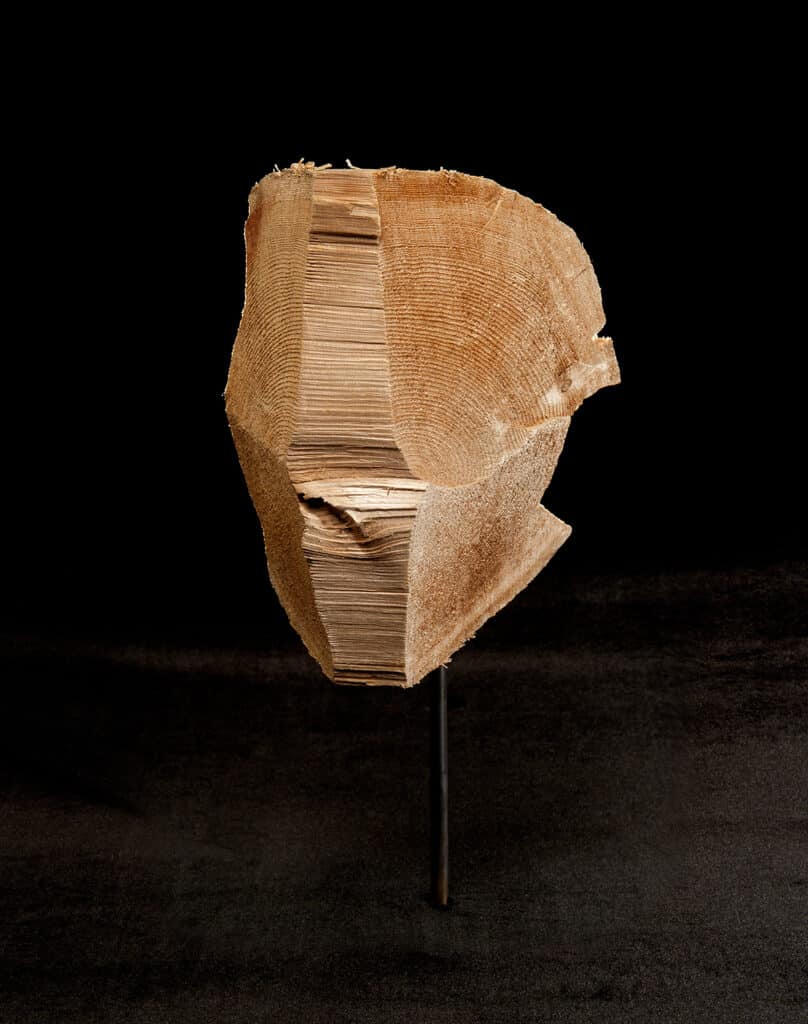
“My studio was right above Budgies Burritos,” he recalls. “I’d go into the studio in the morning, and it smelled like beans and cedar. It was hilarious.”
Sonny, now more than a quarter century into his career and one of the country’s most significant contemporary artists, is known for this balance between incisive, penetrating reflection and gentle, mischievous humour.
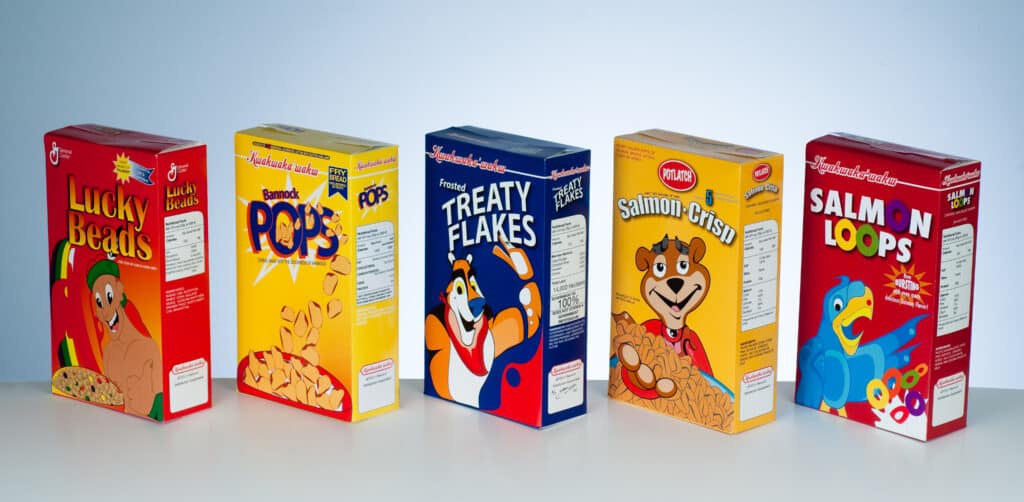
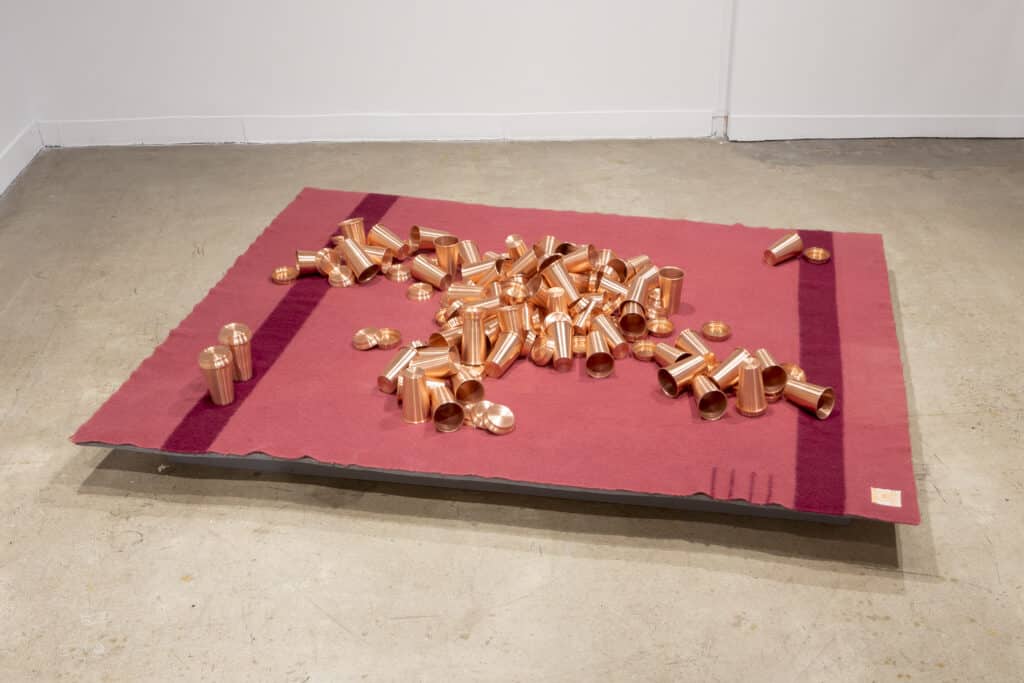
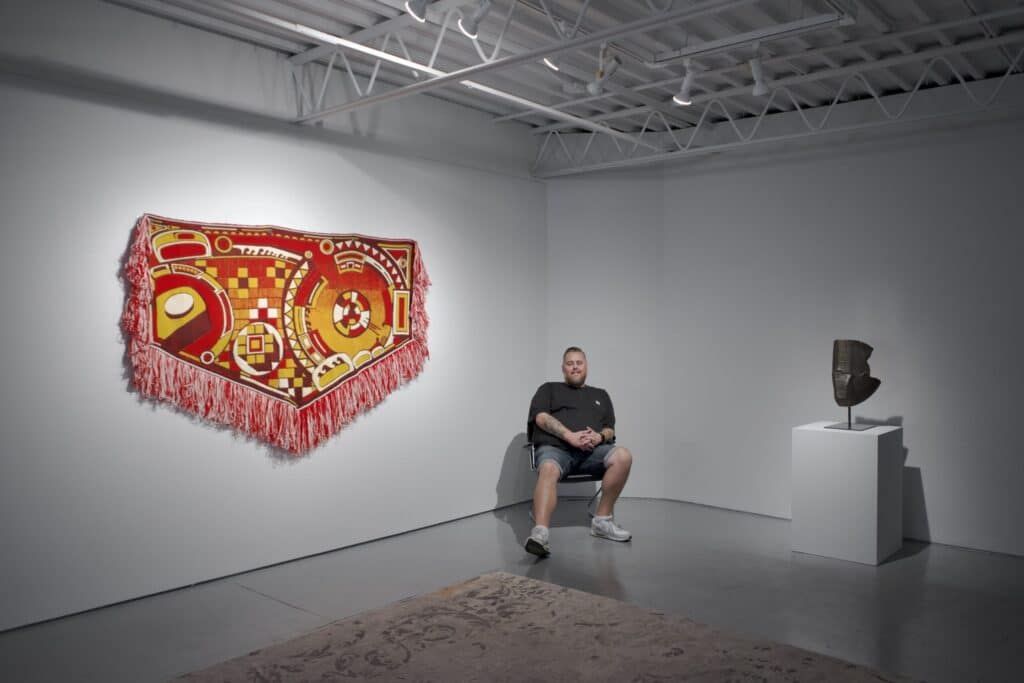
This range has spurred works as diverse as the Challenging Tradition series, the Breakfast Series, 1884-1951, Chilkat and To Boldly Go.
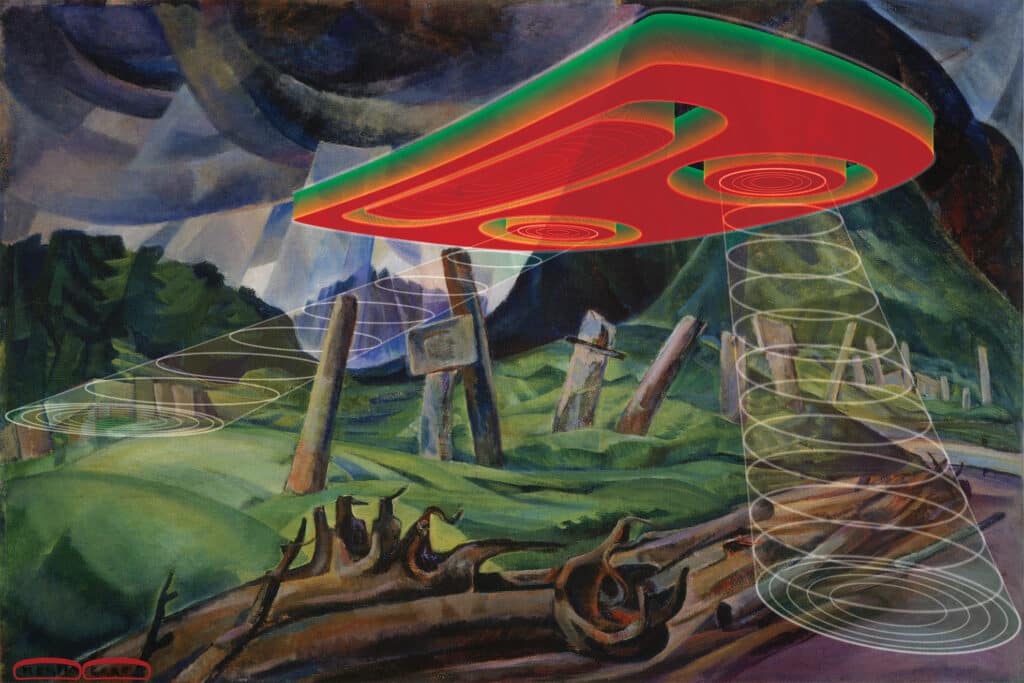
Taking shape through painting, sculpture, installation, photos and digital media, Sonny’s penetrating focus on subjects, including history, Indigenous sovereignty and pop culture has earned him national and international exhibitions, including a major exhibition at the Vancouver Art Gallery (VAG) titled We Come to Witness. The show presented works from his Interventions on The Imaginary series, which explored and interacted with paintings by famed BC artist Emily Carr.
Sonny’s work is also held in dozens of major public collections, and he has earned recognitions, including an Eiteljorg Contemporary Art Fellowship, three-time inclusion on the Sobey Art Award Long List and a 2006 Emily Award from ECU.
Yet after so much critical and professional success, he points to a moment in that Triangle Building studio as one of his proudest. Renowned artist and 2018 ECU Honorary Degree recipient Rebecca Belmore paid him a visit one day and noticed spatters of paint on his wall — remnants of the many works he’d made in the space.
“She said, ‘I want to frame that wall. I want to cut that wall off the building and frame it into my house.’ It was a very special thing to hear that, and it’s always a highlight of mine to be able to talk about that.”
This reverence for fellow practitioners is characteristic of Sonny. It’s also indicative of a broader fascination with cultural production. His work, he says, is as much about looking outward as in.
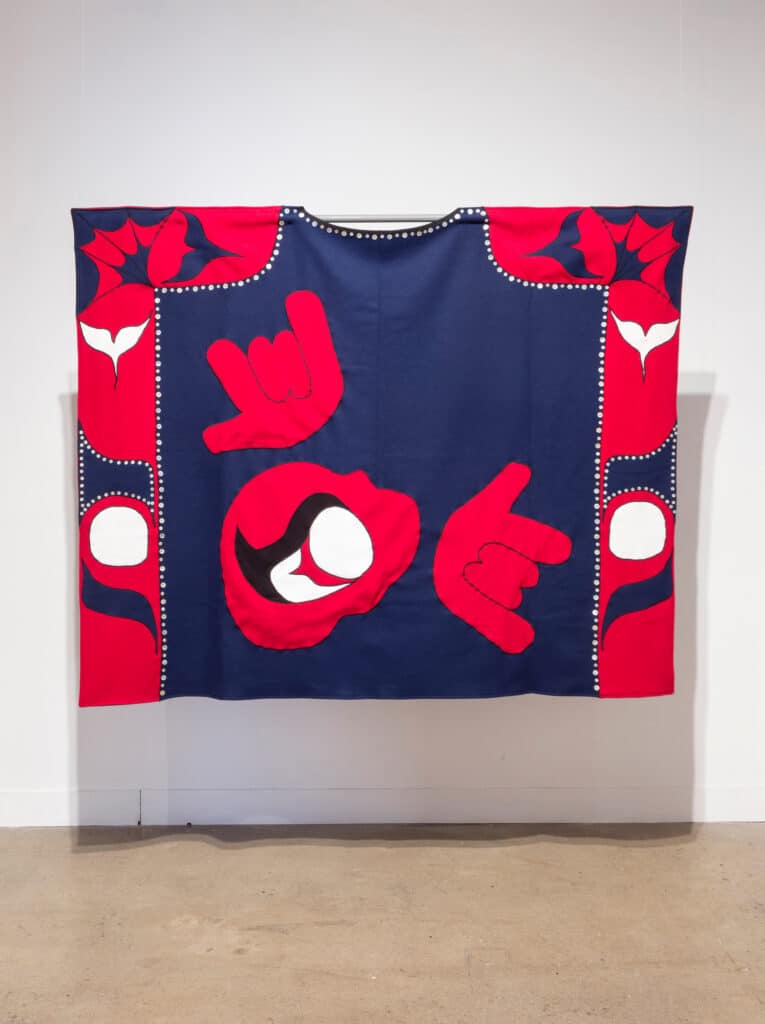
As a child, a history lesson on Kwakwaka’wakw culture (the Nation to which Sonny belongs) set him on a path of exploration that has defined his work and worldview. As a child of the ‘80s, pop culture likewise shaped his perspective on everything from aesthetics to power dynamics.
Sonny says his time at ECU also played a huge role in his approach to artmaking. There, he forged lifelong bonds with community members, including former director of Aboriginal Programs Brenda Crabtree, and fellow students Peter Morin (BFA 2001) and Daina Warren (BFA 2003). With their guidance, he discovered a newfound artistic freedom and began to see artmaking as a viable career path.
“Being at the school was probably the most influential aspect on my career as an artist,” says Sonny, whose 2021 work But I am curious, demon … recently appeared in Somewhere We Have Travelled, a 2026 exhibition organized by the Aboriginal Gathering Place at ECU as part of a series of events acknowledging the contributions of Indigenous ECU alumni.
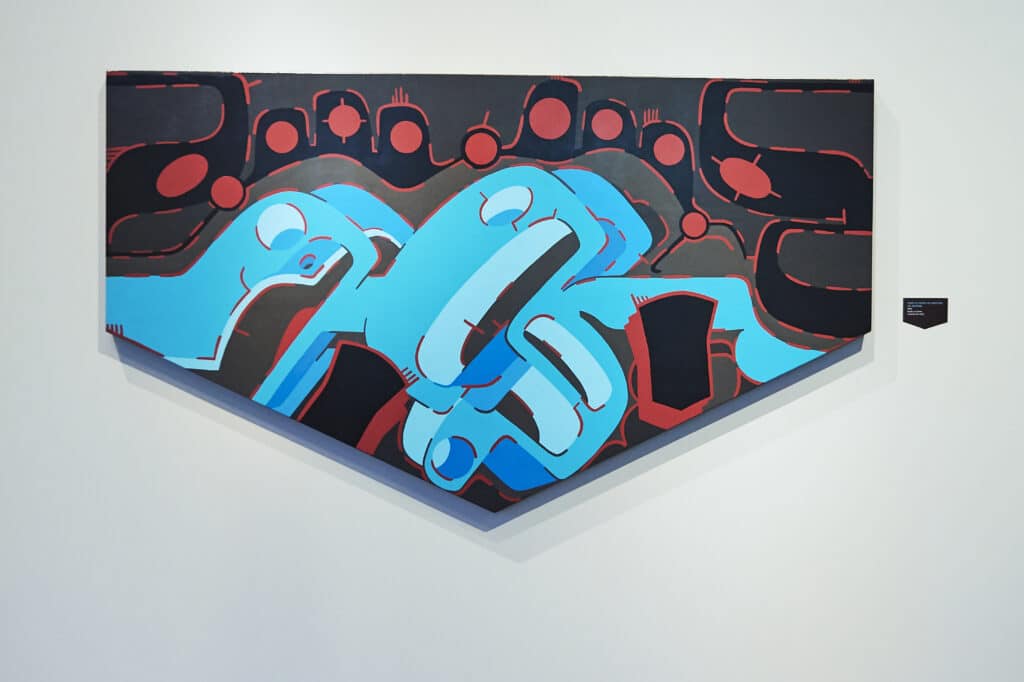
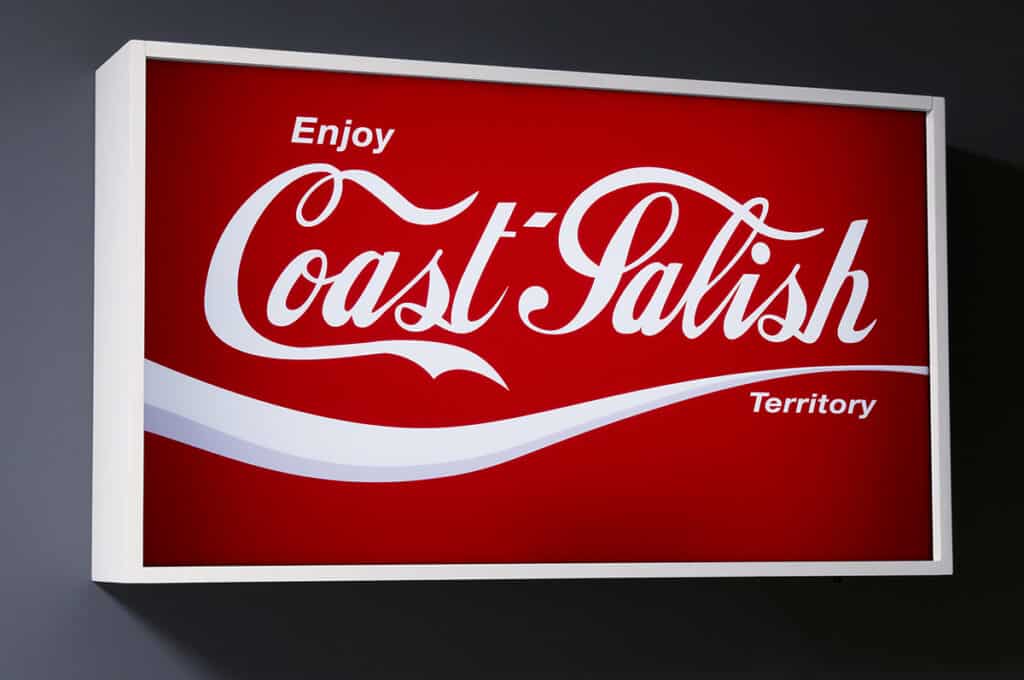
“ECU was transformative in terms of both social and career development. It got me to the understanding that I could do this for a living, but it also gave me the freedom to make the work I wanted to make. I didn’t feel I was hindered by anything. If I wanted to explore, I could explore. It was a game-changing time for me. ECU was a phenomenal place to be.”
In addition to Rebecca Belmore, he cites esteemed artists, including Lawrence Paul Yuxweluptun (Alum 1983, Hon. Deg. 2019), Brian Jungen (Alum 1992) and former ECU faculty member Dana Claxton as figures by whom he has been indelibly impacted.
“It’s funny because I still think of myself as a young person, even though I’m 51 years old,” he says. “But when I think about Rebecca or Lawrence or Brian or Dana, I think, ‘I want to be like them. They’re doing powerful work.’ And then a young person will come up to me and say, ‘Hey, you do powerful work. Thank you.’ And it always takes me by surprise, like, ‘Oh! I’m there now?’ But it feels good to have that kind of validation that you’re doing something meaningful.”
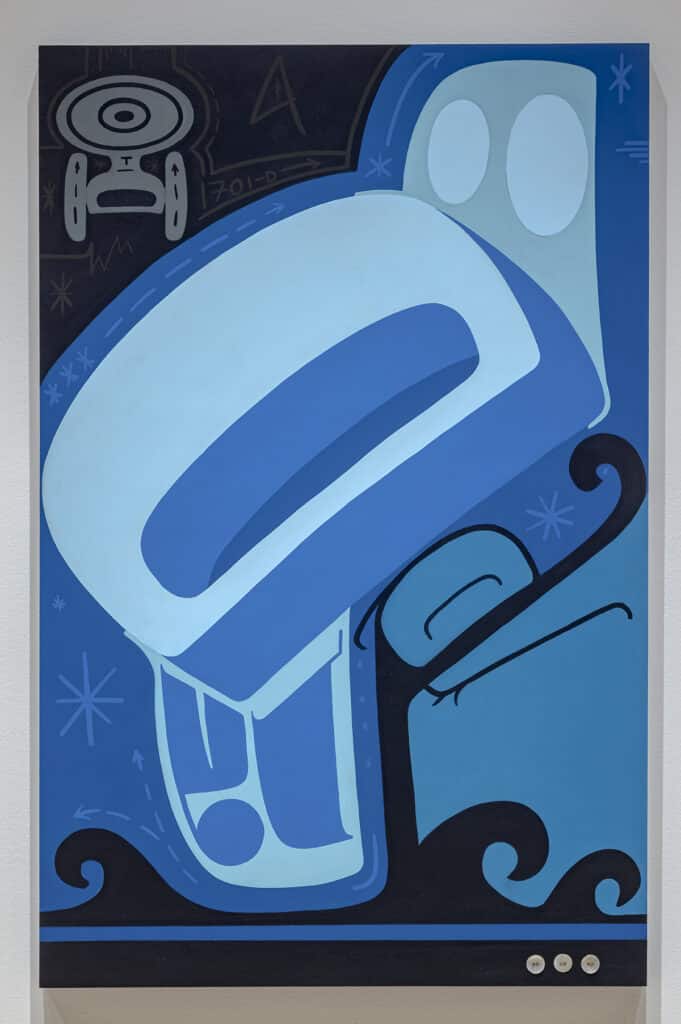
Often, these young artists say Sonny demonstrates how an Indigenous artist can draw inspiration from anywhere while remaining true to their personal and cultural identity. For instance, Sonny’s deep, decades-long engagement with pop-culture forms is not simply a nod to the visual culture and music that infused his childhood and adolescence. It also represents a critical unpacking of the profound influence mass media continues to exert (often invisibly) on our collective and individual psyches.
This work, he notes, is only possible because of the struggles of his ancestors. It is also the work of exploring the limits and possibilities of Indigenous identity in the twenty-first century.
“My grandparents’ generation couldn’t openly speak their language or practice their culture. People in my uncle’s generation dedicated themselves to maintaining and preserving our cultural identity and language and ceremony,” he says. “Those weren’t my struggles, but I benefited from them, and I felt the need to bring my own experiences into the conversation; to infuse it with my lived experience so our youth can see that whatever they want to make doesn’t have to be solely referential to any one thing in order to be Indigenous and in order to belong to them.”
Currently at work on a commission for Canada Goose as well as a public art installation for the City of Toronto, Sonny is also focused on his role as an elected member of Wei Wai Kum First Nation Council as well as fatherhood.
Visit his website to learn more about this work.
100 Years of Creativity: The Stories that Shaped Us
As part of Emily Carr University’s centennial celebrations and our ‘100 Years of Creativity’ campaign, we are sharing stories that spotlight the creativity, resilience and impact of our community over the past 100 years. These stories feature the people, projects, places and ideas that have shaped ECU, reminding us of our shared legacy while inspiring the future. By revisiting past milestones and sharing new ones, we honour the many voices that built our institution and continue to guide its path forward.
For more information about ECU 100 centennial celebrations, upcoming events and stories, visit our webpage.
More About Visual Arts at ECU
For independent and fiercely creative students, ECU’s Visual Arts program offers exceptional freedom and choice. As you build your creative skills, you’ll develop a deep understanding of how various art forms and histories connect, intersect and inform today’s practices.
Your faculty members, practicing artists who define the Canadian creative landscape, will guide you as you refine your techniques and follow your curiosity. After graduating, you’ll have a mature and exceptional body of work to launch your career.
Visit our website to learn more.
Want more stories like this one delivered twice a month to your inbox?
Subscribe to our FREE Emix newsletter today!