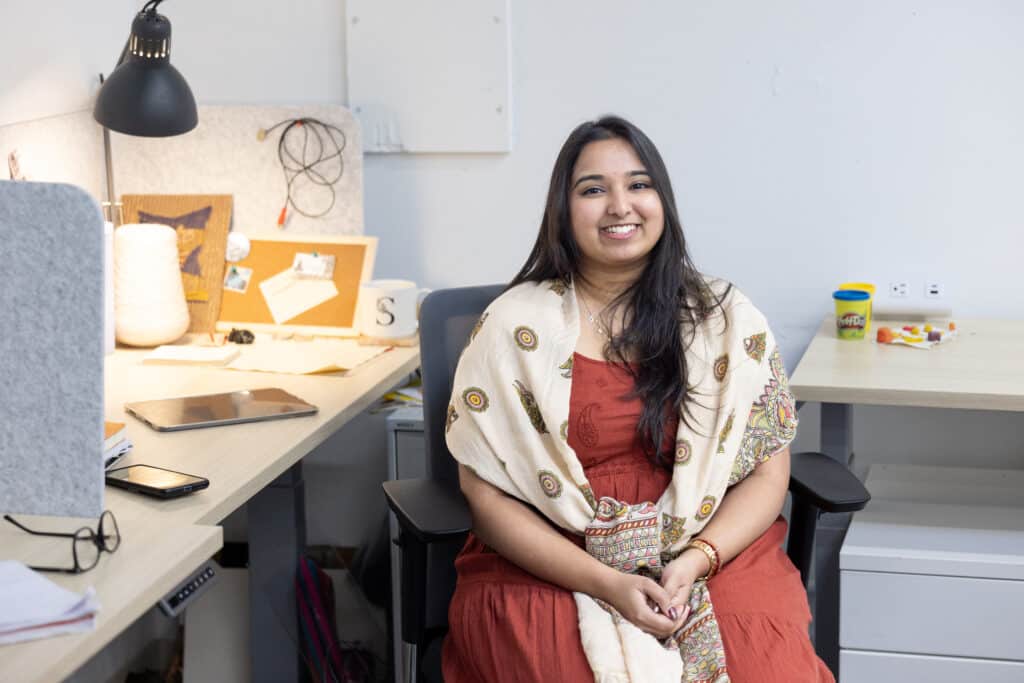
An internship with Seacork Studio opened up a world of design thinking and imagination for Sreya Gopisetty (MDes, 2026).
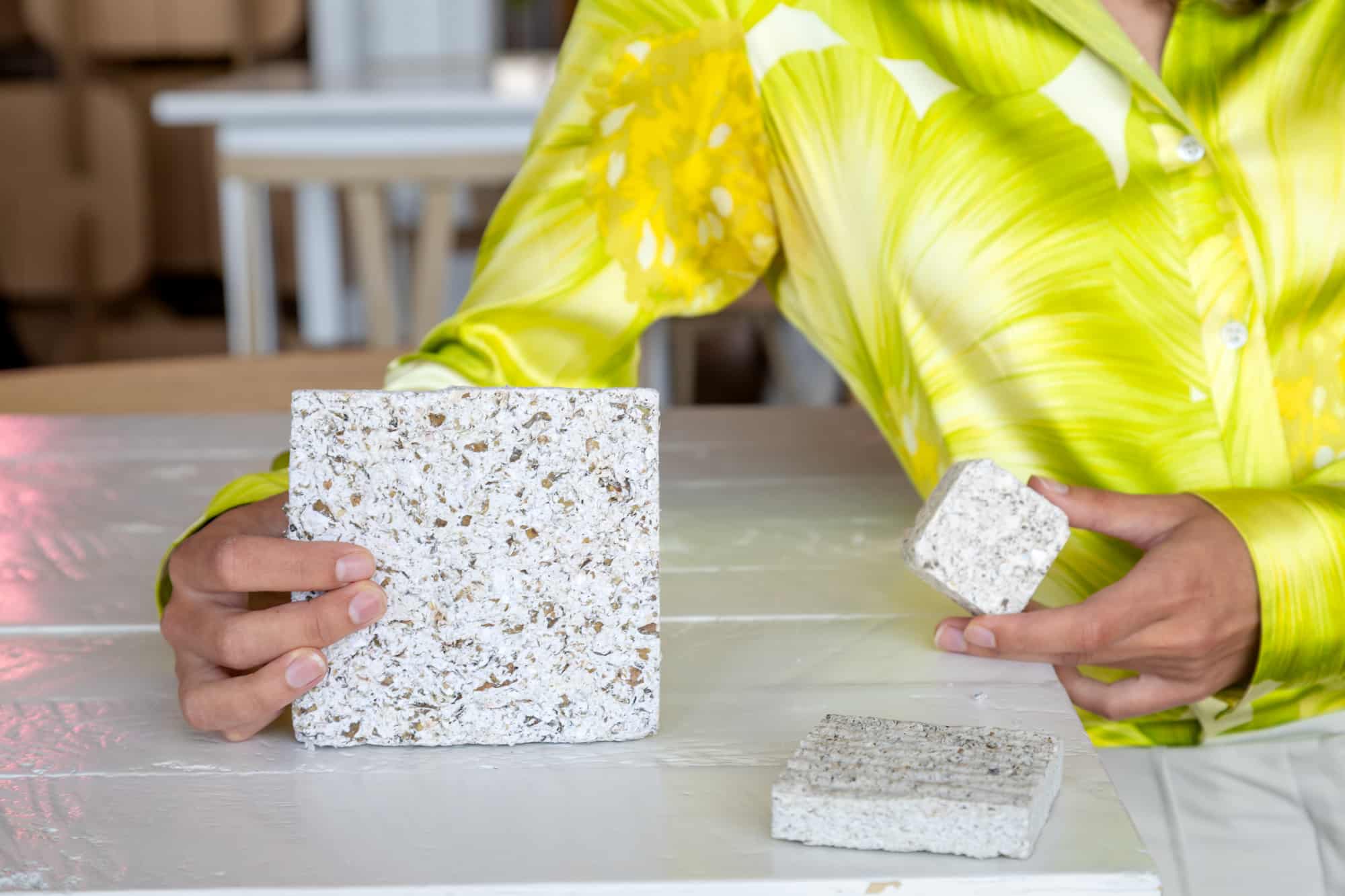
Sreya Gopisetty, a master’s student in Interdisciplinary Design at Emily Carr University of Art + Design (ECU), frequently explores objects and emerging technologies through her design practice. During an internship with Seacork Studio, she designed a sample box that showcased the company’s acoustic panels made from kelp and seaweed, offering a unique, hands-on experience.
“I approach this project less as packaging and more as a user experience touchpoint,” said Sreya. “The sample box is often the first physical interaction that architects and designers have with the material, so I’ve been thinking about sequencing, tactility, information hierarchy, and narrative flow. How does someone encounter the material? What do they understand first? What do they feel?”
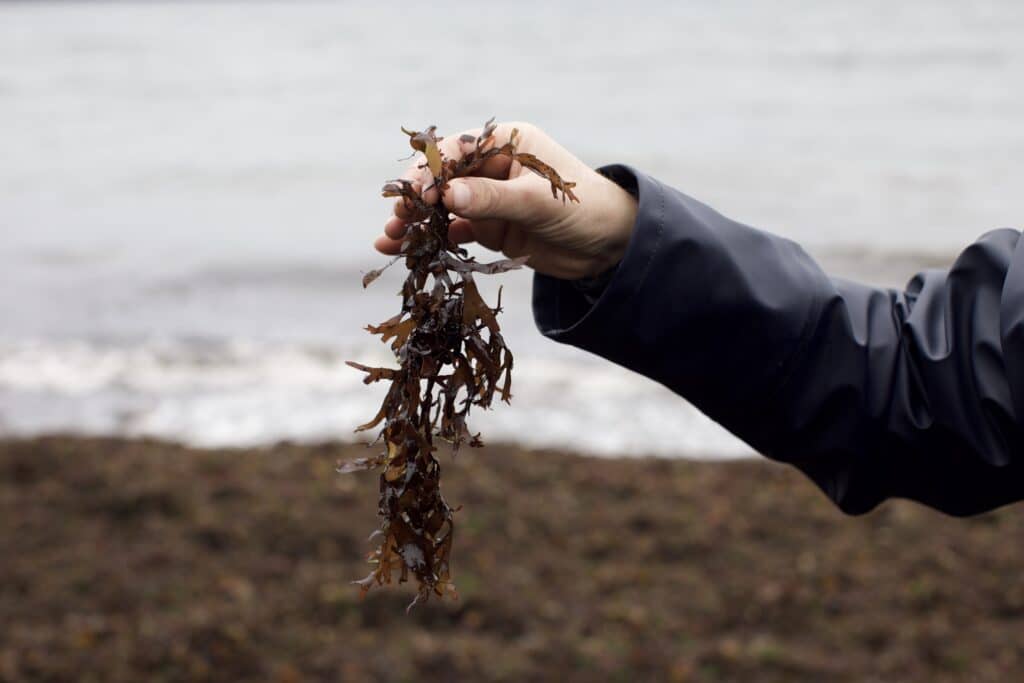
Seacork Studio is a bio-based material design studio, and they often harvest kelp and seaweed from the Vancouver Island coastlines, which get formulated into acoustic sound-dampening panels that are compostable and meet sustainability needs. For Seacork Studio CEO Annie Dahan, Sreya brought that sense of innovation and tactility to her approach with the sample boxes.
“She’s been able to work in multiple channels, moving from drawing and sketching to computer CAD models and Adobe Illustrator, and then back into making physical models as well,” said Annie. “Inside the box, we also include our sales catalogue, which shares the story of the seaweed and how it ended up in their hands. Another great idea Sreya had was to include a little vial of the seaweed we use, so people can actually see and hold the raw material themselves.”
Through the generous support of Mitacs and its Business Strategy Internship program, ECU can offer students like Sreya meaningful industry experiences that prepare them for professional practice and expand the impact of their research and design knowledge.
ECU Industry Liaison Alan Goldman notes that the Mitacs internships are a valuable experience because they allow design students to feel part of the work from the genesis of a project to its delivery to market.
“These partnerships mean the students get real collaborative experience. They’re working directly with the CEO or the head of research and development,” said Alan. “You’re getting in on the ground floor of what this project will look like, because you’re part of it. You’ll be discussing what you think it will take to do the work and helping shape how it develops.”
Aligning with ECU’s sustainability goals was essential to the Seacork Studio internship. Still, Sreya also enjoyed the fun and important moments working with tricky materials like kelp and seaweed, along with natural dyes.
“One thing that was demystified for me is how the unpredictable nature of kelp and seaweed can actually be part of the design’s beauty,” said Sreya. “Initially, I expected variability in the panels to feel like a limitation, but I realized that each variation gives the material character and communicates its natural origin. Working with natural dyes reinforced that lesson. The colours respond differently depending on moisture, fibre density, and drying conditions, which means each panel develops a unique tone.
Sreya is also a recipient of the Future Creative Catalysts Graduate Research Fellowship. Both these experiences have shaped her work as an interdisciplinary designer and creative thinker.
“They’ve influenced my Master’s work in complementary ways. The fellowship provided dedicated funding and recognition for my thesis research, giving me momentum and confidence to deepen my conceptual and material investigations. The collaboration with Seacork Studios accelerated my professional development, requiring me to apply design thinking under real constraints and communicate ideas across disciplines.”
You can check out Seacork Studios’ work at their website and Sreya’s work here.
More about the Master of Design program at ECU.
We seek designers who aspire to create experiences and transformations locally and globally. Root yourself in our campus community while building connections with industry. Our two-year Master of Design degree program is built on critical, practice-based creative research. Faculty, staff and peers will be with you every step of the way, mentoring, challenging and supporting you.
Visit our website to learn more.