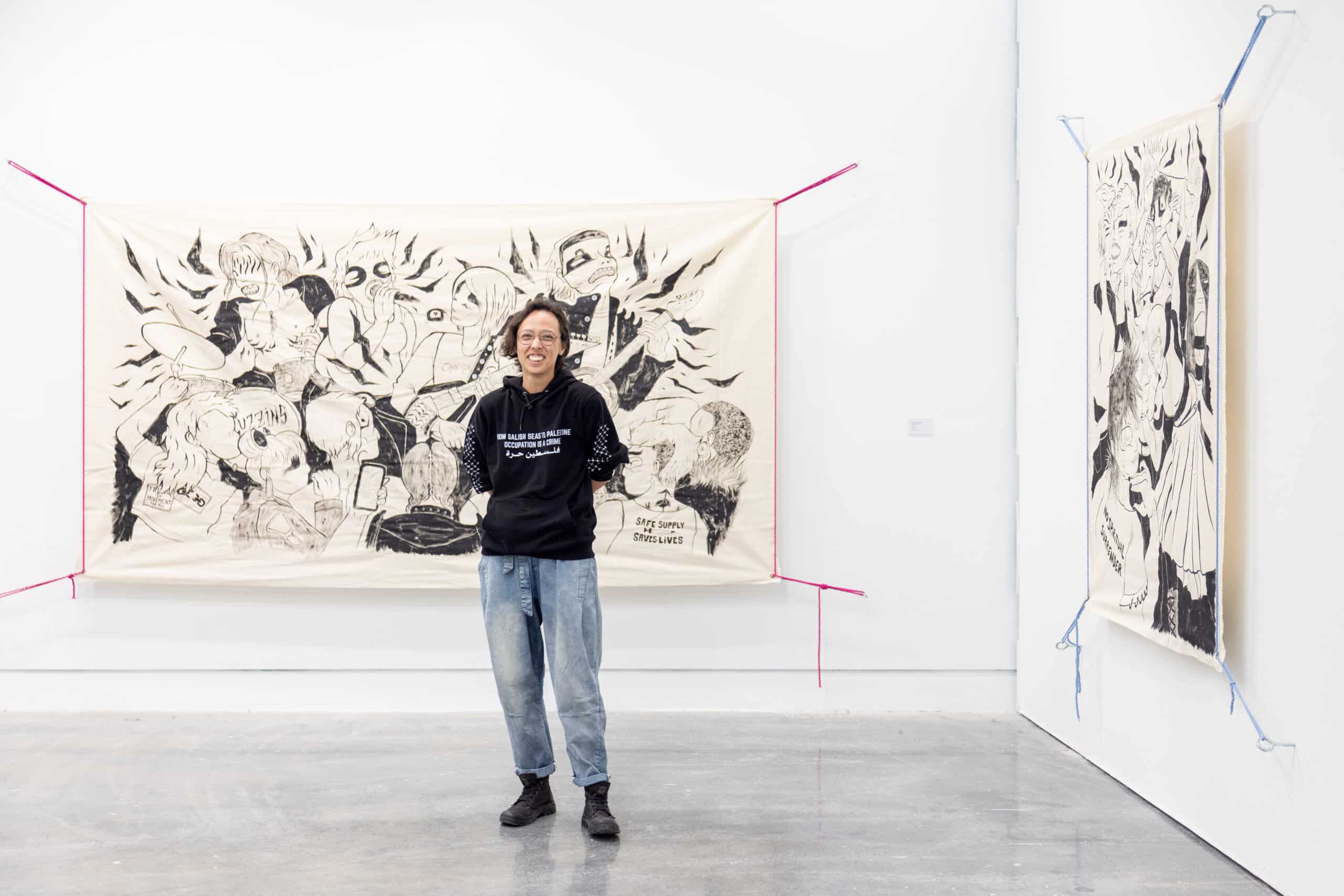
The artist, curator and ECU alum works across disciplines and communities to activate a world characterized by care, connection and dynamic engagement with history.
In February, interdisciplinary artist and curator Whess Harman (BFA 2014) led a workshop at the Aboriginal Gathering Place (AGP) at Emily Carr University of Art + Design (ECU). The event invited students, staff and faculty to learn about zines — a decidedly ephemeral, non-commercial form with its roots in DIY culture. Zines have historically been a space for outsider and marginalized voices, and a pathway for circulation that bypasses mainstream channels.
Whess, a member of the Carrier Wit’at Nation living away from his territories, is a longtime figure in both local punk scenes and leftist political circles, both of which are associated with zine culture. And while zines have been a through line in his practice for many years, Whess’s engagement with the form is part of an ecosystem of concerns, aims and aspirations that go far beyond political or artistic affiliations.
“The way I think about my practice is that it’s entirely in service of some version of our culture surviving so that someone in the future might be able to find it,” he says.
“Part of why I got so into zine making is the idea of proliferation — if you can get enough out there, something might survive and be special to someone.”
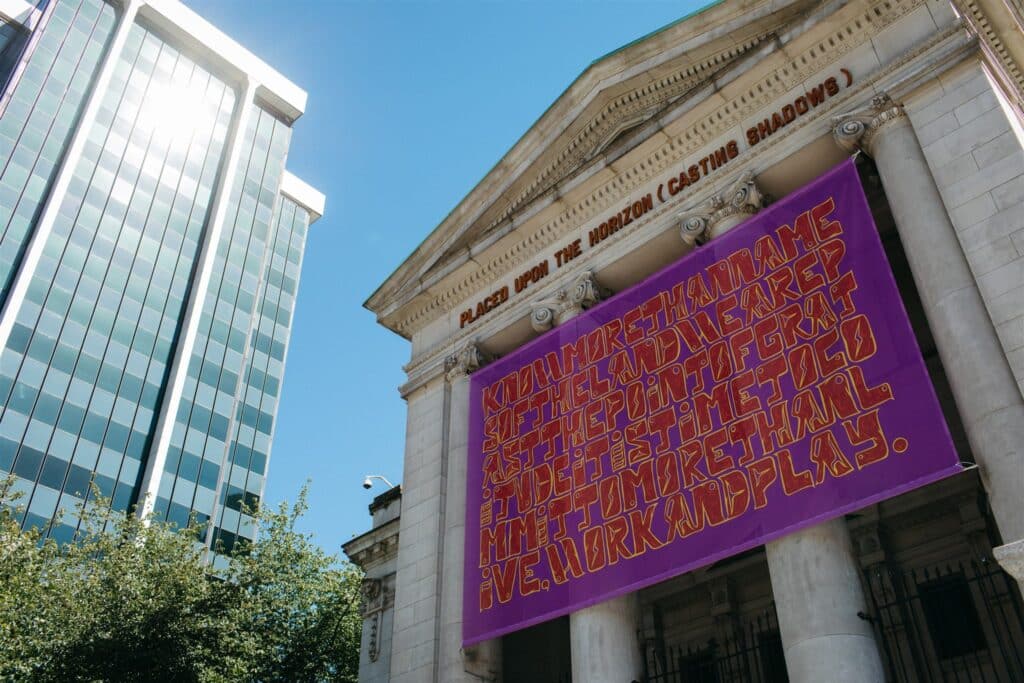
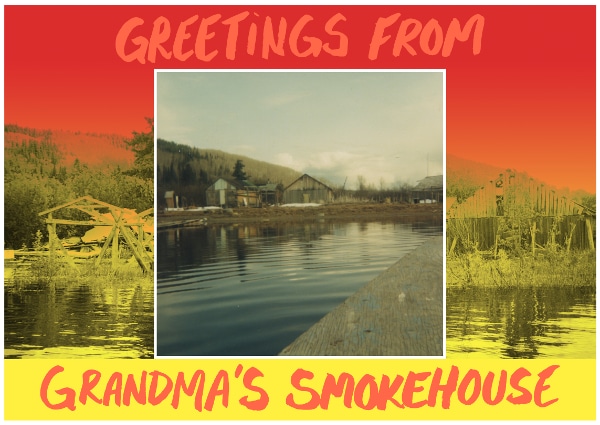
For Whess, the present is an inflection point between past and future — an infinite moment of boundless potential to serve continuity between what came before and what could be. This boundlessness is reflected in Whess’s “magpie” approach to form and material, which he says echoes his Nation’s distinctive openness to blending contemporary materials with traditional forms.
“I really love what that blend means on the ground and in community, and I think a lot of my work is about taking that mentality and transposing it to living in a city and using it as a way to survive,” he says.
For instance, text in Whess’s work is by no means restricted to zines and comics. It also appears on flyers, posters, banners and altered photographs; in drawings and murals; and embroidered or beaded into clothing and patches. And while features of Carrier Wit’at formline inform this work — as it does Whess’s drawings, paintings and illustrations — he notes that his relationship to traditional practices is complicated.
“Although I live within the borders of Canada, I don’t live within the borders of my territory,” he says. “And if I were to go home, no one would know me necessarily. So, in effect, I live in diaspora, which leaves me feeling inauthentic sometimes. And trying to reconcile that may not be achievable, but I do feel it’s important to try.”
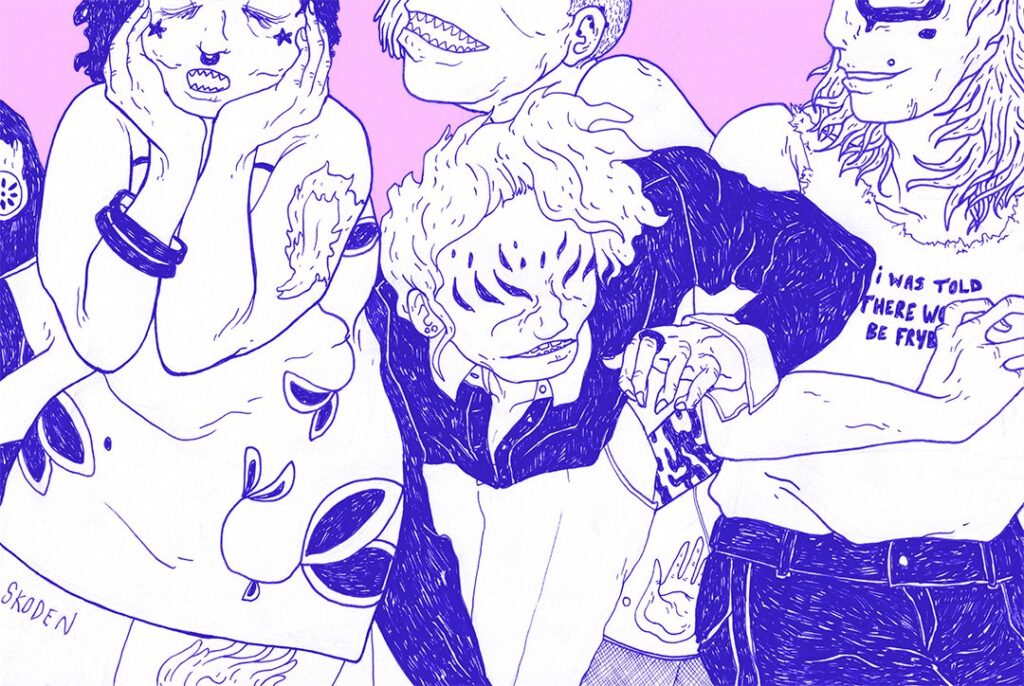
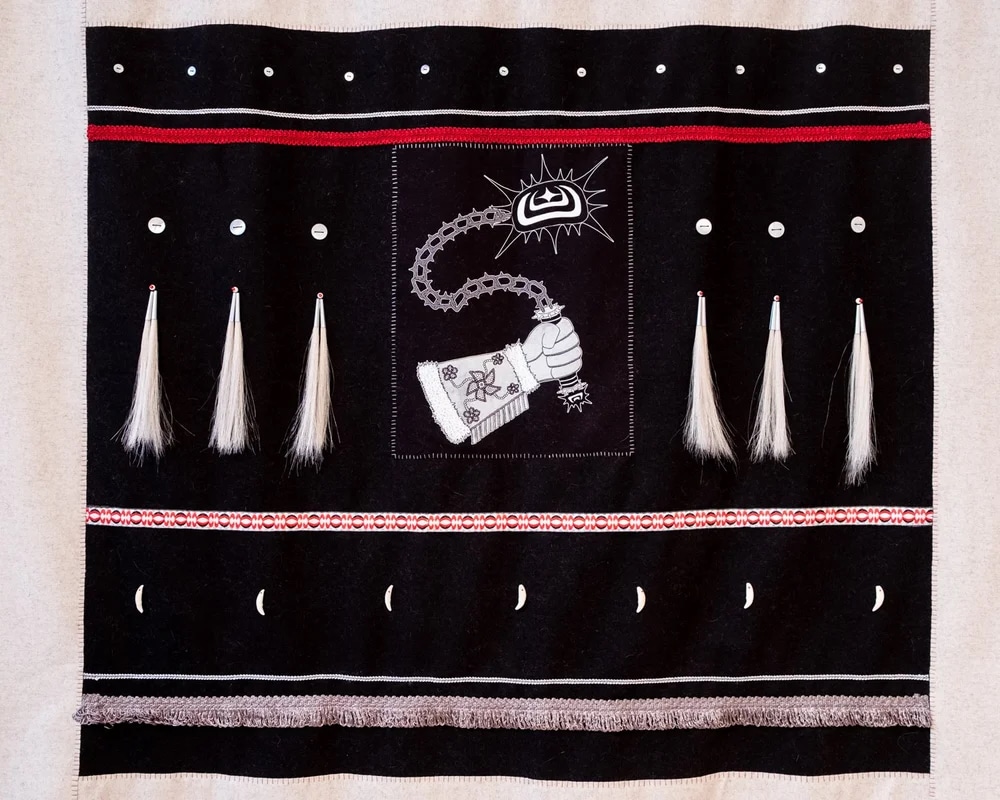
More than simply trying, Whess’s work often comprises an active visualization of a world in which this personal reconciliation has been resolved. For instance, in addition to zines, the Potlatch Punk series includes clothing, textiles, illustrations, installation and large works on unstretched canvas, some of which appeared in Somewhere We Have Travelled, the Indigenous alumni exhibition hosted by the AGP in conjunction with ECU’s centennial celebrations.
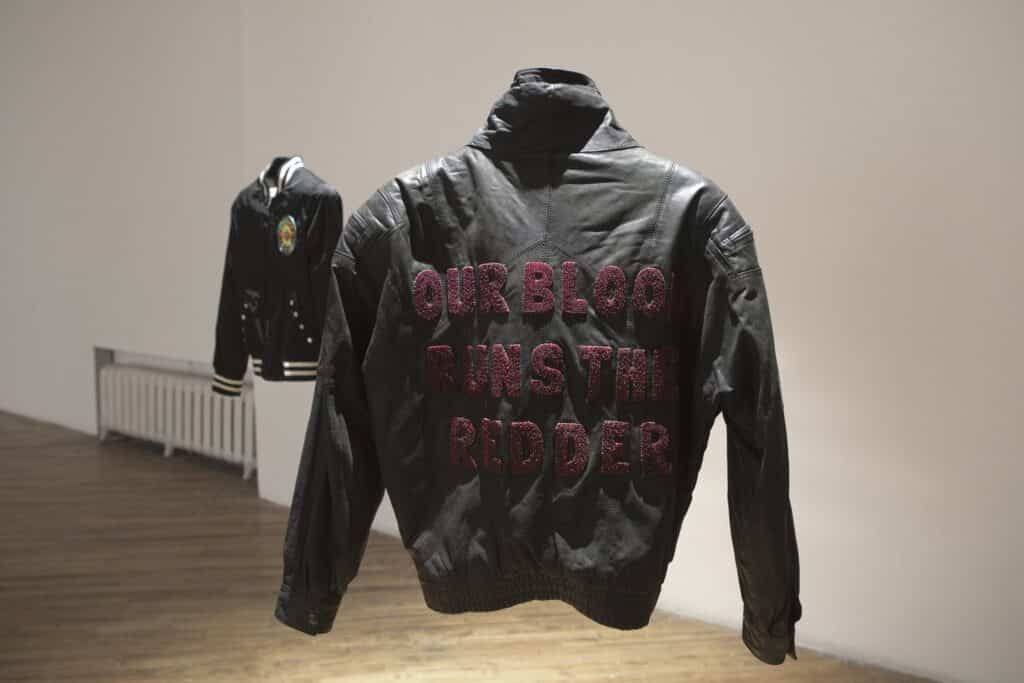
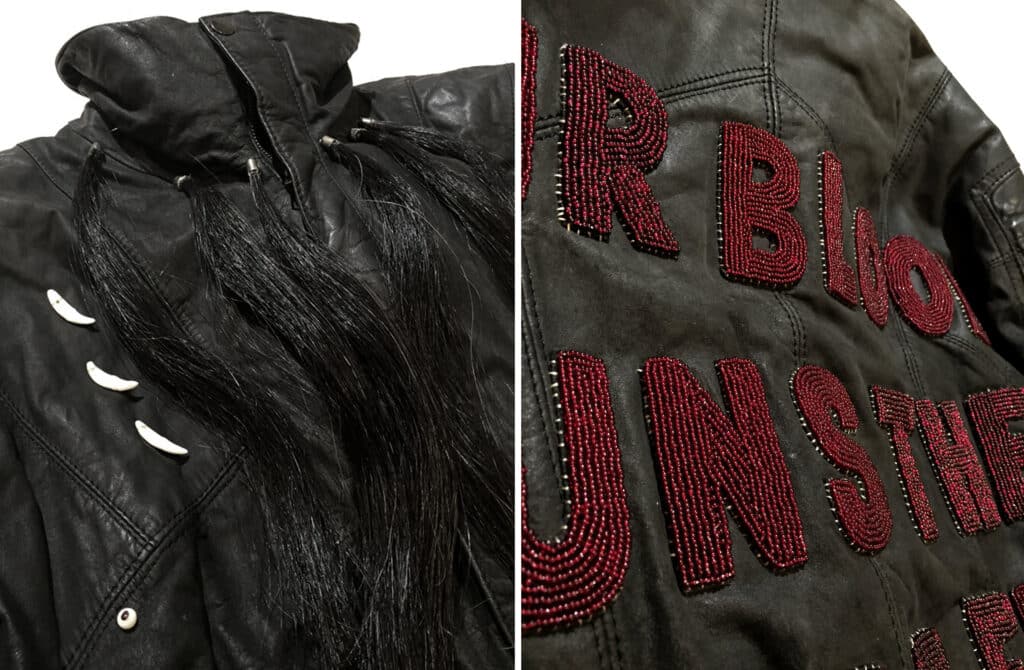
From Whess Harman’s ‘Potlatch Punk’ series, installed in 2018 at aceart inc as part of the group exhibition ‘Oneself and One Another,’ curated by Jennifer Smith. (Images courtesy Whess Harman)
These canvas works blend traditional forms with Whess’s singular visual language to depict the “imaginary/fantasy/aspirational space of an all-Indigenous punk show” — crowd scenes where a community of found and blood family gather in shared revelry and mutual celebration.
The works also refer materially to colonial history, Whess notes. While the Potlatch Ban was in effect between 1884 and 1951, potlatching communities had to adapt the ceremony for temporary spaces to avoid persecution.
“When we weren’t able to have Big Houses for potlatches, potlatch screens that could be quickly installed and taken down became very important,” Whess says, adding his “provisional way of installing these works” refers directly to this practice.
“The ultimate vision is to suspend these works like potlatch screens and invite bands and have a feast.”
Whess will explore this ambition further during a 2026 summer residency at the Libby Leshgold Gallery at ECU alongside Lawrence Paul Yuxweluptun Lets’lo:tseltun (Alum 1983). This “research phase” will support Whess’s upcoming appearance at Queensland Art Gallery | Gallery of Modern Art in Australia.
Having recently finished seven years with grunt gallery, including five as its curator, Whess is also currently guest curating a solo exhibition by artist Rawan Hassan, on view at grunt through Mar. 21. Additionally, he is currently working on a graphic novel set 500 years in the future, which explores cultural displacement. And as part of his role as a board member with the National Indigenous Media Arts Committee, Whess is mentoring a pair of Indigenous media artists.
Which, in addition to the many political causes Whess actively supports, might feel like a lot for one person to shoulder. But he notes the past year has taught him a great deal about patience and trust.
“Part of my daily practice of participation is remembering I don’t always have to be at the front of everything,” he says.
“Things will coalesce when they need to, and it’s important to do the background work of sustaining ourselves. There’s always the big fantasy that one day we’ll live within a system that genuinely supports us caring for each other. And there are times I feel like I won’t see that in my lifetime. But then lately, there are moments where I’m like, ‘No, it’s achievable. It’s possible and it is happening.’”
100 Years of Creativity: The Stories that Shaped Us
As part of Emily Carr University’s centennial celebrations and our ‘100 Years of Creativity’ campaign, we are sharing stories that spotlight the creativity, resilience and impact of our community over the past 100 years. These stories feature the people, projects, places and ideas that have shaped ECU, reminding us of our shared legacy while inspiring the future. By revisiting past milestones and sharing new ones, we honour the many voices that built our institution and continue to guide its path forward.
For more information about ECU 100 centennial celebrations, upcoming events and stories, visit our webpage.
More About Visual Arts at ECU
For independent and fiercely creative students, ECU’s Visual Arts program offers exceptional freedom and choice. As you build your creative skills, you’ll develop a deep understanding of how various art forms and histories connect, intersect and inform today’s practices.
Your faculty members, practicing artists who define the Canadian creative landscape, will guide you as you refine your techniques and follow your curiosity. After graduating, you’ll have a mature and exceptional body of work to launch your career.
Visit our website to learn more.
Want more stories like this one delivered twice a month to your inbox?
Subscribe to our FREE Emix newsletter today!