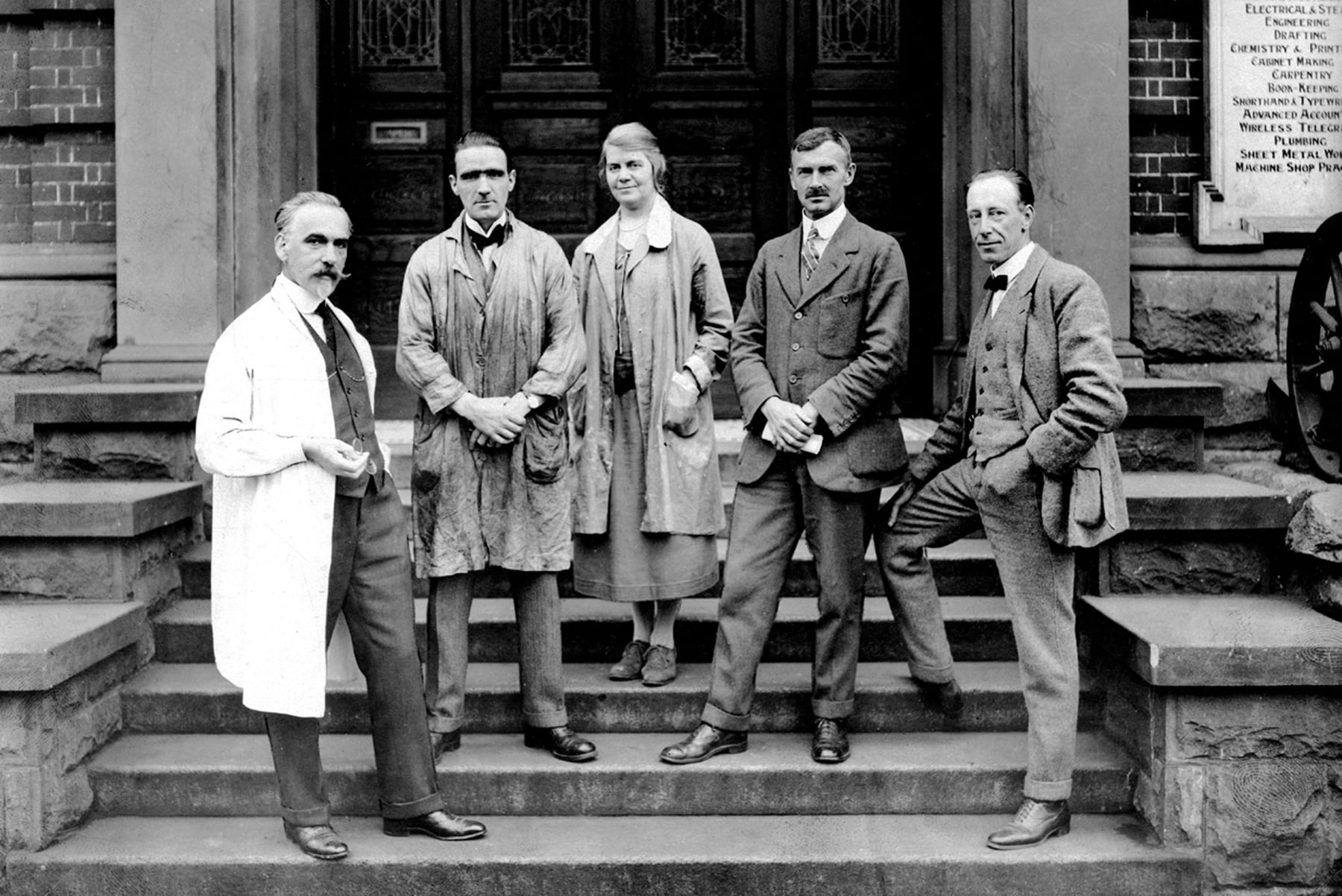
For ECU 100, we’re looking back at the seminal artists in the B.C. Art League, whose efforts helped lead the foundation of ECU in 1925 and the Vancouver Art Gallery in 1931.
In 1920, a coterie of artists, designers and society figures in the art community came together to create the B.C. Art League. Their goals reached beyond promoting art appreciation within the city, aiming to establish a permanent, professional art school in the province.
Their advocacy under the leadership of artist and league member Charles H. Scott directly influenced the creation and early identity of what would eventually become Emily Carr University of Art + Design (ECU).
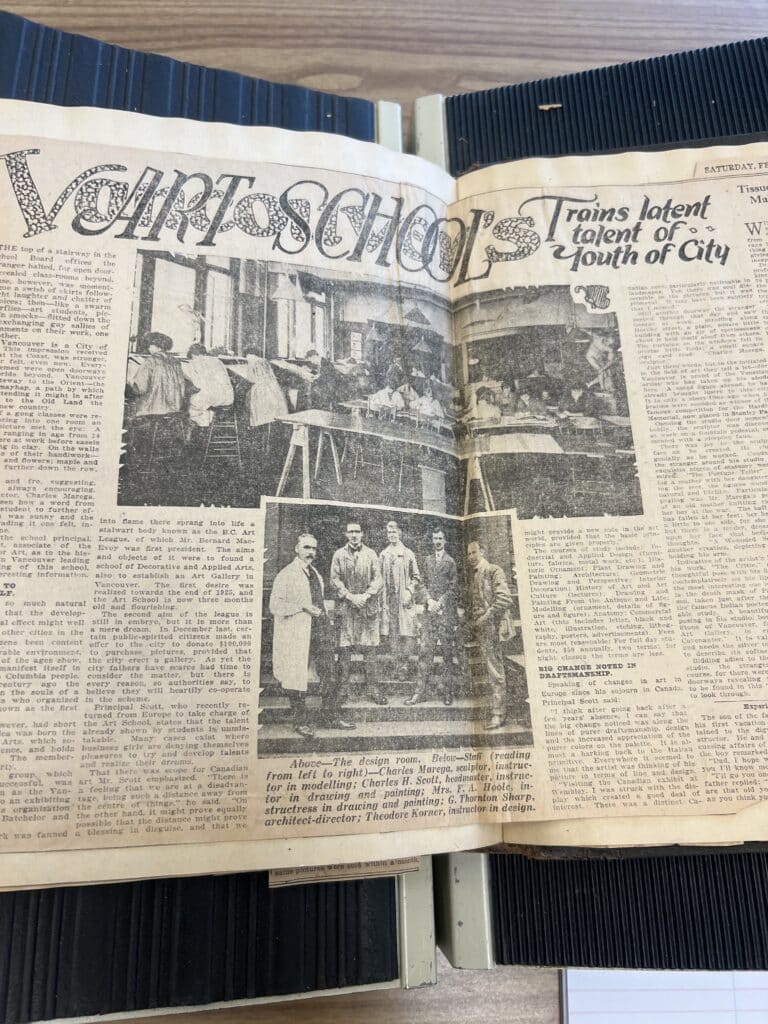
A trove of press clippings, meeting minutes and copious handwritten notes from the ECU and the City of Vancouver Archives reveals a long and winding path toward creating a school that would treat art and design as a serious vocation and foster public interest in creative practices.
The League’s Advocacy
Founding members, including painter Charles H. Scott, sculptor Charles Marega and artist John Innes, created the league with a commitment to advocate for an art and design school, push for a dedicated art gallery, and improve civic engagement with the arts.
The league proposed many different avenues and collaborations to bring the school to fruition. A 1921 article from the Victoria Daily Times, found in the City of Vancouver Archives, details the league’s proposal to sweeten the deal by collaborating with Vancouver Technical School.
“It is proposed that the school be divided into architectural, modelling, drawing, painting and design studios and craft shops, and it is urged that the institution co-operate with the Vancouver Technical School in its craft work. It is urged that the Government make the technical school workshops available for the working out of designs and that Technical School students use the studios for their artistic training.”
The league’s advocacy was rooted in the belief that art should be accessible, practical, and integrated into everyday life — values that would later become central to the school they helped create.
Despite persistent pressure in the press and administrative mishaps that scuttled the league’s initial bid for a school in 1923, they continued to fight for the school to exist.
In 1925, their dream became a reality as years of lobbying, fundraising and public engagement directly led to the founding of the Vancouver School of Decorative and Applied Arts (VSDA) — the ECU we know today.
Charles H Scott: Forging the VSA’s Path
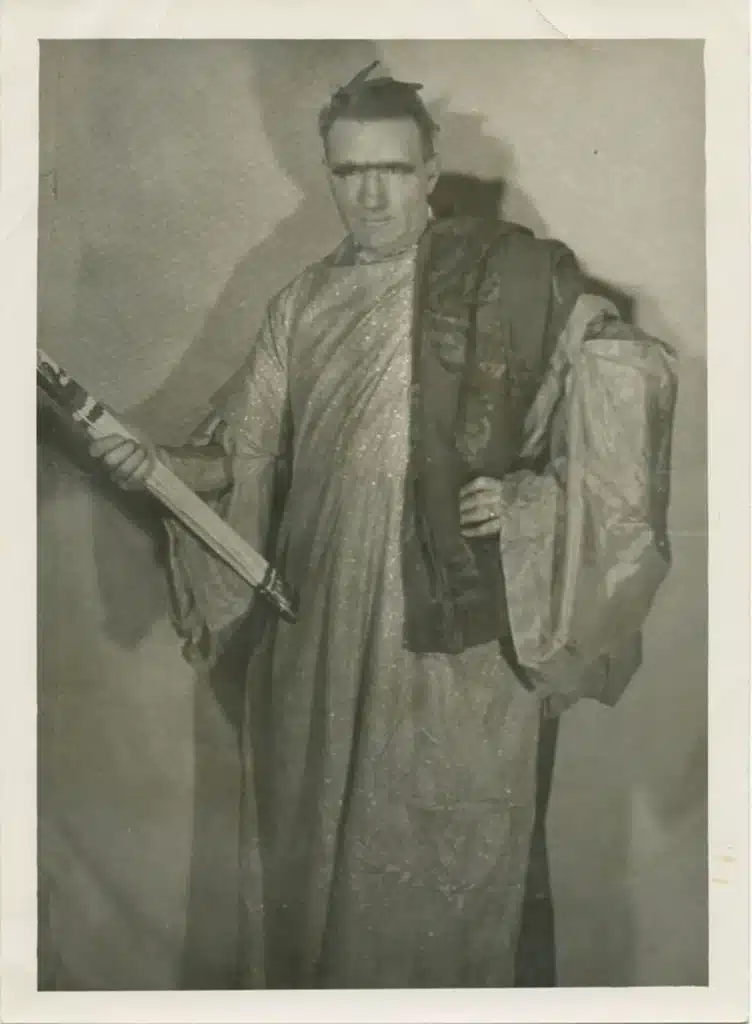
As a founding member of the B.C. Art League, painter Charles H. Scott was a fitting leader to serve as the VSDA’s first principal. Charles was already an accomplished painter and draftsman and ensured that the league’s ideals were embedded in the school’s programming.
Charles ensured the first batch of students were taught by artists at the top of their craft. He recruited Frederick Varley, of the Group of Seven, artist J.W.G. MacDonald and pioneering artist and calligrapher Grace Melvin to help teach and develop programs focused on drawing, painting, design and craft.
After the Vancouver Art Gallery (VAG) was founded in 1931, Charles was chosen by key gallery benefactor H.A. Stone to select the first paintings and sketches for the VAG’s permanent collection.
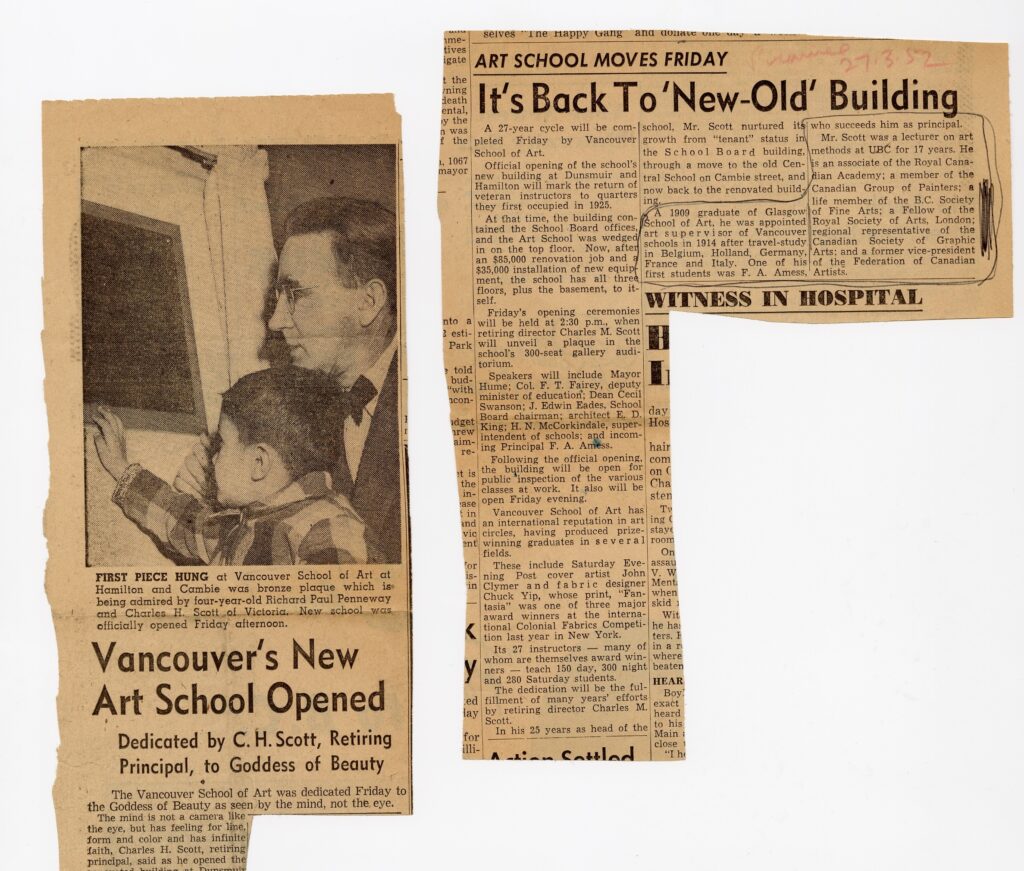
1931 also marked the official dissolution of the B.C. Arts League, though Charles remained principal of the VSDA through 1952. During his final year, he oversaw the VSDA’s move into the new Vancouver School Board office building at Dunsmuir St and Hamilton St. The school initially occupied a single floor, eventually expanding into three floors and the basement.
During a speech at the opening of the new building, he recalled the school’s historic roots with the league at the opening of the new building.
“Nor must I forget the years of work done by the now-defunct B.C. Art League, which was primarily responsible for the beginning of this School. We might pause for a moment, (in this jet-propelled age) to salute our predecessors. They did pioneer work in the Arts for this city and the province. A school is not a product of any one person or of any one mind. It is an amalgam of many minds, past and present.”
A Legacy That Lives On
Tracing ECU’s history to the B.C. Art League highlights how sustained advocacy and the passion of Charles H. Scott resulted in our university, which has been since the beginning, dedicated to making arts education accessible to all.
While the names of some of the league’s members may no longer be familiar, their fierce advocacy for arts engagement forever transformed the cultural life of the province and established creative practitioners as vital contributors to the well-being and transformation of society.
Charles may have said it best in 1952: “We draw, we paint, we sculpt, we build, we make pots, we decorate, so that our fellow-workmen may see our handiwork, appraise us and give us sustenance to live. Thus, making us kin to all other workers.”