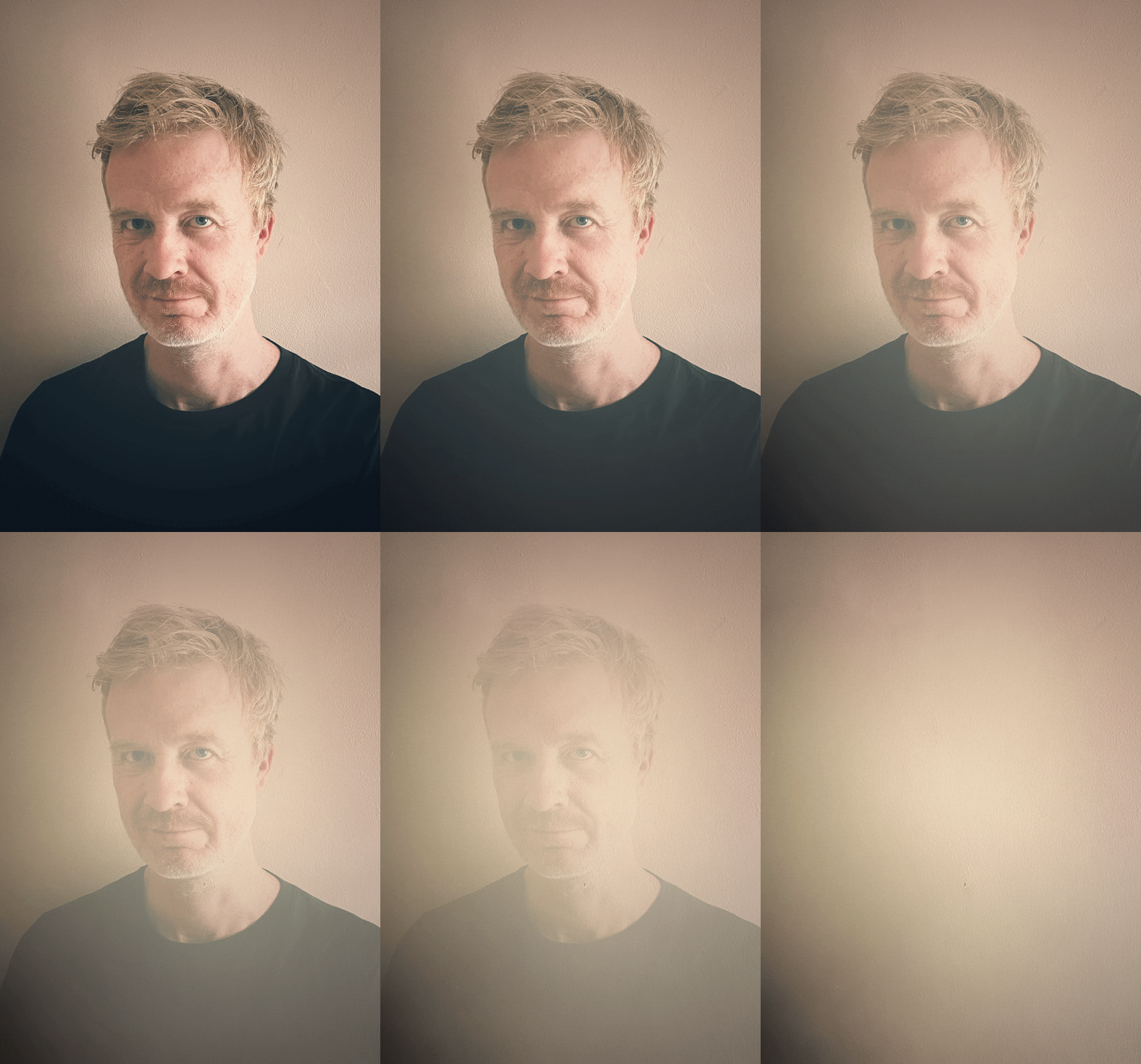
The ECU alum says an editor’s work is essentially that of a storyteller and should disappear seamlessly to serve the magic of the cinematic experience.
Gareth C. Scales (Alum 1999) hopes you’ll never see his work, no matter how hard you look.
The film editor and Emily Carr University of Art + Design (ECU) alum says that, unlike a screenwriter, director or cinematographer, whose individual contributions to a film are often highly conspicuous, the work of an editor is only successful if you don’t notice it at all.
“Editing is an invisible art because the better a film works, the less you notice how it works,” Gareth says from his home in London, UK. “Instead, you come out of a theatre with a visceral emotional experience, which I think is a magical thing, and is about feeling as much as seeing.”
Gareth is known for his work on widely praised films such as The Courier and After Love, as well as 2025’s critically lauded Pillion, which currently boasts 99 per cent “Fresh” on Rotten Tomatoes. The queer, B.D.S.M.-themed romantic comedy stars actor Harry Melling as Colin, a genial submissive-in-training, alongside Alexander Skarsgård as Ray, a beautiful but businesslike dominant.
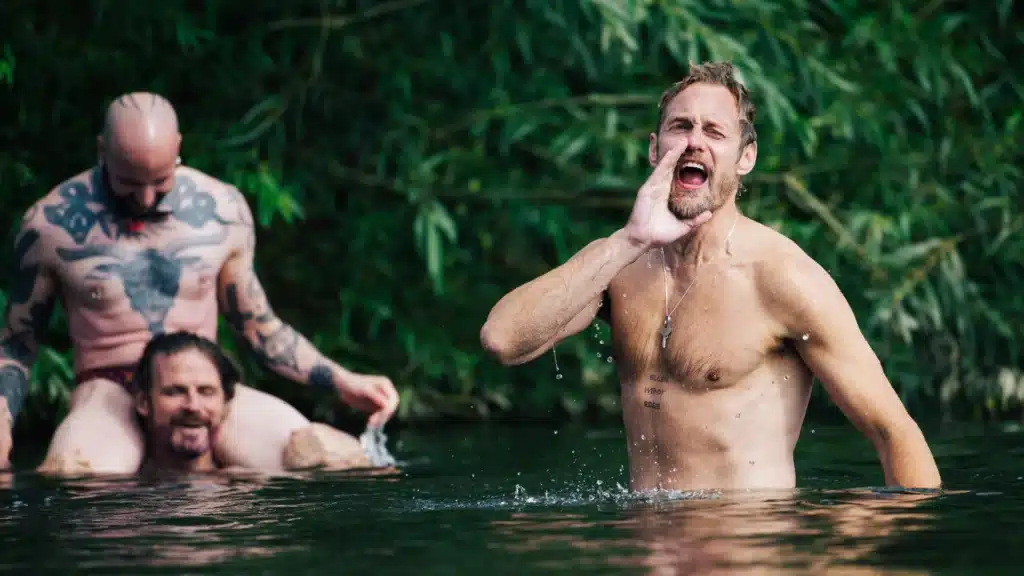

Gareth says Pillion offers a prime example of how an editor can take his colleagues’ raw materials and give them unexpected shape in service of a narrative.
For instance, Pillion’s opening scene depicts Ray speeding down the highway on a motorcycle — a sequence that flickers back into view at the film’s end. But connecting the film’s opening sequence and final moments was not scripted, Gareth says. Rather, it was a decision made in the editing room.
“Ultimately, an editor is a storyteller, and we try to make the best story we can,” he says. “By taking something that was shot for literally scene one and moving it to the end of the film, you, as an audience member, get an opportunity to read it again for the first time with an understanding of the journey Colin is embarking on.”
Gareth first fell in love with editing while a student at ECU. In his third year, the university purchased an Avid Media Composer — an industry-standard editing software — though no one at ECU yet knew how to use it. He sat down with the instruction booklet and quickly trained both students and instructors in its use.
He soon realized he could access his fellow students’ film projects through university computers. He started editing their projects in secret, experimenting with rhythm and pace, and adding counterintuitive music to see how it might transform a scene from its original purpose.
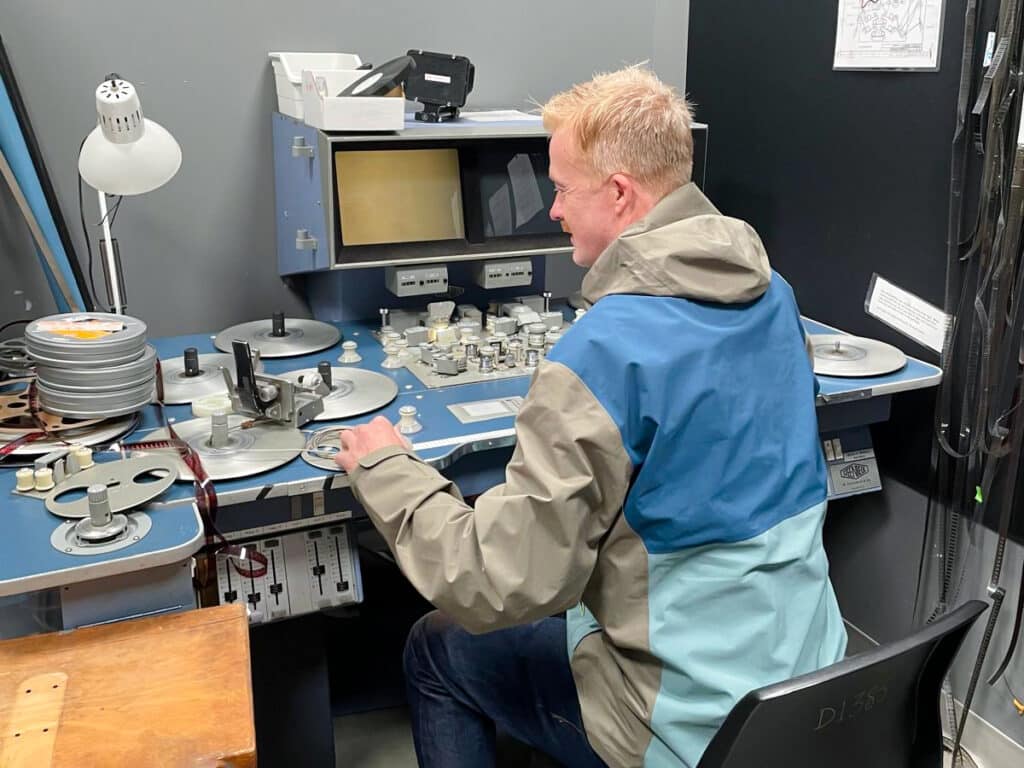
Eventually, fellow students began formally requesting his help. He also stepped in as editor on films made by students from other schools.
“I was just dying to edit stuff. I made my fourth-year film basically just to edit it,” he says. “By the end of my degree, people were saying, ‘I think you might’ve found your calling.’ And very fortunately, [filmmaker and fellow ECU alum] Kevin Eastwood got me a job assistant editing pretty much right after graduation, and that was that.”
While he always knew he wanted to work on narrative films, he says the university community exposed him to all types of filmmaking.
“I felt really lucky,” Gareth says. “The people around me were making wild stuff and doing things I would never in a million years think to do. But it began influencing how I work. And I feel very fortunate to have had that opportunity.”
Filmmakers were not his only important teachers at ECU, he adds. He recalls learning to sketch from drawing instructor Dennis Burton, who urged him to focus first on using quick lines to establish basic dynamics such as movement or body position.
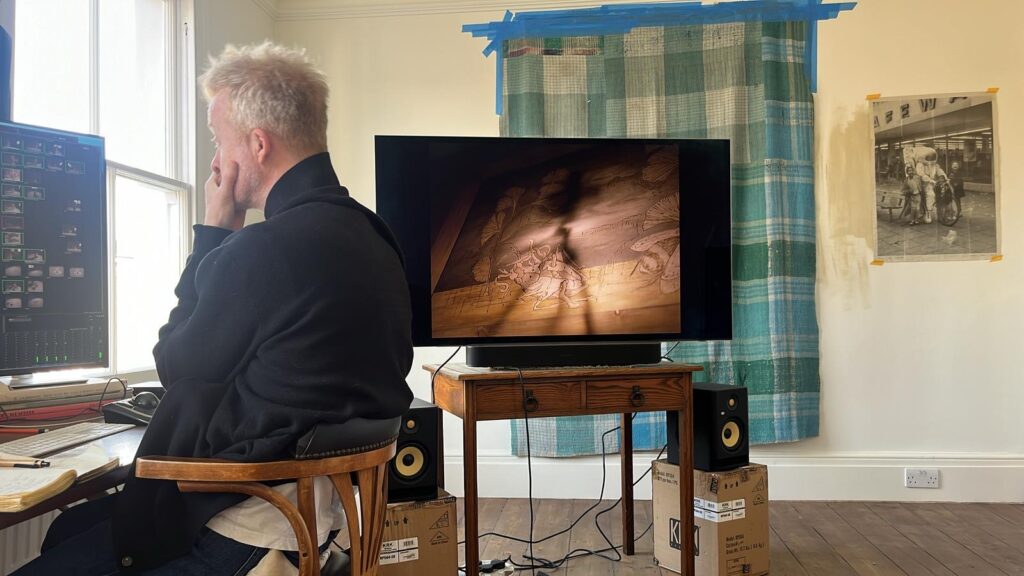
“To this day, that’s how I edit a film,” he says. “You can’t get granular right away and spend ages trying to perfect a single scene. I need to get a film to where I can see the whole and then start chipping away at it. And all of that was born out of going to Emily Carr.”
These lessons have stood Gareth in good stead, with Pillion nominated for a trio of BAFTA awards, including Outstanding British Film of the Year and taking home five British Independent Film Awards (including Best British Independent Film) alongside a Best Editing nomination for Gareth.
He says the warm reception from audiences and industry peers has been the most rewarding part of the experience.
“I’m very proud of the work I did in Pillion,” he says. “The script was amazing, and even if you can’t see the work I did, you can feel the emotion in the film, which was always the goal. We all pour our hearts and souls into everything we create, so for people to see it and enjoy it is truly a wonderful thing.”
100 Years of Creativity: The Stories that Shaped Us
As part of Emily Carr University’s centennial celebrations and our ‘100 Years of Creativity’ campaign, we are sharing stories that spotlight the creativity, resilience and impact of our community over the past 100 years. These stories feature the people, projects, places and ideas that have shaped ECU, reminding us of our shared legacy while inspiring the future. By revisiting past milestones and sharing new ones, we honour the many voices that built our institution and continue to guide its path forward.
For more information about ECU 100 centennial celebrations, upcoming events and stories, visit our webpage.
More About Film + Screen Arts at ECU
In ECU’s Film + Screen Arts major, aspiring filmmakers and media artists learn the fundamentals of film and media-making, from analogue and mechanical media to today’s digital tools and techniques, including virtual and augmented reality. Whether you dream of becoming a cinematographer, director, editor, set designer or sound designer, the Film + Screen Arts major will prepare you for your future as a visual storyteller.
Visit our website to learn more.
Want more stories like this one delivered twice a month to your inbox?
Subscribe to our FREE Emix newsletter today!