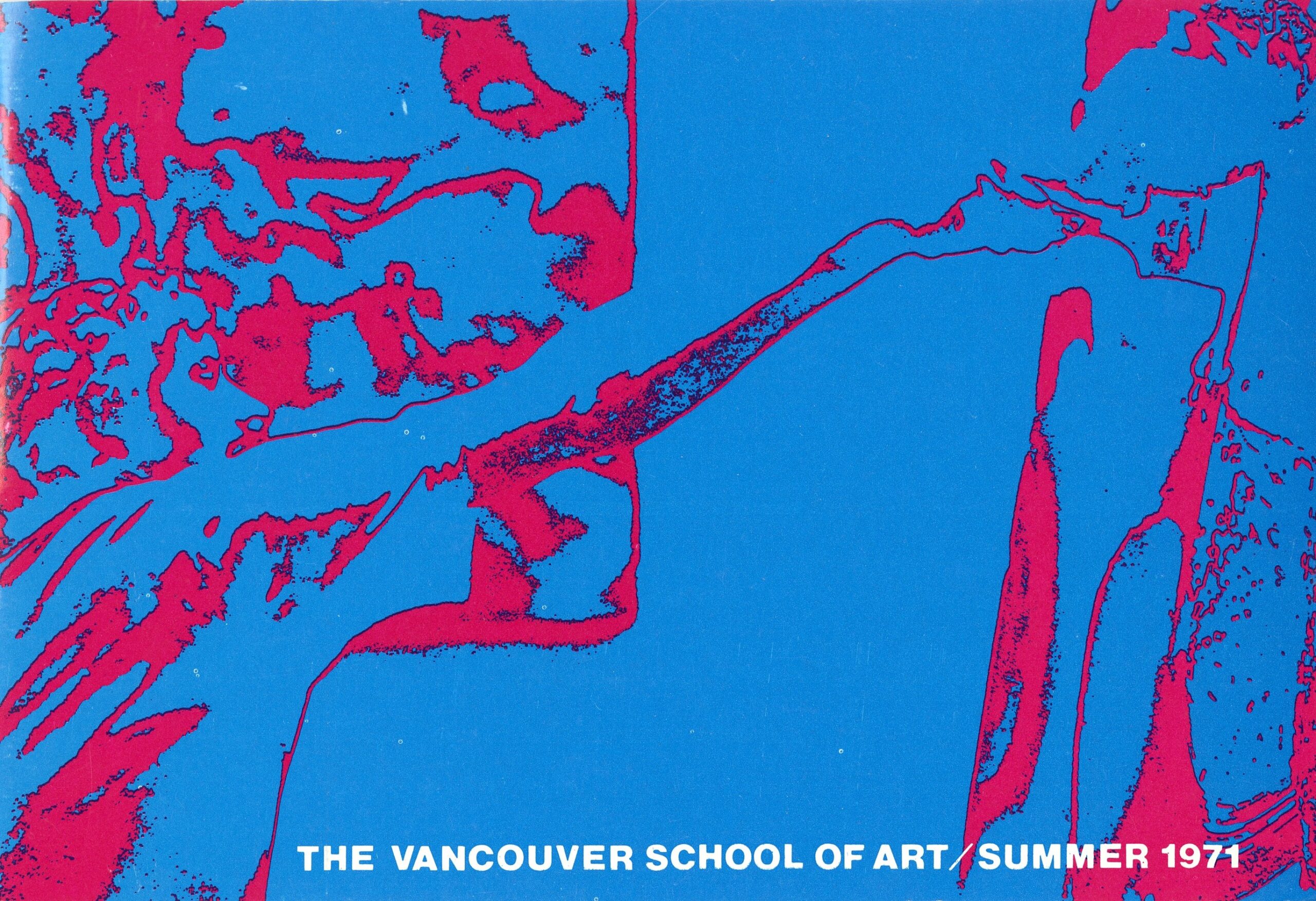
Over the years, Emily Carr University of Art + Design (ECU) has opted for fun and innovative classes during the summer semesters. We’re looking back at the history of the summer program and some of the unique learning opportunities we offered in bygone decades.
Before ECU offered our Summer Institute for Teens, Junior Art Institute and micro-credentials, there was the Summer Program, where artists of all talents could participate in our offerings.
The Early Years (1930s -1967)
Before there was a formal summer school program, instructors at the Vancouver School of Art (VSA) would organize a free annual sketching trip to Savary Island, where instructors like Fred Amess would guide students in embracing the beauty of the surrounding landscapes. These informal trips were not a credited course, but rather an extracurricular feature that students could participate in.
The first edition of ECU’s summer program began in July 1963, when students could study figure drawing, drawing from nature, etching, non-figurative painting, and ceramics. Led by painter and war artist Orville Fisher, ceramicist Robert Weghsteen and other professors, these courses were meant to introduce students to general fundamentals of art and design at a relaxed pace in the summer. Costing only $50 at the time, the program allowed students to spend four weeks at the school honing their art practices and developing their skills for the Fall term.
The Experimental Years (1968-1975)
As fashion and music transformed throughout the city, the institution also evolved, with program instructors exploring new artistic directions and recruiting instructors to modernize the summer school courses. Demand for the courses was growing, and the program was eventually divided into two sessions, with one in June-July and one in July-August.
From unique courses like Introduction to Dance, where students learned to integrate movement and dance into their projects, Thermoplastics for Artists & Designers, which introduced students to polymer and new methods of design, to Jewelry Design, where instructors utilized the metal labs to make rings and earrings, the summer program was a boon for students looking to explore their creativity.
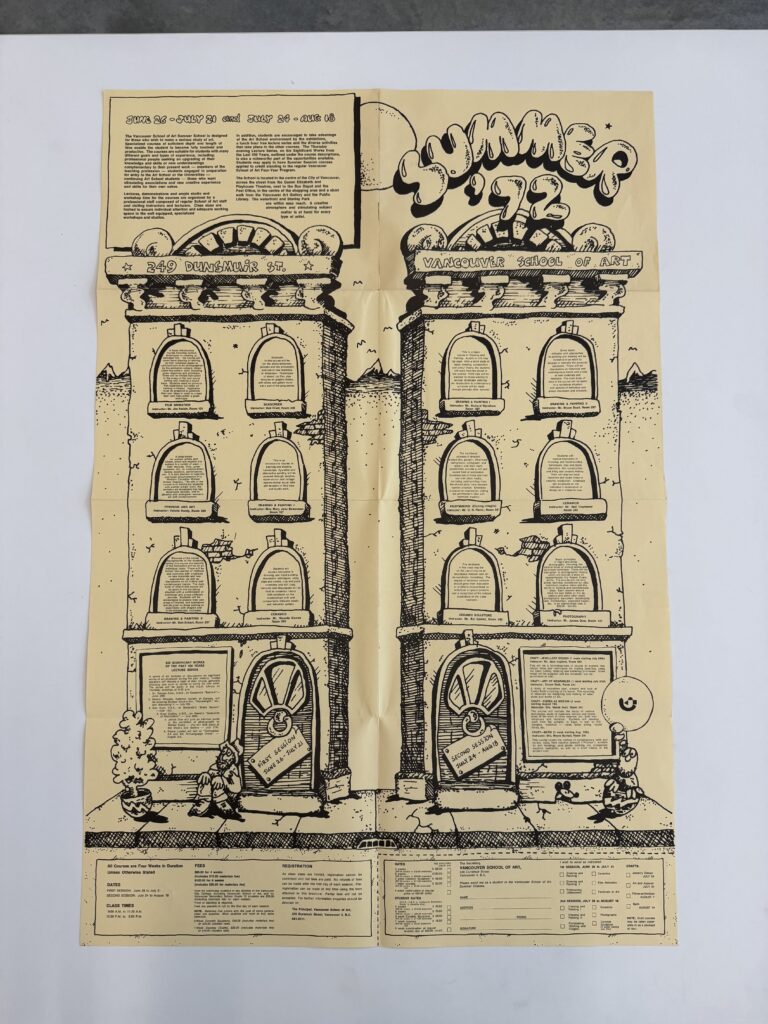
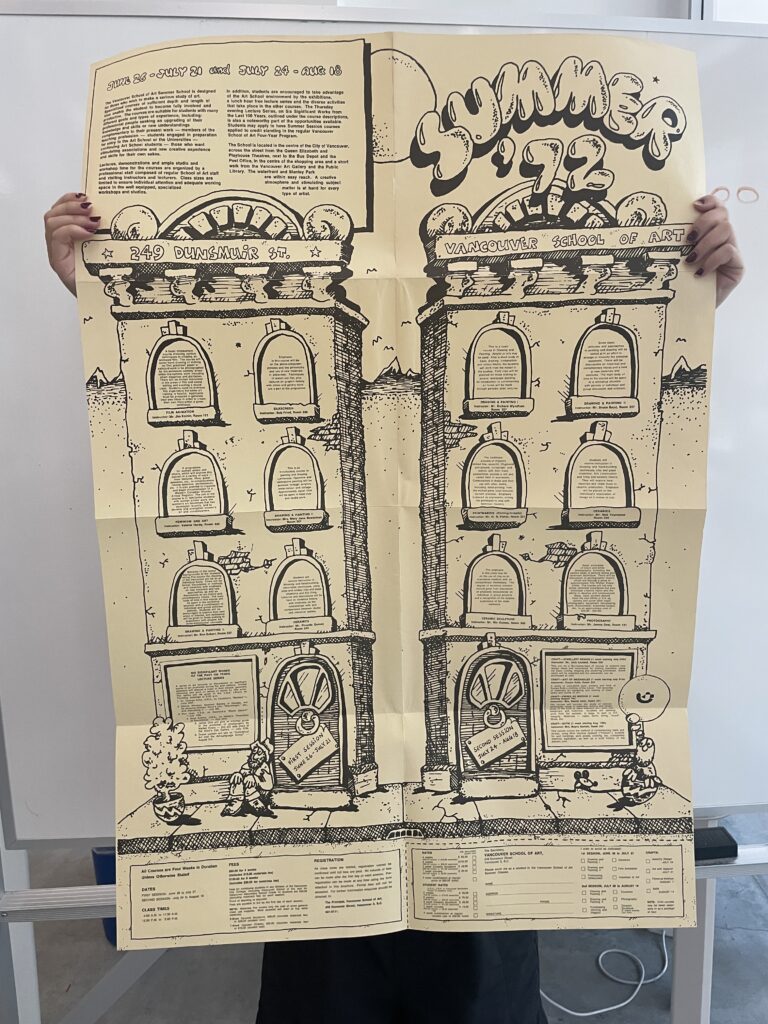
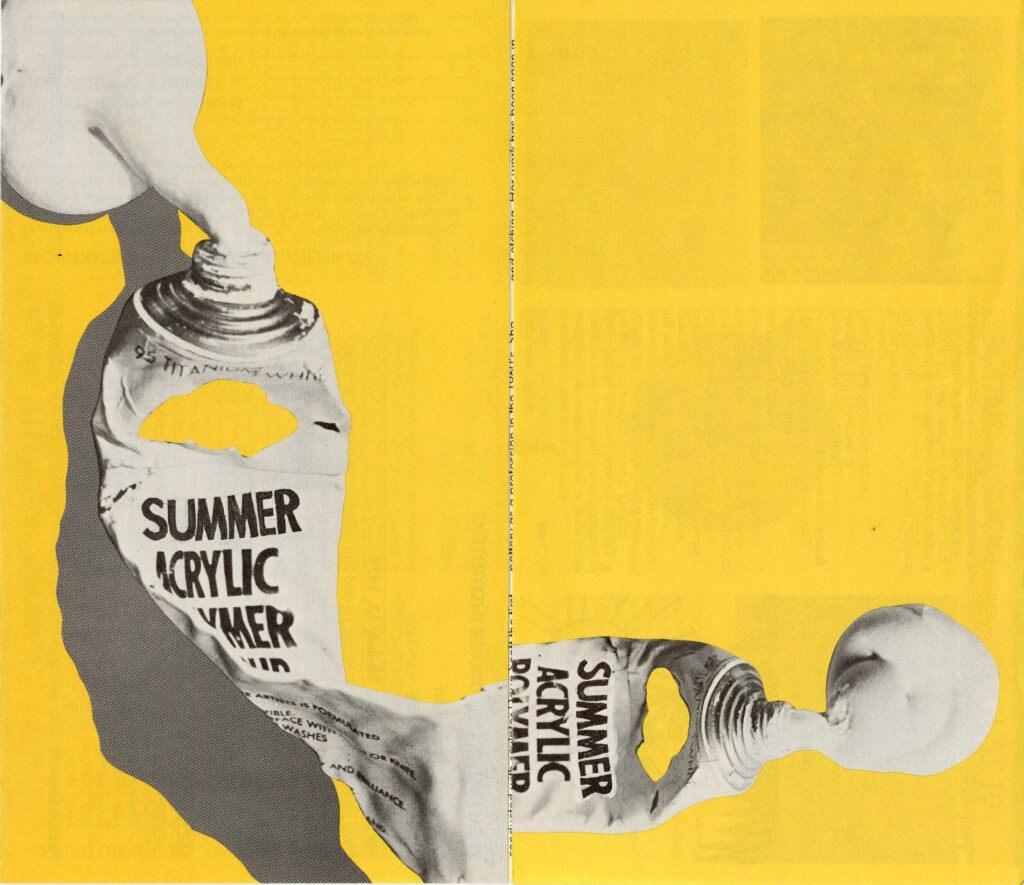
Even the summer program booklets grew wackier and wilder with 1968 and 69 editions using bright colours and zine-style designs. Still, the 1972 edition is by far the funkiest, folding out into a massive poster with graffiti-style typography and illustrations designed in-house by students. These summer posters and booklets give a window into the playful spirit on our former campus.
The Expansion Years (1979 – 1990s)
From the weird and wonderful courses of the 60s and 70s, the institution decided to be more intentional and thoughtful with its summer school courses once moving to the Granville Island campus. In line with the Outreach Program and its goals for expanding arts education across the province, the institution set aside 50 per cent of admissions for out-of-town students to participate in the now-rebranded Summer Institute.
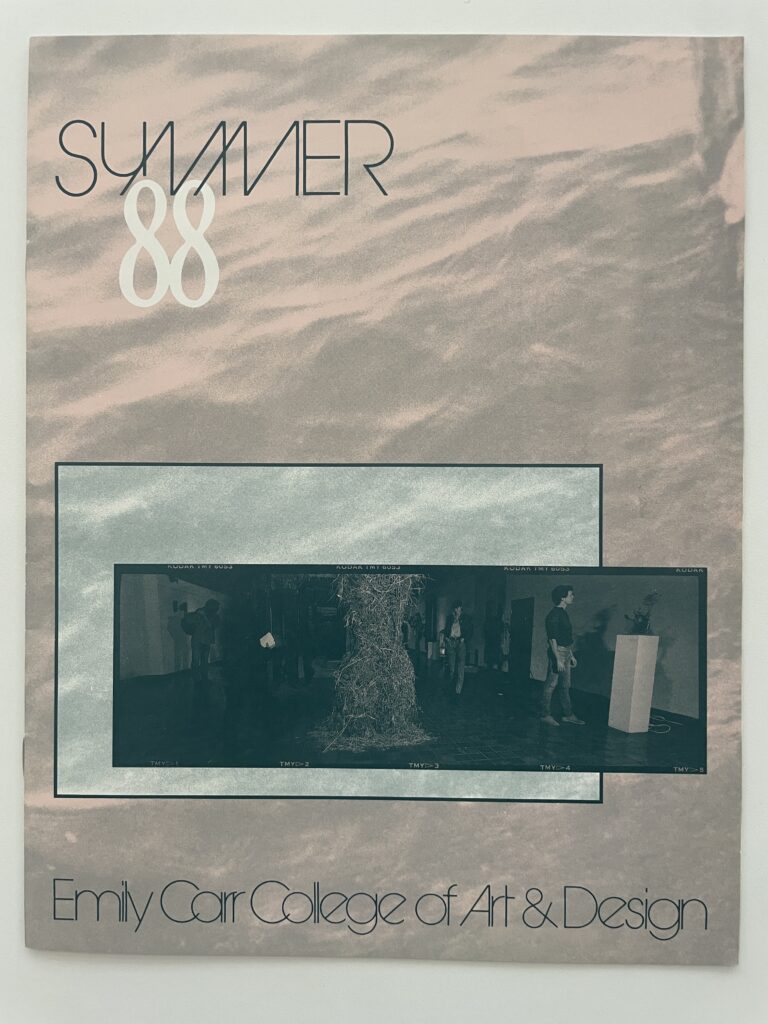
By 1984, the program had introduced seminar courses in which visiting artists and professors could teach specialized topics. This outreach provided ample opportunity for the institution to broaden its scope beyond Canadian art and design and into global and cross-cultural partnerships. In the 1984 Summer Institute, there was a seminar series on Japanese visual culture with courses such as Japanese Folk tales & Folk Art, where students were introduced to mask-making, costume design and a presentation of the folktale by a local theatre company and dancers, along with The Evolution of Teahouse Architecture & Gardens, The Tea Ceremony and Japanese Theatre: The Noh Drama.
In the spirit of the Savary Island trips, the Institute also hosted several trips to Haida Gwaii (formerly the Queen Charlotte Islands) in the 1980s for students to sketch and paint away from the bustling city environment. However, budget limitations led to these trips being less frequent. By the 1990s, the Summer Institute shifted towards young and teenage learners, along with more practice-based courses for current students and those seeking to upskill within their roles.
Through name changes and different courses, the one constant has been that summer at ECU is a time to try something completely new and stretch your skills. From sketching on Savary Island, making jewelry to match your coolest outfit or experimenting with dance, ECU’s summer programs continue to show students a new way to learn, create and develop their artistic journey.