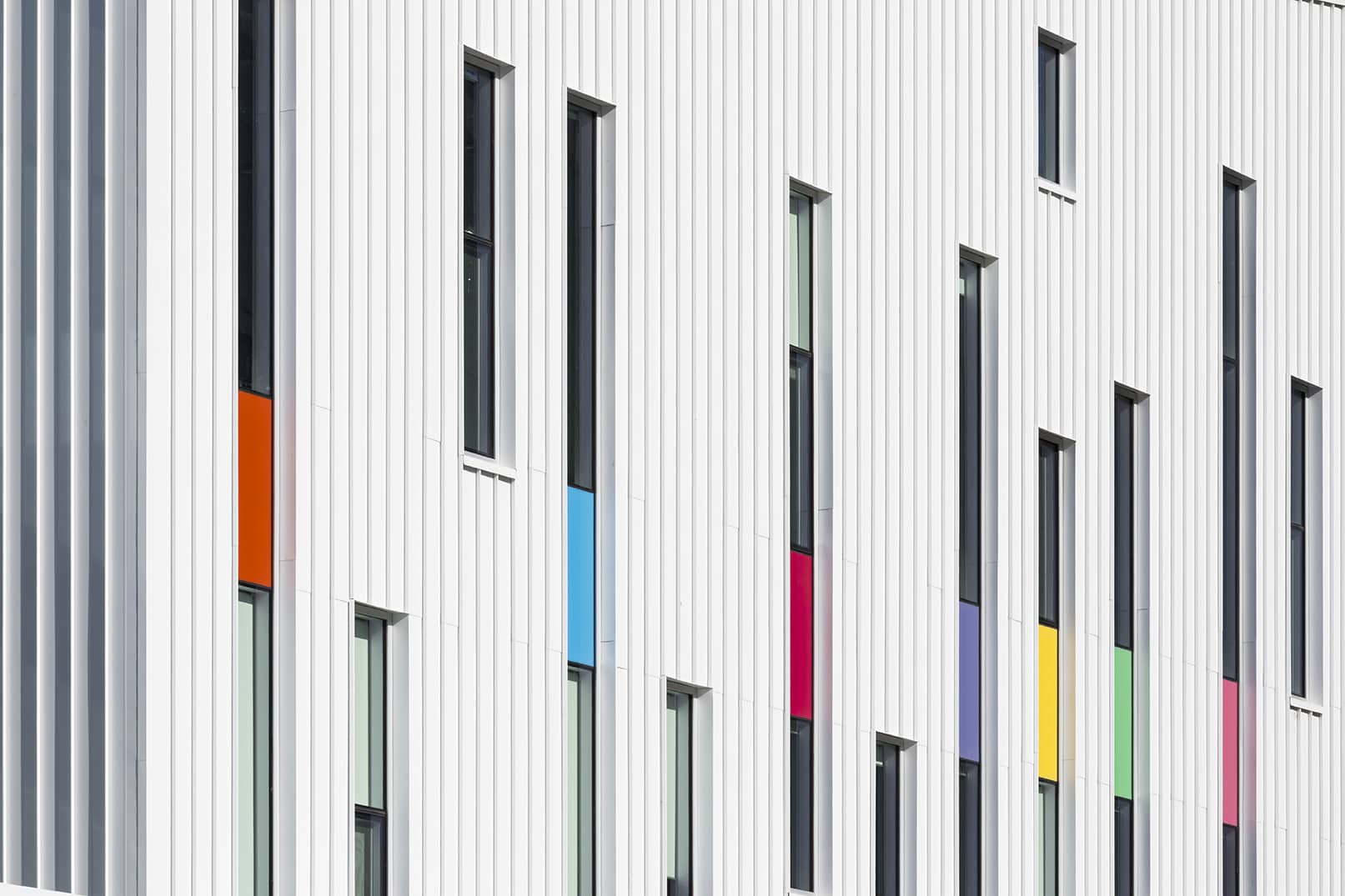
The artists and former faculty members were commissioned to enliven ECU’s facade ahead of the building’s completion in 2017.
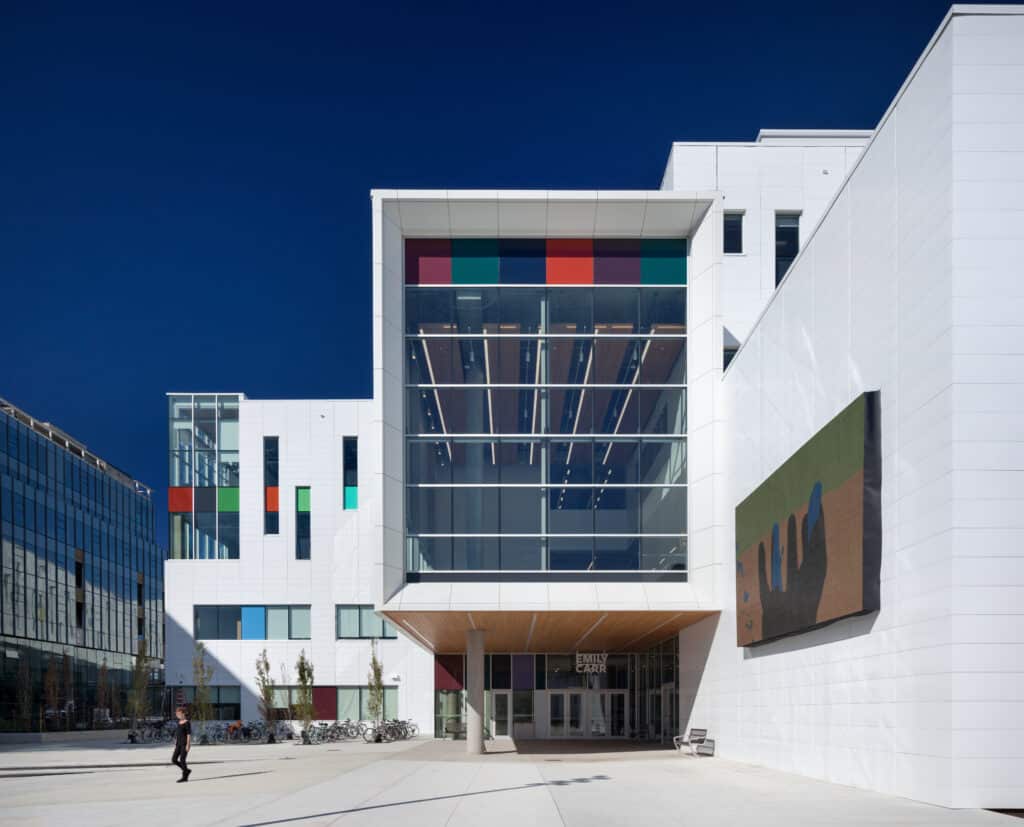
Even if you’ve never studied at Emily Carr University of Art + Design (ECU) or attended an exhibition in its light-filled halls, the most cursory glance will tell you the building stands out.
Designed by Diamond Schmitt Architects and completed in 2017, the campus exterior bears distinctive white metal cladding punctuated by more than 240 colourful, back-painted spandrel glass panels.
But did you know this facade was carefully chosen for its symbolic value? Or that artist and Professor Emerita Landon Mackenzie was commissioned for this work in 2016 in collaboration with artist and former faculty member Ben Reeves?
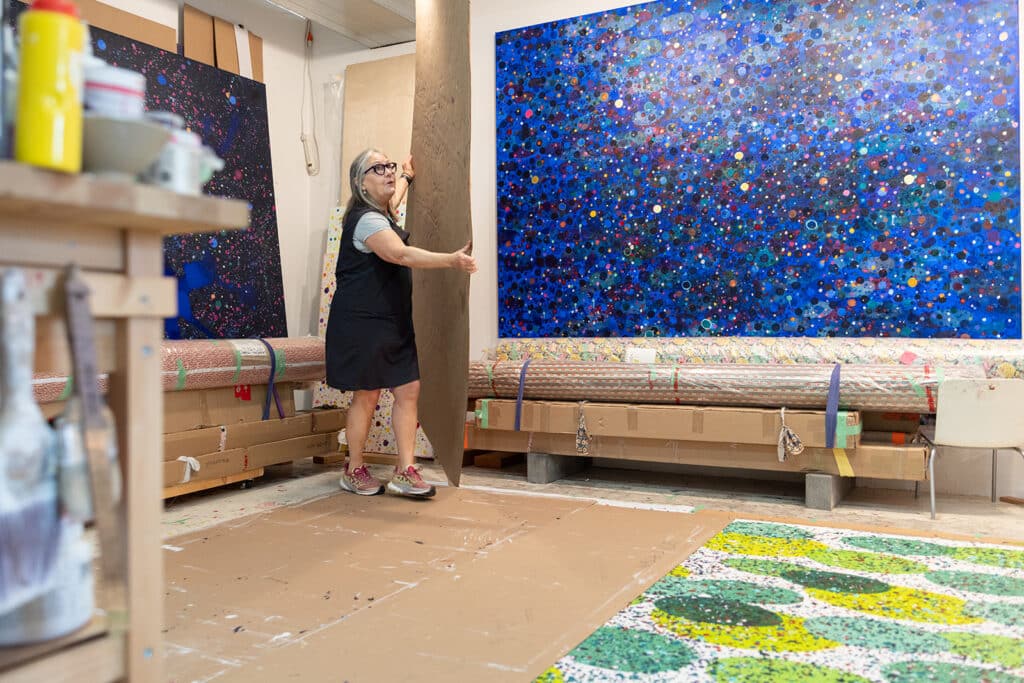
“I happily took on the project to do my part,” recalls Landon. “At the time, I had just finished my big show with Emily Carr at the Vancouver Art Gallery and so was quite into the weeds on her colour history.”
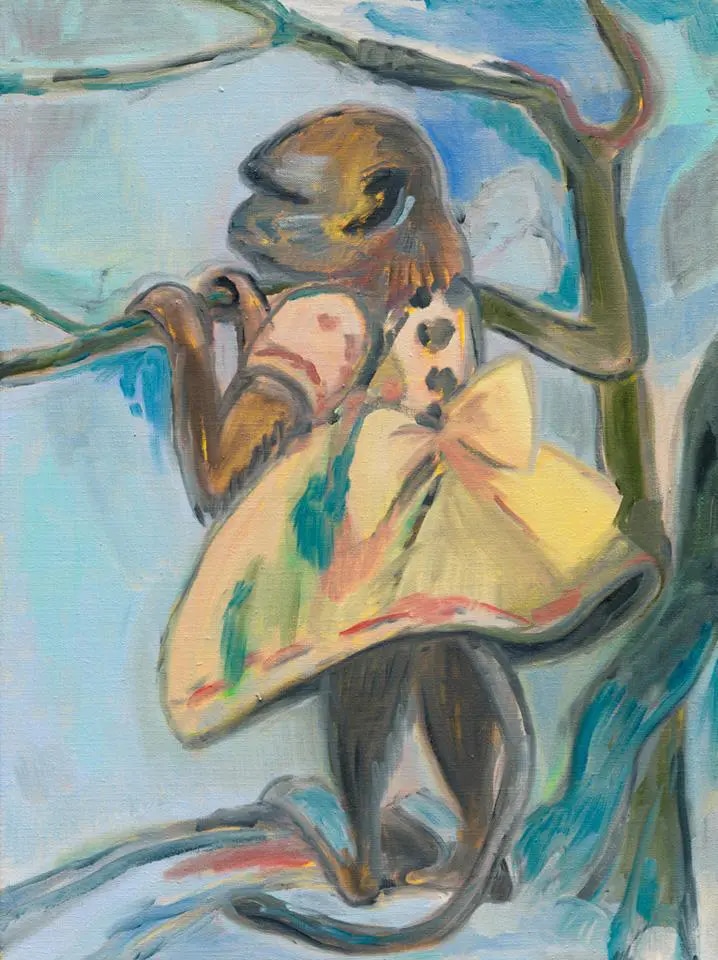
That exhibition, titled Emily Carr and Landon Mackenzie: Wood Chopper and the Monkey(2014-15), traced correlations between Landon’s work and the paintings of Emily Carr, an artist who has been a touchstone for Landon throughout her career.
Landon and Ben selected the colours for the windows, with Landon suggesting an emphasis on colours from Carr’s palette used in works created between 1900 and 1945 paired with Ben’s interest in “broken colours” — a term referring to the technique of using imperfectly mixed paint.
After the colour choices were confirmed, Landon was further commissioned to develop a unique composition for the placement of each coloured panel. She ensured no pattern or combination ever repeated, making the entirety of ECU’s facade a single, continuous creative work.
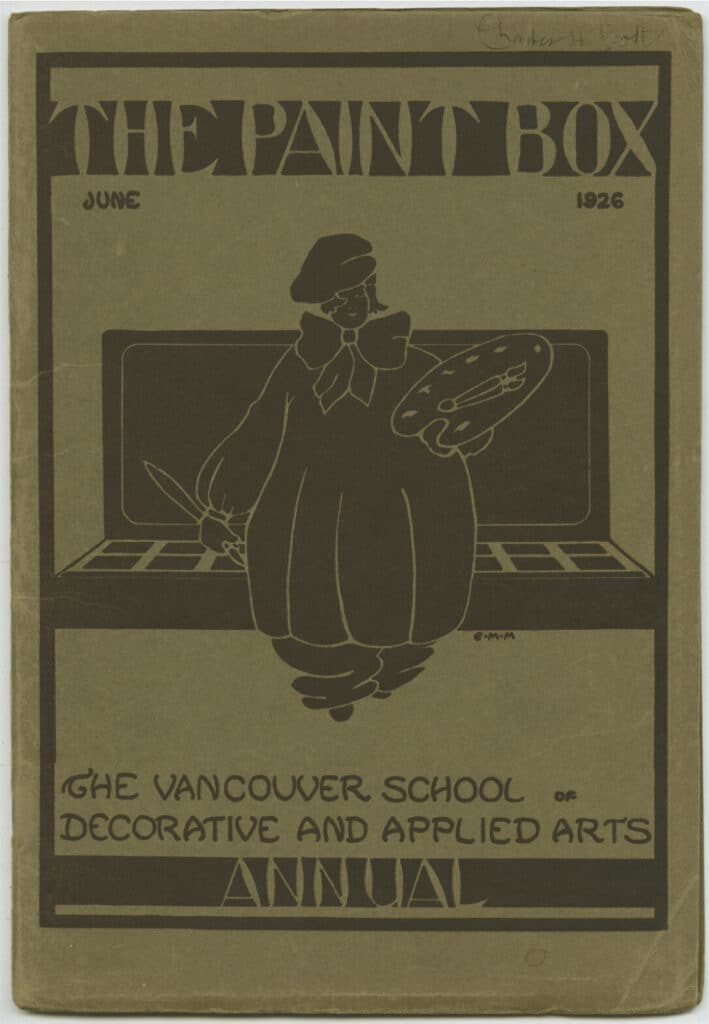
“From a distance, the school resembles a paint box,” Landon says, “especially when viewed from the SkyTrain.” The work’s title, The Paint Box, pays homage to this resemblance. Additionally, it honours the work of arts education as well as ECU’s first student newspaper, The Paint Box, which launched a century ago, in 1926.
In their project summary, Diamond Schmitt Architects also note the building’s white facade is “reminiscent of a blank canvas writ large.”
Having worked closely with the architects throughout the process, including liaising with lead architect Donald Schmitt and the site managers, Landon says the project remains a singular experience among the many public artworks she has completed.
“My reward was marking up all the blueprints with colour swatches, meeting up to review glass sample tests in parking lots, and, finally, getting to choose the colour (rusty cedar red) for the back staircase,” she says. “And that Donald Schmitt was pleased.”
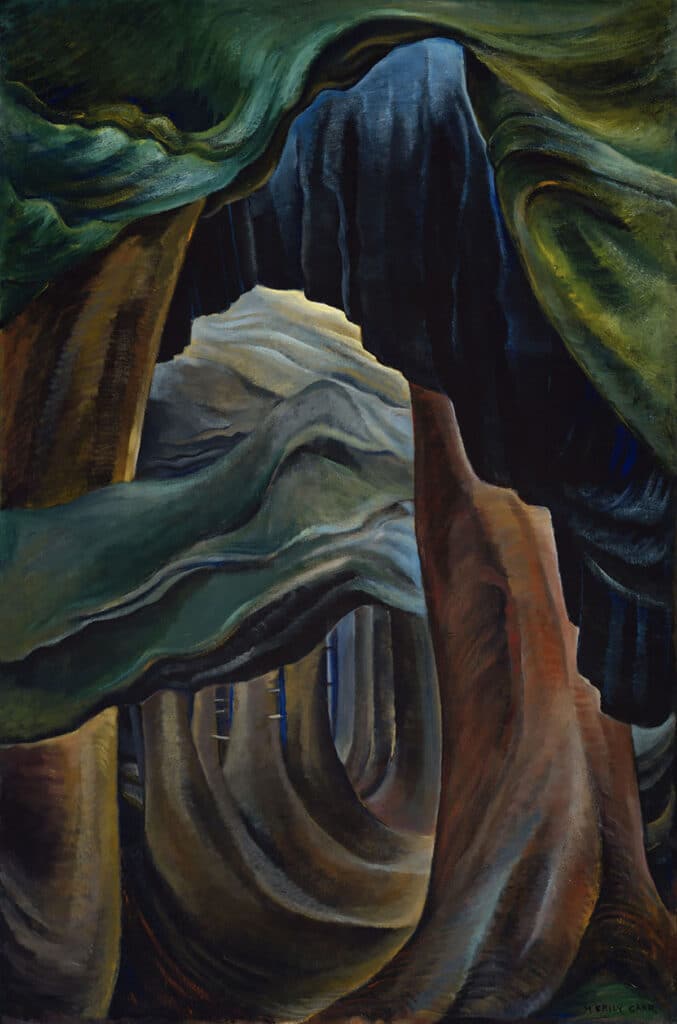
Visit Landon’s website to learn more about her work. See Emily Carr’s painting ‘Forest, British Columbia’ in person at the Vancouver Art Gallery as part of their exhibition, That Green Ideal: Emily Carr and the Idea of Nature, on view now through Nov. 8, 2026.
100 Years of Creativity: The Stories that Shaped Us
As part of Emily Carr University’s centennial celebrations and our ‘100 Years of Creativity’ campaign, we are sharing stories that spotlight the creativity, resilience and impact of our community over the past 100 years. These stories feature the people, projects, places and ideas that have shaped ECU, reminding us of our shared legacy while inspiring the future. By revisiting past milestones and sharing new ones, we honour the many voices that built our institution and continue to guide its path forward.
For more information about ECU 100 centennial celebrations, upcoming events and stories, visit our webpage.
Want more stories like this one delivered twice a month to your inbox?
Subscribe to our FREE Emix newsletter today!