A team of students from ECU’s Master of Design program took home first place in the annual hackathon at Simon Fraser University.
A new project from Material Matters research hub at Emily Carr University of Art + Design (ECU) explores charred wood to provide insight and understanding into the increasingly devastating impacts of wildfire.
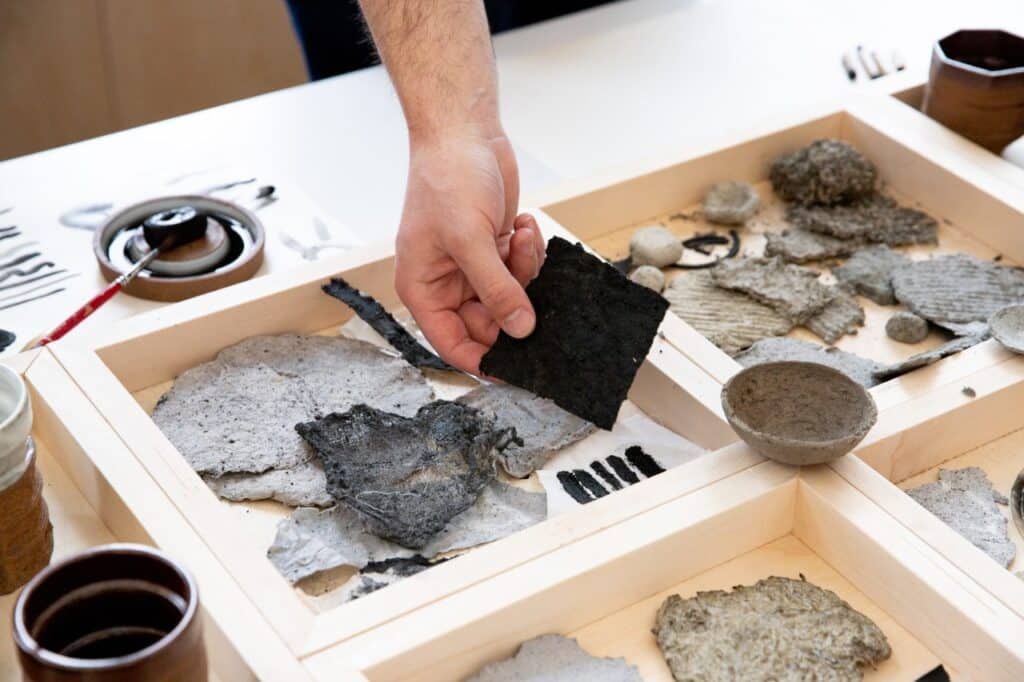
Titled Charred Wood, the project produced significant concrete outcomes, including a sustainable, super-black ink pigmented with refined biochar. But Charred Wood is about more than investigating material applications for BC’s flame-scorched forests.
“Really, this project is about relations,” says Material Matters cofounder and ECU faculty member Hélène Day Fraser.
“It’s about how to build relations with scientists, government, Indigenous communities and one another. We’re asking, where do our materials come from? How do we take responsibility for them? And how can the work we do as designers change relations through the sharing of perspectives?”
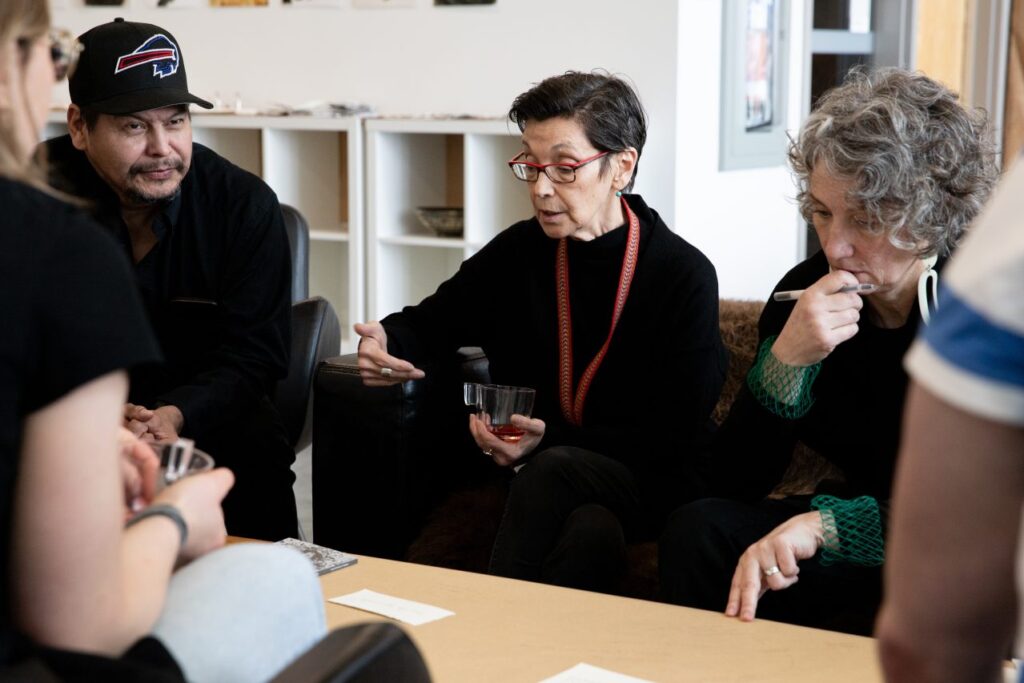
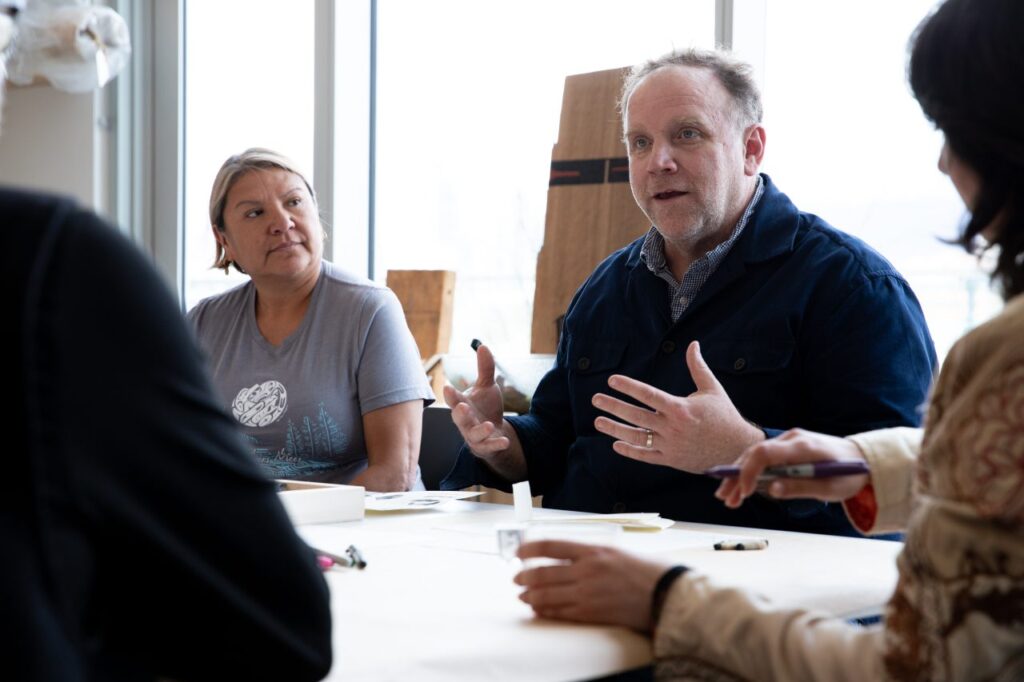
Charred Wood is a collaboration between Material Matters, the BioProducts Institute (BPI) and Clean Energy Research Centre at the University of British Columbia, and the Boothroyd Band, a member of the Nlaka’pamux Nation. The project was generously funded by BC Ministry of Forests.
Key Material Matters contributors include Keith Doyle, Material Matters cofounder and associate dean of the ECU Faculty of Design + Dynamic Media, and Aaron Oussoren, lab technician and affiliated researcher.
Charred Wood also included more than a half dozen research assistants from across undergraduate and graduate programs, as well as ECU alums. Additional participants included ECU staff and faculty.
Knowledge Vessels
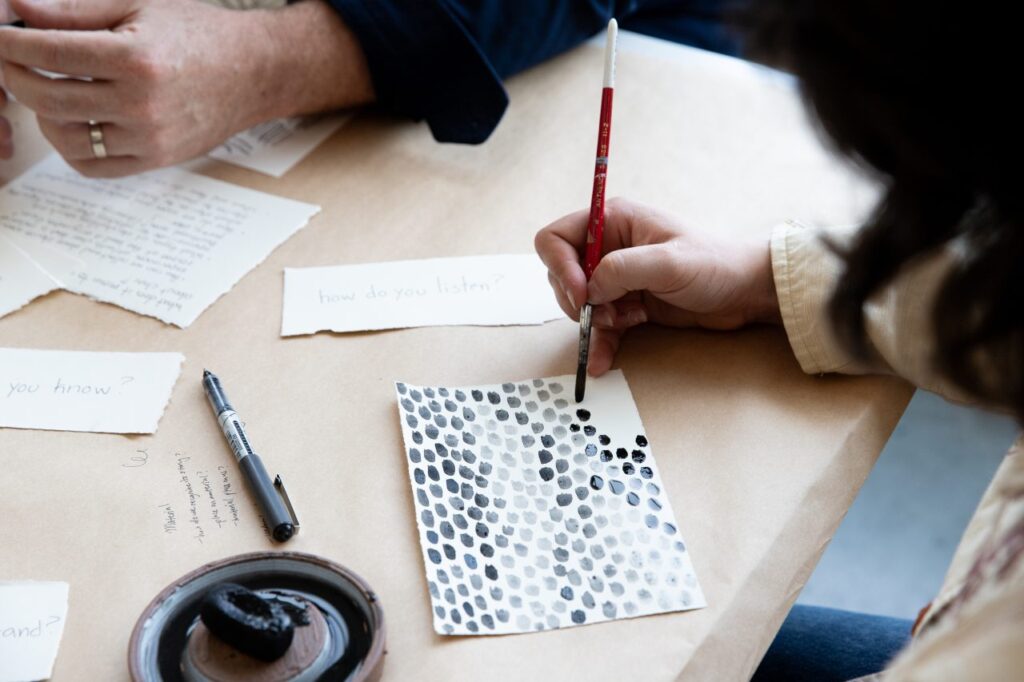
The ink made from biochar is one of several material innovations produced during the project. Keith notes it is water-soluble, printable and can be mixed with a sustainable hydrogel for 3D printing.
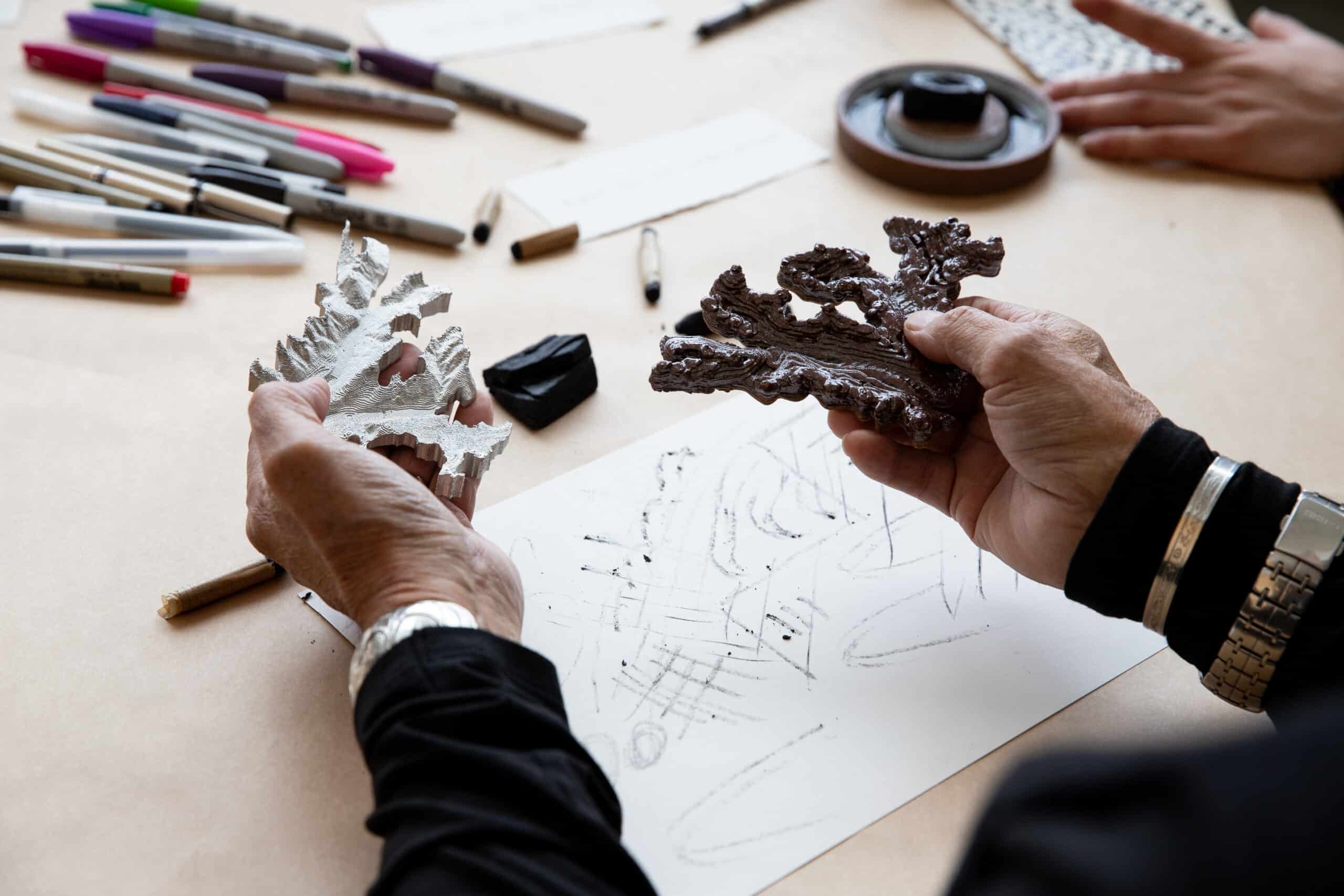
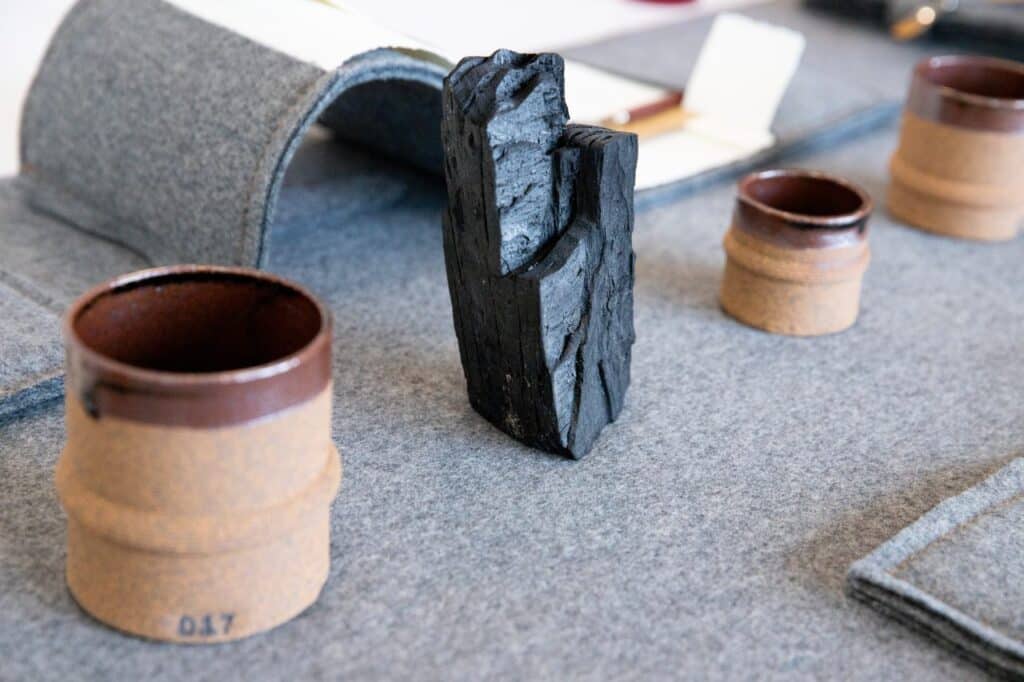
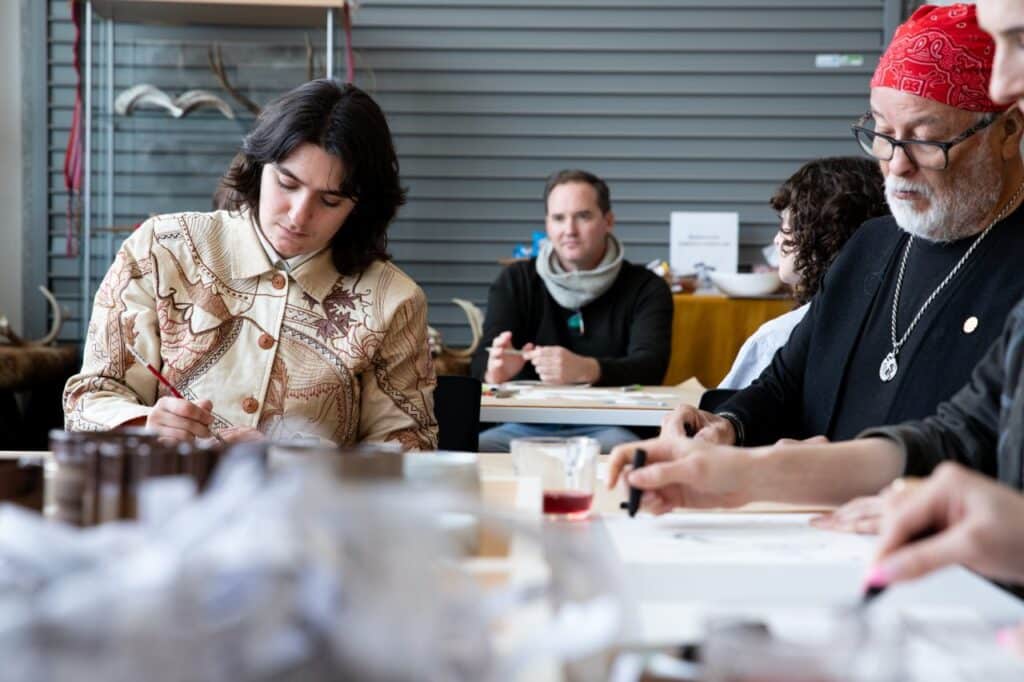
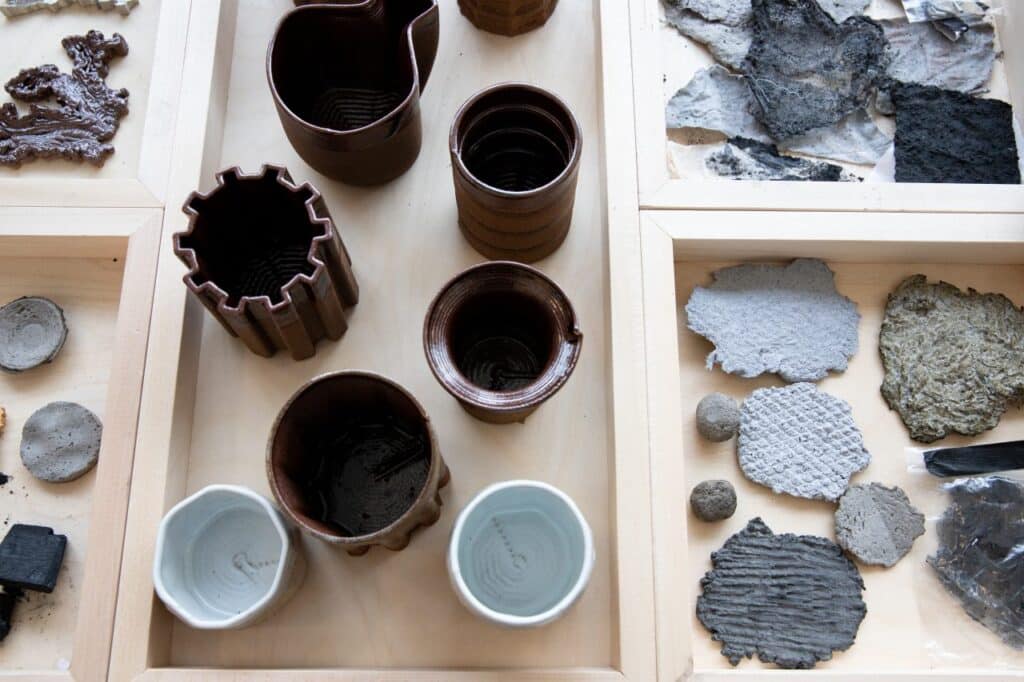
The research team also created a suite of objects, including a collection of ceramic cups whose shapes and volumes record the intensity and duration of rainfall, wildfire and other data specific to Boothroyd territory. They also scanned and 3D-printed individual pieces of woodchar, experimented with papers, textiles and other biomaterials, and 3D-printed topographic maps of parts of the Fraser Canyon.
“These objects are all knowledge vessels — they hold knowledge much like a book,” Keith says. “It’s an embodied knowledge, which the vessels communicate in a non-literal and material way.
“We achieved our project goal, which was the regeneration of biochar to practical and expressive application. But we’re also interested in sharing how an embodied understanding of material creates emotionally, culturally and interpersonally significant value, and leads to greater understanding between people and communities.”
Higher Stakes
Industrial Design student Ophir Barzilay will be entering her fourth year at ECU in September. Working on the project allowed her to root her practice in listening, rather than focusing on outcomes.
“You’re working with a material that has so much depth and meaning before you even touch it. There’s so much history already within it,” she says.
“In this project, we were asking what this material means and how we can share that meaning. Everything was made with enormous intention, care and time. The process was more valuable than any final product.”
She adds that meeting Boothroyd Band Chief Michael Campbell, Elder Rick Campbell and Councillor Cheryl Davidson underscored the importance of looking beyond a material’s physical properties.
“Connecting with people felt truly important for my practice,” she says. “It feels like higher stakes. This experience will stick with me.”
Something Beautiful
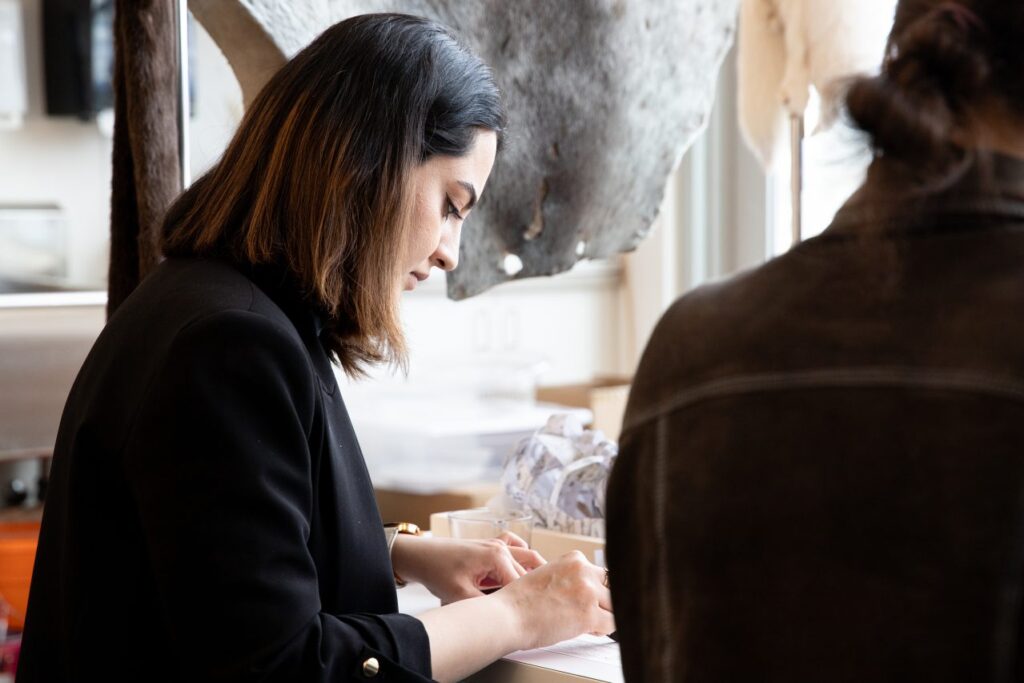
Scientist and engineer Dr. Elena Erfanian leads the BPI’s Biomass-derived Carbon and Hybrid Materials research group. Her work, which involves synthesizing nanomaterials, relies on a laboratory environment where conditions can be tightly controlled.
She says working with the Charred Wood team amounted to a revelation.
“It opened a new window for me. I realized that instead of working in the lab to develop materials, I can look to nature,” she says.
Elena played a central role in developing Charred Wood’s 3D-printable ink. Meanwhile, she says her understanding of “value” also evolved into something closer to “meaning.”
“Now when I work with a material, I can connect with it and tell you it’s story. I can see how it affects us and what it means, which can be missed in scientific work,” she says. “That was something beautiful for me that I haven’t experienced before. It changed my perspective a lot.”
The Very Beginning
Hélène says Charred Wood remains a work in progress. She had hoped to begin with a visit to Boothroyd territory to ground the project in the lived experience of a community with firsthand insight into the impacts of wildfire.
In 2021, the Boothroyd were among communities affected by a severe fire season that razed the town of Lytton and displaced hundreds of members of the Lytton First Nation living on reserves along the Fraser River.
But members of the Boothroyd Band were unable to meet with the Charred Wood team until the end of the project.
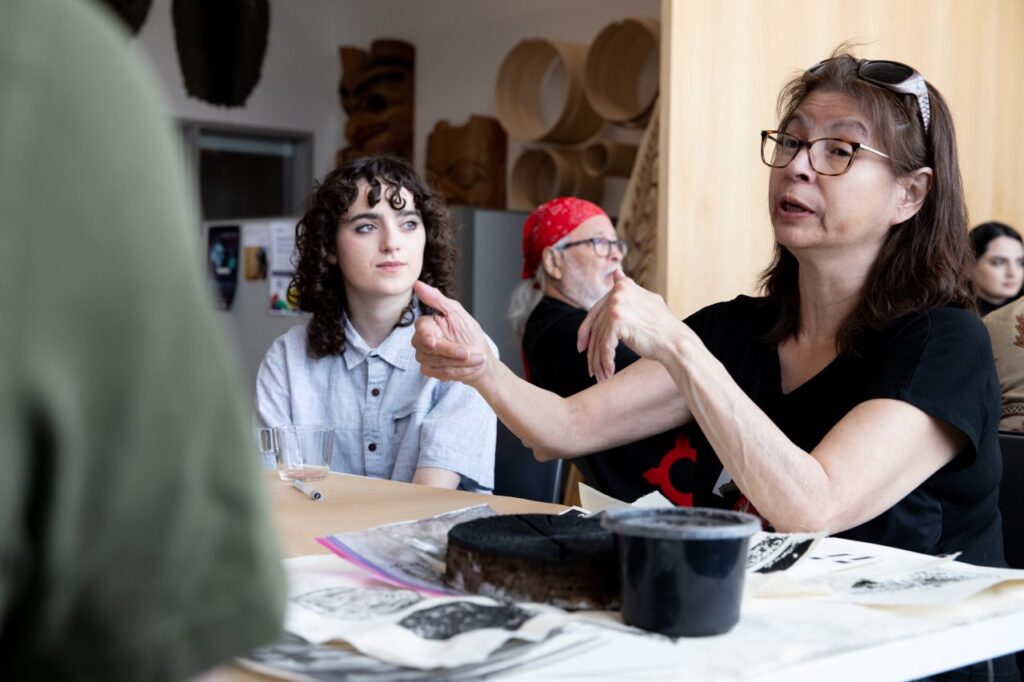
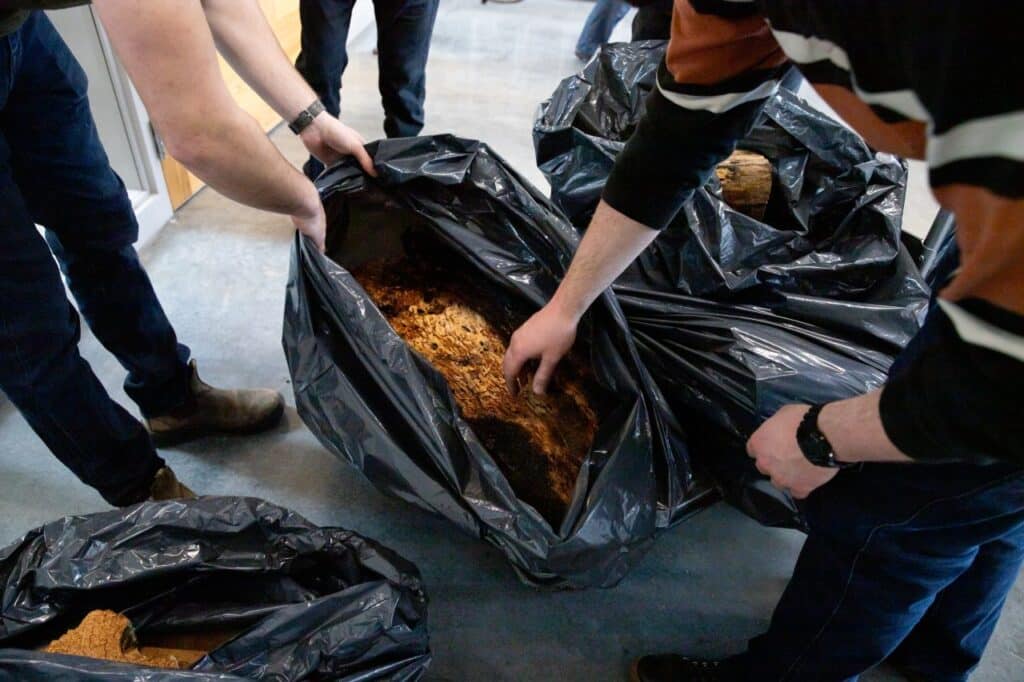
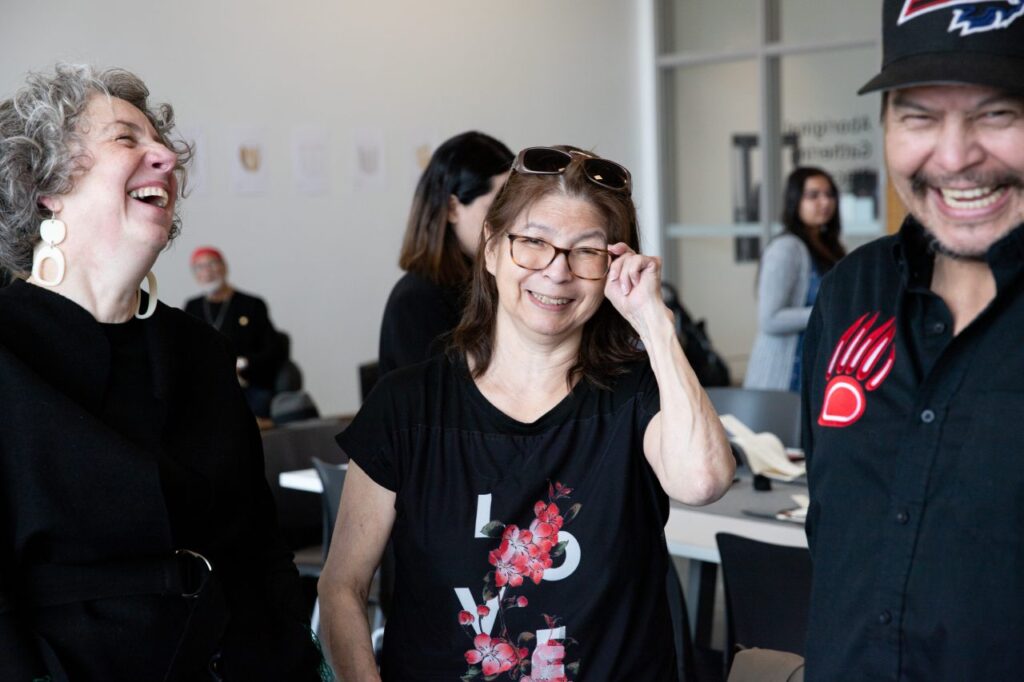
During that final gathering, Chief Campbell, Elder Campbell and Councillor Davidson shared stories and perspectives from their home territory. Chief Campbell extended an invitation to the team for a future visit and gifted a load of fire-damaged tree rounds to the project. The Charred Wood team also presented the guests with gifts and shared their work and process.
As Material Matters plans for the project’s next phase, Hélène, Keith and Aaron hope to fold the project’s insights and materials into learning opportunities for current students. For instance, bringing inks or charcoals made from Boothroyd wood into classrooms could provide a hands-on lesson in the ways materials can hold stories as well as mark-making potential.
Ultimately, the team won’t feel the project is meeting its full promise or potential until they can build their work around meaningful connections with the Boothroyd community.
“By the end of this phase, we got to the point where we were just beginning to make relations,” Hélène says. “Now, we need to spend time with that community and work with them to figure out what the next steps are, on their terms. Really and truly, we’re only in the very beginning.”
Visit Material Matters’ website to learn more about their work.
More about Research at ECU
As one of the most research-intensive art and design universities in Canada, ECU connects art, media, and design practices with some of the most pressing questions of our time. At ECU, we believe that our research can help to transform the world, build healthier and more vibrant futures, and cultivate cultural resilience throughout our local and global communities and industry partners.
Visit our website to learn more.
Get more stories like this delivered to your inbox twice a month!
Subscribe to our FREE Emix newsletter today!