One of ECU’s transformational supporters reflects on the artworks that inspire him, the country that shaped him and the ways visual arts underpin a society’s identity.
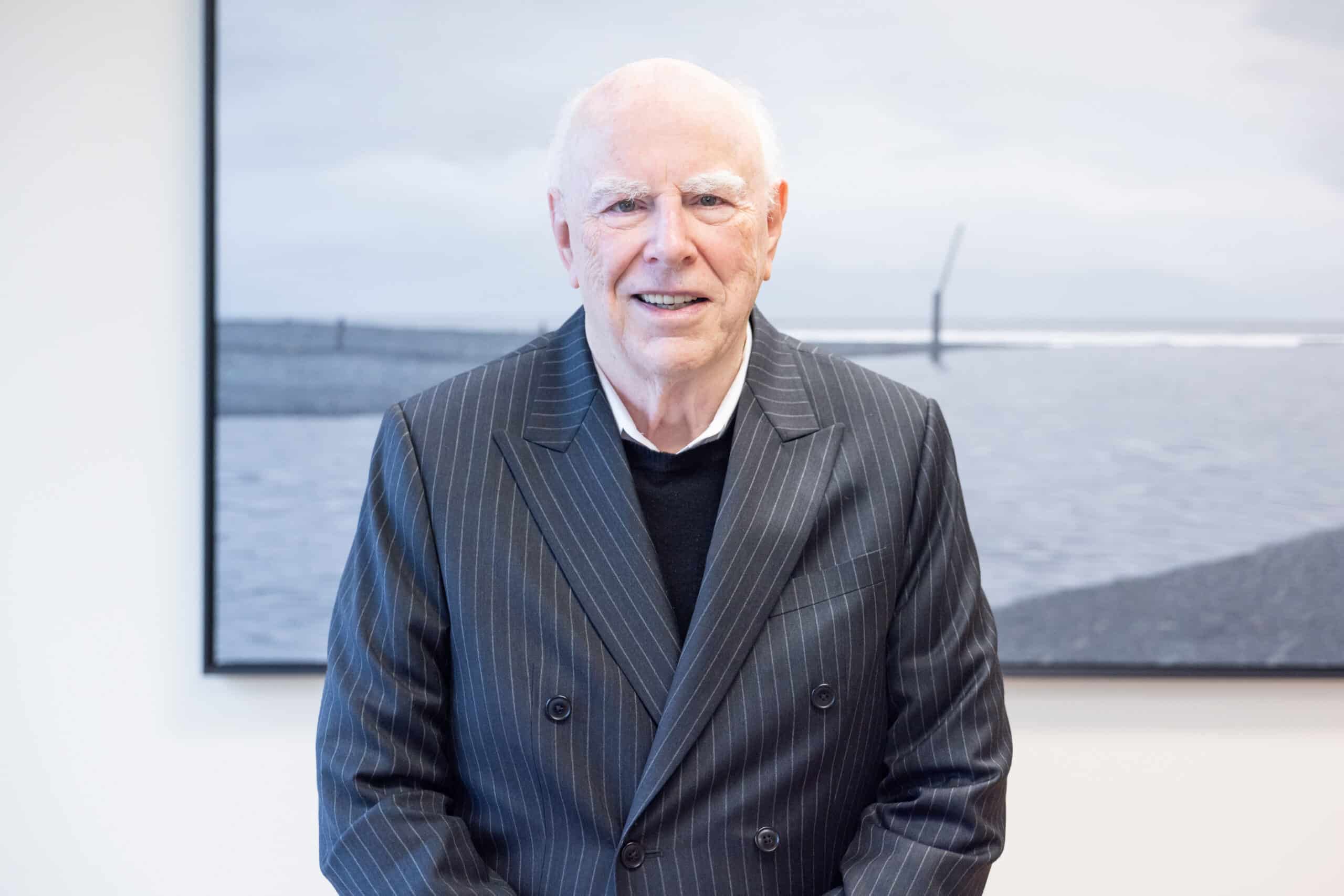
A quiet estuary on Vancouver Island’s west coast fills a sweeping painting in Michael Audain’s office. Rendered almost entirely in greyscale, the image is divided between water and sky. The 2001 painting, Rivers 1/01: Jordan River, depicts a landscape Michael has known since childhood.
In his youth, he accompanied his father on a duck hunt up the coast in the late 1940s to Jordan River, just a short distance from Victoria, BC, where he spent much of his childhood.
The painter, Takao Tanabe, is one of Canada’s most celebrated visual artists, and taught at Emily Carr University of Art + Design (ECU, then the Vancouver School of Art) from 1961 to 1968. But Takao, reflects Michael, could not have known Michael had peered across this very vista in person as a ten-year-old boy.
Nearly eight decades later, Michael’s life looks, even to his own eyes, almost impossibly different. The ten-year-old gazing along the Island’s ragged coast “never even dreamed of having the great privilege of living with good art,” he says.
Yet since those years, he has assembled a world-class art collection comprising a comprehensive history of BC visual art, including pre-colonization and contemporary works by Indigenous artists; a leading collection of major works by Canadian artists from post-war icons through contemporary paragons; and the country’s only major collection of Mexican Modernist artworks.
This collection, built in partnership with both his first wife, Tunya Swetleshnoff, and for the past four decades with his wife Yoshiko Karasawa, was donated mainly to the public in 2016 via the Audain Art Museum in Whistler, BC. This donation forms only one small part of Michael’s philanthropy, which for decades has created supports for artists and greater access to the arts and arts education across Canada.
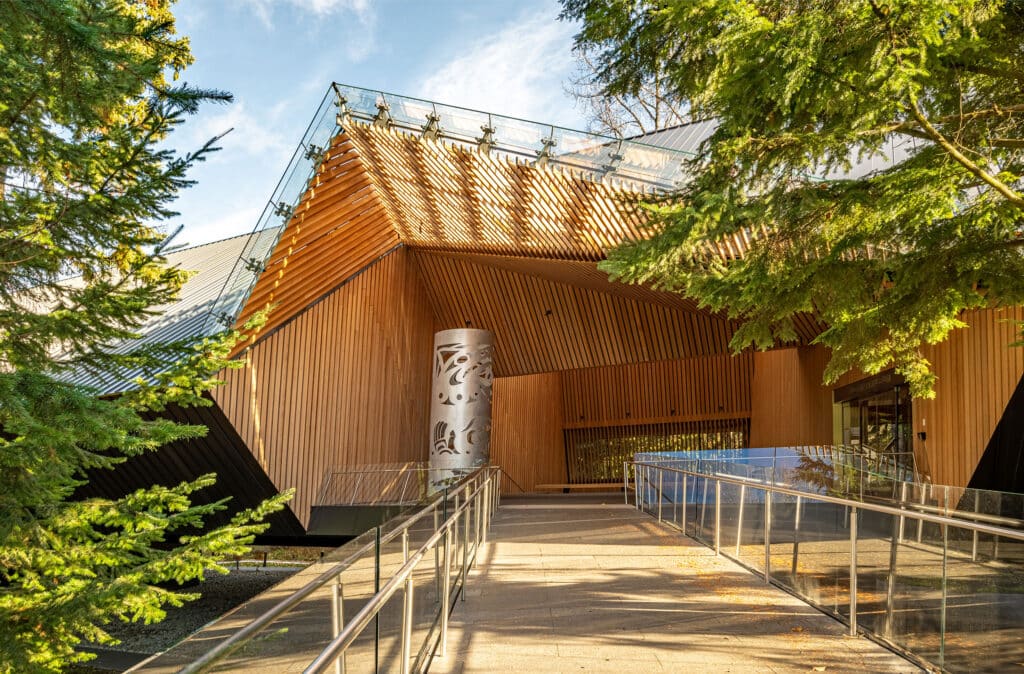
His gifts to ECU over 30 years total more than $5.6 million, and not only established annual awards, including the Audain Foundation Annual Entrance Scholarship, the Audain Travel Award and the Audain Distinguished Artist-in-Residence Program, but also helped fund the Charles H. Scott Gallery on ECU’s former Granville Island campus and the arts facilities on its current campus, where the Audain Faculty of Arts is named in his honour.
Asked why the arts have been such a focus of his philanthropy, Michael suggests it plays a central role in the expression of place.
“As a province, visual art is, I think, our most important art form, which you can see in the histories of the First Nations going back thousands of years,” he says. “More recently, I think the Vancouver School of Art, and now Emily Carr University, has also had quite a bit to do with that.”
ECU has not only attracted students from across the country and beyond; it has also trained generations of artists who have gone on to transform the country’s cultural milieu, he says.
One of the country’s most prestigious arts honour, the Audain Prize for the Visual Arts, underwrites Michael’s claim. Awarded annually by an independent jury of peers and art-world luminaries, nearly every one of its past recipients is either a former ECU student, faculty member or honorary degree recipient.
“People ask me why, compared to many parts of Canada, the visual arts have flourished here in BC. And of course, I refer to the art of the Indigenous peoples. But I think it’s also because of the quality of our art school, Emily Carr University,” he says. “It has attracted a lot of students who have decided to make a career in art and sometimes a very notable career. It has had a major impact on the importance of artmaking in British Columbia.”
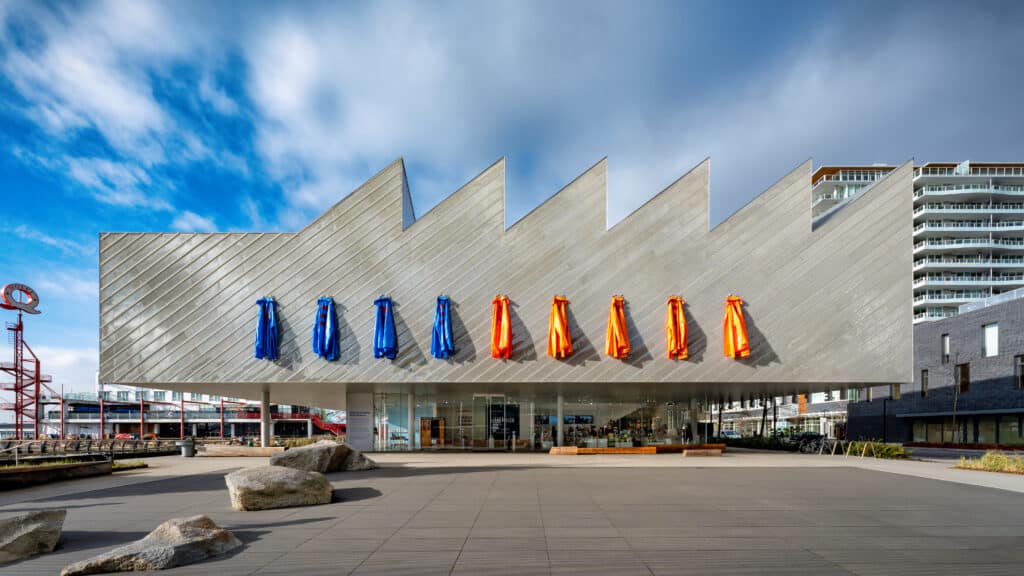
But ECU is far from the only arts organization to benefit from Michael’s extraordinary support. He has made significant donations to the National Gallery of Canada, the University of British Columbia, the Vancouver Art Gallery, Arts Umbrella, the Bill Reid Foundation and St. Paul’s Foundation. His major gift to the former Presentation House Gallery, via the Audain Foundation and Polygon Homes, helped transform the North Vancouver media arts hub into the Polygon Gallery, one of North America’s leading public institutions dedicated to lens-based practices.
This history of philanthropy stems directly from a lifelong commitment to principles born out of leftwing activist circles in which Michael was involved as a young man. On a trip to the US as a student in 1961, he was arrested in Jackson, Mississippi, for participating as a Freedom Rider in the US civil rights movement. He led peace marches, founded the University of British Columbia’s nuclear disarmament club as a student, and, for more than 60 years, has exclusively worn black neck ties in protest against nuclear weapons.
He cofounded the BC Civil Liberties Association in 1962, established the Grizzly Bear Foundation in 2016, and the Audain Foundation, established in 1992, remains a leading organization supporting the visual arts in British Columbia and across Canada through grants, endowments, programming, educational initiatives and more.
Michael has been a social worker, a housing policy analyst and has worked with the BC government to help shape cooperative housing policy and the development of subsidized housing — all of which connect to his conviction that quality social housing is fundamental to an equitable society.
And his business, Polygon Homes, has grown into what is widely regarded as one of BC’s most significant and highly respected developers with more than 34,000 homes completed across the Lower Mainland.
For his efforts, Michael has been appointed to the Order of Canada and the Order of British Columbia, received two Queen’s Jubilee Medals among other national and international honours, and, in 2025, received the City of Vancouver’s Freedom of the City Award which recognizes people whose achievements in the arts, business or philanthropy have brought distinction to the city.
But all his pursuits are grounded in a vision of a better world. And art, he notes, is fundamental to a society’s capacity for advancement.
“In every society, art is absolutely crucial to their identity,” he says. “We can see this with the peoples of the Northwest Coast. But also, as a country, art brings us together to some extent.”
It is possibly this capacity of art to reflect and embody both our most interior and collective selves that finds this man, who has achieved so much, enthralled by the evocative power of a painting of a shore break – at once distant and familiar – on a stony beach under an overcast sky. A painting created by an artist who grew up in the same province yet also worlds away from the one that shaped Michael, who nevertheless discovered his world quietly mirrored in the work of this acclaimed practitioner. A painter whose landscapes offer a transformative vision of the place both he and Michael call home.
100 Years of Creativity: The Stories that Shaped Us
As part of Emily Carr University’s centennial celebrations and our ‘100 Years of Creativity’ campaign, we are sharing stories that spotlight the creativity, resilience and impact of our community over the past 100 years. These stories feature the people, projects, places and ideas that have shaped ECU, reminding us of our shared legacy while inspiring the future. By revisiting past milestones and sharing new ones, we honour the many voices that built our institution and continue to guide its path forward.
For more information about ECU 100 centennial celebrations, upcoming events and stories, visit our webpage.
Want more stories like this one delivered twice a month to your inbox?
Subscribe to our FREE Emix newsletter today!