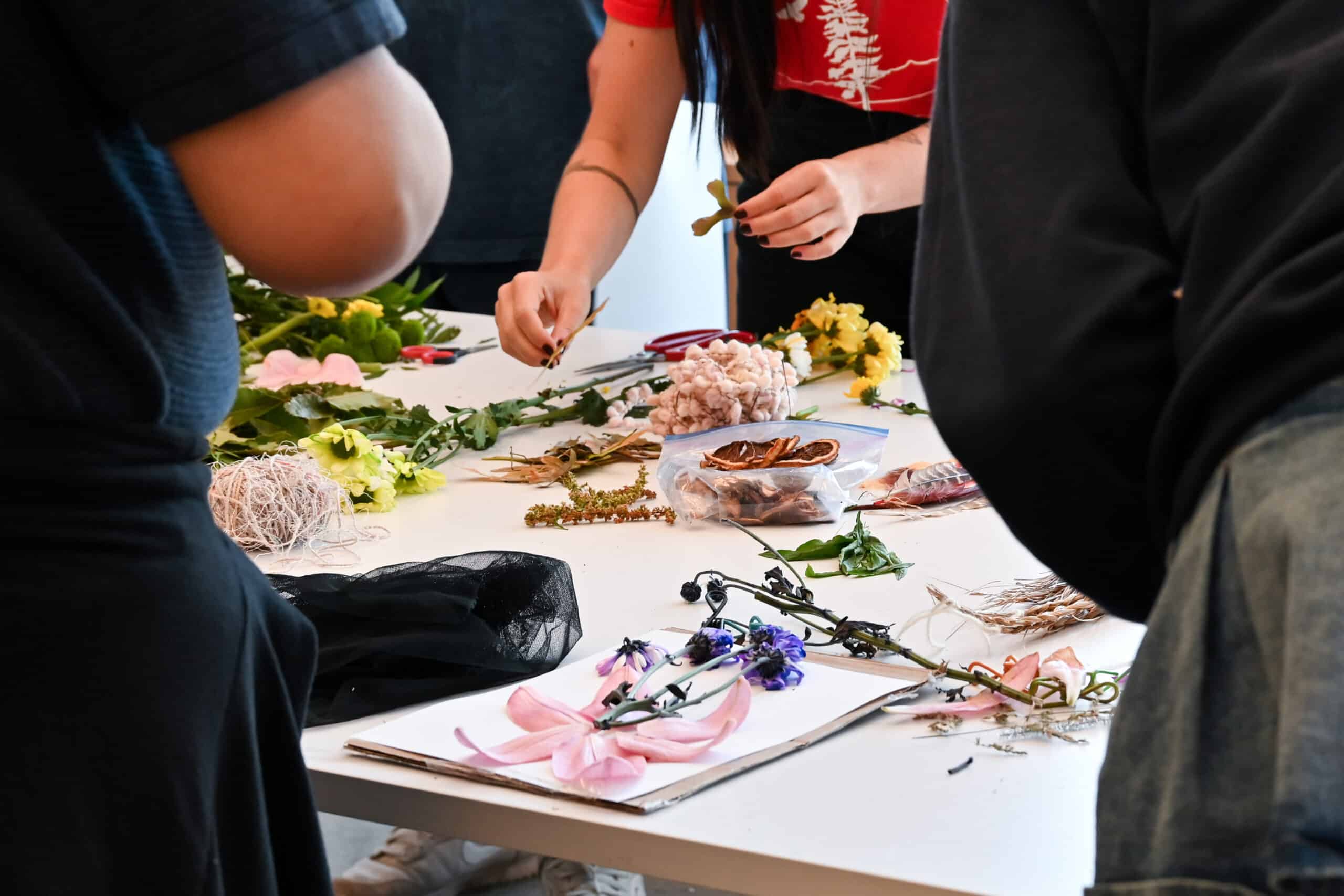
As part of the MOA’s Native Youth Program, Indigenous teens visited ECU for a week-long series of workshops with Indigenous students, alums and other artists.
A partnership with the Museum of Anthropology (MOA) at the University of British Columbia brings urban Indigenous youth to the Aboriginal Gathering Place (AGP) at Emily Carr University of Art + Design (ECU) for artmaking workshops.
As part of the MOA’s six-week Native Youth Program (NYP), Indigenous high-school students from across the Lower Mainland spent a week at the AGP learning contemporary and traditional art practices directly from ECU students, alums and other Indigenous artists.
“Art is a beautiful access point to the things we’re hoping to teach them, like feeling a strong sense of self, having an embodied experience of Indigenous identity and proudly saying who they are and where they’re from, regardless of where they’re at in their journey of connectivity,” says Damara Jacobs-Petersen, NYP program director and curator of Indigenous Engagement at the MOA.
“With artmaking, you can just dive in. And we see an awakening when they do these workshops. They realize they’re creative people and feel good about that. It gives them another way to contemplate how they’re connecting to the belongings in the MOA’s collections. It’s a transformative learning opportunity.”
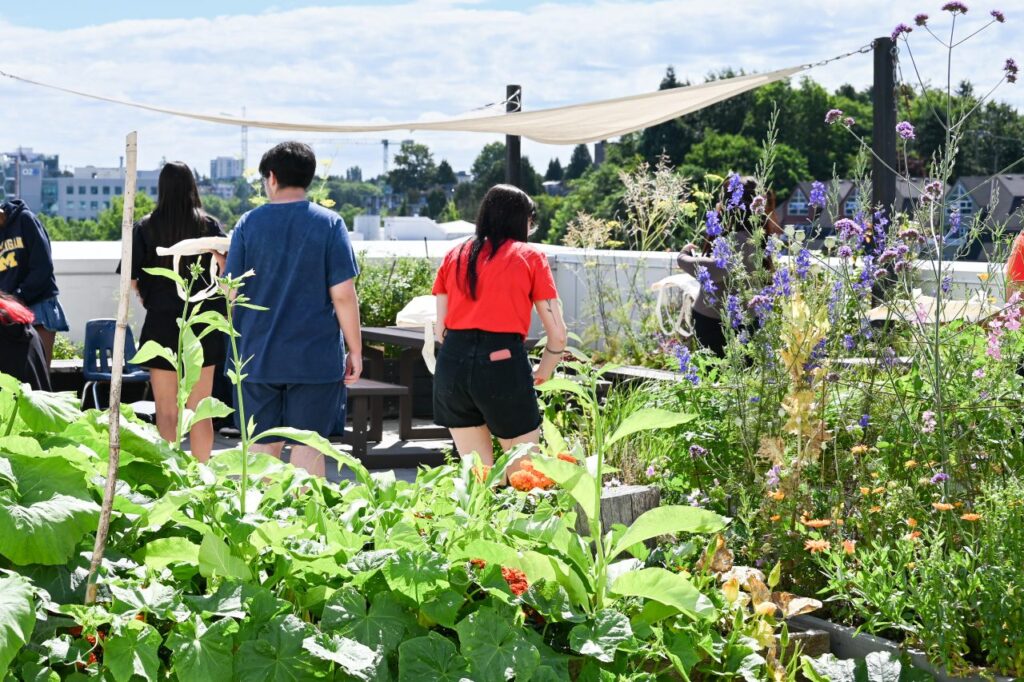
The NYP is a training and work experience program providing Indigenous youth with a chance to explore their identity through art and culture. Under mentorship from curators like Damara, NYP students engage with the MOA’s collections which oftentimes include belongings from the students’ communities of origin, or which were made by their direct ancestors.
They are also trained to liaise with the museum’s visitors to provide a contemporary and historical Indigenous perspective. In doing so, they learn vital professional skills, gain self-confidence and have an opportunity to establish or deepen a relationship with their Nation’s material culture, says Damara.
The goal is to produce young Indigenous leaders, provide meaningful direction and mentoring, enhance employment opportunities for Indigenous youth and promote public understanding of the diversity and richness of Indigenous cultures.
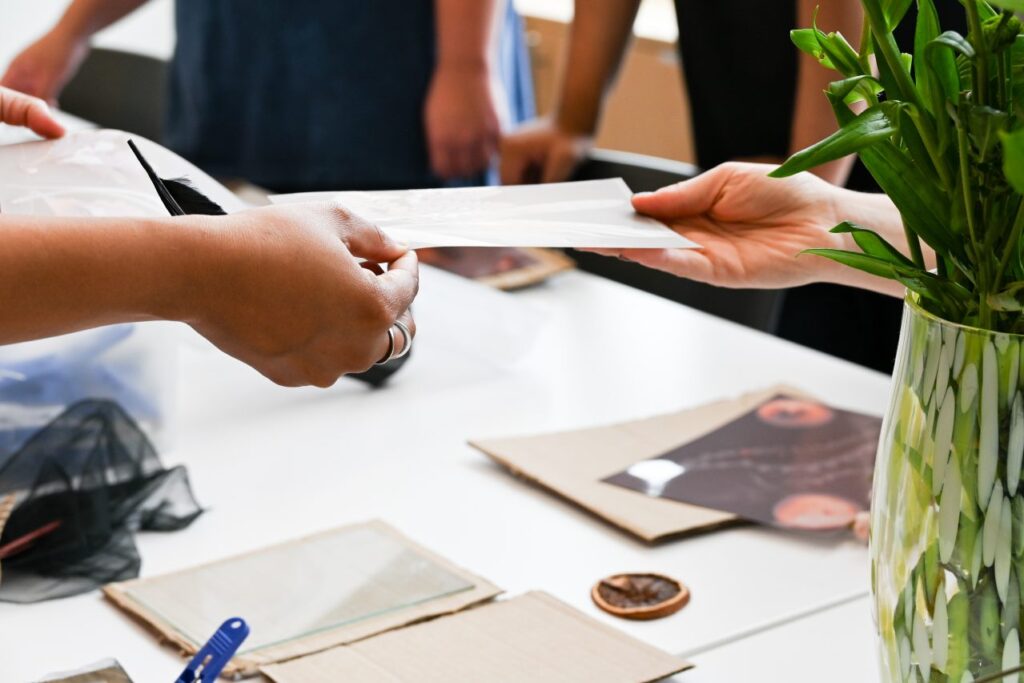
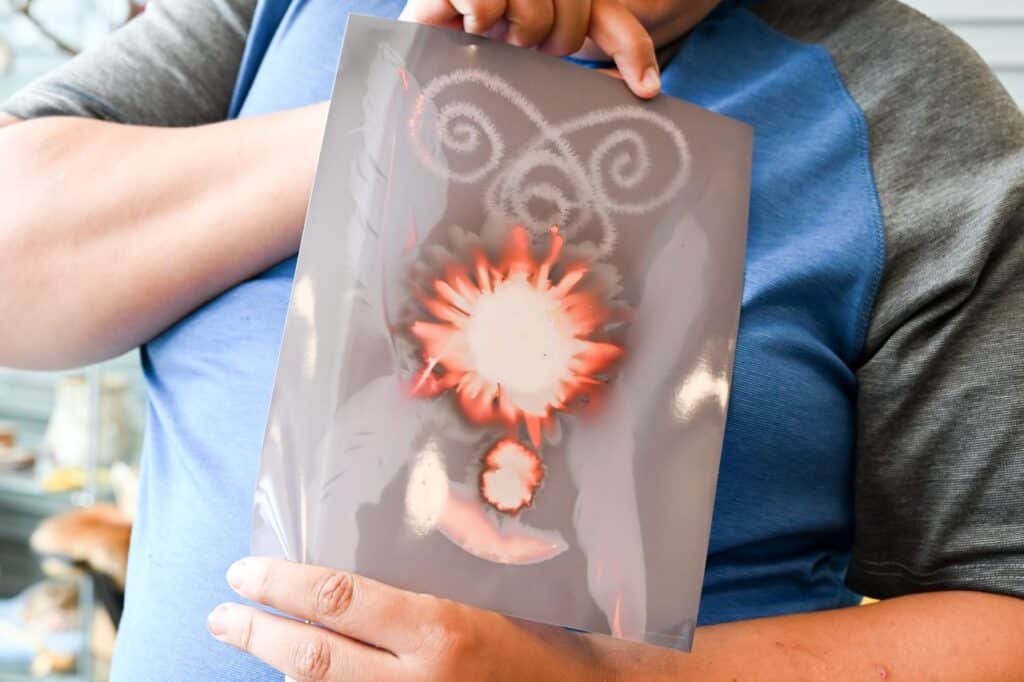
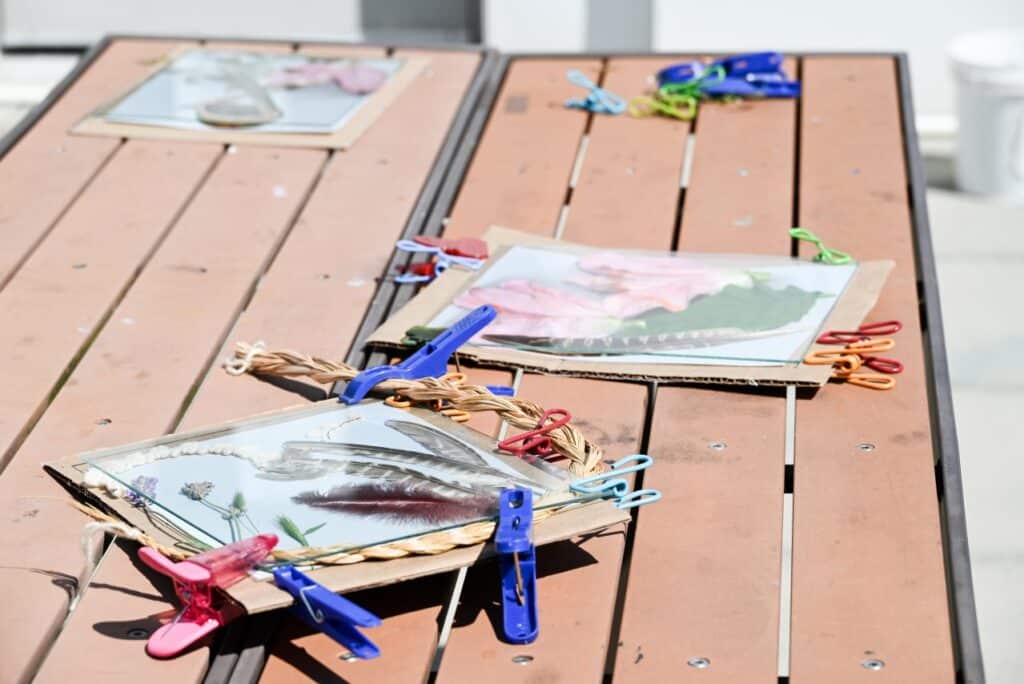
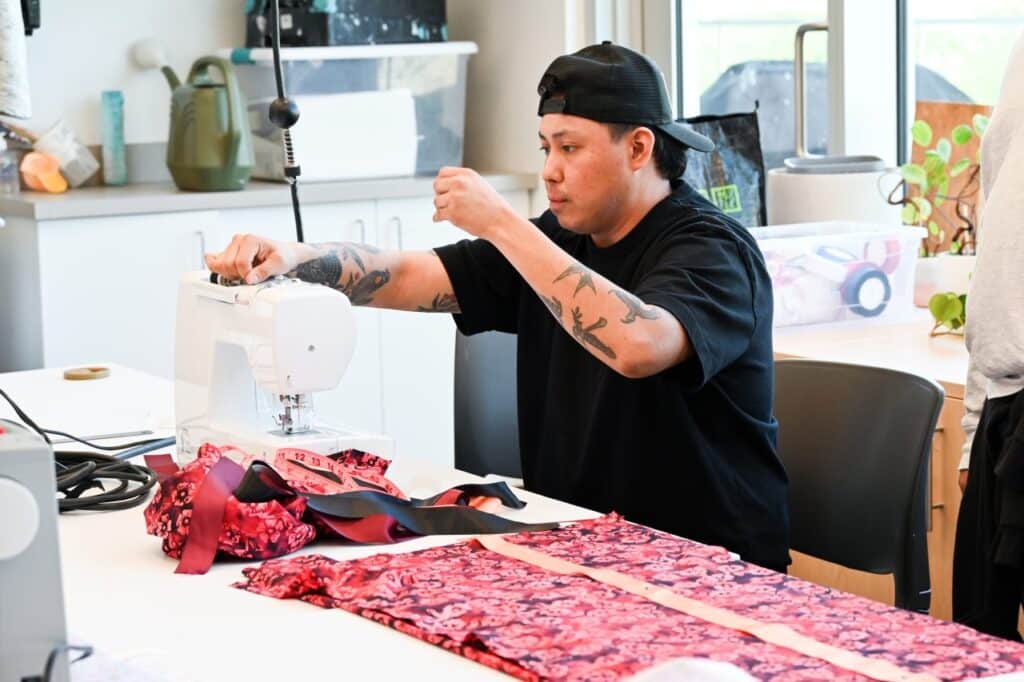
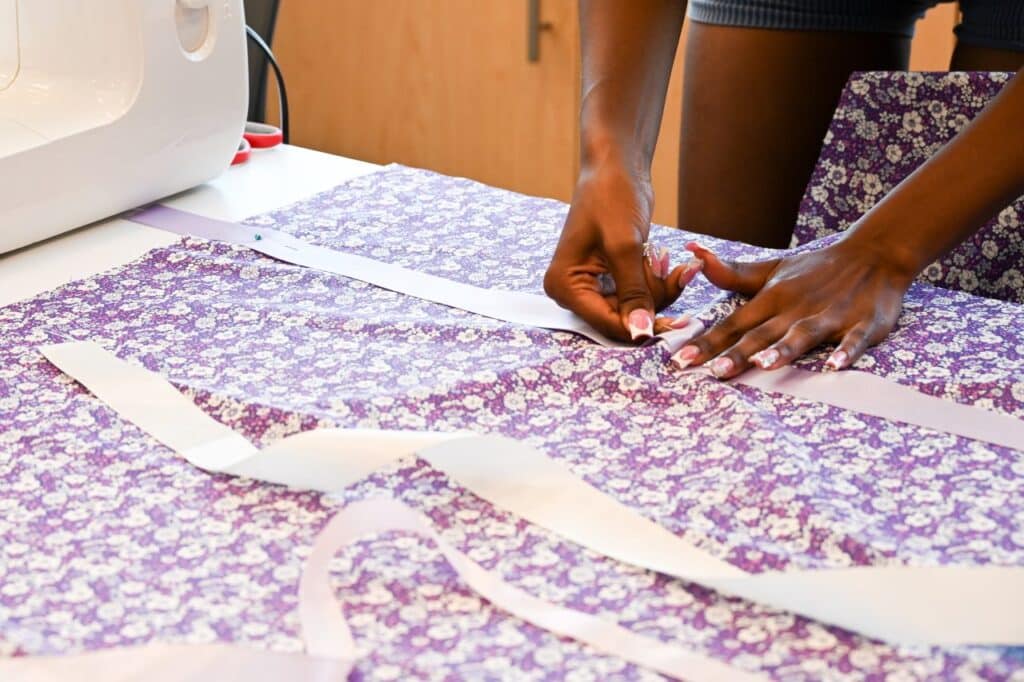
At the AGP, the students learned lumen printing from artist and ECU student Kimberly Ronning; made regalia and ribbon shirts with Matthew Provost; learned weaving with Athena Picha; and learned drum-making with ECU staff member Sydney Pascal (MFA 2023). Each workshop also involved broader reflection on artistry, identity and the many ways a creative career can take shape.
“In addition to working with the artists, the students got a tour of the Master of Fine Arts exhibition from Kimberly Ronning and me,” says Sydney, Aboriginal Program coordinator at ECU. “We introduced them to works by some of our Indigenous MFA students, and you could see them get inspired and energized as they realized the possibilities for what can happen through Indigenous creative practice.”
“As with much of what we do at the AGP, our main goal was encouraging exploration of different materials and practices to show how many ways there are to express a story,” adds Kajola Morewood, associate director of Aboriginal Programs at ECU.
“We also introduce them to some of the cultural traditions around these practices. Because the things you see in a museum were never meant to be simply observed. They’re part of living cultures. Coming here, students get a chance to get directly involved in those traditions through making — to take that history in their hands and become a part of how it’s taking shape now, in the present.”
Damara notes these lessons dovetail neatly with her aim of helping her students step into their power as Indigenous people.
“No matter what you might read about your history in a museum, you are the one with lived experience,” she says. “As an Indigenous person, you have a PhD in who you are, and nobody can tell you different. Working with all the different Indigenous artists here at ECU is another way we can bring that truth to life for our students. And frankly, the kinds of transformation we see with these amazing, generous young spirits is phenomenal.”
Visit the MOA’s website to learn more about the Native Youth Program.
More About Aboriginal Programs at ECU
The Aboriginal Program Office provides culturally appropriate support that encompasses both traditional and contemporary artistic and cultural expressions of Aboriginal peoples and is a valuable resource for students to access traditional materials/supplies.
The Aboriginal Program team also assists with the promotion and coordination of events and workshops related to Aboriginal art and culture, and is responsible for providing information regarding Aboriginal funding, scholarships and awards.
Visit the Aboriginal Gathering Place online to learn more about their programming and resources.
Want more stories like this one delivered twice a month to your inbox?
Subscribe to our free Emix newsletter today!