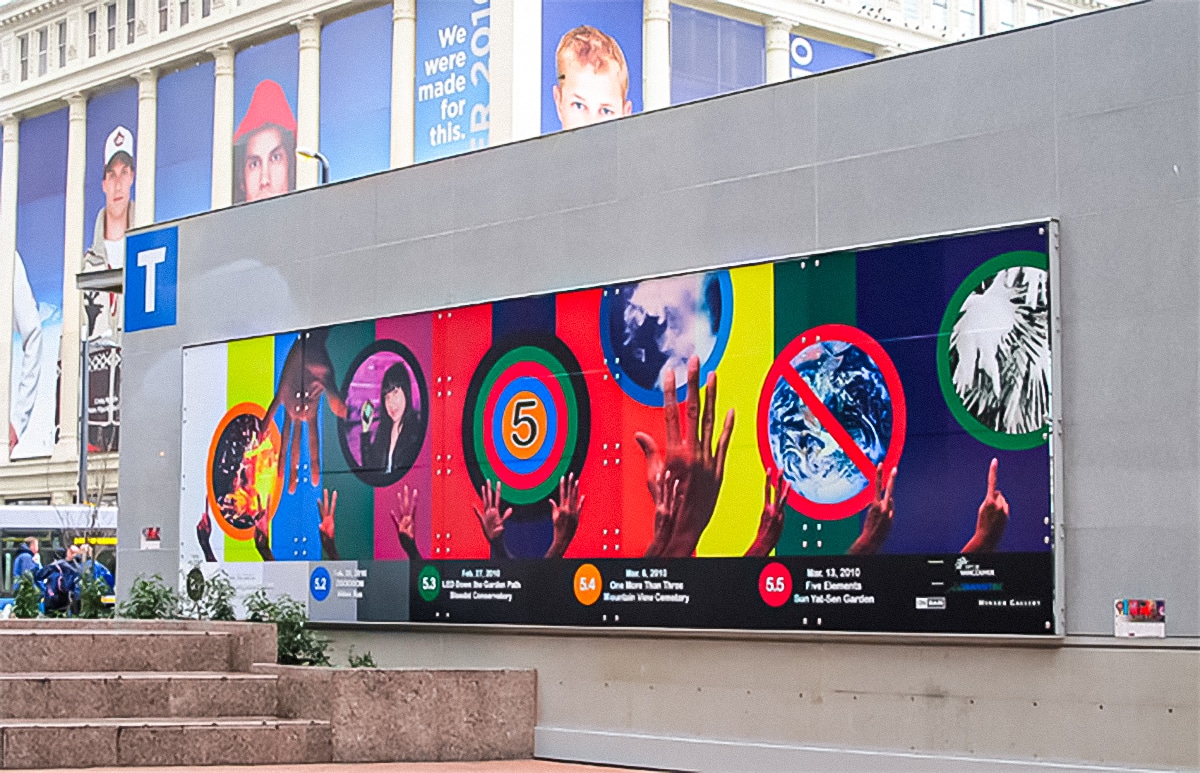
Among the many artists who participated in the 2010 Cultural Olympiad are a host of ECU community members.
As the 2026 Winter Olympics unfold across Northern Italy, the sprawling, multi-city Milano-Cortino opening ceremonies have received warm appraisal for their playfulness and showcasing of local talent.
For many in Vancouver and across Canada, the spectacle perhaps inevitably recalls memories of 2010 – when the city hosted the world and Canada took centre stage.
In the two years leading up to the 2010 Winter Games and throughout, the Vancouver 2010 Cultural Olympiad brought together hundreds of artists, performances, exhibitions and installations. It was a rare moment when the global spotlight met regional cultural and creative energy.
Among the contributors to the Cultural Olympiad were a host of Emily Carr University of Art + Design (ECU) community members.
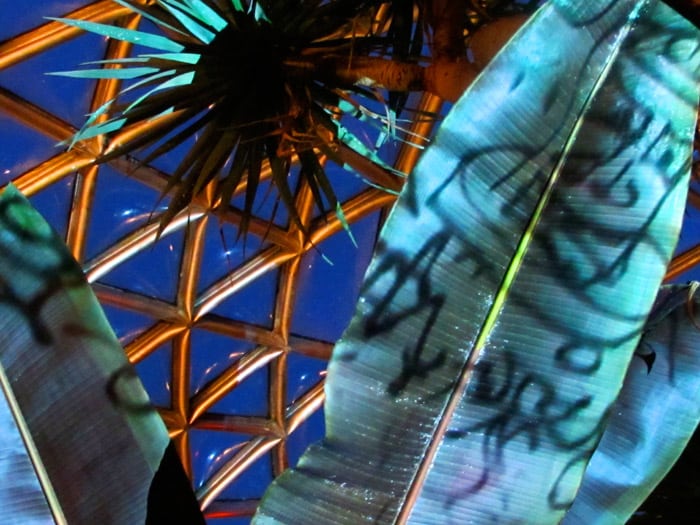
Celebrated artist and 2023 Honorary Degree recipient Paul Wong was one of the most prolific participants. His suite of projects, titled 5, comprised five, five-hour events staged across the city over the course of the 2010 Olympic and Paralympic Winter Games.
Paul, who is known for his groundbreaking and oftentimes visceral work interrogating the social and political constructions of race, place, identity and sexuality, says marquee events like Cultural Olympiads offer a unique venue for artists to push their relationship to form and audience.
“I’ve always liked rupturing, accessing and making public all kinds of spaces,” says Paul, who hired a team of dozens to help him realize his sprawling series of projects.
“We were working with ideas like pushing back-and-forth between inside and outside. We were asking ‘What is art?’ And ‘Who is the public?’ We were reimagining how the Sun Yat-Sen Garden could be more than just an out-of-town tourist destination, working with artists who’ve never shown before or reaching communities we’ve never engaged with before.”
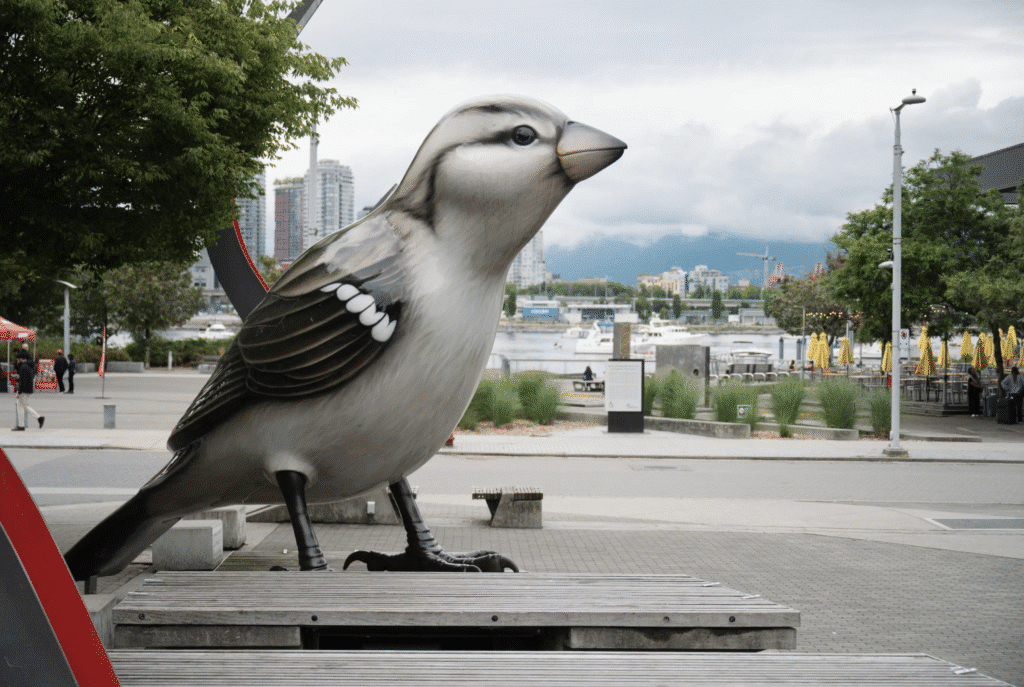
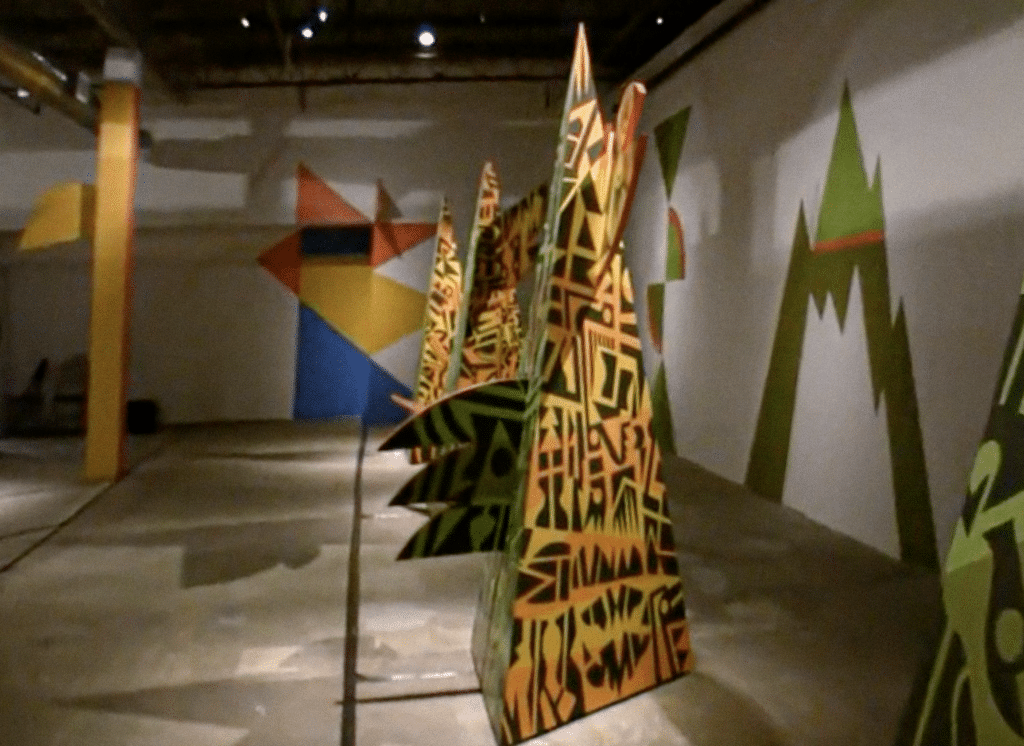
Many other ECU artists contributed works as well, some of which can still be seen today. Welcome Figure by faculty member Tawx’sin Yexwulla/Poolxtun (Aaron Nelson-Moody), The Birds by former faculty member Myfanwy Macleod and IKONS: Eric Metcalfe/George Lewis co-created by former faculty member Eric Metcalfe were all developed in conjunction with the occasion.
Honorary Degree recipient Susan Point also contributed works including an architectural artwork dedicated to the Fraser River which adorns the buttress runnels of the Richmond Olympic Oval.
And Xwalacktun, who graduated from ECU in 1982 and received an Honorary Degree in 2022, worked on designs for the 2010 Winter Olympic Bid, including initial icon development and laser-etched designs created especially for the 2010 Bid Box. He was also the first Indigenous artist to be granted a license to create art related to an Olympic Games.
The breadth of ECU community participation in Vancouver 2010 underscores the university’s longstanding role in shaping BC’s cultural landscape – not only through individual artistic careers, but through contributions to major public moments and engagements that reach global audiences.
More than a decade later, the legacy created by these artists remains visible across the region, from civic landmarks to public gathering spaces. It is a reminder that cultural moments of this scale are shaped not only by sport, but by artists who envision how they are seen and remembered.
100 Years of Creativity: The Stories that Shaped Us
As part of Emily Carr University’s centennial celebrations and our ‘100 Years of Creativity’ campaign, we are sharing stories that spotlight the creativity, resilience and impact of our community over the past 100 years. These stories feature the people, projects, places and ideas that have shaped ECU, reminding us of our shared legacy while inspiring the future. By revisiting past milestones and sharing new ones, we honour the many voices that built our institution and continue to guide its path forward.
For more information about ECU 100 centennial celebrations, upcoming events and stories, visit our webpage.