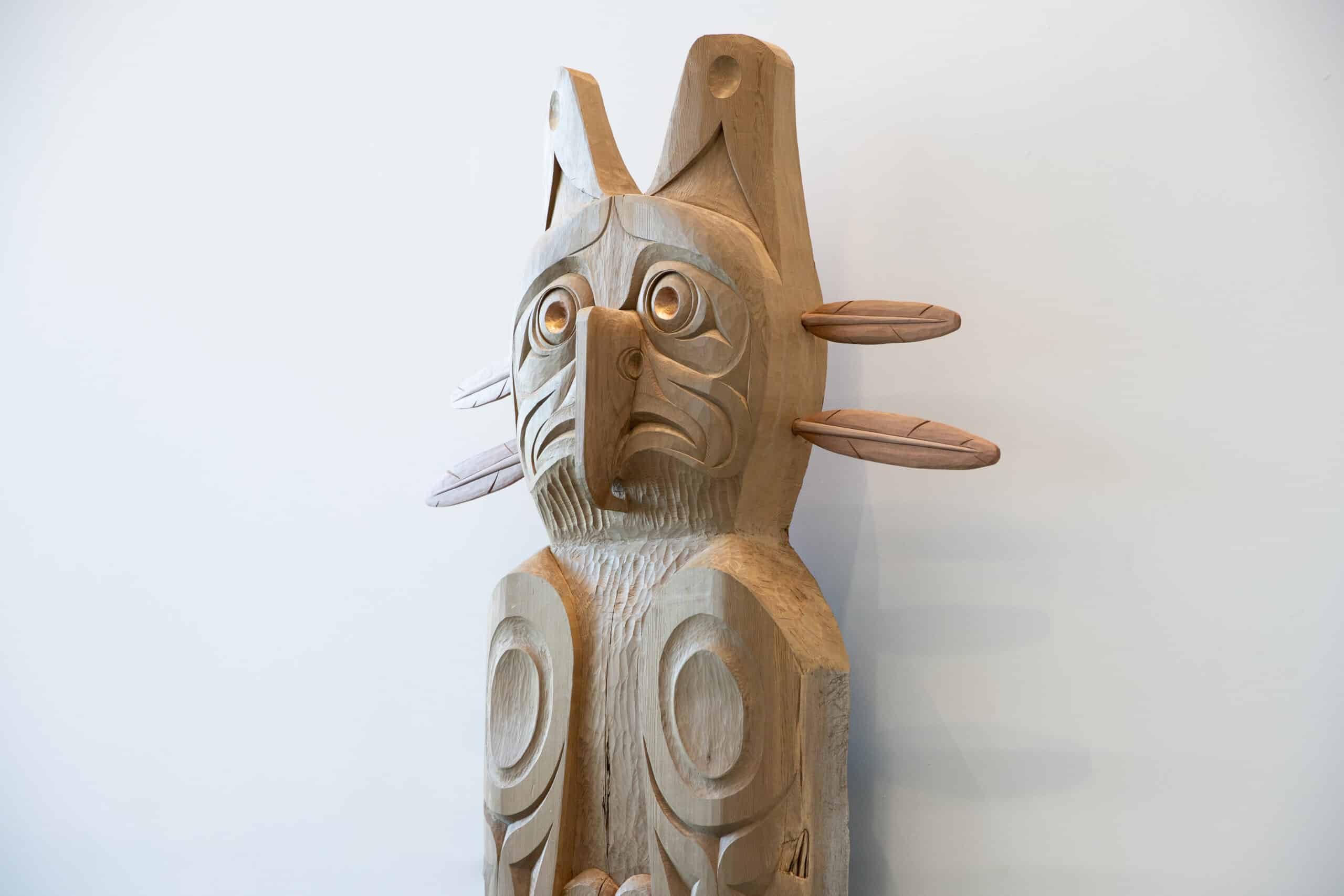
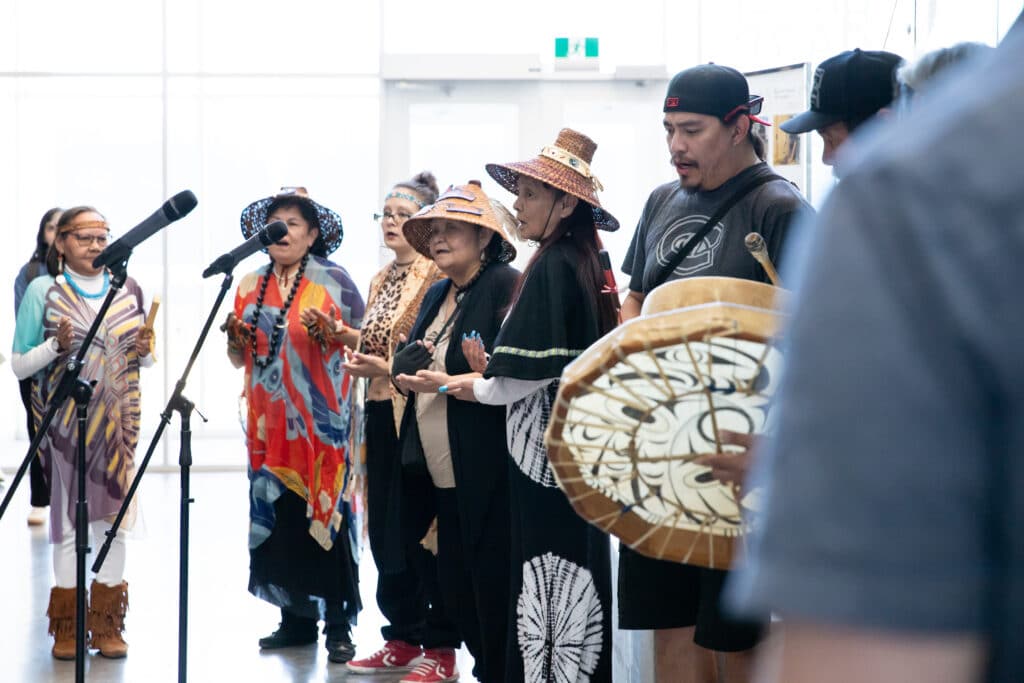
In late April, the ECU community celebrated carver and artist Xwalacktun’s efforts after completing the university’s first of three House Posts to honour Vancouver’s Host Nations.
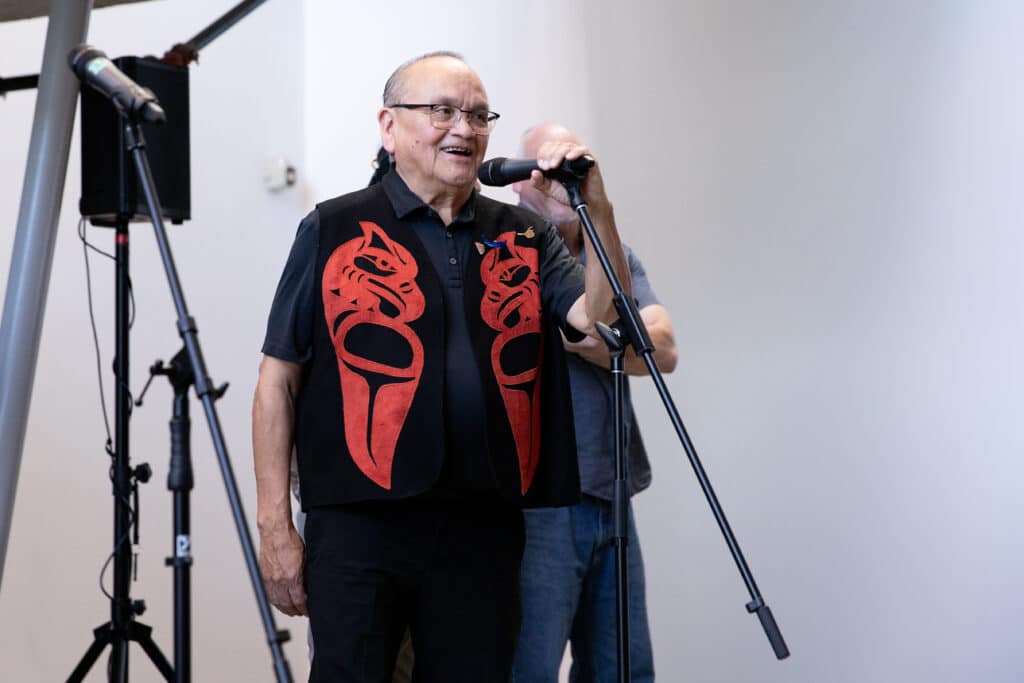
As Xwalacktun’s brother Chief Dale Harry shared in his remarks at the House Post celebration, “All learners are teachers, and all teachers are learners” in the ethos of the Sḵwx̱wú7mesh (Squamish) community. Artist and carver Xwalacktun’s work on the House Post embodies this philosophy through the subjects he carves and in the collaborative way he engages with students at ECU.
The House Post was created in collaboration with Indigenous students and alumni Randall Bear Barnetson, Jesse Tustin and Aaron Rice. By inviting the students to share their knowledge and reflect on their identities, along with sharing his own stories, the creation of the post blurred the boundaries between student and mentor to prioritize the co-creation experience.
Xwalacktun chuckles as he recalls the students who were more experienced in painting and transitioned to carving through this project. “They were working really hard, but I told them to relax and just enjoy themselves; still, they were sweating! I said, ‘If you’re sweating, you’re working too hard.’ You need to let the tool do the work and take it easy, learning the technique as I showed them.”

Surrounded by friends and family, Xwalacktun beamed as he reflected on creating the House Post and welcoming anyone in the ECU community to participate, including former President Gillian Siddall
“I kept the door open and encouraged people to come and ask questions. Even the former president came by and took off some wood. Anyone interested could bring a tool and give it a try. This was a way to help people learn about our culture and, more importantly, experience carving firsthand.”
THE LEGACY OF FAMILY MEMORIES & INFLUENCES
As his 94-year-old mother looked on proudly, Xwalacktun paid tribute to her memories, which inspired the design of this House Post newly installed at ECU.
His mother was five when she witnessed Chief Mathias Joe Capilano, whose family attended the event, carving stunning totem poles in North Vancouver.
“It feels like we’re moving from the old ways of carving into the new. My mother saw Chief Joe’s work, and I wanted to copy that form and shape to honour that,” says Xwalacktun. “I wanted it to feel like it could come from my grandfather’s or great-grandfather’s time. Taking that design and bringing it forward to show how the carvers were back then.”
That exemplary legacy of craftwork is apparent in the remarkable new House Post, which sits in the north entrance stairwell near the Pacific Song of the Ancestors pole. The House Post is a culmination of Xwalacktun’s work, inspired by his Coast Salish heritage and honouring his elders’ and ancestors’ traditional carving methods.
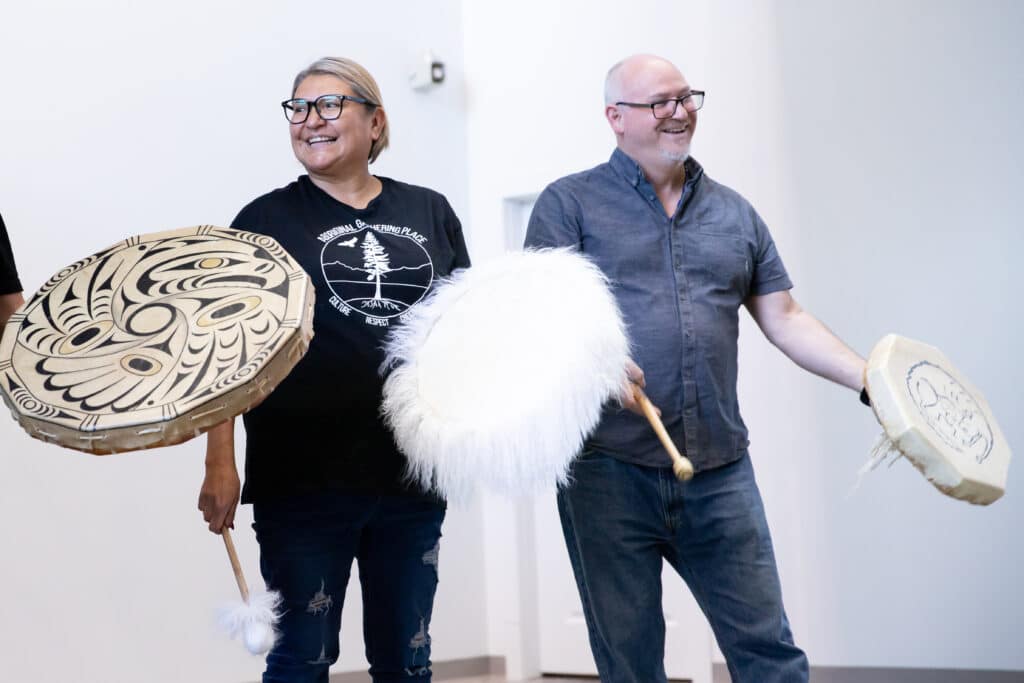
Daina Warren, the Executive Director, Indigenous Initiatives, highlighted how special this event was in celebrating Xwalacktun’s role as a key mentor and integral figure in ECU’s Aboriginal Gathering Place.
“I think it’s important to acknowledge his efforts in bringing this project to life. We wanted to celebrate him – not just for this achievement, but for everything he’s contributed to the university,” says Daina.
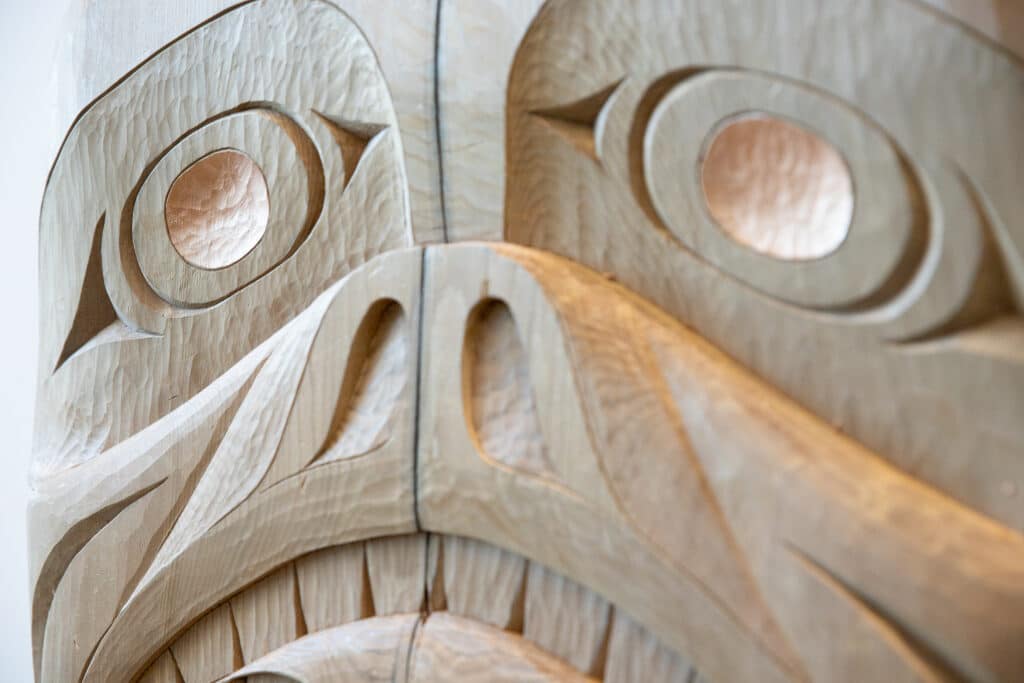
“I appreciate that he consistently incorporates copper leafing in the eyes. It’s a signature detail that appears throughout his previous work. Seeing that kind of continuity and recognizable identity in his art is great. We hadn’t realized that the two feathers extending from the headpiece were part of the final design, so learning that they would be added later brought an exciting touch.”
You can learn more about Xwalacktun’s practice on his website.
More about the Aboriginal Gathering Place at ECU
The Aboriginal Gathering Place at ECU provides culturally appropriate support that encompasses both traditional and contemporary artistic and cultural expressions of Aboriginal peoples and is a valuable resource for students to access traditional materials and supplies. The Aboriginal Program team also assists with the promotion and coordination of events and workshops related to Aboriginal art and culture and is responsible for providing information regarding Aboriginal funding, scholarships and awards.
Visit their website to learn more about their programming and resources.
Want more stories like this one delivered twice a month to your inbox?
Subscribe to our free Emix newsletter today!