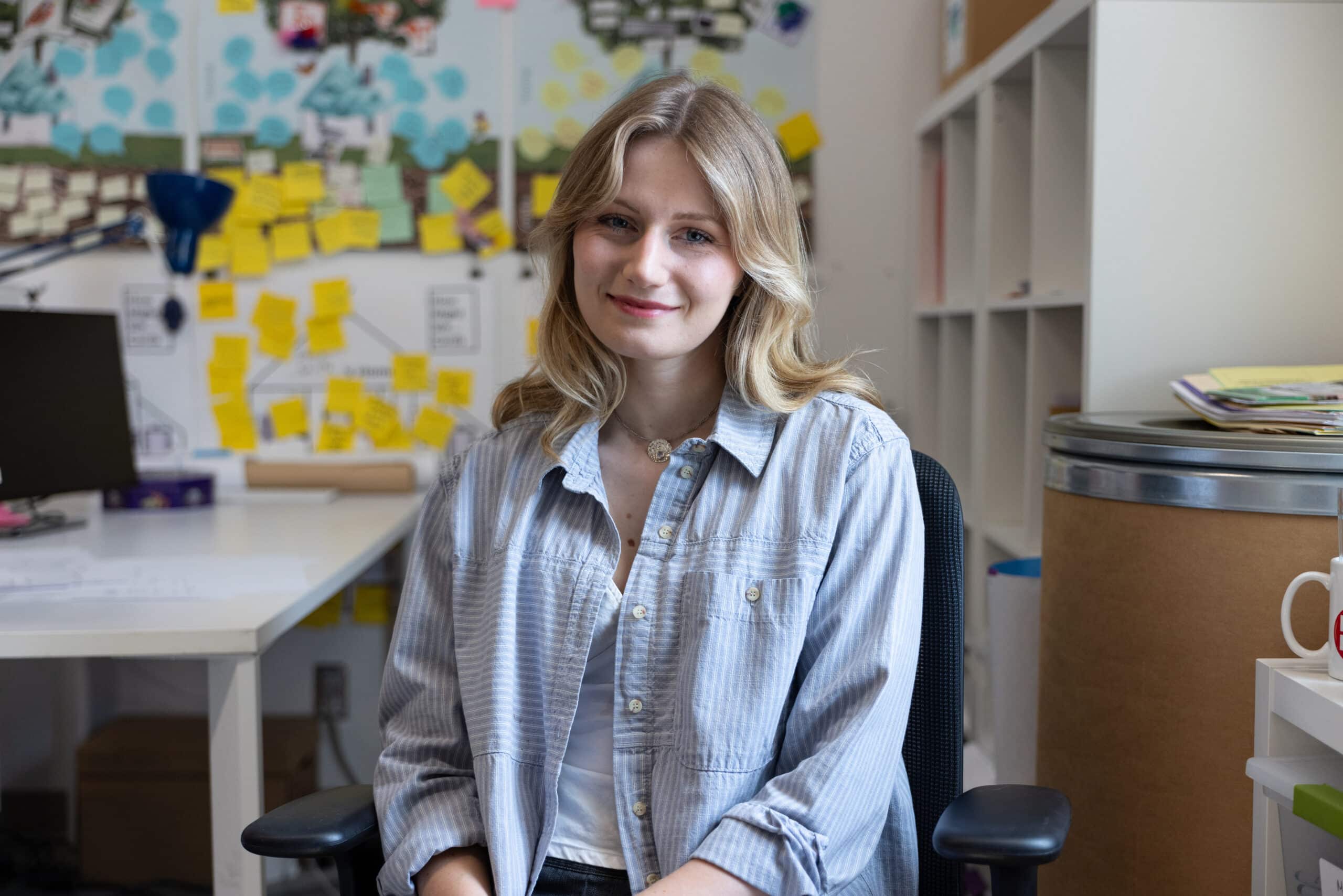
Working with the lab opened new possibilities for the Master of Design student’s research with people living in long-term care.
A Master of Design student at Emily Carr University of Art + Design (ECU) says her thesis exploring how residents in long-term care homes can shape the sounds around them was influenced by her work with the Health Design Lab (HDL) research centre.
Now successfully defended, Logan Wilkinson’s Master’s Thesis project, Listening as Agency: A Participatory Approach to Designing Institutional Soundscapes, engaged local seniors to consider their auditory environments.
“Through a series of workshops, I invited residents to reflect on the sounds that mattered most in their daily lives and to imagine changes they would like to hear in their environment,” Logan says. “The project showed how focusing on listening can reveal previously invisible opportunities to improve resident experiences in care homes and to strengthen resident autonomy and agency.”
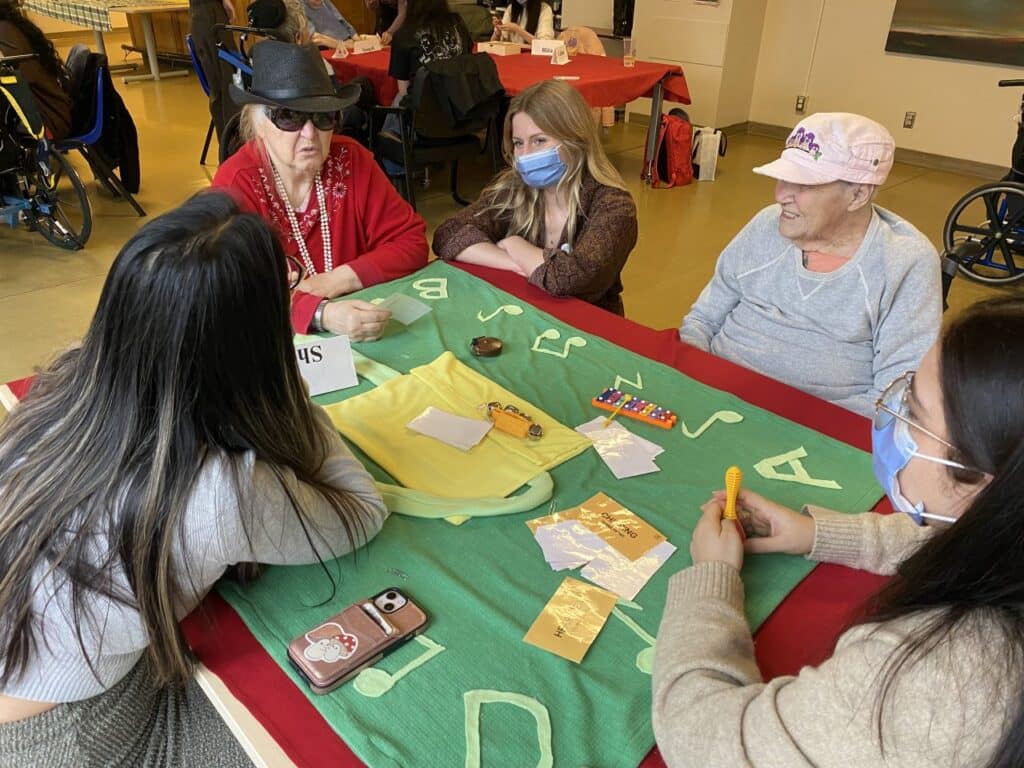
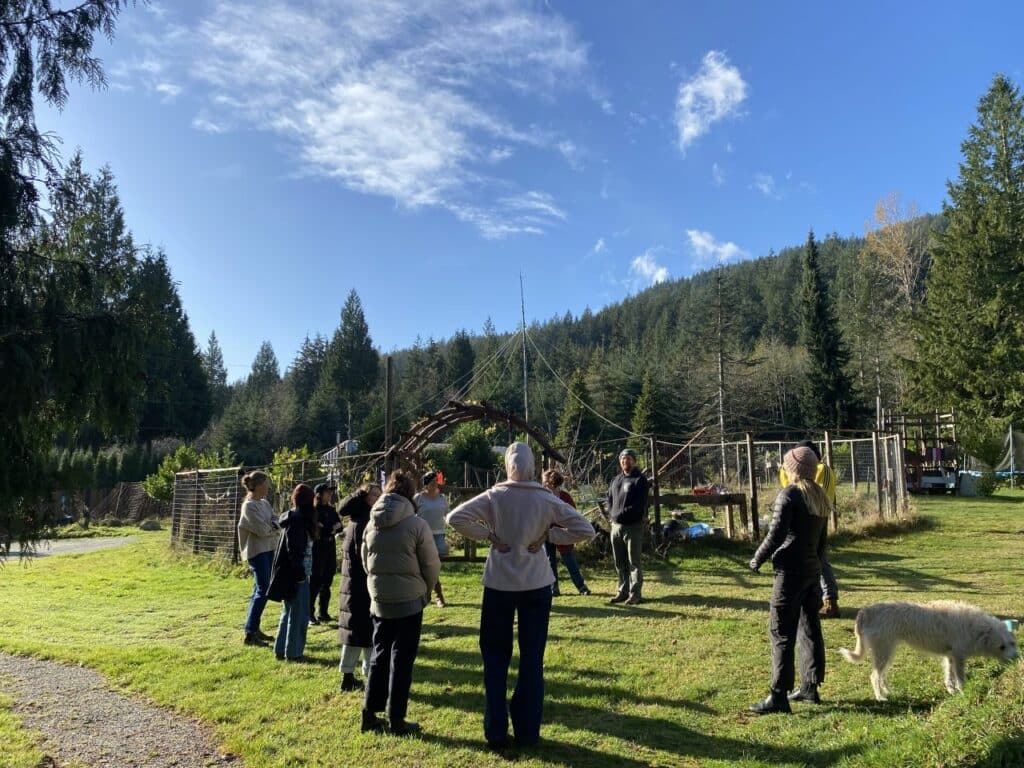
Logan adds that her work on Perspectives, HDL’s course-based program bringing together design students with people living in long-term care for intergenerational exchange and co-design, and on Who Cares?, HDL’s collaborative project to foster community-based models of care support for aging, helped her developed vital skills and networks to support the development of Listening as Agency.
“Perspectives allowed me to connect with staff and residents within a care home and to be actively involved in leading co-design workshops with elderly folks, which influenced the direction of my thesis,” Logan says.
“With Who Cares?, getting to know how a cross-organizational collaboration worked within a design context was also valuable. Seeing the HDL’s approach to participatory design, specifically when working with people with diverse accessibility needs and differing sensory experiences, directly inspired my thesis work.”
MAKING THE LEAP
From a student perspective, Caylee says the HDL helps provide a crucial bridge between classrooms and applied practice.
Internships with external companies can be valuable, but employers often lack a strong understanding of what students are learning in school. The HDL offers applied learning opportunities from mentors with a keen understanding of both professional and curricular settings.
“Most of our projects introduce them to skills and ways of working they’re not familiar with through curriculum. It’s hard to make the leap from the classroom into the real world. The RA positions really support them do so,” Caylee says.
“While students are drawing on skills they’ve learned in curriculum, they’re also being asked to do many new things and broadening their skills and experience.”
REVEALING THE UNNOTICED
Logan has previous experience in healthcare, including studying psychology in her undergrad, conducting research in a children’s hospital with youth experiencing mental health crises, and working as a support worker for people with hearing loss and low vision.
She says these experiences helped her develop fundamental skills for working with vulnerable populations. Meanwhile, her background as a musician and multimedia artist helped attune her to the importance of sound in how we experience the world.
Focusing these practices through the lens of her work at the HDL allowed Logan to develop a robust research methodology for exploring how a setting like a care home could be improved for residents by paying attention to sound.
Exercises with her participants included asking them to record their daily soundscapes with a portable device, interviews about their recordings, and a workshop to brainstorm changes to the home to improve their quality of life.
For instance, one resident recorded a noisy fan in their room. The exercise — and the interview afterward — expedited its repair. Other residents recorded noises made by their neighbours, often noting confusion as to why such noise was happening. This suggested some form of education regarding the relationship between dementia and vocalization might lower the distress of residents.
“Listening, both to the sounds of the home and to the insights shared by residents, was really powerful in revealing often-unnoticed aspects of the environment that designers and people who are working in health may not typically be privy to,” she says.
INVALUABLE CONNECTIONS
While Logan’s research resulted in recommendations for the care home, she notes her thesis’ aims are broader.
“I’m interested in the theoretical takeaways for how this approach could be valuable to designers in general,” she says. “I’m keen to continue exploring new approaches to participatory design in care institutions and sharing the stories and experiences of residents. Advancing this methodology is really what I’m trying to get at.”
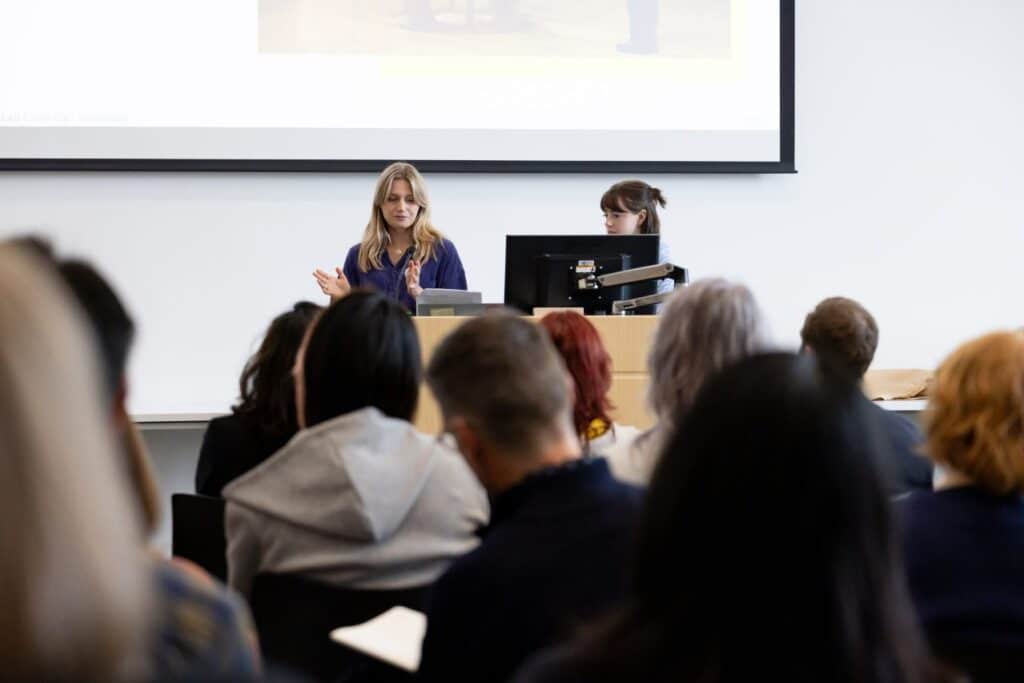
Leaning on the connections and insights she gained through her work with the HDL, her research has already begun finding its way into the wider world. A care-home contact is hoping to arrange an opportunity for Logan to present her work to VGH care-home leadership at other sites. Meanwhile, she is travelling to Italy to present her work at the Ways of Listening conference in Sicily.
She emphasizes the transformative impact of working with the HDL and notes the importance of such opportunities for mobilizing student research beyond the university.
“It gave me a lot of perspective, experience and mentorship that my study wouldn’t have been possible without,” Logan says. “I would love to see more projects like this in the future that are integrated into the community and allow students to build connections to facilitate their research both at ECU and after graduation. It’s invaluable.”
More About the Master of Design Program at ECU
We seek designers who aspire to create experiences and transformations locally and globally. Root yourself in our campus community while building connections with industry. Our two-year Master of Design degree program is built on critical, practice-based creative research. Faculty, staff and peers will be with you every step of the way, mentoring, challenging and supporting you.
Visit our website to learn more.
More About the Health Design Lab
The Health Design Lab (HDL) is a research and design centre at ECU. We use participatory design methods to catalyze, support and amplify initiatives that address complex health challenges.
To us, health is more than healthcare. Health is about community, culture, equity, agency, and much more. As a team of designers, including faculty, research associates and students, we work collaboratively with communities through storytelling, visualizing, making and co-design. Collaborations and projects seek to foster new ideas, uncover needs or opportunities, improve systems and services, and amplify voices and stories.
Visit our website to find out how to partner with and support the HDL.
Want more stories like this one delivered twice a month to your inbox?
Subscribe to our free Emix newsletter today!