Written by Heather Fitzgerald
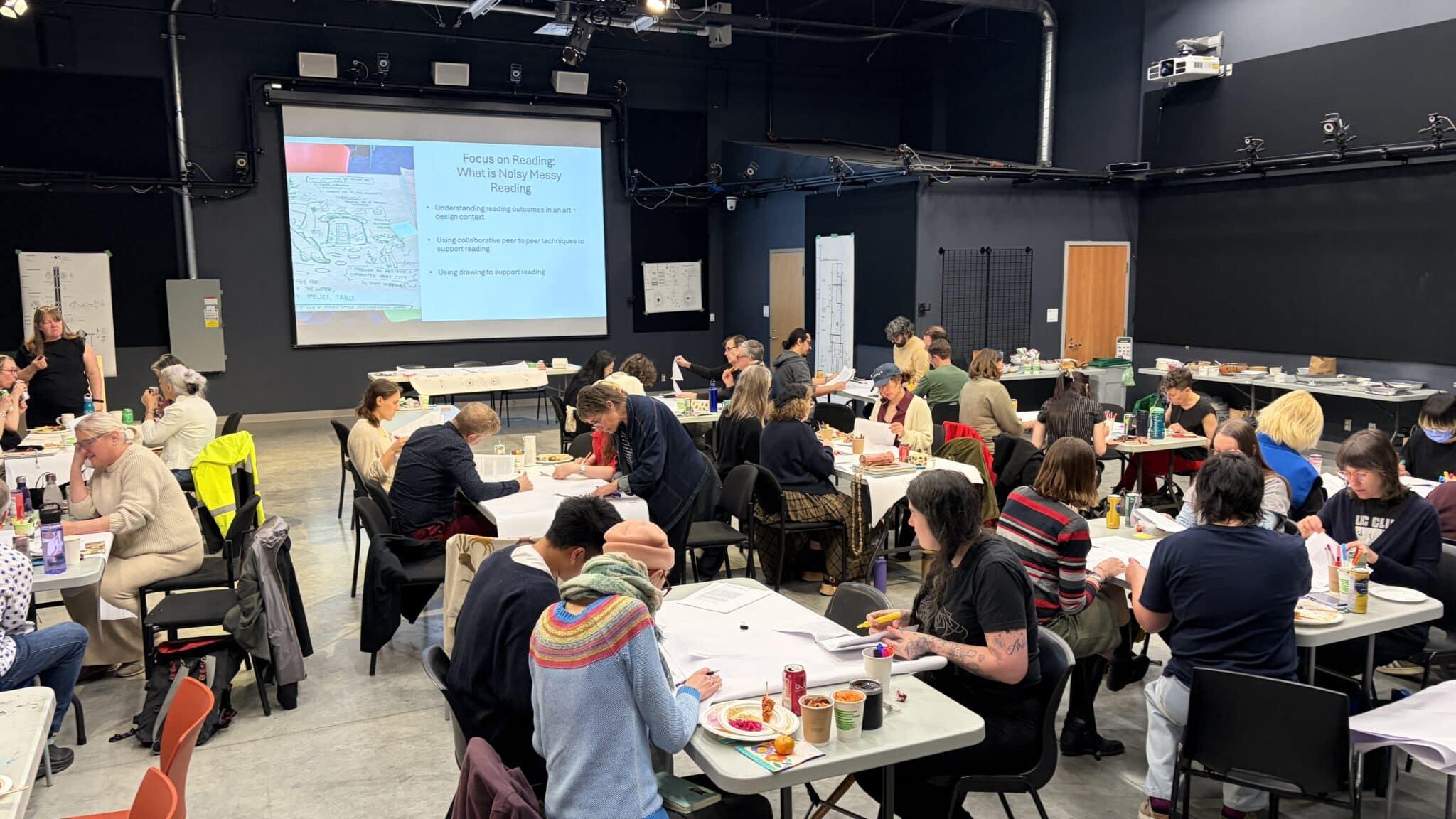
ECU’s annual Practice and Pedagogy Symposium took place on April 28, 2026. About 65 colleagues gathered in person, joined by another 25 online, to engage with presentations about sabbatical research and teaching and learning projects. While there was no formal coordination between the seven presentations, the elephant in the room that is GenAI was a recurring topic: colleagues shared explorations with these technologies in their creative practice and research, posed thoughtful questions about what it means to be a human creator and learner in this moment, and shared powerful stories of human memory, sensation, and emotion as a foundation on which we might build a future.
Other themes and topics threaded the day together as well. Birthe Piontek and Chris Jones considered what it means to teach photography in the current moment, both in an era of AI-generated images but also in the context of potential changes to the Photo program at ECU. They reminded us that this is not the first existential threat that photography has faced, and that the artistic practice of photography will persist as it has always done.
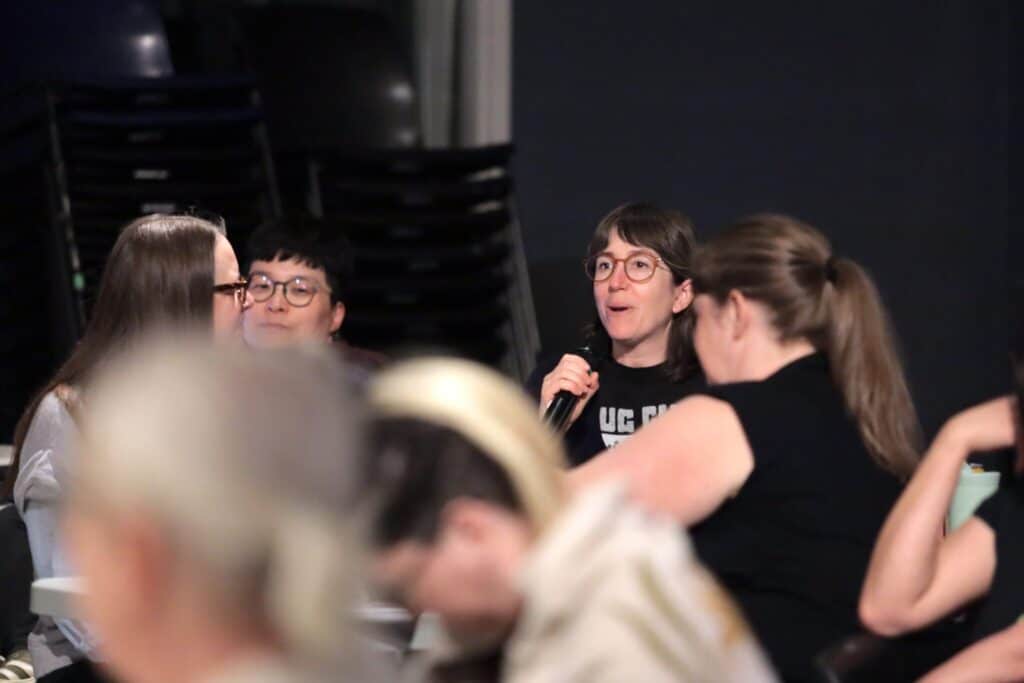
Faculty members Eugenia Bertulis, Sara Osenton, and Michelle Ng all explored, in very different ways, the value of tactile and embodied representation and exploration in this era of digitally mediated learning. In her presentation on “Messy Noisy Reading,” Sara documented the very real learning benefits that come from allowing students to “read” with their hands, bodies, and voices as well as their eyes. You can read more about Sara’s approach to reading workshops in this blog post. Michelle shared large format prints that allow students to chart – physically, in space – the operations of AI tools in their “Under the Hood of Generative AI” workshops. And Eugenia described her sabbatical research practice of reconnecting with the “archetypal activity” of design: sketching. Through daily sketching, she reminds herself (and students) that designers have more tools available to them than just the computer, and that designers, themselves, are not machines.
Pedagogical research led by Ki Wight (Gen AI in art and design education) and Allison Yasukawa (rethinking critique practice for equity and inclusion) reminded us of the power we, as educators, hold in how students interact with new technologies, practices, and identities. Joined by their research assistants, MDes student Mia Portelance and BFA student Eliza Miller respectively, Ki and Allison posed questions inviting us to (re)consider what and how we know about AI and critique, and they shared ideas for how we might discuss these two complex topics with our students.
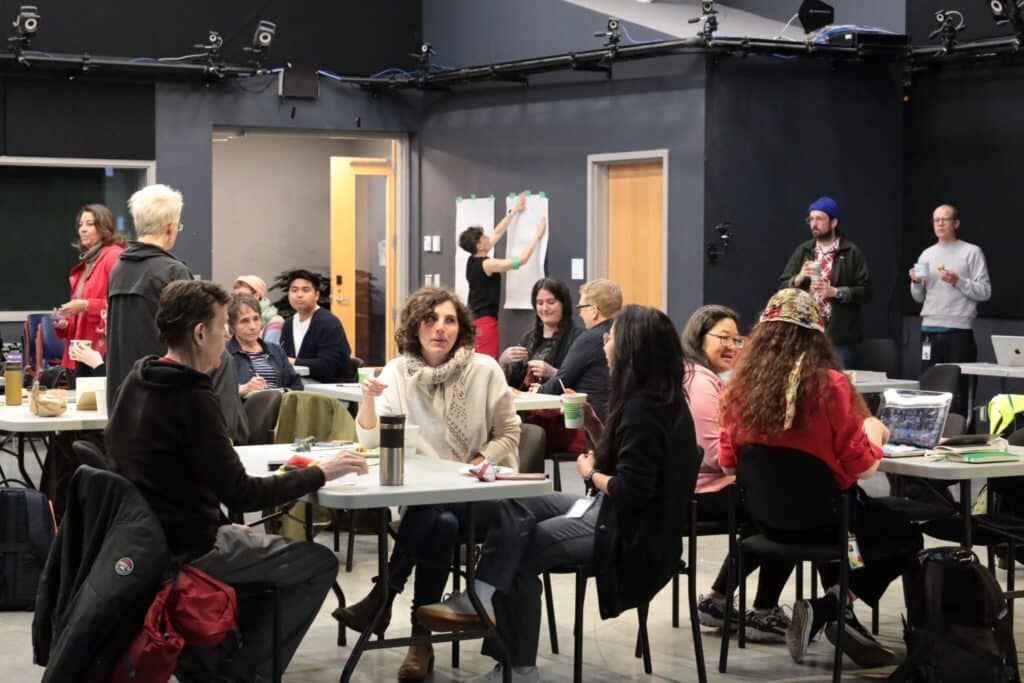
Throughout the day, we were reminded of the value of gathering to share, eat, and be together as a community. Participants reported feeling connected, inspired, and grateful, and they enjoyed opportunities for play, conversation, and laughter. Many participants reported that this aspect of the day—just being present with and for one another – was what they were most grateful for and wished we could do more often. They also told us what they want to spend more time discussing in future: in particular, more strategies for discussing AI and critique in classrooms.
Do you have feedback on the event or ideas for ways we can help faculty share ideas in similar events? If so, we’d love to hear from you: email us at tlc@ecuad.ca. We may share your comments in the next issue of the newsletter!