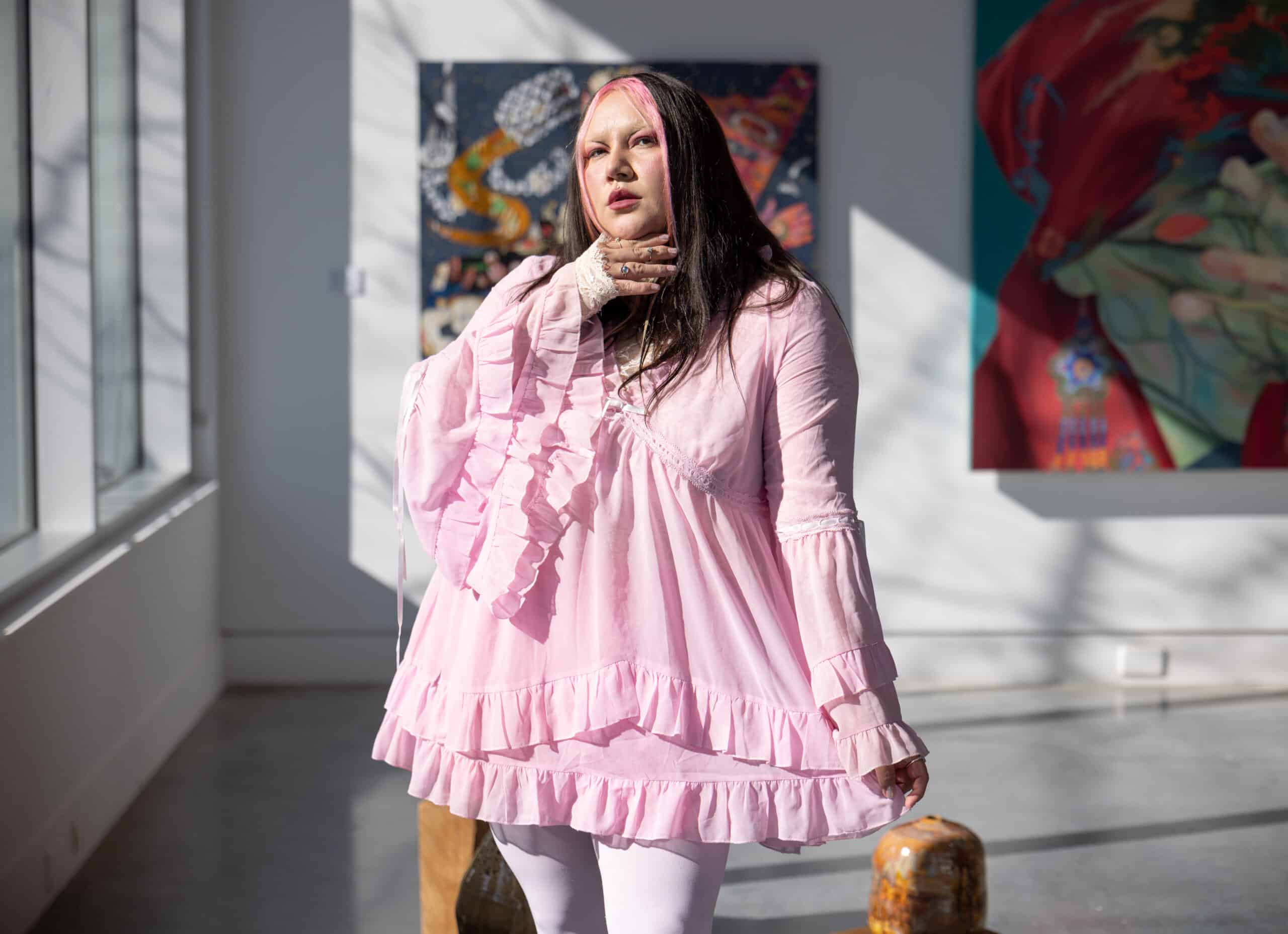
The interdisciplinary artist and ECU alum shares their vision of a world characterized by joy, resilience and shimmering, murmuring, pastel-coloured splendour.
When Cheyenne Rain LeGrande ᑭᒥᐊᐧᐣ (BFA 2019) was studying at Emily Carr University of Art + Design (ECU), their peers used to joke that their purse held a portal to another universe. Sitting in the Aboriginal Gathering Place (AGP) at ECU ahead of their artist talk and workshop in March 2026, they do little to dispel the rumour, at one point pulling from its modest interior a substantial maquette for a monumental public artwork they’re currently producing for permanent installation in a major Canadian city.
And they freely admit this perception serves the interdimensional personal mythology behind the “Nehiyaw Alien” persona they’ve adopted in recent years. But speaking with Cheyenne, it quickly becomes clear that the purse is a ruse. The portal is Cheyenne themself.
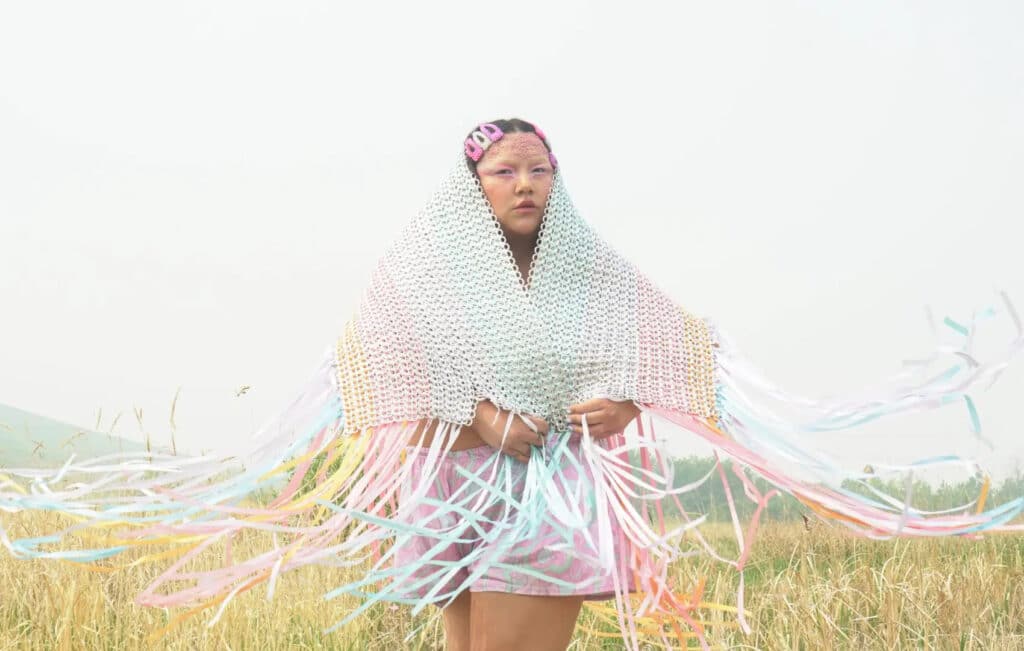
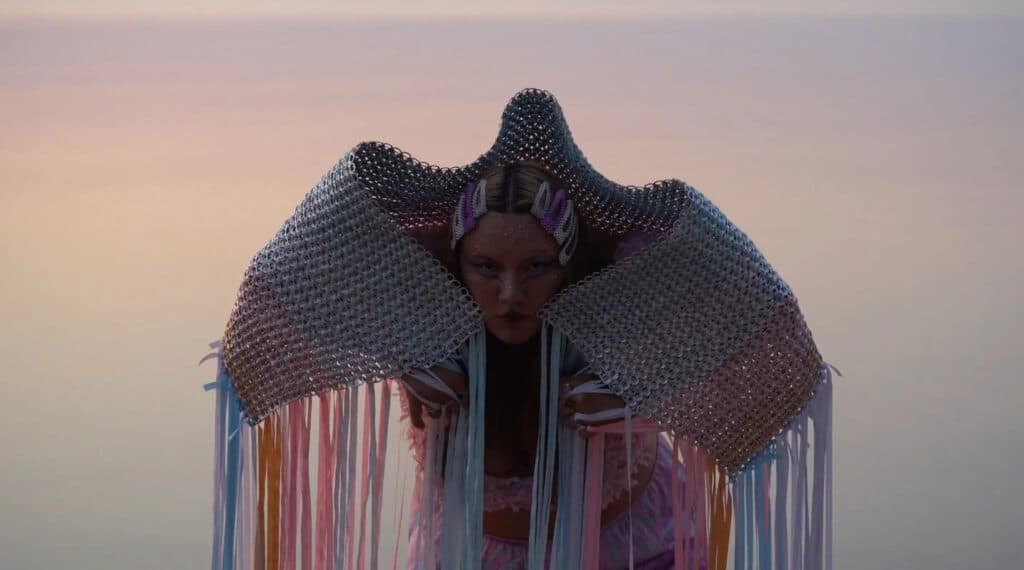
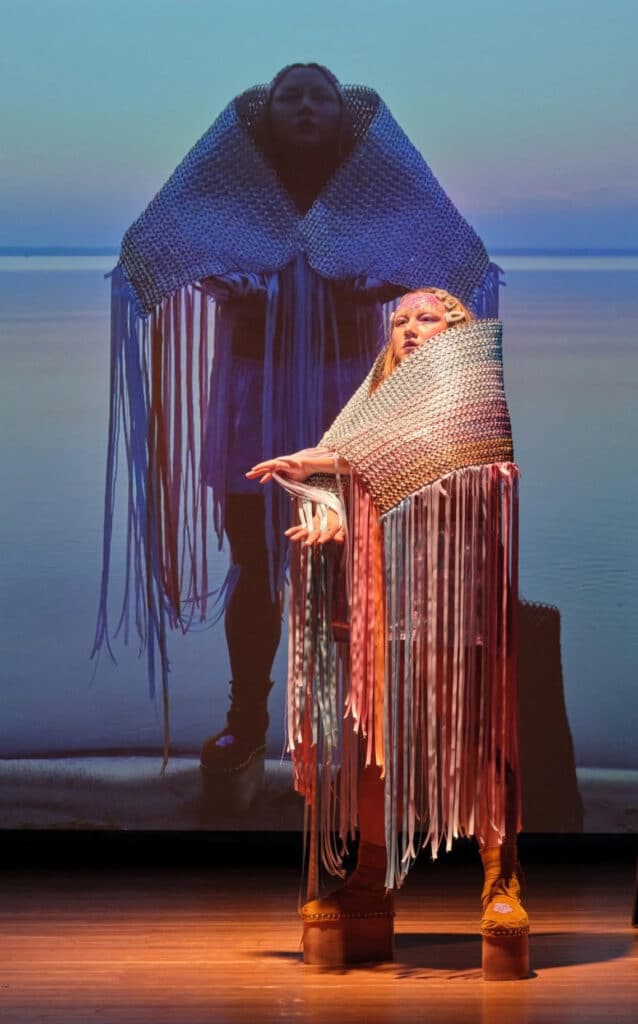
The pastel colours that animate their iconic Rainbow Thunderbird Shawl are reflected in Cheyenne’s coral daywear, replete with a wearable version of the original, wood-soled platform moccasins they built for performance. The “alien makeup” that frames the gaze they send beaming out from their photos and videos frames the easy smile they extend in person. And if you happened to catch sight of a teenager from Bigstone Cree Nation, you might spot a bepsi-tab bracelet woven with ribbons — a legacy of Cheyenne’s visit with local high schoolers to lead a workshop, deliver an artist talk and possibly open a gateway to another world.
“All of the different things I do just leak into each other,” they say. “They flow out of each other.”
In other words, Cheyenne’s lens-based and performance practices are not distinct, but instead are part of a holistic ecology of practice which includes fashion, sound, installation, modelling and, more recently, public art and music. Nor does Cheyenne view themself as operating in isolation. Their practice is highly porous, with themes and stories drawn from the experiences of their Kokum and Mosum (grandmother and grandfather), and frequent collaborations with their mother and brother, a musician and fashion designer, respectively.
Their 2019 graduating performance work, Nehiyaw Isko, exemplifies this syncretic approach, which has, since that time, earned Cheyenne numerous awards, recognitions and residencies as well as solo and group exhibitions across North America.
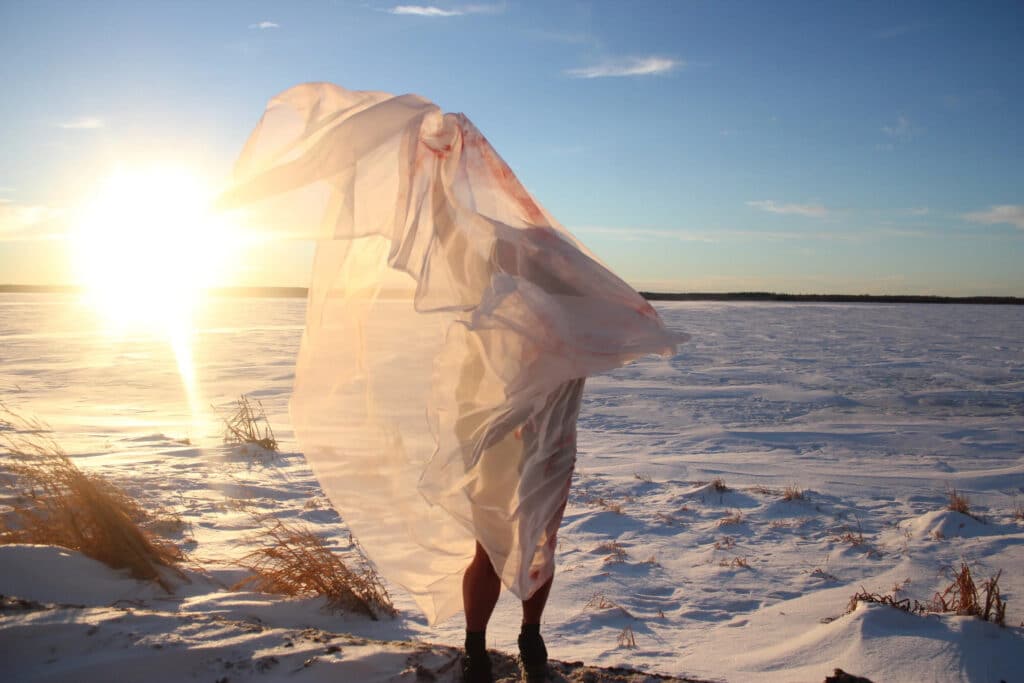
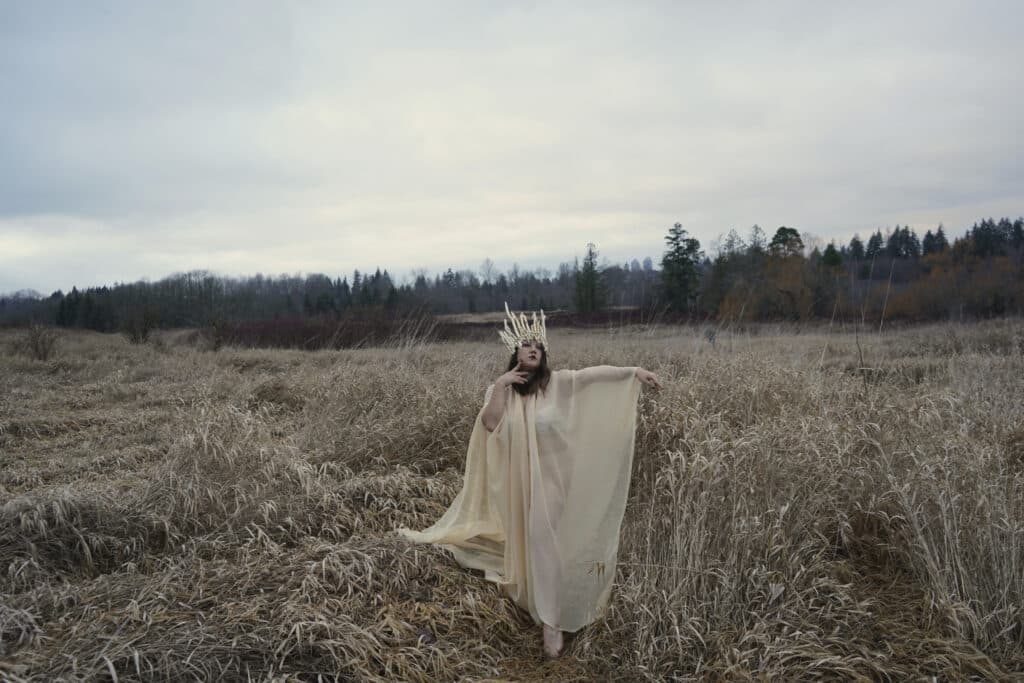
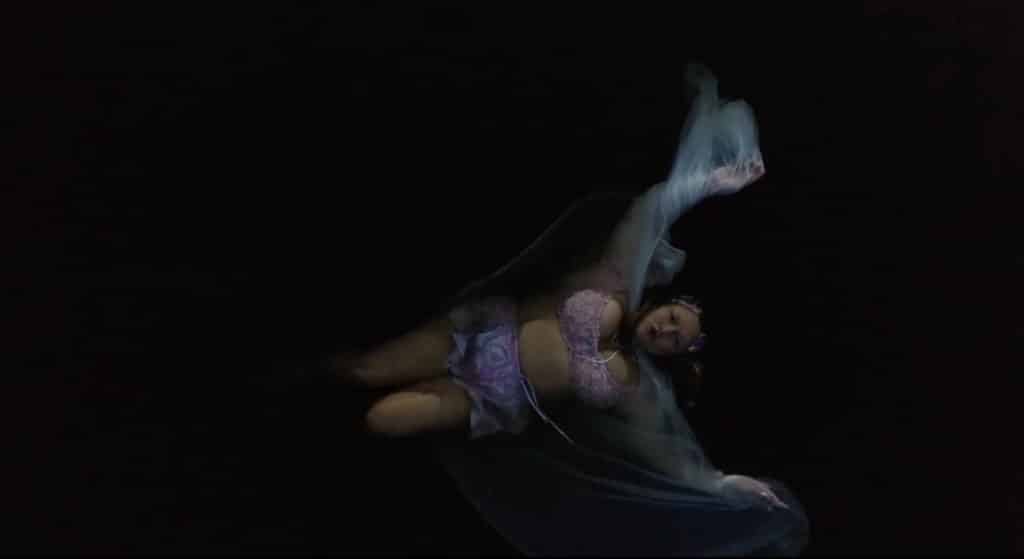
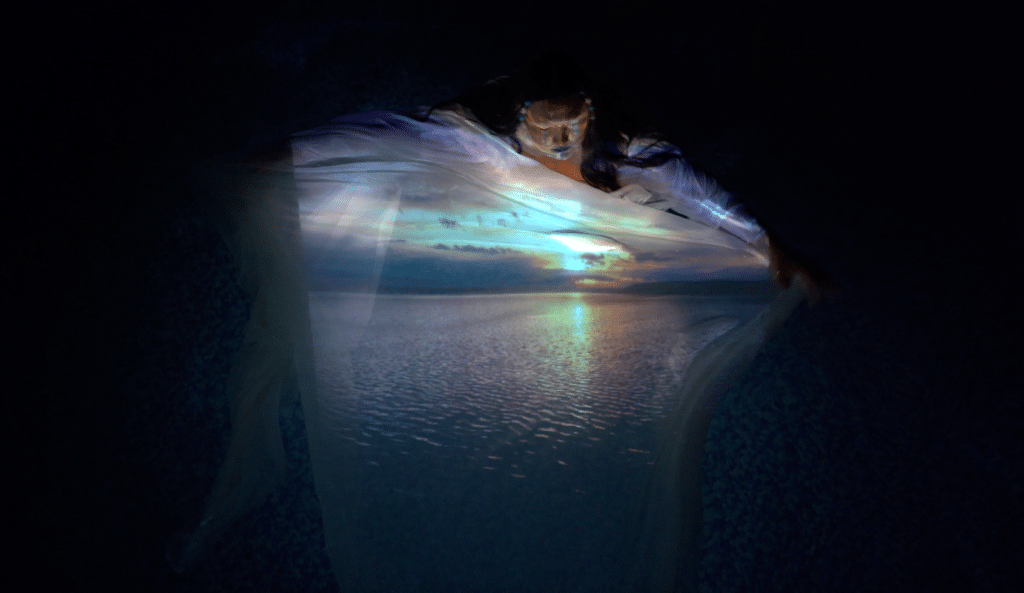
Nehiyaw Isko comprises a four-channel video documentation of a performance on four sites, including ECU and — in the dead of winter — Wabasca Lake near Bigstone Cree Nation. As Cheyenne moves with a billowing scrim and sheds red pigment from their skin, their mother responds in song.
Cheyenne notes the Wabasca Lake section of the work, which referred to their Kokum and Mosum’s personal histories, was performed in the snow in bare feet. The gesture caused them extraordinary pain but, thankfully, no lasting damage. They say this extreme gesture, which typifies a great deal of their early performance work, was aimed at working through some of the most extreme conditions imposed on their personhood.
“Both my Kokum and Mosum were in residential school and being back on that land reminded me of their pain,” they say. “The performance was a way for me to physically feel that pain in my body. But the beautiful thing about art is it’s allowed me to heal and process all of that.”
Cheyenne adds they no longer feel compelled to put their body at risk for their art.
“When I was in university, I was processing intergenerational pain and everything that my family had been through,” they say. “But I’m in a generation where I’m strong enough to feel those feelings that my Mosum and Kokum can’t talk about. I’m able to express them and release them. So, while I wouldn’t do a work like that now, it was important for my journey of healing and expression to go through that.”
As with so much of what Cheyenne does, this catharsis is both artistic and personal. They note their Rainbow Thunderbird Shawl epitomizes this transformation, offering an exuberant declaration of self that is as much affirmation as armour.
“My shawl is an expression of joyous protection,” they continue. “It’s about loving myself and reclaiming things I’ve lost. I never got to grow up dancing powwow, so it’s my way of reclaiming that, but also speaking to who I am today as a queer person.”
Cheyenne says their practice increasingly includes supporting younger artists as Cheyenne themself was mentored, most notably by esteemed artist and 2018 Honorary Degree recipient Rebecca Belmore. Cheyenne’s workshop at the AGP is an example, as is their engagement with teens in Bigstone Cree Nation and other young artists who reach out seeking advice.
“It’s incredibly meaningful to be able to share my knowledge so people can learn how art can heal you and help you, especially because I feel so lucky to be in a place where my work is now about intergenerational joy and resilience and love,” they say.
“Those are the things I want people to feel when they see my work now. And that is a healing power I want to share.”
It’s Cheyenne’s universe. Join them there, won’t you?
100 Years of Creativity: The Stories that Shaped Us
As part of Emily Carr University’s centennial celebrations and our ‘100 Years of Creativity’ campaign, we are sharing stories that spotlight the creativity, resilience and impact of our community over the past 100 years. These stories feature the people, projects, places and ideas that have shaped ECU, reminding us of our shared legacy while inspiring the future. By revisiting past milestones and sharing new ones, we honour the many voices that built our institution and continue to guide its path forward.
For more information about ECU 100 centennial celebrations, upcoming events and stories, visit our webpage.
More About Visual Arts at ECU
For independent and fiercely creative students, ECU’s Visual Arts program offers exceptional freedom and choice. As you build your creative skills, you’ll develop a deep understanding of how various art forms and histories connect, intersect and inform today’s practices.
Your faculty members, practicing artists who define the Canadian creative landscape, will guide you as you refine your techniques and follow your curiosity. After graduating, you’ll have a mature and exceptional body of work to launch your career.
Visit our website to learn more.
Want more stories like this one delivered twice a month to your inbox?
Subscribe to our FREE Emix newsletter today!