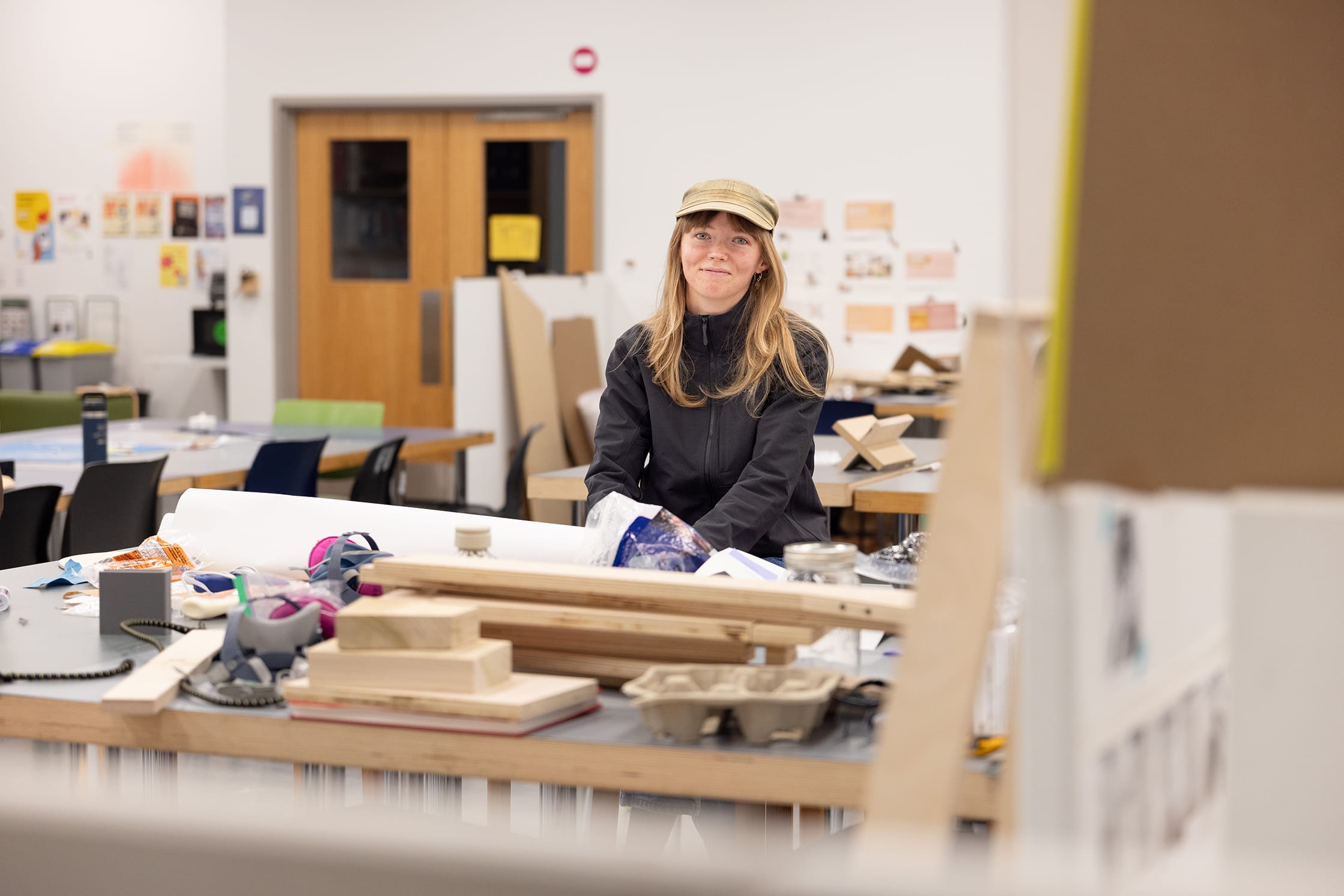
The recent Industrial Design grad’s work-placement with Arc’teryx merged her love of clothing design and snow sports — and led to a job with the respected brand.
Growing up, Sarah Wohlgemuth (BDes 2026) learned to sew on her mother’s machine to make affordable versions of the clothes she saw in retail stores.
Hailing from Vernon, B.C., at the edge of the Monashee Mountains in the province’s Southern Interior, she also grew up loving to ski, travelling regularly to nearby Silver Star to enjoy its massive annual snowfall, competing in freeride as part of the local team.
That love sustained her when she moved to Calgary as a teen, where she skied Lake Louise, and then to Squamish to finish high school, where she explored the extensive alpine terrain of Whistler and Blackcomb.
Now a snow apparel designer with Canadian outdoor apparel and equipment brand Arc’teryx, Sarah marvels at the serendipity of finding a career that combines her love for both clothing design and snow sports.
“I feel extremely lucky to be in the position I’m in,” she says.
But her career didn’t emerge out of the ether, she adds. Her success is built on an Industrial Design degree from Emily Carr University of Art + Design (ECU), where, in addition to developing technical and conceptual skills through studio work and critical studies, Sarah discovered the Career Development + Work Integrated Learning (CD + WIL) Office’s Work Experience Program. The program facilitates structured, paid work placements that allow undergraduate students to earn academic credit while gaining real-world experience.
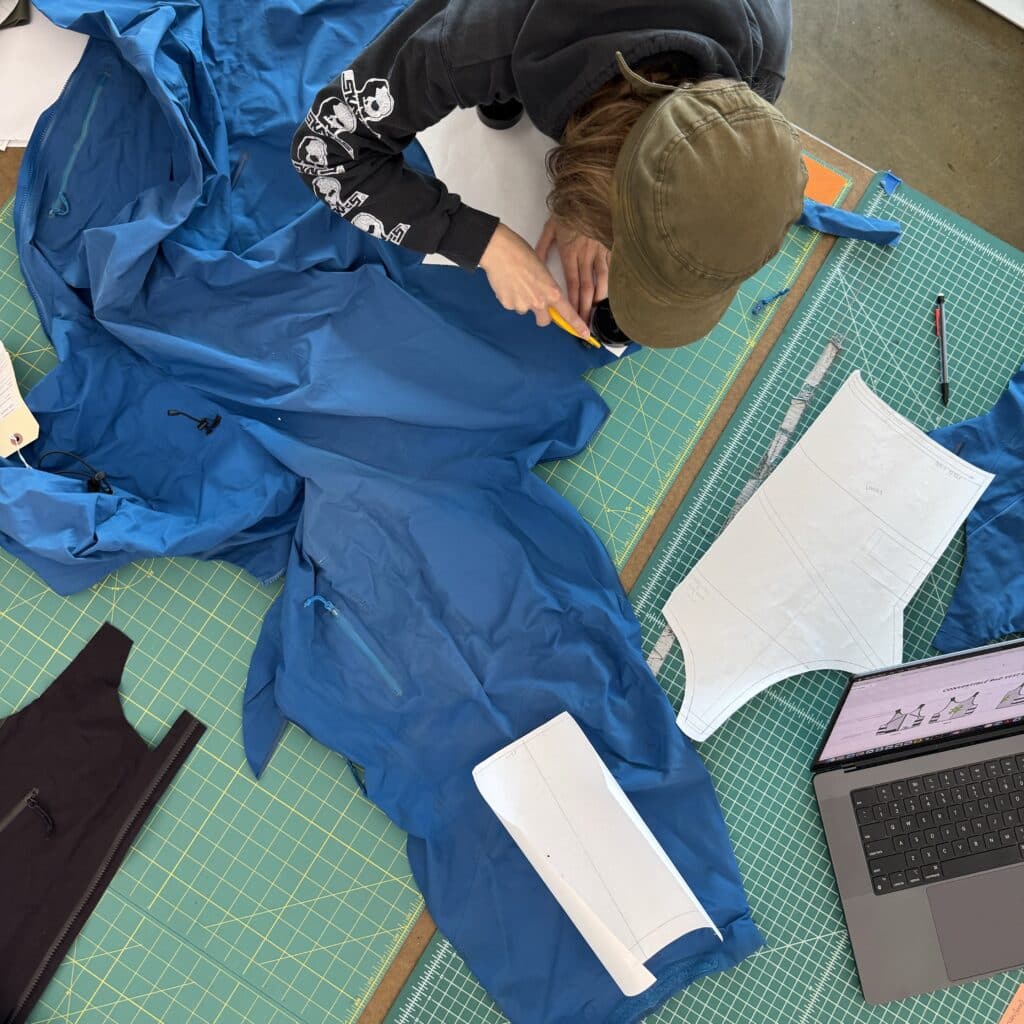
In her third year at ECU, Sarah spotted a posting for a junior designer with Arc’teryx. She applied and would go on to complete two consecutive four-month placements with the company. During those eight months, she worked full time while earning credits toward her degree, shadowing the senior snow designer to learn the ins-and-outs of the company’s workflows.
“The CD + WIL Office’s Work Experience Program is amazing,” she says. “The people who work there are so lovely and encouraging, and getting the experience of learning in a different environment while I was still at university was incredibly beneficial to me.”
Sarah notes that a directed studies course with ECU faculty member Keith Doyle provided crucial guidance as she juggled priorities.
“I don’t know if I’d have been able to do everything I did without Keith’s support during my application for the position and throughout my co-op,” she says.
Sarah’s work-placement project for Arc’teryx was to redesign a competition bib using old, warrantied jackets. With her new colleagues, she created a garment that could turn into a tote bag to honour the athletes’ request that it be functional post-competition.
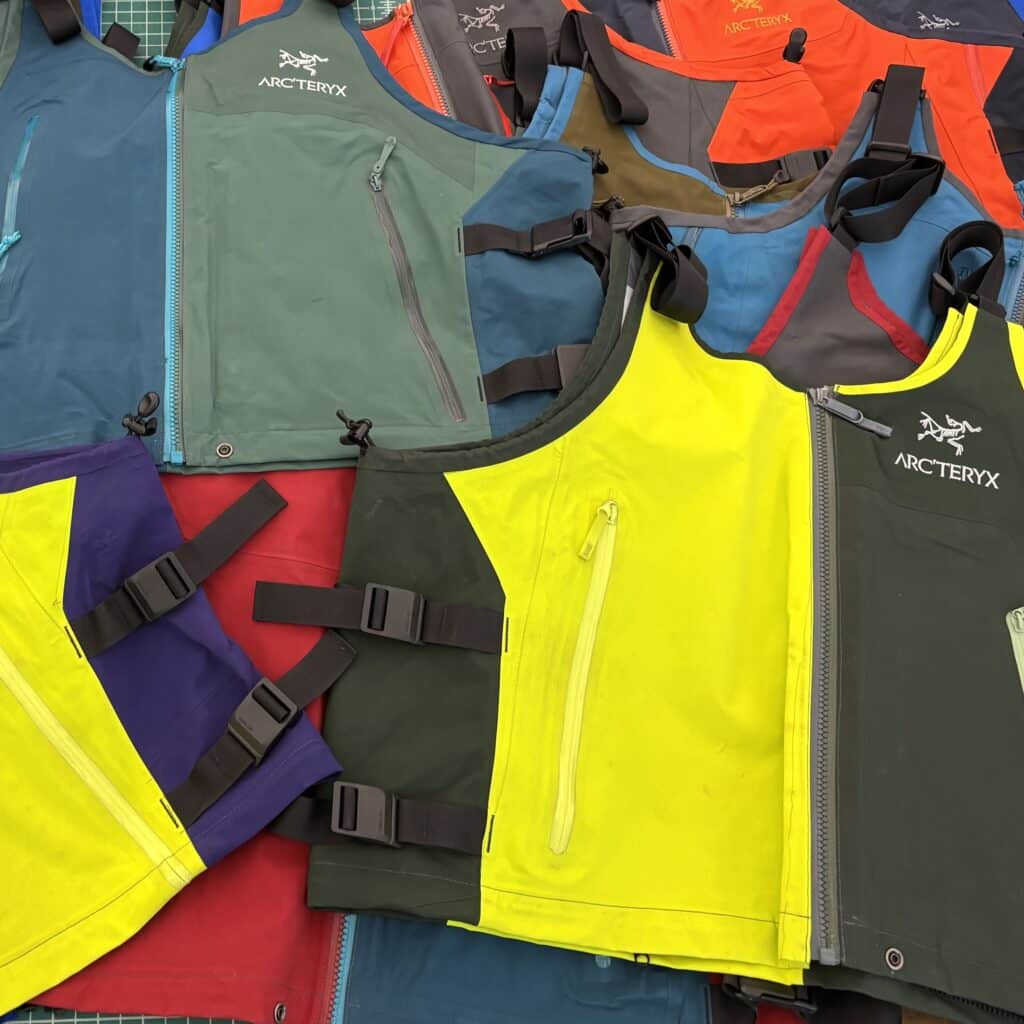
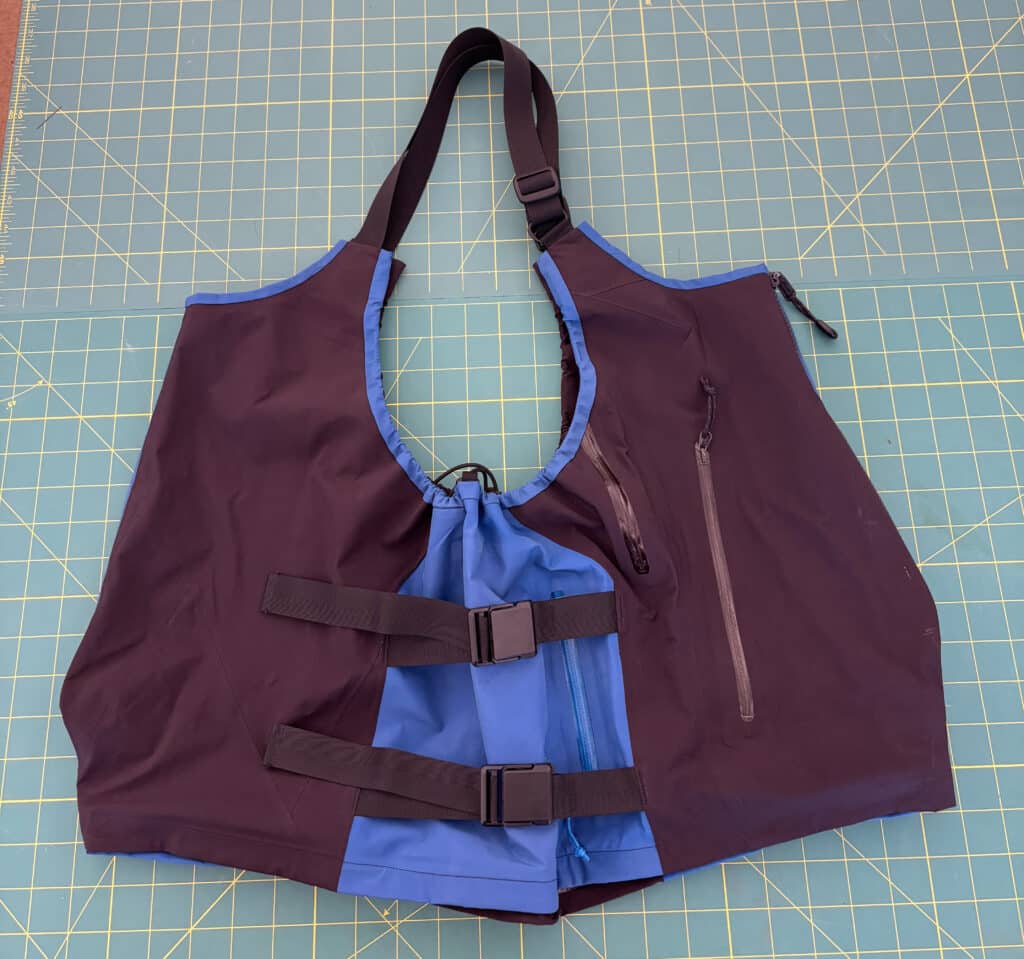
She says this experience was front-of-mind as she began planning her capstone project for graduation. The project repurposed warrantied Arc’teryx jacket stock and discontinued trim stock to create a brand-new jacket, reflecting not only the new skills she’d been learning but the principles of sustainability and reuse that inform both the Arc’teryx ethos and ECU’s design programs.
“I learned so much that helped me with my grad project as well as in my own personal sewing practices and design thinking,” she says. “Arc’teryx takes repurposing really seriously, and I felt very lucky to have been pushed at ECU to think more deeply about the why’s of design, including ecological awareness, which is super relevant as the industry starts to invest more in circularity.”
As her work placement progressed, Sarah was encouraged to apply for a permanent position with Arc’teryx and was hired just before her fourth year at ECU began. She worked part-time as she finished her studies and began working full-time as soon as her classes ended.
CD WIL Career Development coordinator Ghislaine Crawford says Sarah’s experience is exemplary of the kinds of empowerment students discover through work placement programming.
“Taking advantage of experiences like this is a powerful way for students to apply their classroom learning within a real-life context,” she says. “Work placements also help students make vital industry connections, which, in Sarah’s case, led to full-time employment.”
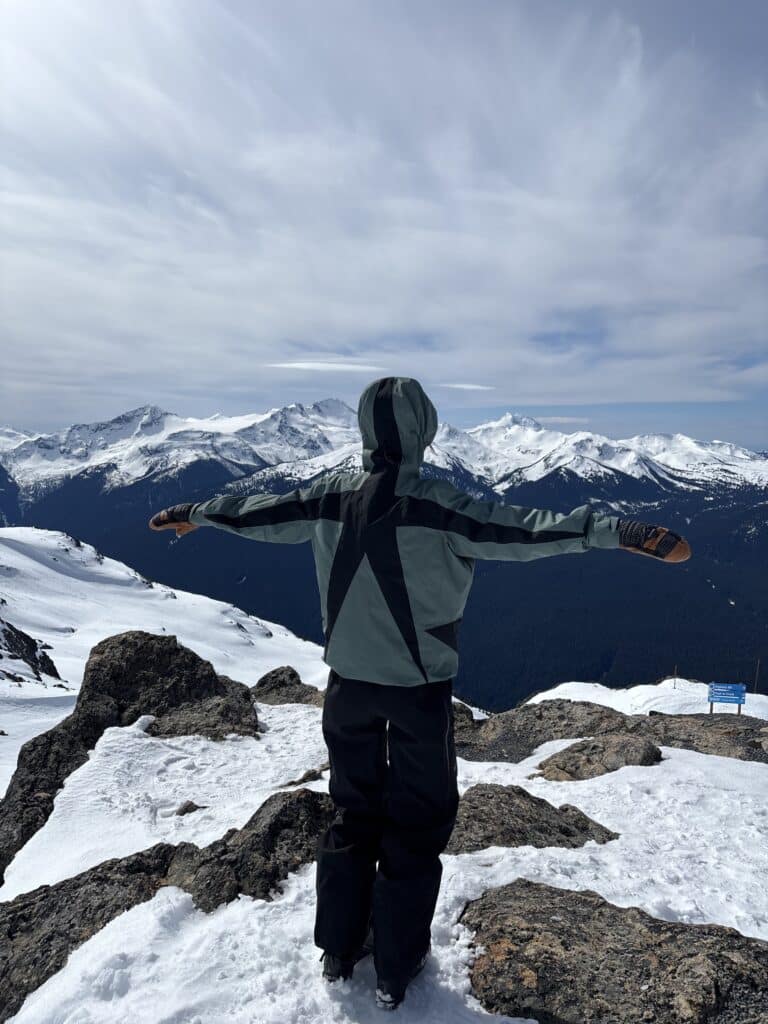
Now, as part of an all-woman team, Sarah helps design snow apparel including jackets, pants and mid-layers for both men and women. The women’s line is particularly exciting, Sarah says, as she always felt conflicted about women-specific ski gear as a young athlete.
“Growing up, I would always buy men’s gear because women’s gear was slim in the waist and didn’t allow me to move freely. Plus, the colouring was always hyper-feminine and didn’t feel authentic to me,” she says.
“Now I’m working with people whose backgrounds are from all parts of the fashion industry, and I get to add a skier’s voice to the conversation. I think Arc’teryx has always done a better job of not singling out women with their gear, and I get to be a part of equalizing that imbalance.”
The first Arc’teryx garments co-designed by Sarah hit stores this fall, with more to come in 2027.
More about Industrial Design at ECU
ECU’s Industrial Design major is an immersive, hands-on program aimed at understanding and responding to our complex world in aesthetic, emotional and material ways. You’ll create products, services and experiences that support relationships between individuals, communities and the environment.
Visit our website to learn more.
Want more stories like this one delivered twice a month to your inbox?
Subscribe to our free Emix newsletter today!