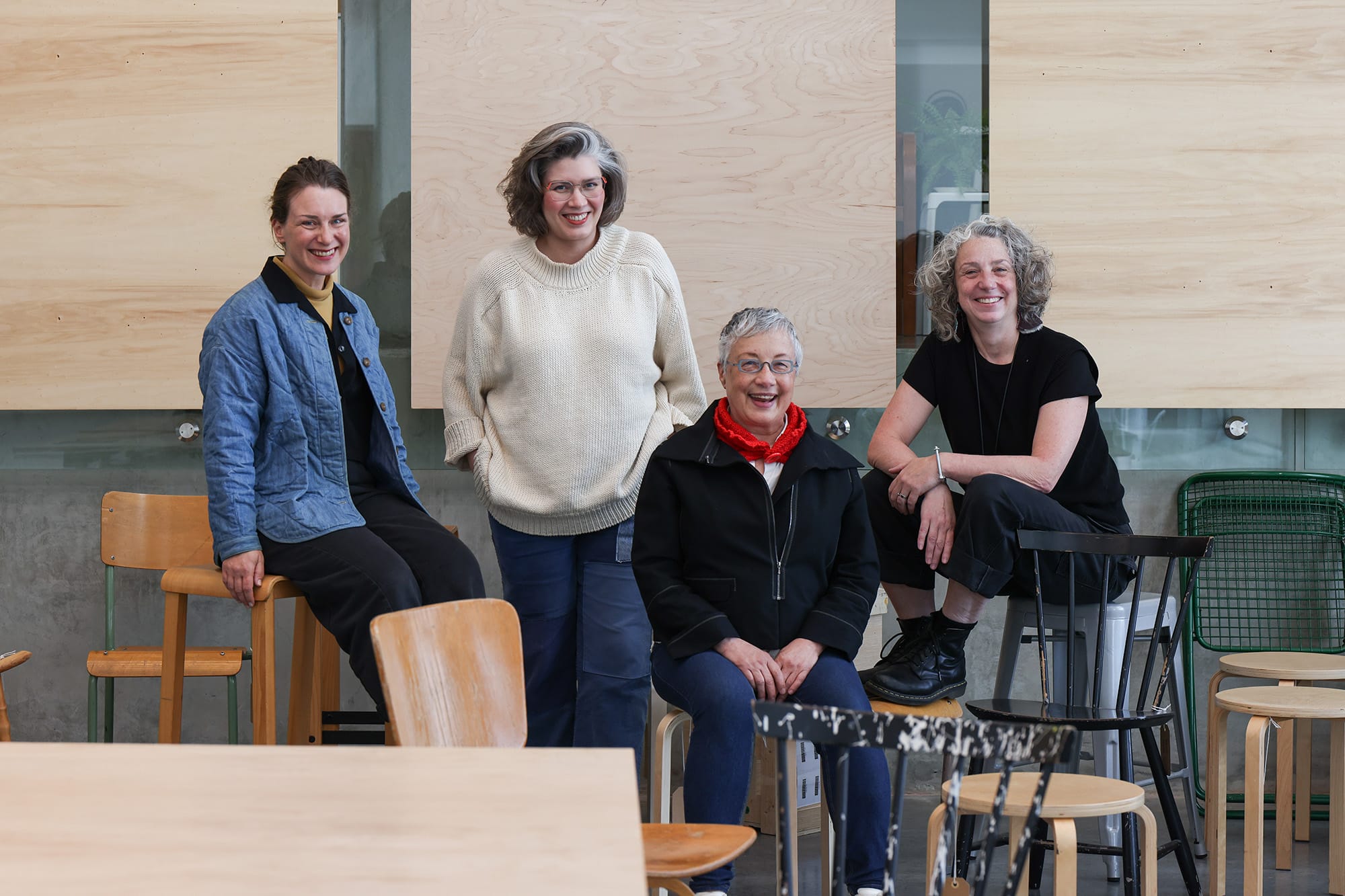
As part of an event series reflecting on 15 years of Canada’s only DESIS Lab, a public reception for From Here with DESIS: Designing for All Beings takes place at ECU on Sept. 29 at 5pm.
A new exhibition and event series showcase 15 years of innovation from Emily Carr University of Art + Design’s (ECU) Design for Social Innovation + Sustainability (DESIS) Lab, the only lab of its kind in Canada.
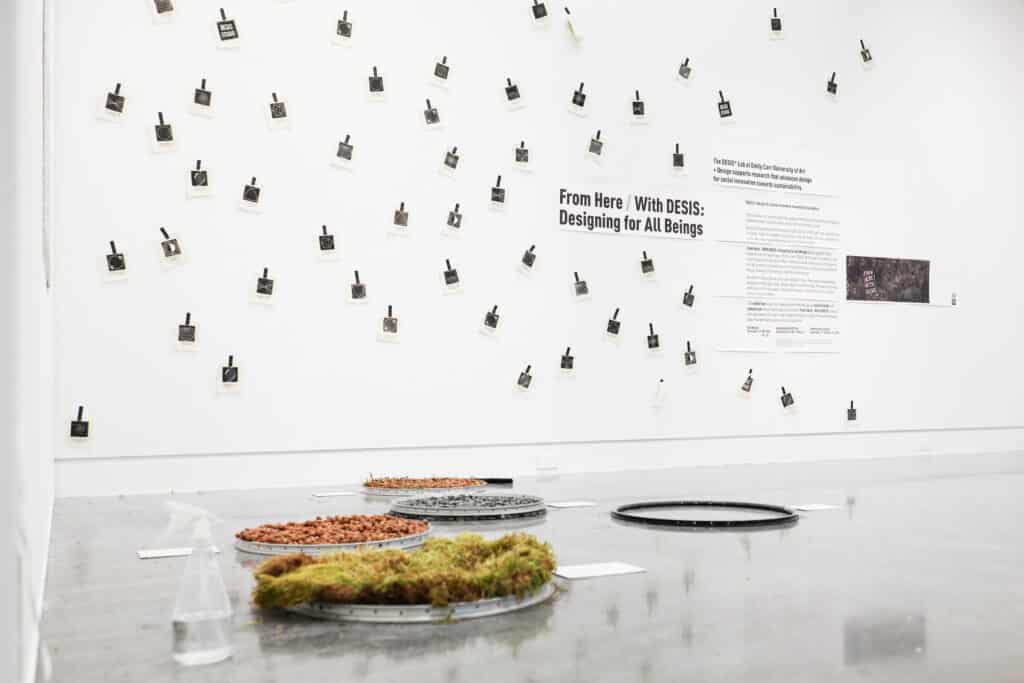
Taking place in the final weeks of ECU 100, ECU’s centennial celebrations, From Here with DESIS: Designing for All Beings spotlights the ongoing work of designers committed to supporting and advancing a more sustainable future.
“From Here with DESIS grew partly from a desire to tell the story of our work attending to place-based learning, community support for sustainable biodiversity, and relations with nature, as well as bringing work from different moments and perspectives into relation,” write ECU faculty members Charlotte Falk, Hélène Day Fraser, Laura Kozak and Dr. Louise St. Pierre, who lead ECU’s DESIS Lab.
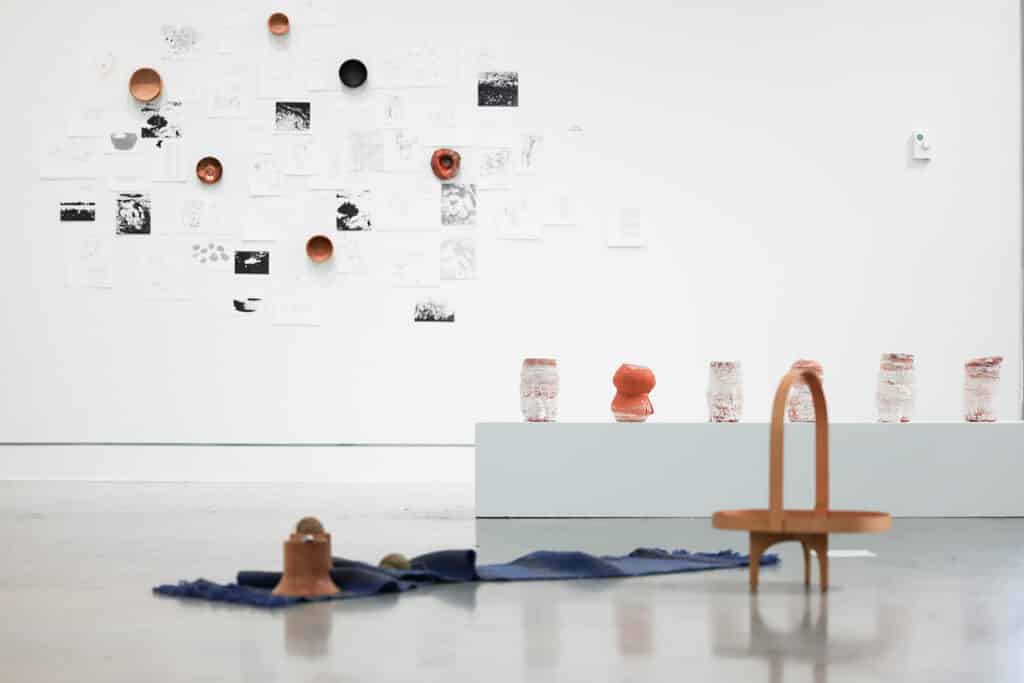
“It’s meant to be a survey of the lab’s work so far, sharing a sample of the different kinds of research questions we’ve addressed over the years. It’s also important to not merely look back. The exhibition, paired with the symposium and active studio, create space for this work to move forward.”
NEW DIALOGUES
Founded by Dr. Louise St. Pierre, ECU’s DESIS lab supports student-led research, awards annual DESIS Scholars to graduate students, and adjudicates the Ecological Design and Radical Sustainability awards. The lab also provides training and support to research assistants in the Graduate Studies program in addition to project-related research assistantships.
DESIS research and ethics emphasize rigorous consideration for the ecological implications of design, and support durable relationships and peer support. Substantial DESIS research informs curricula throughout ECU undergraduate and graduate design programs, including core Industrial Design curriculum and the Ecological Practices in Design Minor.
ECU’s DESIS Lab is part of an international network of 65 DESIS Labs globally. Current and recent collaborations include initiatives with partners such as Politecnico di Milano (Italy), Tongji University (China), Kyushu University (Japan) and Federal University (Brazil) among others.
At ECU through the fall, From Here with DESIS showcases some of these collaborations with an exhibition, symposium and active studio alongside presentations, workshops and screenings. The series also gathers students with faculty members and alums to share past and present work while activating new dialogues, collaborations and initiatives with an emphasis on designing for all beings and ecological futures grounded in interdependence.
HOW WE BUILD RELATIONSHIPS
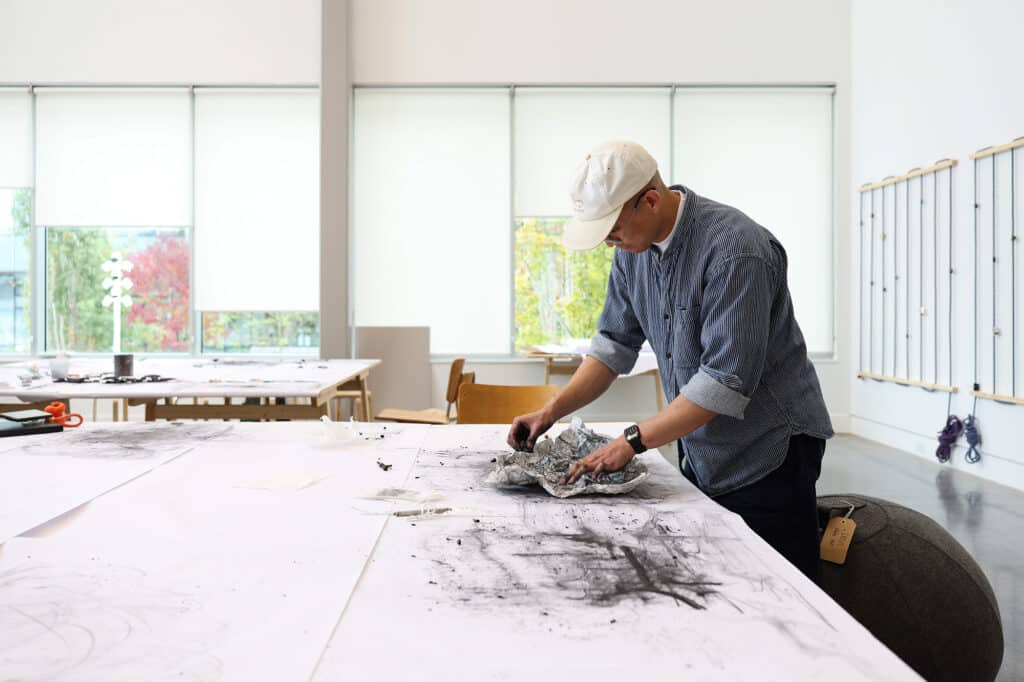
Charlotte, Hélène, Laura and Louise note the series reflects the ways in which community members from all levels of the university contribute to the life of the lab.
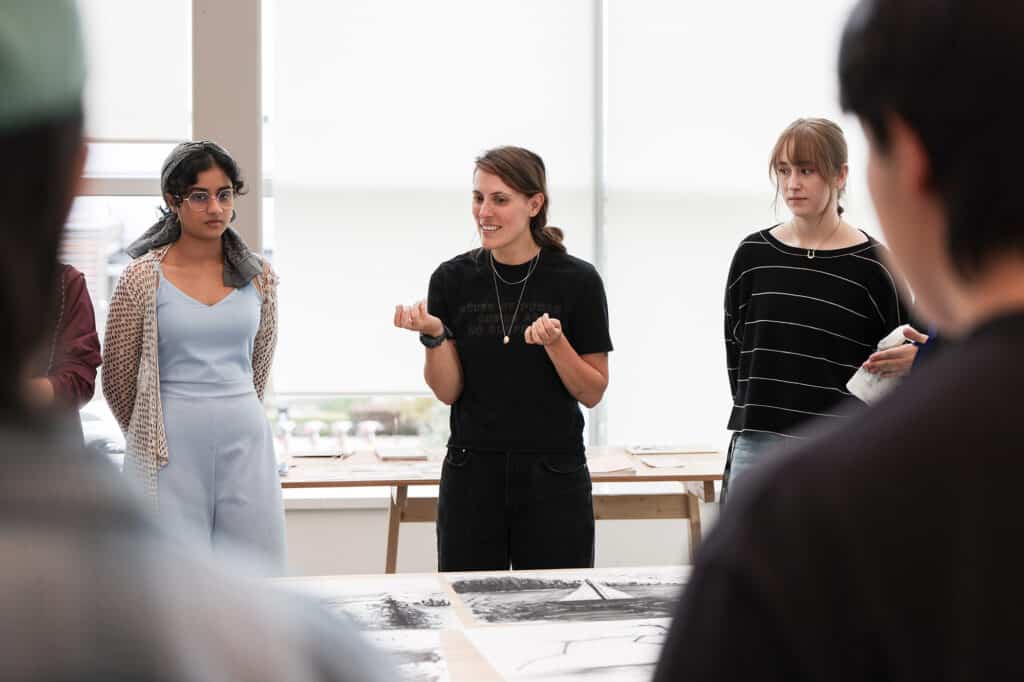
“Much of DESIS’s work is shaped through the classroom and through collaboration with student researchers,” they write. “Students have contributed directly to addressing the lab’s research questions, and many continue to build on expanding these learnings in their own practices. This is reflected in all parts of this project, and bringing this work together recognizes that continuity while creating opportunities for these connections to keep growing.”
Marcia Higuchi (MDes 2022), whose work is featured in From Here with DESIS, says the lab was central to her decision to study at ECU. Originally from Brazil, her Master of Design studies began during the pandemic, and she was unable to move to Vancouver for her first year. Fortunately, Louise connected her with the DESIS Lab in Rio de Janeiro, and Marcia began the research that would inform her thesis project.
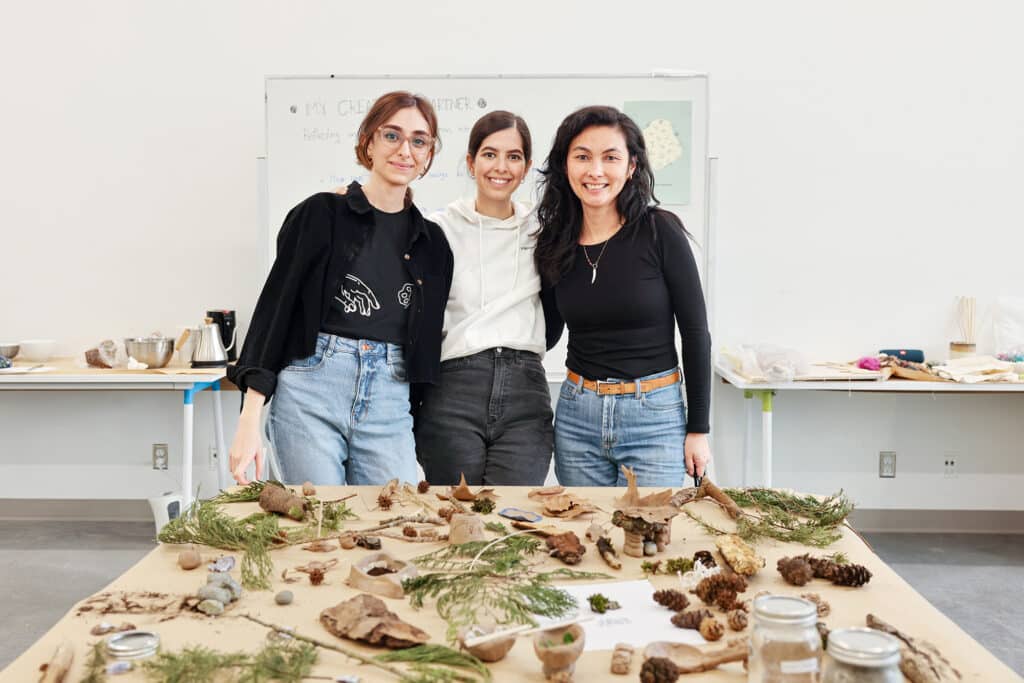
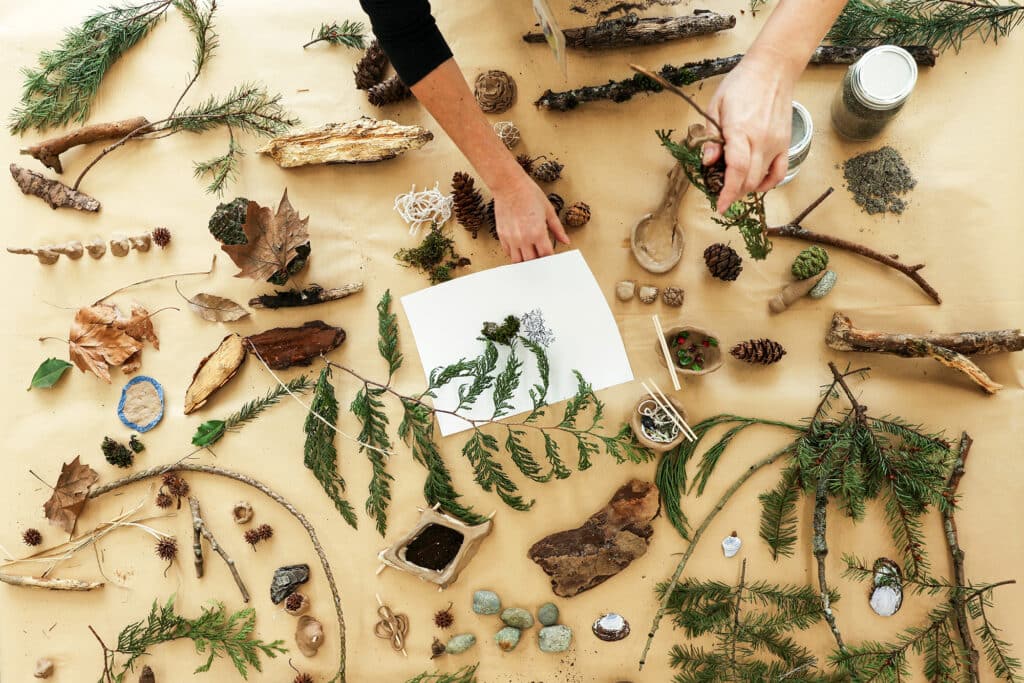
“I was interested in participatory practice and relational learning, but I didn’t have the language for that yet,” she says. “When I started working with DESIS, I learned how those things could take shape and how my practice could be redirected. I learned how we build relationships with each other, with the more-than-human world, the environment and the local community — and that those outcomes are more durable and impactful than a product. So, DESIS shaped a lot of what my design practice became.”
Now a faculty member at the University of the Fraser Valley, Marcia says that initial research has been foundational to her practice ever since, including the ways she teaches.
“A teacher is always working with people and collaborating,” she says. “I can see now how the research projects I engage with or the projects I propose for my students are all connected to those experiences with DESIS.”
PRACTICING RECIPROCITY
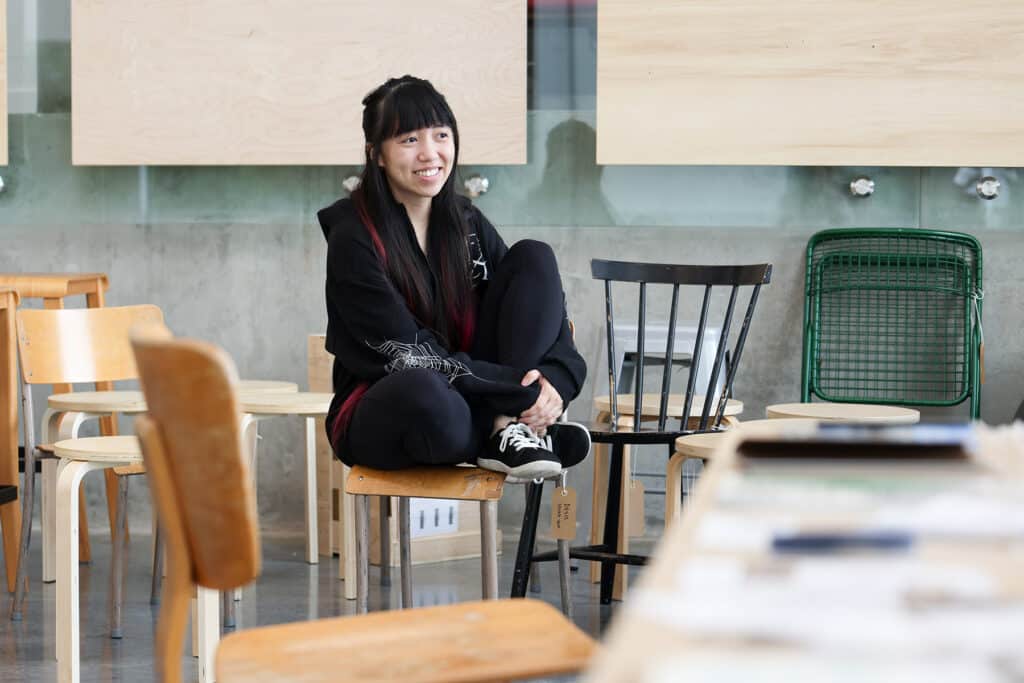
Fourth-year Industrial Design student Anita Lau’s third-year project Species Cards, which appears in From Here with DESIS, was created as part of a class with Louise. In that class, students documented themselves as a species, mapping their worlds and relationships, and then applied the same paradigm to a being in nature, such as a plant or animal.
Anita says she hopes the DESIS events convey a message that was transformative for her as an emerging designer. Namely: that design is first and foremost about process, not about product. In that sense, design practices have a unique capacity to reflect the world.
“Life isn’t ever finished. It doesn’t come to a stop, and it doesn’t end in perfection,” says Anita, whose degree studies include a minor in Ecological Design Practice. “When we insist on perfection, we end up trying to hold things still, in an unstable balance. But when things are in process, we’re free to evolve. We’re also free to collaborate and practice reciprocity with all beings, including with our materials, in ways that consider our future.”
Visit ECU’s events calendar and follow the ECU DESIS Lab on Instagram for details on upcoming events.
A public reception for From Here with DESIS will take place at ECU at 5pm on Sept. 29. The exhibition is on view through Oct. 8, and the open studio is open to the public through Oct. 13. Attendance to all events is free.
More about Research at ECU
As one of the most research-intensive art and design universities in Canada, ECU connects art, media, and design practices with some of the most pressing questions of our time. At ECU, we believe that our research can help to transform the world, build healthier and more vibrant futures, and cultivate cultural resilience throughout our local and global communities and industry partners.
Visit our website to learn more.
100 Years of Creativity: The Stories that Shaped Us
As part of Emily Carr University’s centennial celebrations and our ‘100 Years of Creativity’ campaign, we are sharing stories that spotlight the creativity, resilience and impact of our community over the past 100 years. These stories feature the people, projects, places and ideas that have shaped ECU, reminding us of our shared legacy while inspiring the future. By revisiting past milestones and sharing new ones, we honour the many voices that built our institution and continue to guide its path forward.
For more information about ECU 100 centennial celebrations, upcoming events and stories, visit our webpage.
Want more stories like this one delivered twice a month to your inbox?
Subscribe to our FREE Emix newsletter today!