By Heather Fitzgerald
When you grow up with a common name, you become very aware of how names command attention. Growing up in the 70s and 80s in Canada, I was never the only Heather in any group – I was forever answering in response to hearing my name only to discover it was intended for another Heather.
(There were other impacts too: of the three Heathers in my junior kindergarten class in Toronto, two of us were Heather Fs, which meant learning to spell Fitzgerald when I was just 4 years old.)
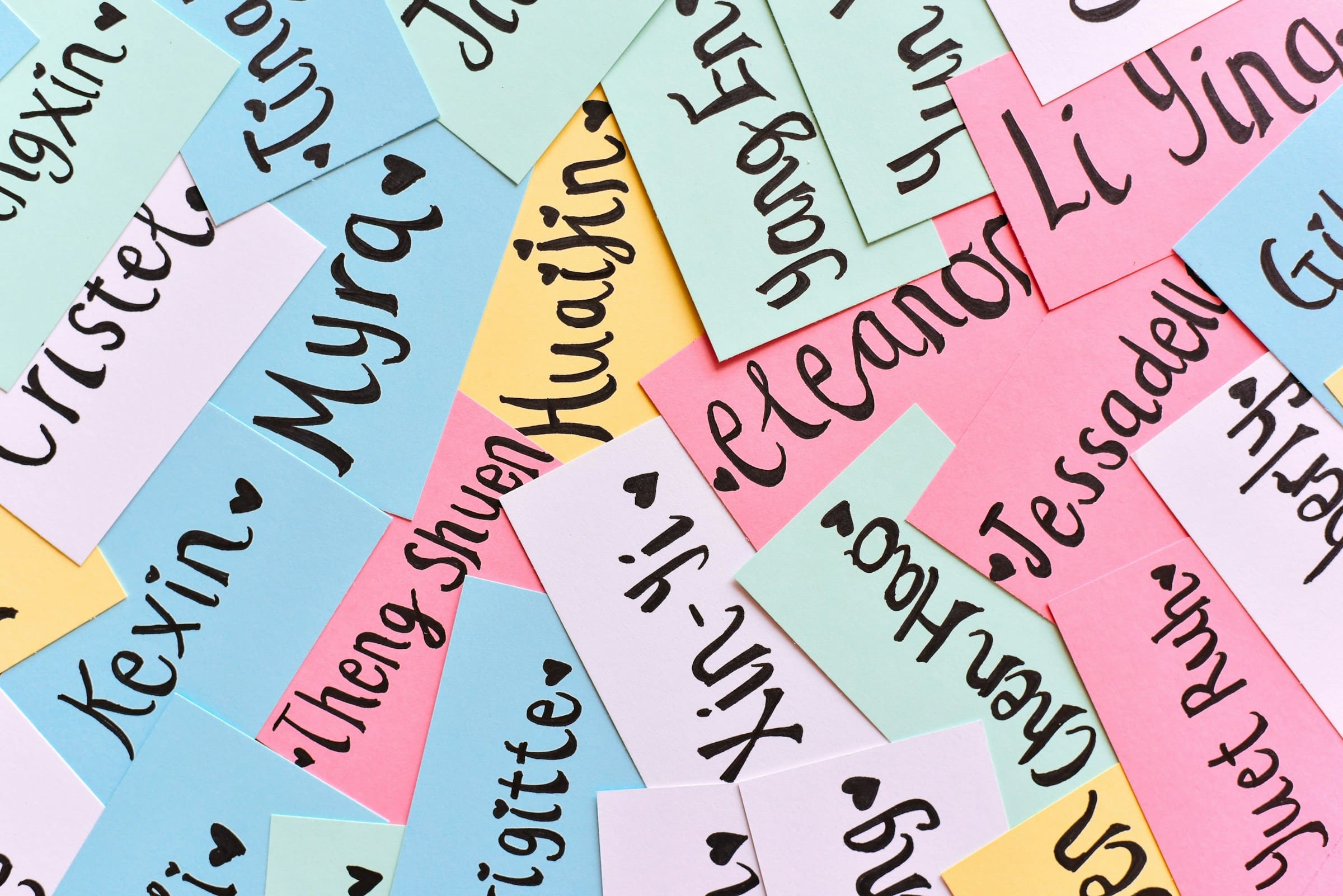
So, I understand all too well why learning and using student names is the ultimate teaching hack: hearing our names spoken snaps us to attention like nothing else, even when we are deeply focused on something else (Hayes, 2025).
Readers of this blog know that I am fond of the simple acts that have the biggest impact on improving student learning (see Small Gestures, Big Impact). The simplest act of all, if you are not already doing it, is to learn and use student names. Not only does this tactic help students keep their attention in the classroom where you want it (resisting the constant pull of digital devices) (Lang, 2020), but it helps build classroom community and connection, which in turn increases motivation and persistence (Felton and Lambert, 2020). Win, win, win!
For the memory-challenged among us, the good news is you don’t even have to memorize student names to see these benefits. Using name cards, name tags, or seating charts has the same benefit of helping students feel seen and known (Supiano, 2022). A study at the Arizona State University found that using name tent cards in a large biology course both improved student motivation and learning while also encouraging them to seek help from faculty (Felton and Lambert, 2020), which makes perfect sense: it’s always easier to seek support from someone you know, and someone who knows your name feels like someone you know!
As you use student names more regularly, students also start to learn one another’s names, generating a virtual circle of relations that knits the class together over the course of the semester (and then onward through the student’s degree). This “relationship-rich education” then becomes the infrastructure upon which students build their identity as artists and designers.
It’s one of the simplest and kindest human gestures, learning and using someone’s name (Denial, 2024). If we can make such a difference in our students’ lives through this simple gesture, why wouldn’t we add it to our toolkit?
Your turn: Do you have any tried and true icebreakers, activities, or pro tips that help you learn names? Email us your ideas, and we will share them in a follow-up post: tlc@ecuad.ca
Are you interested in building strong classroom communities? If so, you might also check out ECU faculty member Nessa Palmer’s online presentation for BC Campus: Co-Creating Your Classroom – Building Agency, Inclusion and Belonging From Day One, taking place on August 28th from 12-1pm. Register here.
References
Denial, C. J. (2024). A pedagogy of kindness. University of Oklahoma Press.
Felten, Peter, and Leo M. Lambert. (2020). Relationship-rich education: How human connections drive success in college. Johns Hopkins University Press.
Hayes, C. (2025). The sirens’ call: How attention became the world’s most endangered resource. Penguin Press.
Lang, J. M. (2020). Distracted: Why students can’t focus and what you can do about it. First edition. New York, NY, Basic Books, Hachette Book Group.
Supiano, B. (2022, February 24). Teaching a sea of students. The Chronicle of Higher Education.