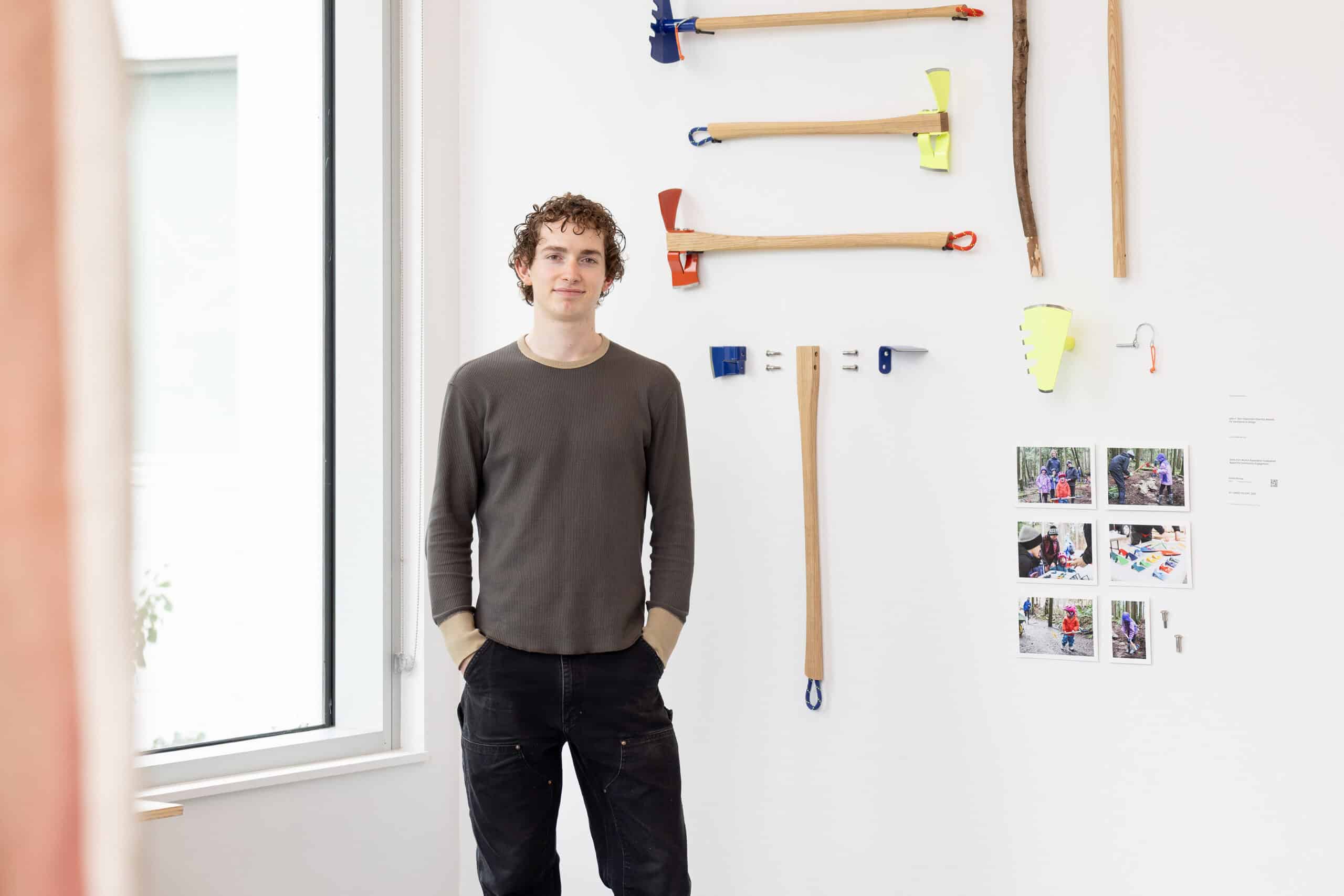
The graduating Industrial Design student drew on childhood experience to create a series of objects encouraging youth empowerment through risky play.
A capstone project by recent Emily Carr University of Art + Design (ECU) graduate Sasha Bishop (BDes 2026) promotes childhood independence, resilience and social cohesion through outdoor exploration.
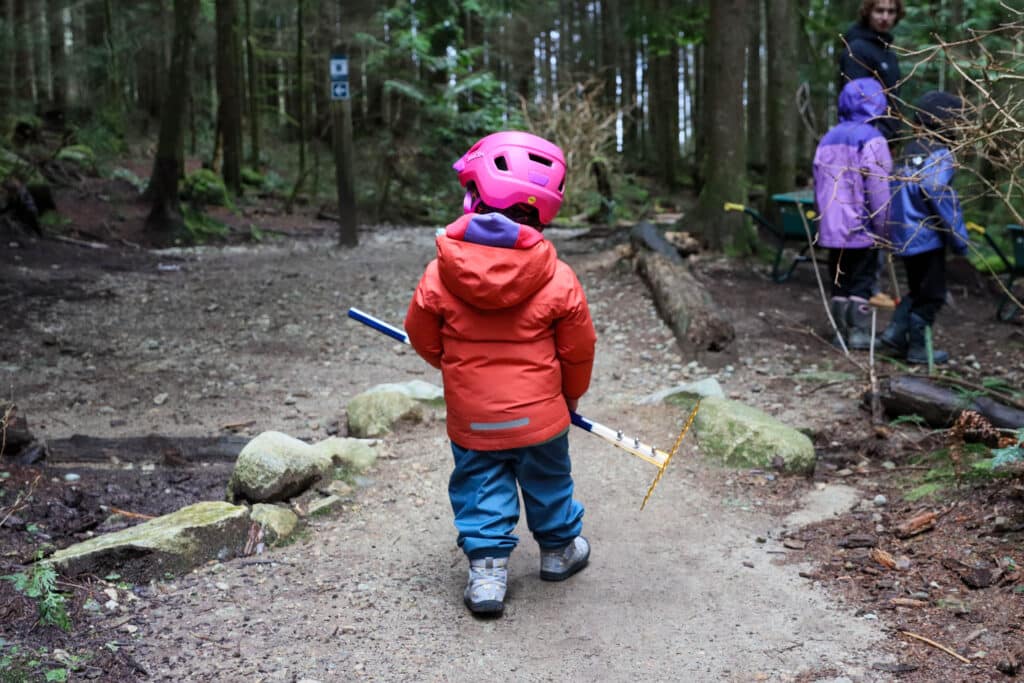
All Hands on Dirt is a series of mountain bike trail-building tools for kids developed by Sasha during his final year of study at ECU in collaboration with the North Shore Mountain Bike Association (NSMBA).
“My inspiration is my childhood,” says Sasha, an Industrial Design alum who grew up in Squamish, BC, where he and his family spent much of their time outdoors. “I was riding a bike before I was three years old, and the trail-building community throughout the south province is a tight group. They’re big environmental advocates who really emphasize knowledge transfer and ethical conduct. I was reflecting on my experiences in that community and wanted to create an intervention to give the same opportunity to more kids.”
All Hands on Dirt comprises versions of tools typically used for building mountain bike trails in the BC forests, all designed specifically for children. They include a Pulaski (a specialized forestry axe), a multi-tool hoe, a multipurpose tamper known as a McLeod and a rake.

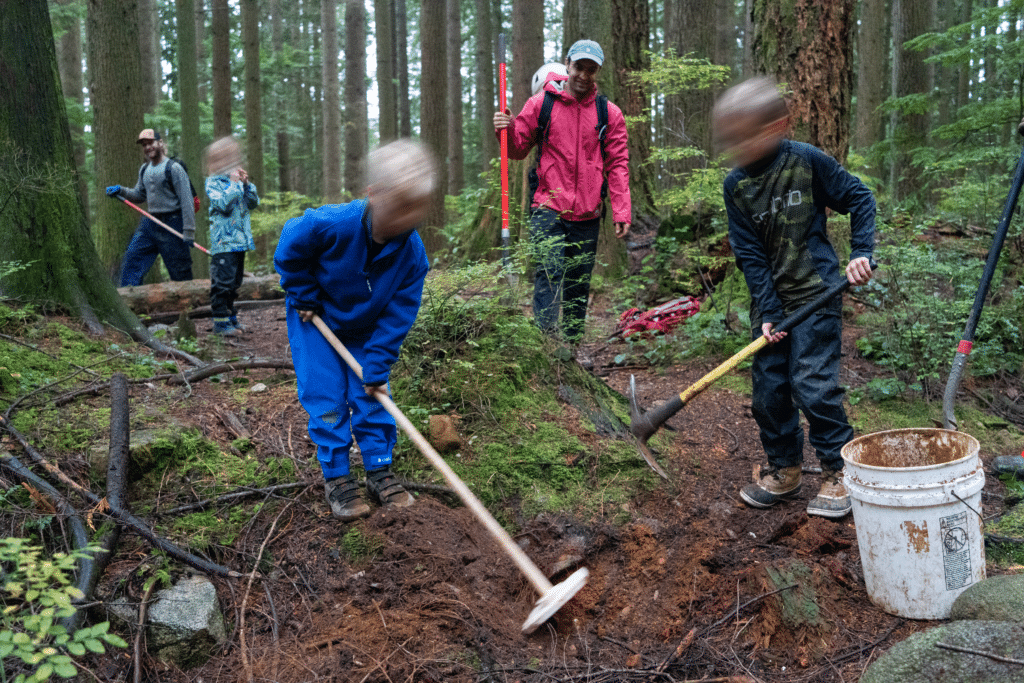
While putting such items in children’s hands might feel risky, Sasha says this is precisely the point. Research increasingly shows that risky play is an essential part of healthy childhood development. While being careful to distinguish ‘risk’ from ‘hazard,’ Sasha notes the developmental impacts of risky play include increased situational evaluation, emotional regulation, perseverance, self-confidence, independence, complex problem-solving and environmental awareness.
“Risky play is all about giving kids agency and letting them choose based on what they can see and understand, which is different from being unsafe,” he says. “This isn’t a proposal to let kids run wild in the forest with axes. We provide them with fundamental skills and understanding. And then once they have a tool that’s properly built for them, they get to make their own evaluations and chart their own path forward in a healthy way.”
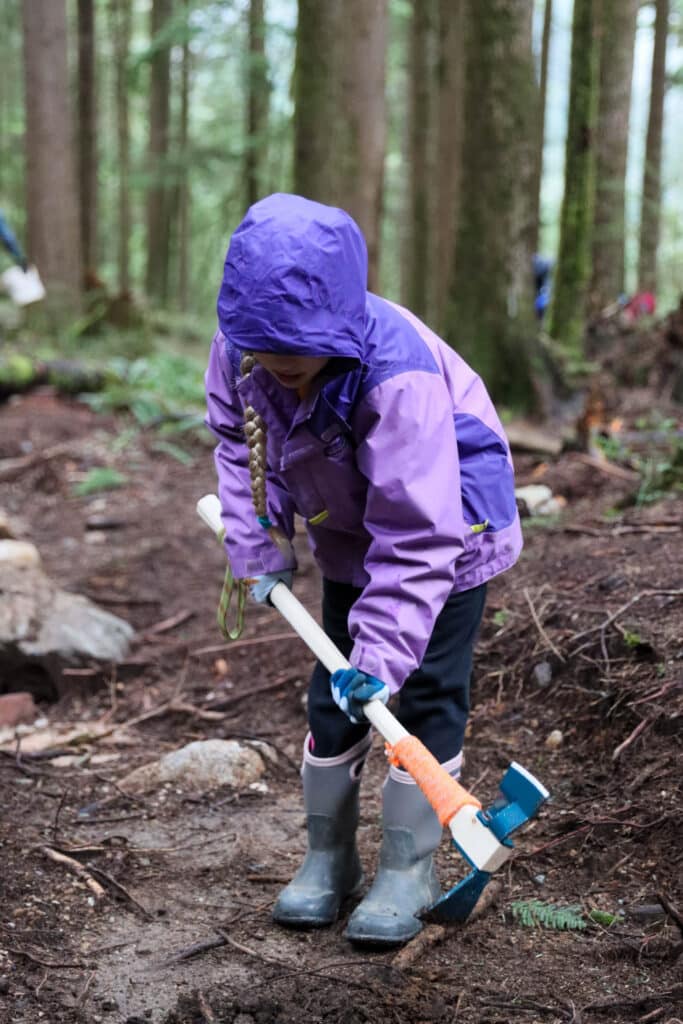
Nor does All Hands on Dirt encourage a type of play that isn’t already occurring. Sasha’s research with the NSMBA confirmed that children regularly use tools throughout trail-building communities. But because of a lack of quality child-sized options, they often default to using adult versions.
For that reason, NSMBA staff were eager to collaborate with Sasha to test his prototypes. On weekends throughout 2025 and 2026, Sasha developed several iterations of his tools, spending weekends with the NSMBA and local families to refine his designs during workshops and other community activities.
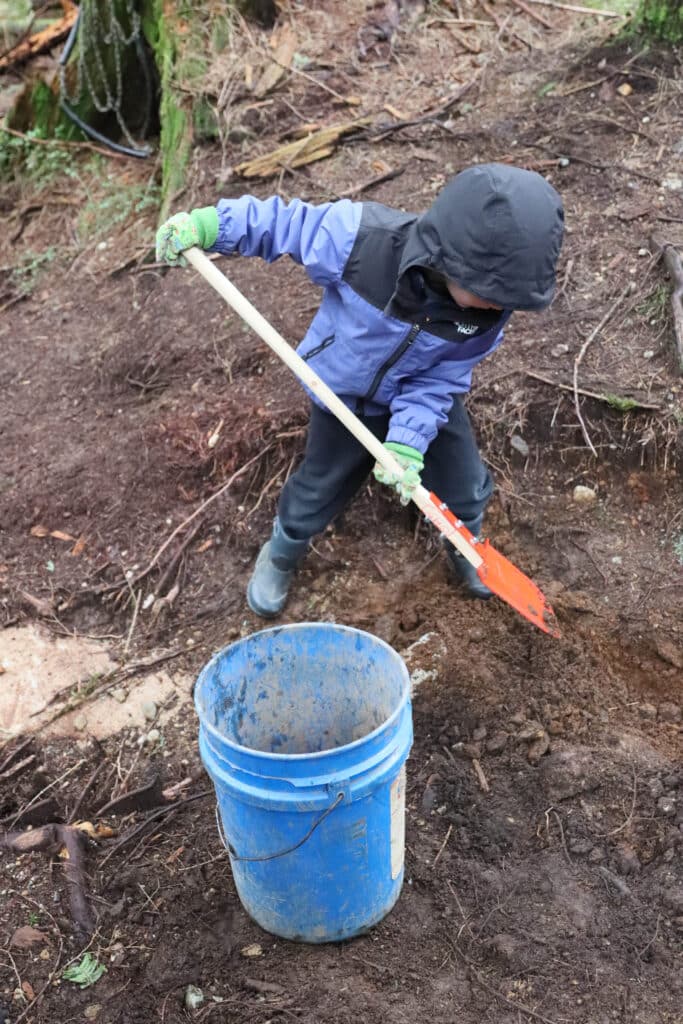
During the workshops, kids chose components to build their own tools, providing a personal connection and sense of ownership with the objects. With the help of the NSMBA, participants were then instructed on tool safety and trail-building techniques. Feedback from these sessions led Sasha to emphasize modular design and mix-and-match colours, allowing for personalization and increased user engagement as well as greater safety and visibility.
“I’ve had parents say, ‘Wow, the kids are usually tired by this point, but they’re still going,’” he says. “At another workshop, a family rode by and decided to stop for a moment. Their kid ended up staying for three hours to do trail work. Moments like that have been incredibly special. Seeing kids get so engaged with these tools has been hugely motivational for me.”
Toward the end of his graduating semester, Sasha finalized his designs and secured manufacturers to begin producing the tools for retail. Working with Cut My Parts in Ontario, Pinner Machine Shop in Pemberton, BC, and Superior Powder Coating in North Vancouver, BC, Sasha plans to continue developing the project throughout 2026.
“More than anything, I’m excited to be part of developing something to facilitate learning and help kids feel empowered to participate in their world in a meaningful way,” he says.
Visit Sasha’s website and follow him on Instagram to learn more about his work.
More about Industrial Design at ECU
ECU’s Industrial Design major is an immersive, hands-on program aimed at understanding and responding to our complex world in aesthetic, emotional and material ways. You’ll create products, services and experiences that support relationships between individuals, communities and the environment.
Visit our website to learn more.
Want more stories like this one delivered twice a month to your inbox?
Subscribe to our free Emix newsletter today!