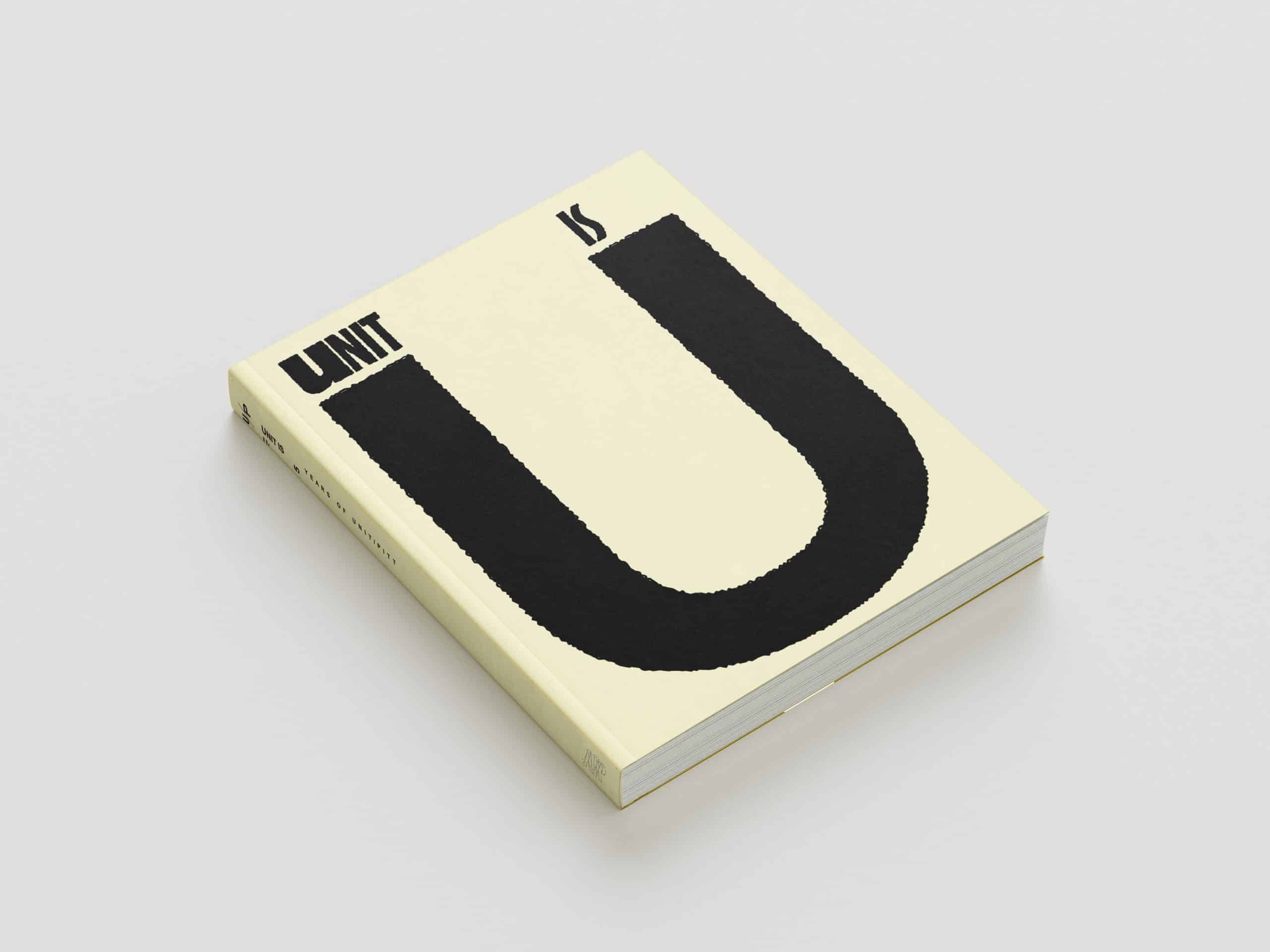
For ECU 100, we’re celebrating the UNIT/PITT Gallery, which emerged as an artist-run space for and by Emily Carr University of Art + Design (ECU) students and has retained its indomitable spirit over its 51 years.
In 2026, both ECU and the UNIT/PITT gallery have overlapping anniversaries to celebrate with the gallery in its 51st year and ECU’s centennial year. In its history, UNIT/PITT gallery has showcased the work of countless artists from Vancouver School of Art (VSA), which is now ECU, and provided a platform for local artists to experiment and develop their practice.
Established in 1975 by VSA student founders, including John Goble, Kerry Mulhern, Katherine Hrominchuck, Pam Jacobson, Bill Rennie, and Stan Lake, the gallery was named the Helen Pitt Gallery. They hoped that the new name, after a prominent patron of the arts, would bring new funding, but this did not materialize.
Despite funding hurdles and space limitations during the 70s and 80s, the UNIT/PITT hosted several group exhibitions by VSA students, the Federation of Canadian Artists, Handcraft House, the Women’s Interart Co-op, and the Malaspina Printmakers Society, along with solo shows.
In the ensuing decades, UNIT/PITT adapted to shifting funding and a changing art world, undergoing eleven name changes and as many locations. Each shift highlighted its resilience and commitment to continuing artist-run programming.
Doing more with less was an ethos that UNIT/PITT founders and staff had to live by and often took on multiple roles to keep the gallery running. That pitch-in spirit is something that Emma Somers, Coordinator of Operations at the Library + Archives and UNIT/PITT administration director from 1999 to 2001, recognizes intimately.
“I jumped into this job with a lot of young-person confidence, but I had never written grants, never done payroll or taxes or any of that. It was a huge learning curve, but it was amazing,” said Emma. “I was there all the time either washing the floors, painting the walls, handing out paychecks, writing grants, cleaning up vomit after openings or buying the beer! Most artist-run centres might do three shows a year. We were doing openings every other week.”
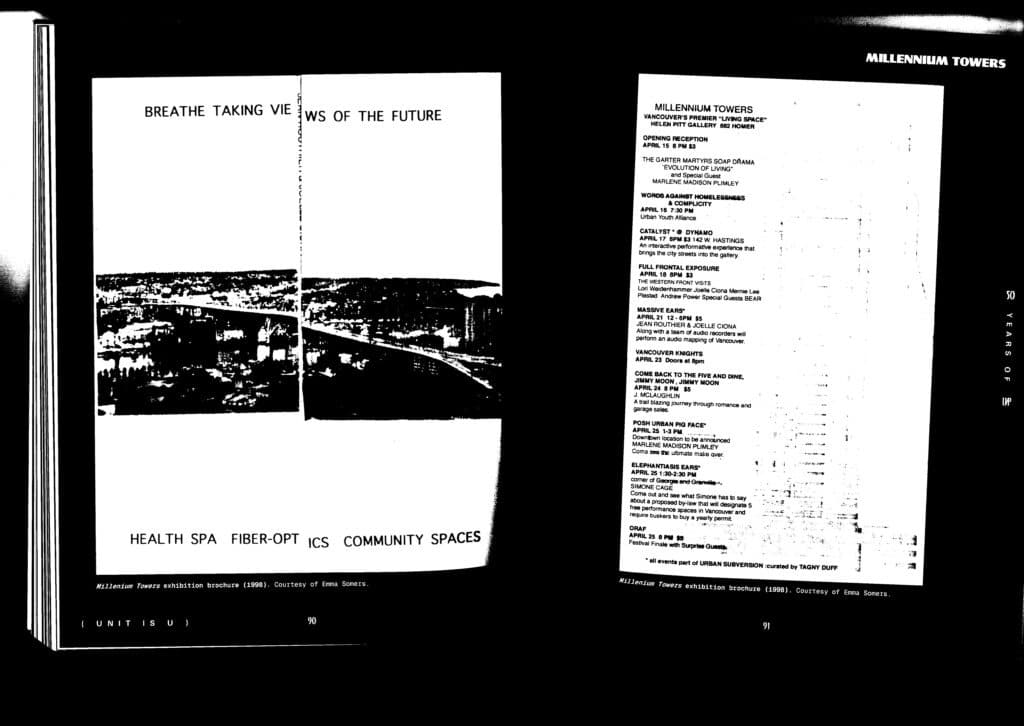
During Emma’s time there, the gallery was located in what is now Yaletown. One standout exhibition, Millennium Towers, satirized the neighbourhood’s rapid redevelopment and the arrival of condo culture.
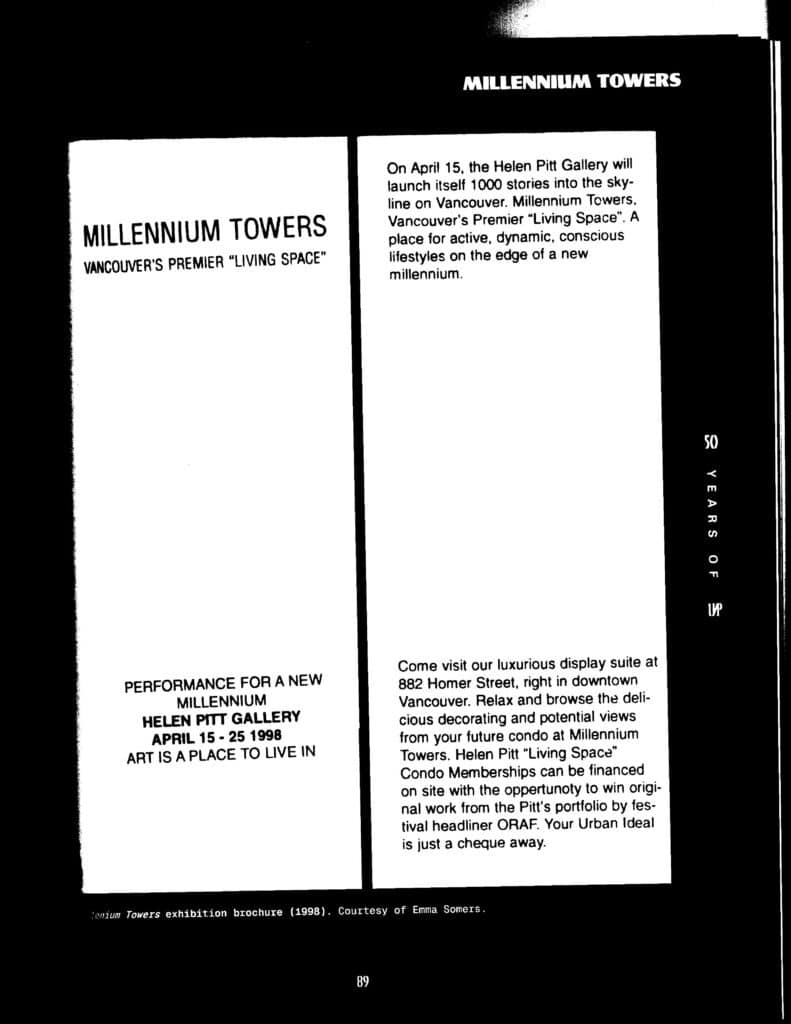
“It was such an interesting time, because the first pre-sale condos were just starting to happen in Yaletown,” said Emma. “Alongside the exhibition, we were also doing a ton of performance art nearby, which pushed back against the displacement of people in the neighbourhood.”
From punk shows in the 1980s to online programming during the pandemic, UNIT/PITT staff have often been relied on to shoulder the impossible, leading to burnout amid constant change, an experience reflected in the gallery’s recent publication UNIT is U. Emma does not sugarcoat these tougher aspects of maintaining an artist-run hub but encourages artists to keep going.
“As the administrator, it often feels like everything falls on you. On top of that, we were making almost nothing. The role had previously been one job, and instead of increasing the budget, they just split the same pay into two positions. So, that was tough and there’s a high level of burnout.”
But UNIT/PITT is unique because it works with emerging artists, and it’s always had this kind of punk history,” Emma said. “It really functions as a stepping stone. It gave people space to experiment and move toward work that actually speaks to them.
UNIT/PITT has now found its current home at 2954 West 4th Avenue and continues to offer unparalleled programming, exhibitions and events that speak to the current moment. This summer, UNIT/PITT will be presenting Solar Bee Garden Tea Zen REMIX, a multi-media collaboration by Lam Wong and Peter Courtemanche and will use the UNIT/PITT gallery and garden. The exhibition will explore ceremony, analogue audio/visual experimentation, and garden-centred practice, along with other events in the series later in the summer.
As ECU marks its 100th year, art student founded spaces like UNIT/PITT offer a parallel history shaped by artists and alumni. For decades, students and alumni have moved between the classroom and the gallery, testing out their ideas and actualizing them in the gallery. UNIT/PITT’s legacy is captured in UNIT/PITT is U, available at READ Books.
Visit UNIT/PITT’s website for more information on their upcoming exhibitions and events.
100 Years of Creativity: The Stories that Shaped Us
As part of Emily Carr University’s centennial celebrations and our ‘100 Years of Creativity’ campaign, we are sharing stories that spotlight the creativity, resilience and impact of our community over the past 100 years. These stories feature the people, projects, places and ideas that have shaped ECU, reminding us of our shared legacy while inspiring the future. By revisiting past milestones and sharing new ones, we honour the many voices that built our institution and continue to guide its path forward.
For more information about ECU 100 centennial celebrations, upcoming events and stories, visit our webpage.