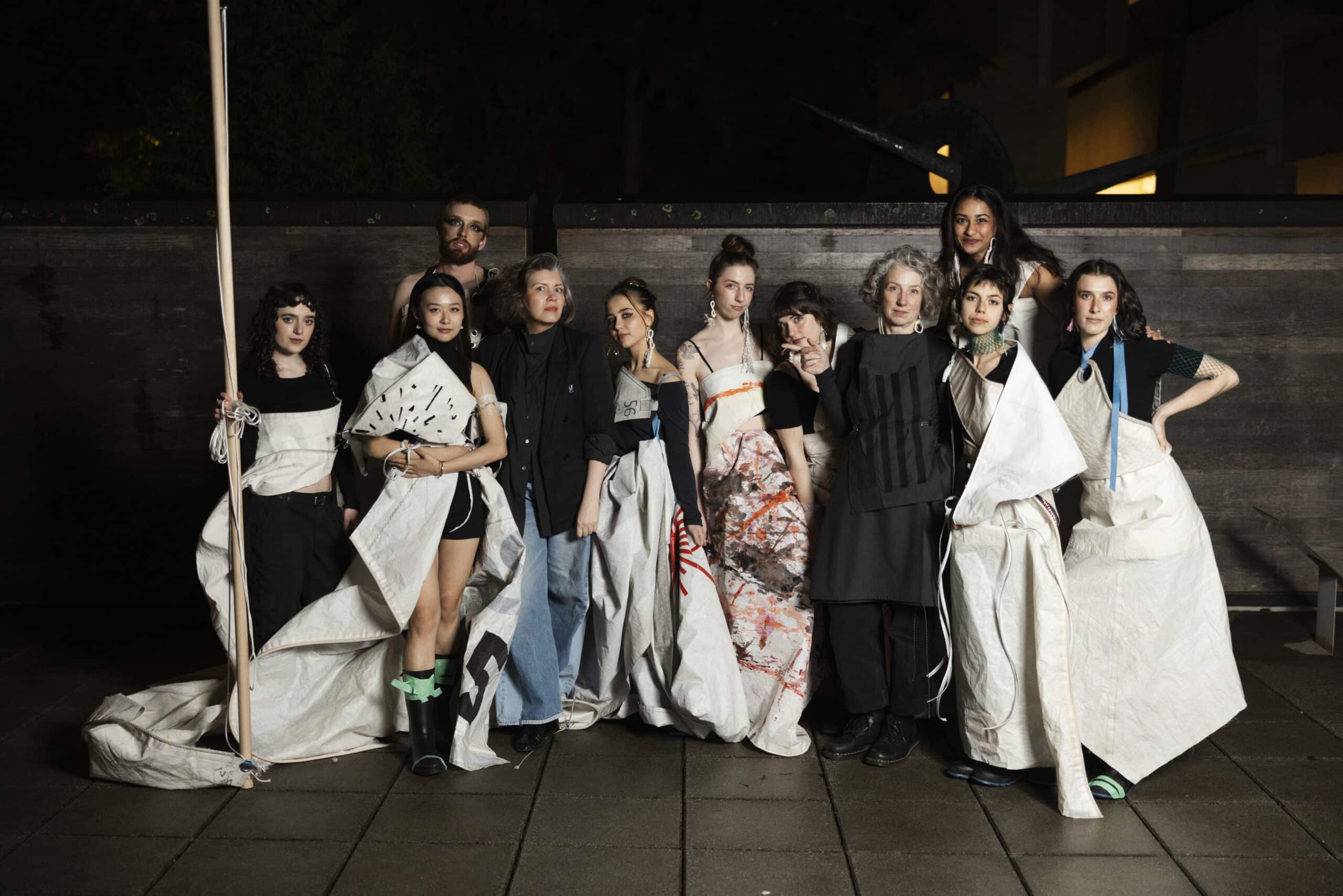
In collaboration with UBC, ECU students, alums and faculty members helped ignite the second annual series of events sharing research, design and artwork with the public.
A collaboration with the Slow Fashion: Circular Textiles, Sustainable Fibre research cluster at the University of British Columbia (UBC) saw students, alums and faculty at Emily Carr University of Art + Design (ECU) contribute to a series of projects exploring how textiles can be made more sustainable.
Slow Fashion Season 2026 brought students together with artists, scholars, researchers, architects, engineers and industry partners to work on the complex problems of sustainability in textiles and clothing and share knowledge with the public.
“Participating in Slow Fashion Season reinforced that I’ve learned all these practical skills — I can stitch and sew and build — but more importantly, I have a design sense. That I can trust both my technical abilities and my aesthetic eye,” says fourth-year Industrial Design student Audrey Allanson.
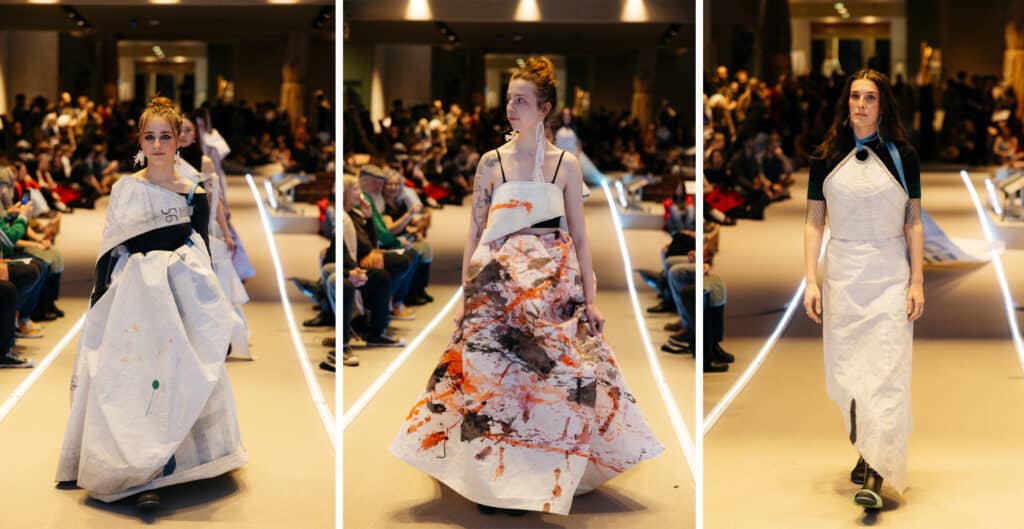
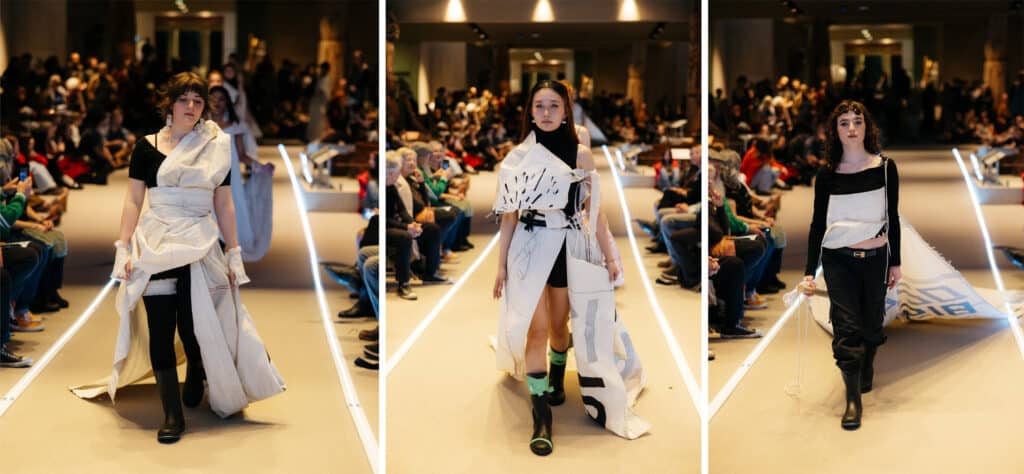
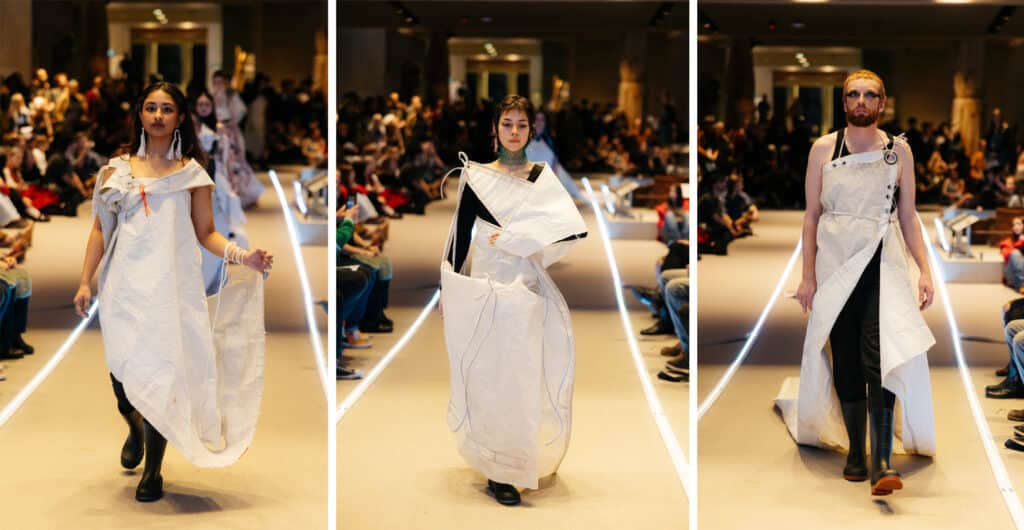
Audrey was among the students and alums who collaborated to create a series of garments from sails donated by ECU faculty members Eugenia Bertulis, Laura Kozak and Bonne Zabolotney, which she and her peers then modelled on the runway during the Slow Fashion Show at the Museum of Anthropology.
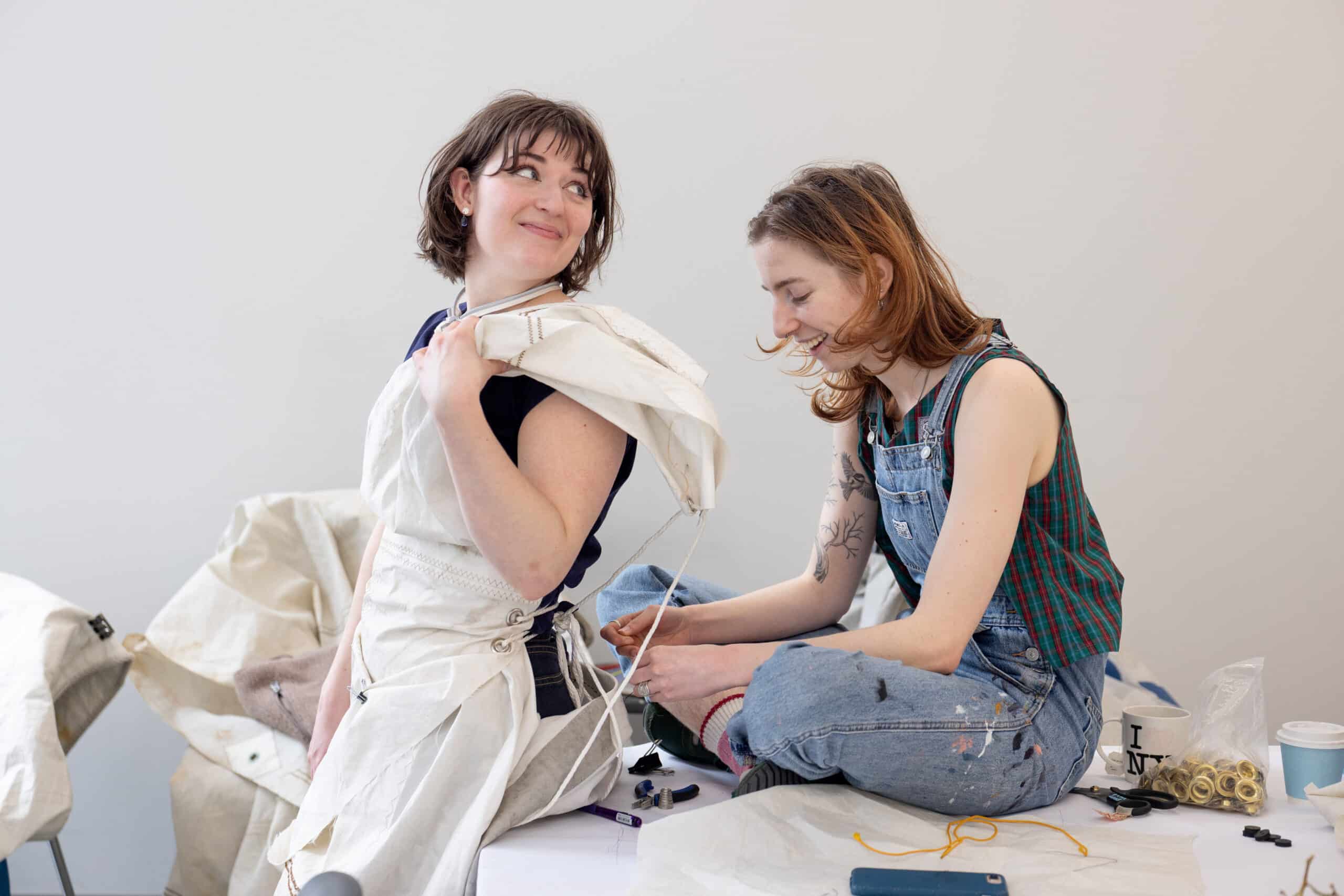
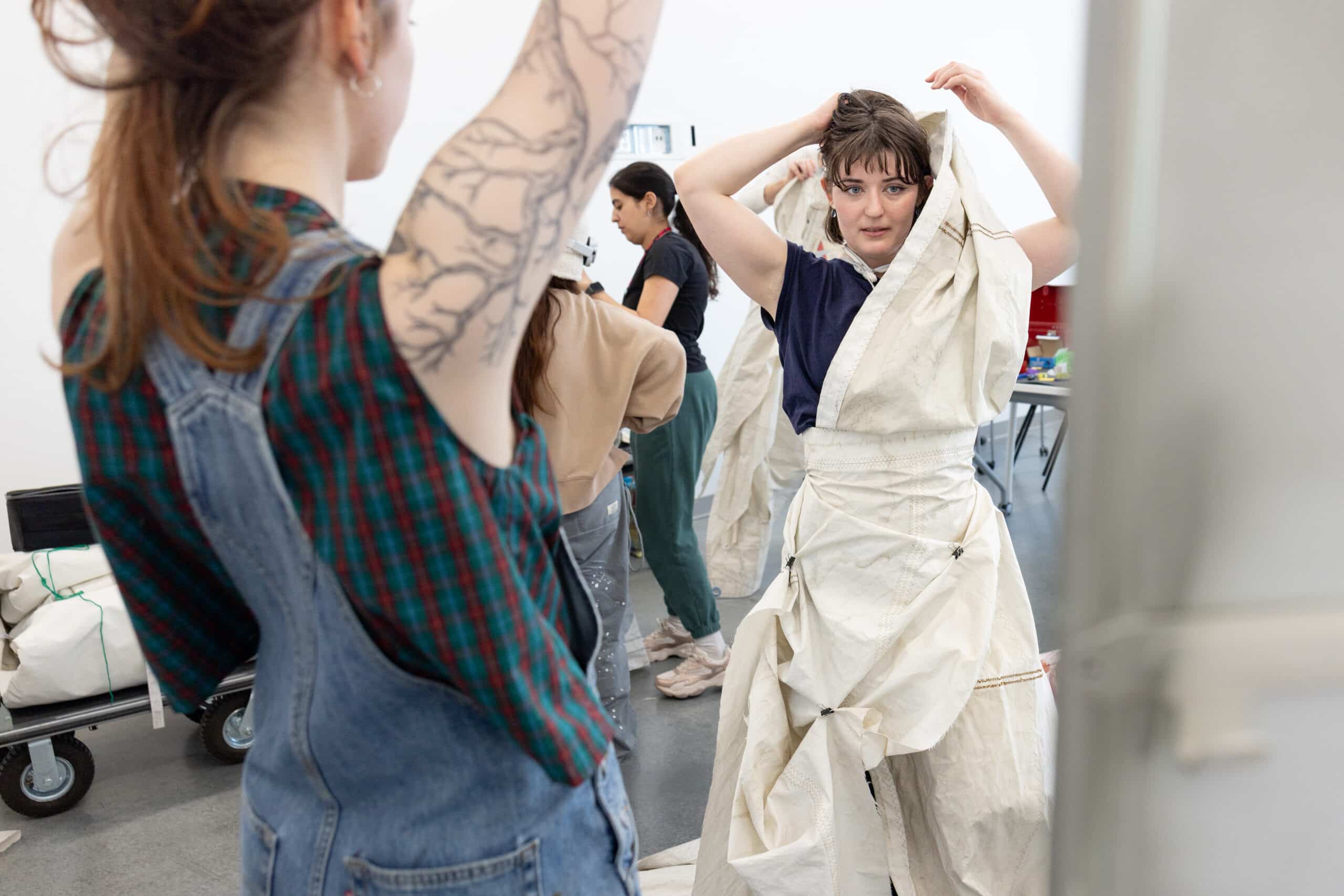
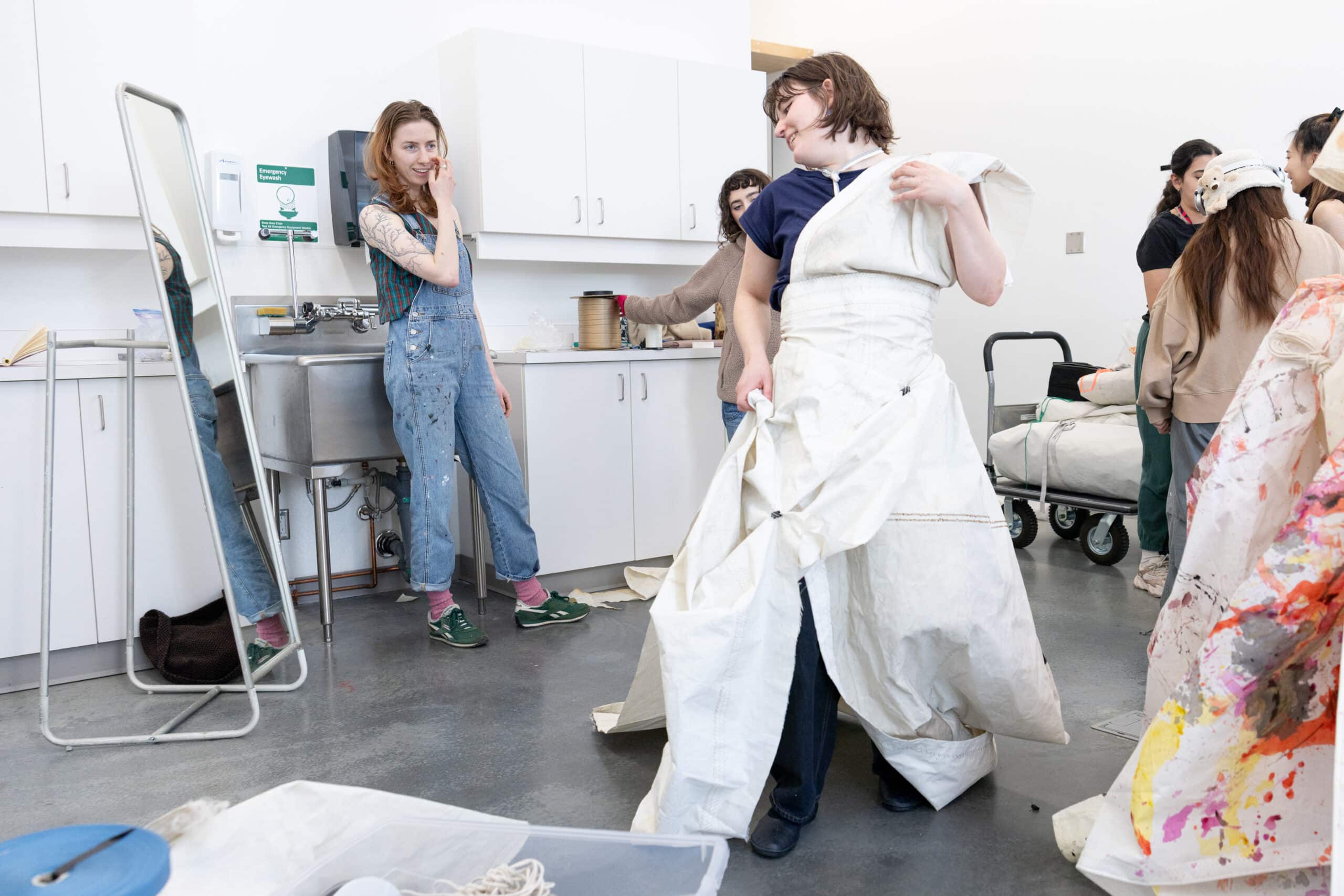
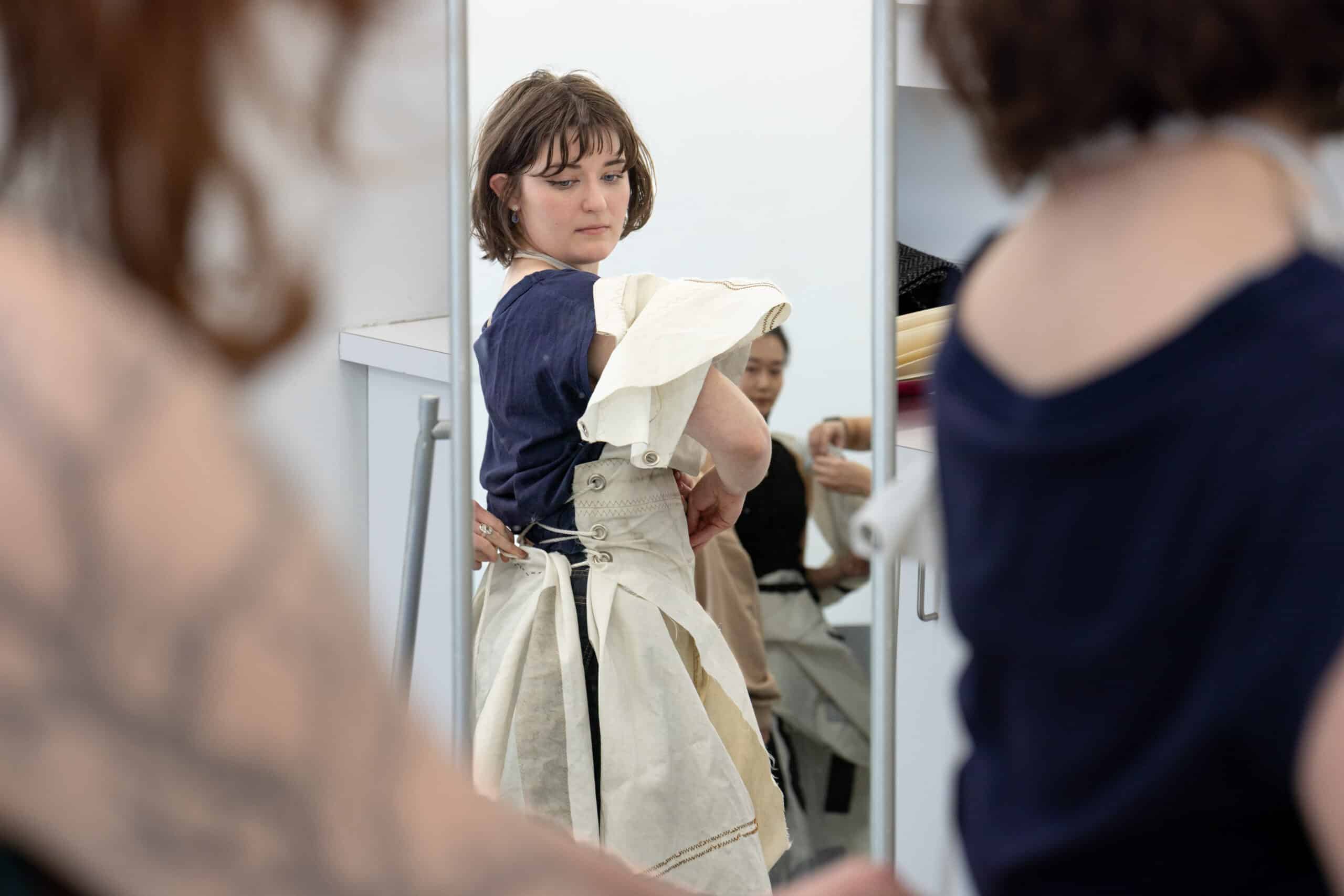
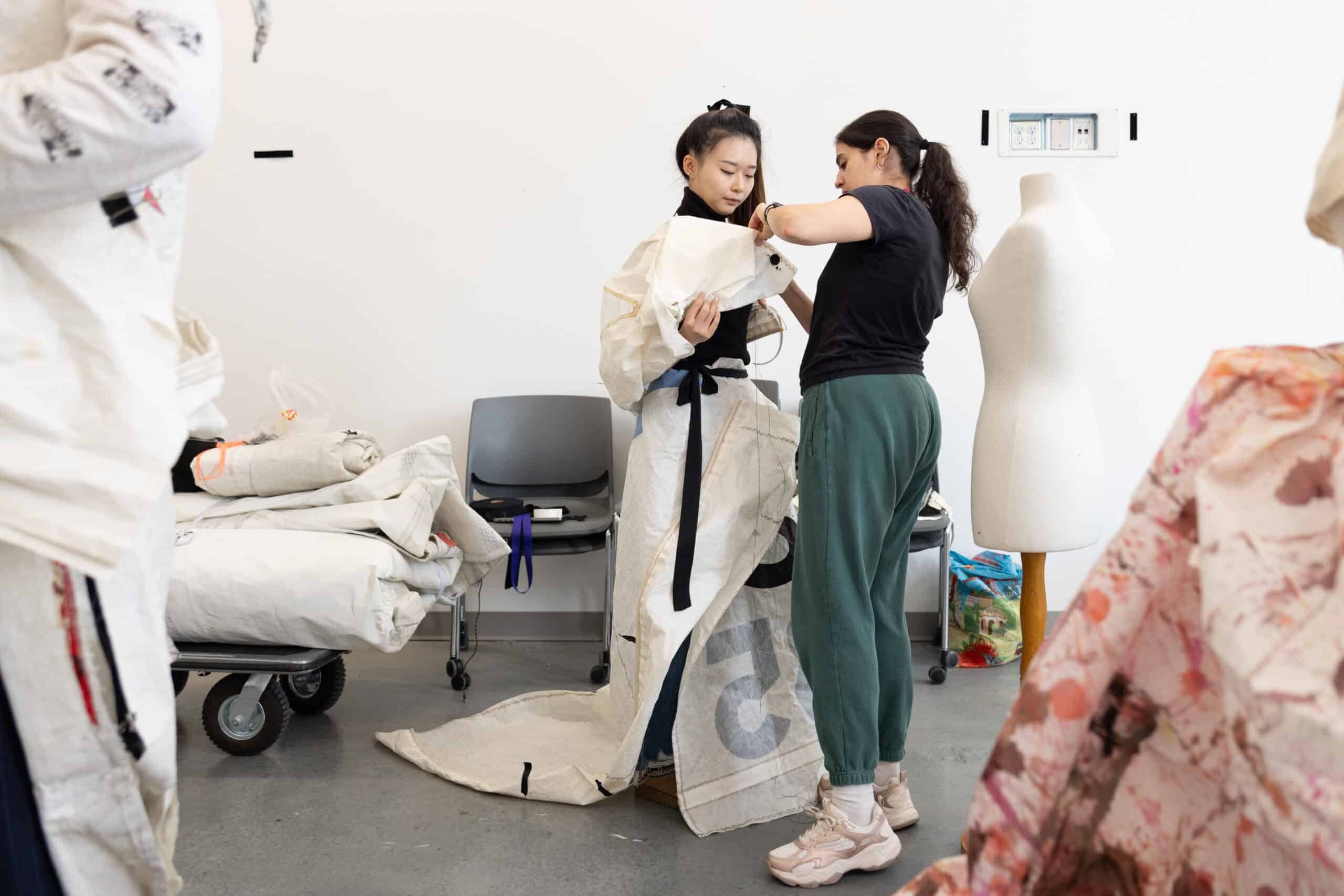
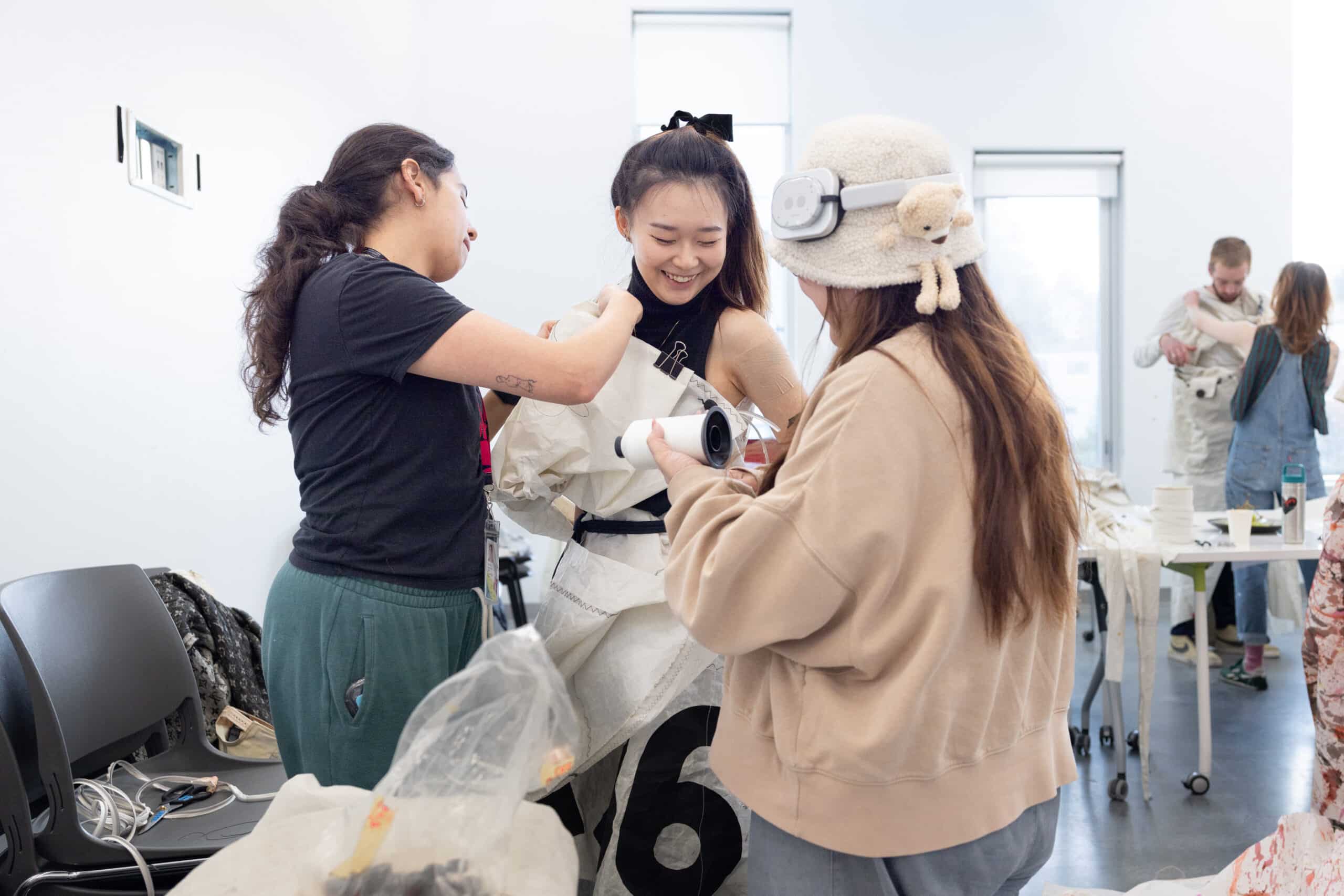
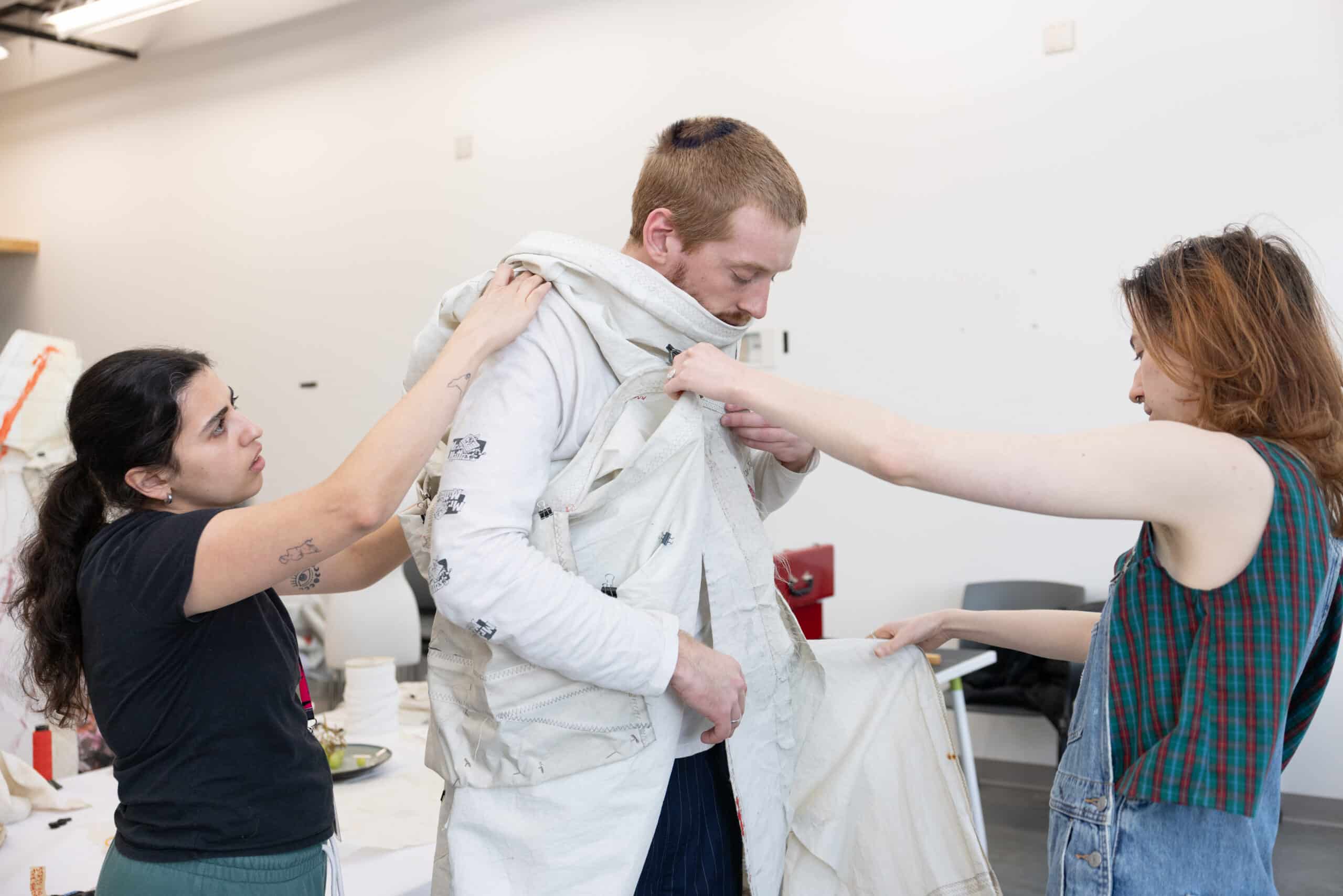
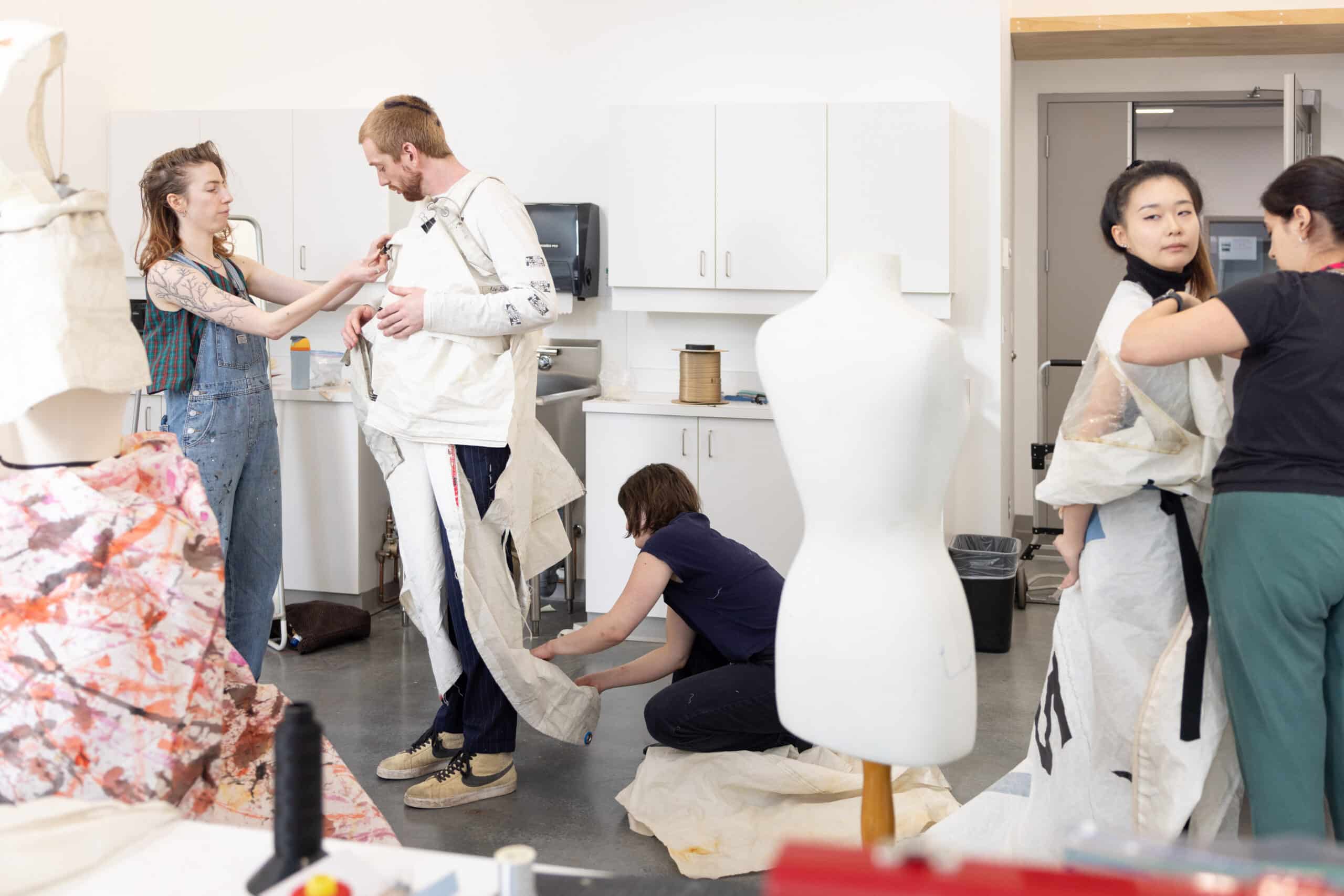
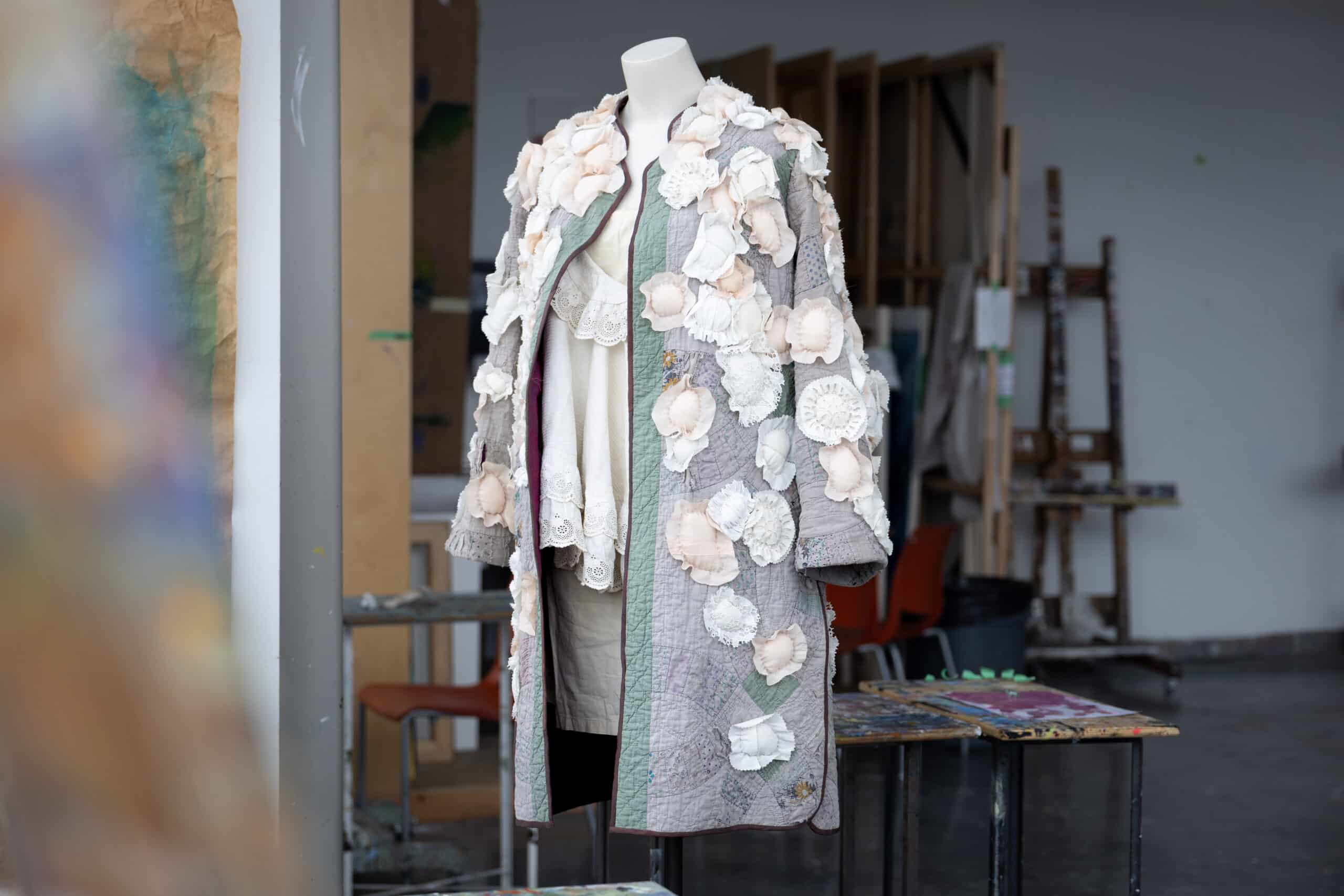
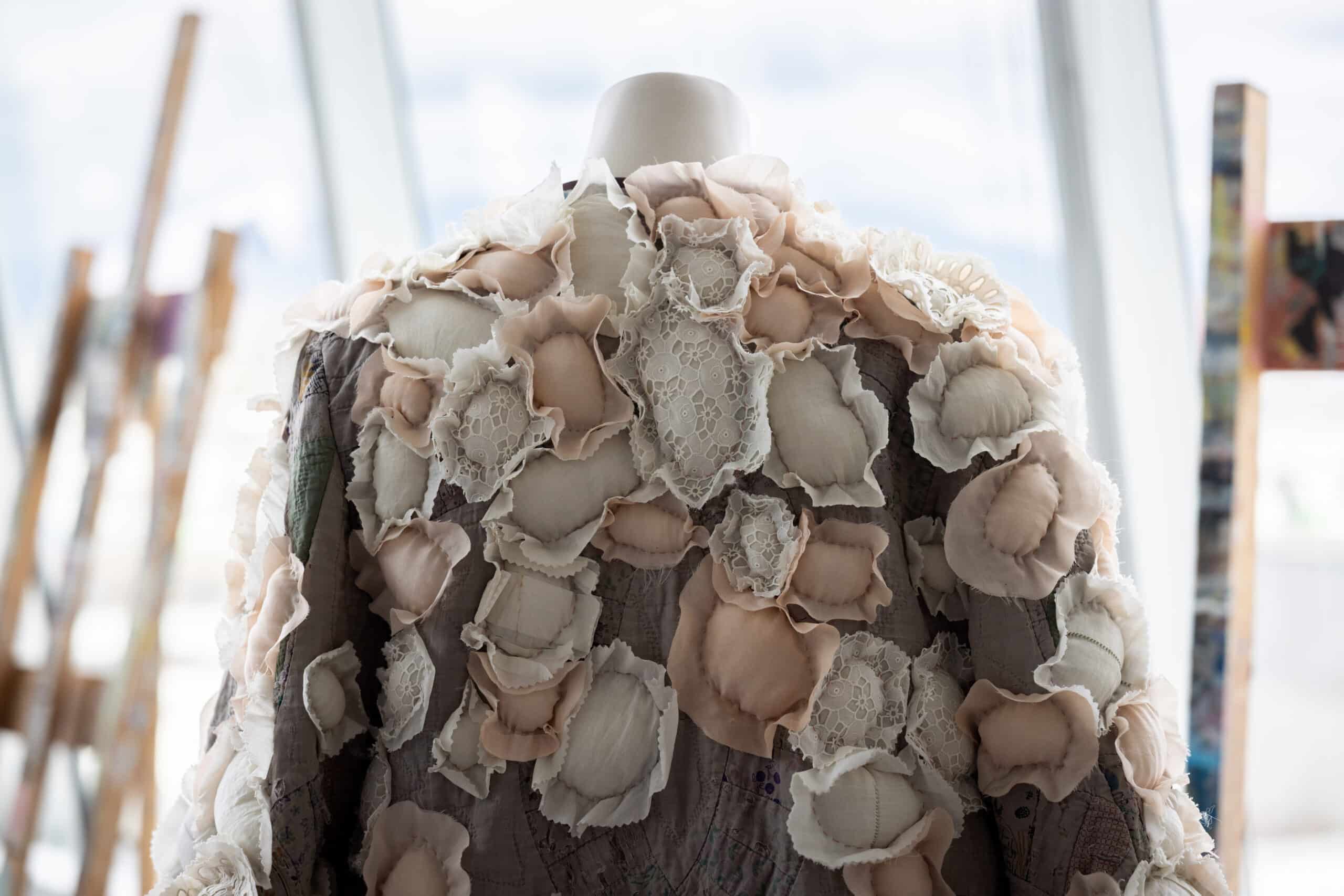
She was also one of nine ECU students who led a trio of public workshops at UBC on how to mend, construct and upcycle clothing. She says the experience aligned squarely with the aims of her capstone project, A New Hope [Chest], which reimagines the hope chest as a site for knowledge transfer and sustainable ways of working.
“My grad project is about building community around traditional textile crafts and exposing people to those skills and knowledge as a path to sustainability,” Audrey says. “The Slow Fashion workshops were right in line with all of that. I was able to think about the conversations and projects I’ve been developing and apply them in a structured forum. I got to hone my teaching skills, but also my understanding of how to communicate with people outside my bubble. It was very lovely and exciting.”
EVERYONE IS INCLUDED
Slow Fashion Season was created by interdisciplinary artist, curator and UBC faculty member Germaine Koh as an initiative of the Slow Fashion research cluster, which she launched in 2024. The project connects researchers from across disciplines who focus on textile and clothing recycling, upcycling, circularity, waste recuperation, and the development and revival of sustainable materials.
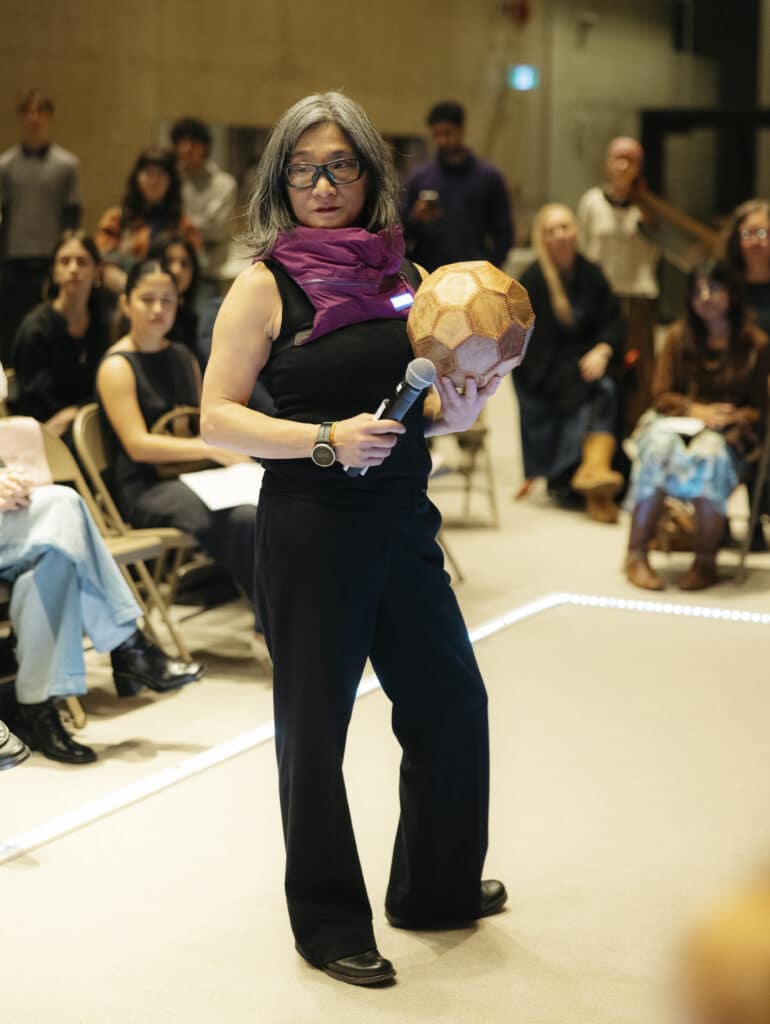
“These are folks who would not normally be travelling in the same orbit. And an important part of our work is generating connections and emphasizing that if we’re going to make any progress on the question of sustainability in textiles, it has to happen at every level,” Germaine says.
“It must happen in materials development, in the actual fabrication of textiles and clothing, and at the level of consumption. That’s why it was so important to include the public right from the beginning, so the conversation around these questions includes everyone.”
In 2025, Germaine contacted ECU faculty member and Material Matters cofounder Hélène Day Fraser and ECU faculty member Heather Young to participate in Slow Fashion Season’s inaugural program, which included a runway show, design competition, exhibition, lectures and student-led workshops. The pair helped Germaine expand the 2026 edition to include a second exhibition, weekly workshops, design charrettes and a symposium.
HOW FAR THEY’VE COME
Undergraduate and graduate students alongside ECU alums and faculty members participated in every module, from creating and modelling garments in the runway show to displaying work in the exhibitions.
Meanwhile, two ECU students, Malika Chopra (BDes 2026) and Janae Rajarethnam (BFA 2027), earned awards in design competitions, and ECU students and alums Dakota Burpee (MFA 2027), Vaughan Woodward (BDes 2025), Azmina Doctor (MDes 2026) and Eden Eisses (BDes 2025) showed alongside ECU faculty Amber Frid-Jimenez and Emily Hermant in the Slow Fashion Lab exhibition.
Hélène says the commitment and success of ECU students and alums demonstrate how Slow Fashion Season embodies and extends the classroom learning that students encounter across undergraduate and graduate programs at ECU. She notes Germaine also designed the series to ensure participants had ample professional development opportunities.
“Slow Fashion Season was an amazing learning experience for our students because they’ve done so much work on things like participatory design, upcycling, recycling, circularity, and this was their chance to speak with the public about what it all means. They really put a ton of effort into it,” says Hélène, who mentored the ECU students leading the workshops, was a member of the Slow Fashion curatorial advisory committee and co-curated the research group’s Slow Fashion Lab exhibition at UBC’s AVHA gallery.
“At ECU, they learn about rethinking relations with materials and systems, but also how to understand the social and participatory components of their work. They’ve learned so much, and this was an opportunity to really show off how far they’ve come. They won awards, strutted on the runway, and in so many ways stole the show. It was a joy to see.”
CONNECTING THE CITY
Students, faculty members and researchers from UBC, LaSalle College Vancouver and the non-academic world were also involved throughout the series, offering ECU students a chance to connect with a wide community of practitioners and experts in their fields.
“Talking to so many different people and looking at so many different projects, I realized how versatile we are as both individual practitioners and as a university,” Audrey says. “I saw the kinds of value I could bring to a huge variety of contexts, because our interests connect so many different industries and institutions, and our skills are applicable in all of them. We just feel so lucky to know there’s this whole network in the city connected by the Slow Fashion research cluster.”
Look for Audrey’s capstone project, A New Hope [Chest], alongside the work of her peers in the 2026 edition of The Show, ECU’s annual graduating student exhibition, in May 2026.
More about Industrial Design at ECU
ECU’s Industrial Design major is an immersive, hands-on program aimed at understanding and responding to our complex world in aesthetic, emotional and material ways. You’ll create products, services and experiences that support relationships between individuals, communities and the environment.
Visit our website to learn more.
More about Research at ECU
As one of the most research-intensive art and design universities in Canada, ECU connects art, media, and design practices with some of the most pressing questions of our time. At ECU, we believe our research can help to transform the world, build healthier and more vibrant futures, and cultivate cultural resilience throughout our local and global communities and industry partners.
Visit our website to learn more.
Want more stories like this one delivered twice a month to your inbox?
Subscribe to our FREE Emix newsletter today!