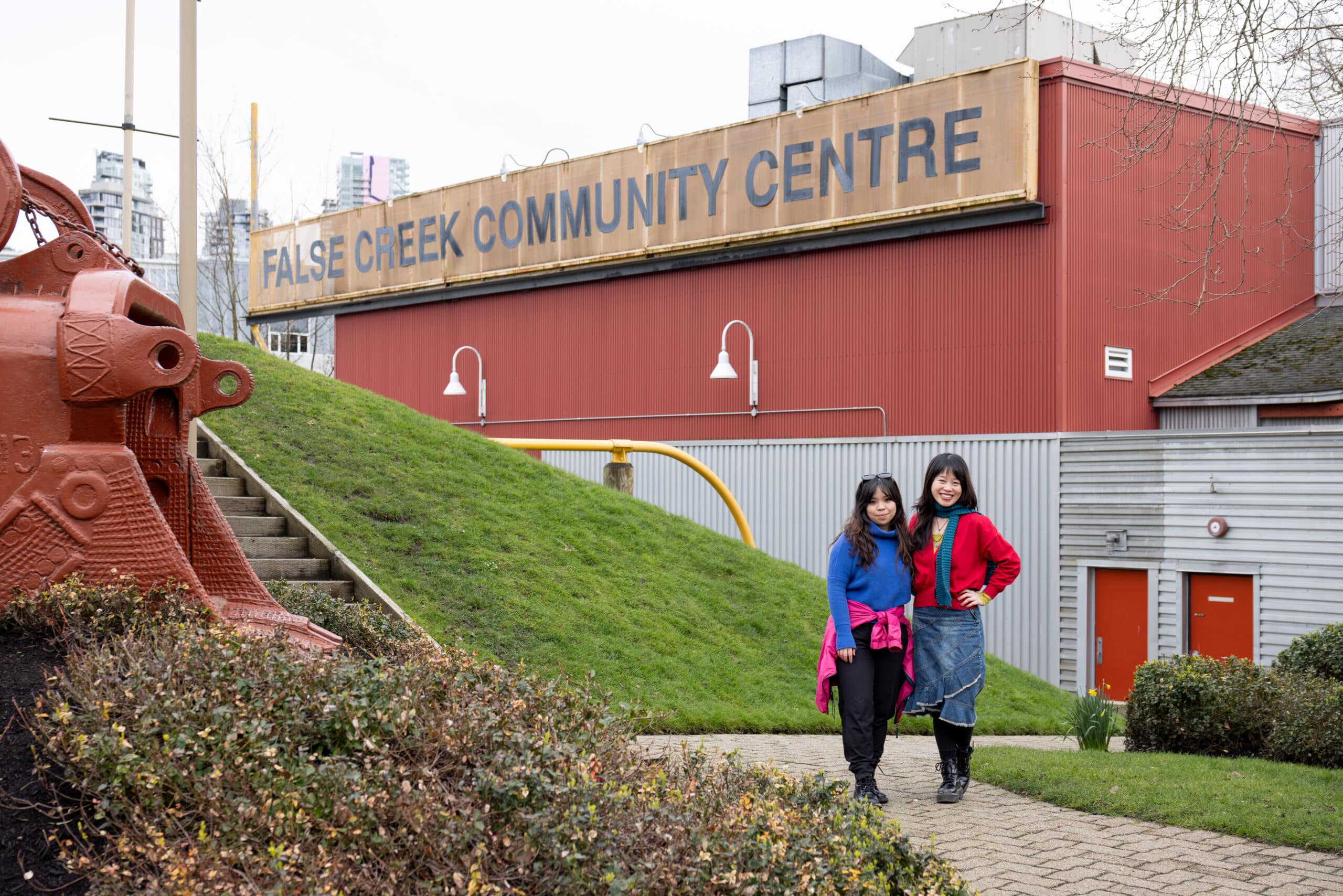
Co-led by artist and ECU Master of Fine Arts student Sichen Grace Chen, “False Creek”: Community Connected by Water brings together four interdisciplinary organizations to inspire a new understanding of the urban waterway.
A three-year research project brings together artists, scientists, students and educators to investigate False Creek’s biodiversity, advocate for better stewardship of the inlet and engage the public through art.
“False Creek”: Community Connected by Water aims to transform public perception of the keystone urban waterway that has long been haunted by its history as an outfall for industrial pollution.
“We’re working with our partners in community-led science to gather hard data on False Creek’s biodiversity, and then we’ll be using art to translate that data to help reorient public perspectives,” says Sichen Grace “SG” Chen, a Master of Fine Arts student at Emily Carr University of Art + Design (ECU) and Creative Director with Aloera, one of four partner organizations on the project.
“Data can sometimes feel purely intellectual or difficult to integrate into our daily conversations. Art reaches people on a different level. Maybe it touches the heart or even the body. With this project, we’re trying to mobilize all those different ways of knowing and feeling so people can see that False Creek is so much more than just that body of water by Science World.”
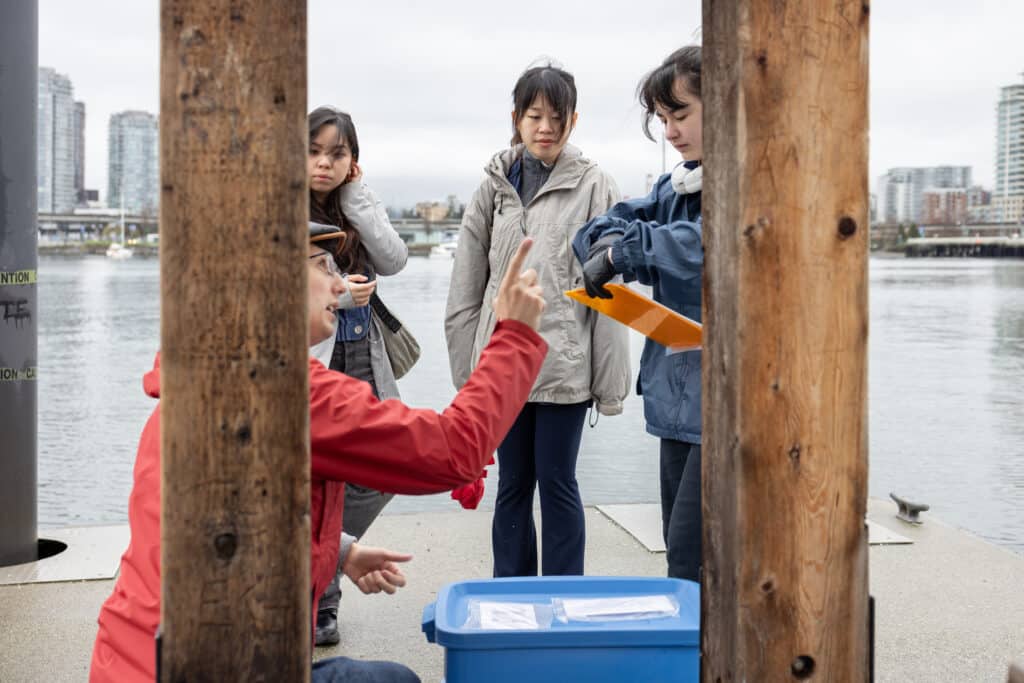
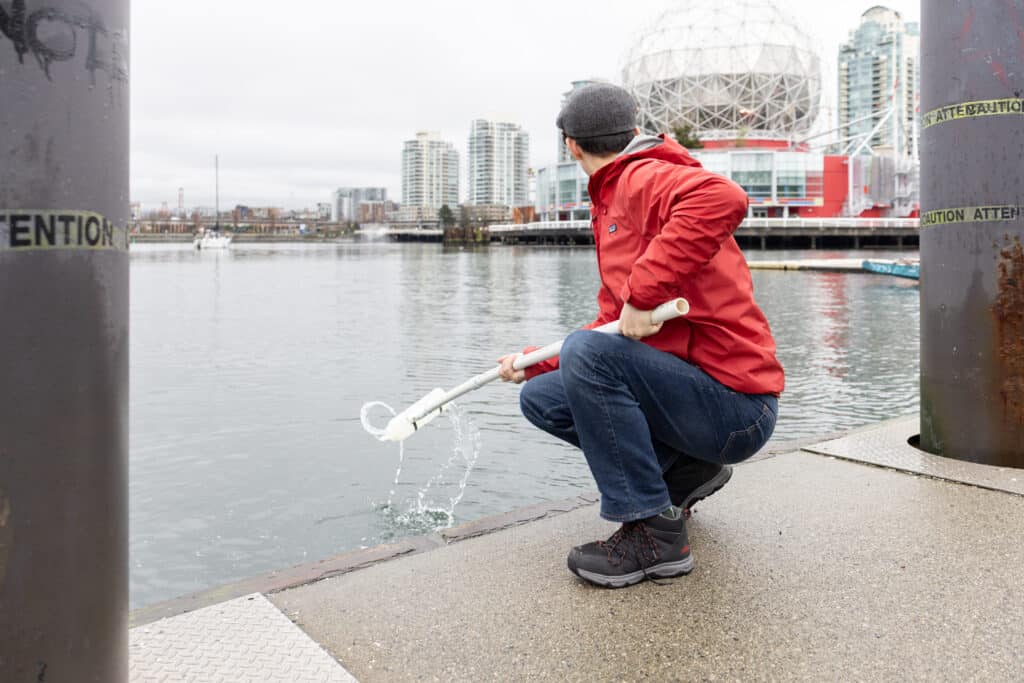
In addition to Aloera’s focus on public engagement, “False Creek”: Community Connected by Water involves large-scale water sampling by a team at Langara College, analysis by scientists at the Hakai Institute and support from False Creek Friends.
By building a clearer picture of False Creek’s biological diversity and sharing their findings through art, science and storytelling, Community Connected by Water aims to ignite public interest and toward imagining a better future for the waterway.
The project is generously funded by the Natural Sciences and Engineering Research Council of Canada, whose College and Community Social Innovation Fund awarded $350,000 to the Applied Research Centre at Langara College, and by the Canada Council for the Arts, which awarded $225,000 to Aloera.
“SG’s work on this project is incredibly exciting because it weaves together not only multidisciplinary practices, but multiple ways of engaging in community-based problem solving,” says Justin Langlois, Associate Vice-President of Research and Dean of Graduate Studies.
“So many of our students, like SG, are finding new and important ways to translate their learning into real-world impacts, and it’s a testament to the power of the practice-based education we offer here at ECU. Collaborative, community-engaged, values-based creative research and practice facilitates meaningful exchanges between our educational community and the broader public, and our students and faculty are truly on the leading edge of this kind of work.”
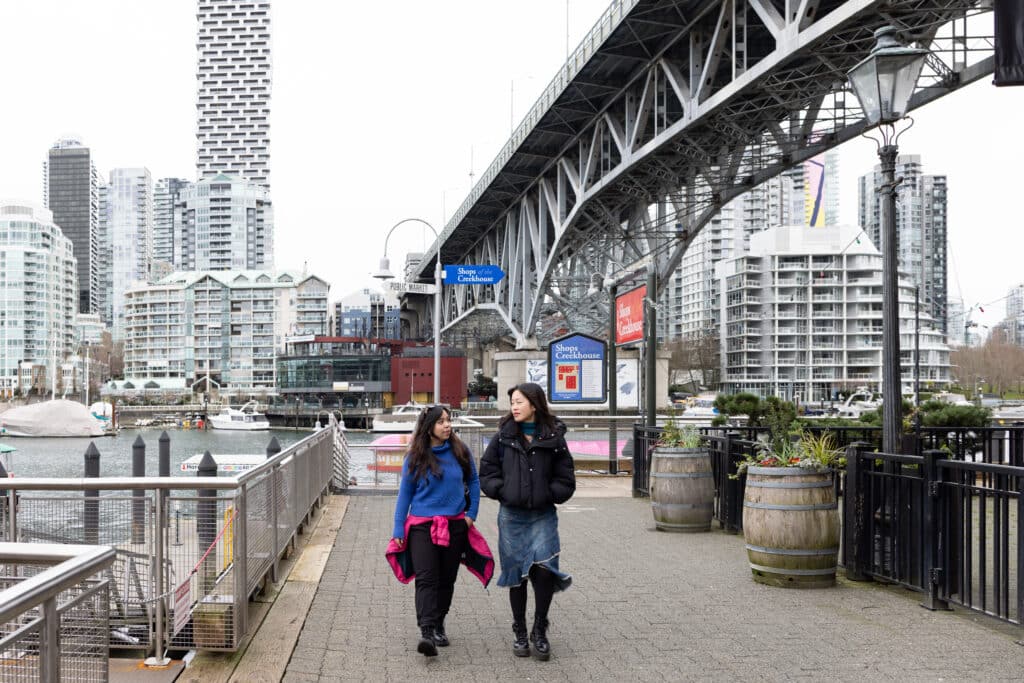
Part of Aloera’s funding will provide a pair of paid research assistantships for emerging artists. SG says she and Aloera Climate Director Jasmine Lee received more than 70 applications for the positions in addition to dozens of inquiries regarding possibilities for volunteering.
“To see this kind of hunger from so many people who have a desire to make an impact is incredibly inspiring,” says Jasmine, a Master of Applied Sciences candidate studying Materials Engineering at the University of British Columbia. “It’s been our dream to find a way to bridge the gap between our disciplines, and we feel very fortunate to be able to involve the community in this project that addresses so many urgent issues around climate, the environment and our relationship to the land.”
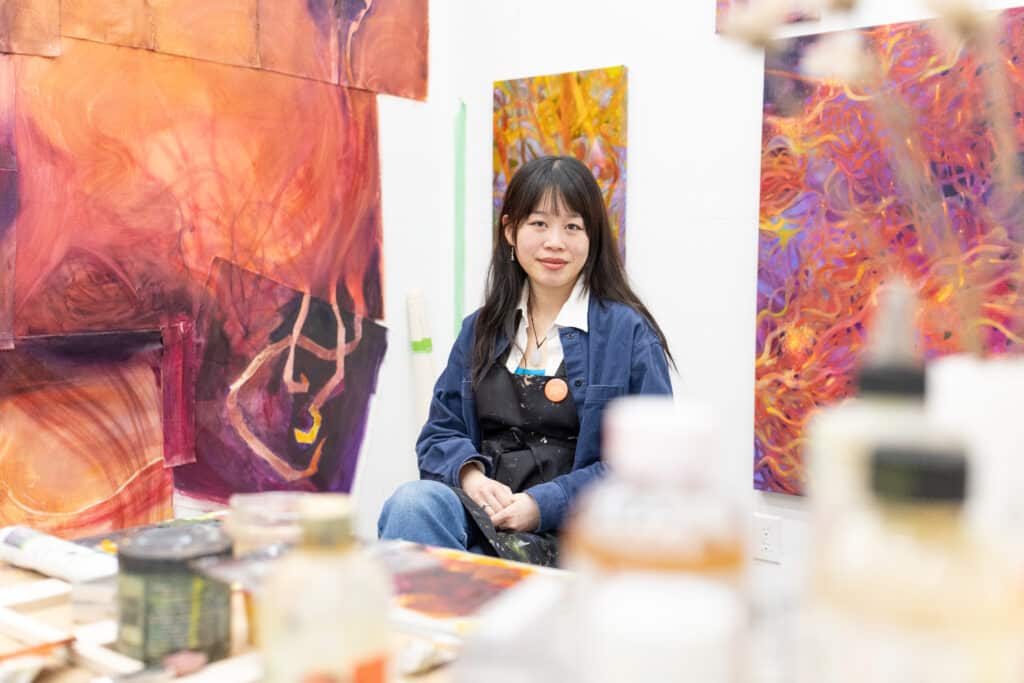
SG adds she hopes the projects models new, collaborative ways for visual artists interested in ecology to build a meaningful, multifaceted career in the arts.
“In a way that parallels scientific inquiry, art has the capacity to identify connections that are invisible to human perception,” SG says. “Many artists tell me they feel passionate about issues like climate change and sustainability but can’t see a way to intervene artistically in those spaces. We’re hoping to show how art has the power to reorient perspective, reshape the lens with which we examine our surroundings and ourselves, and to make a difference in our communities, which includes the lands and the waters we live on.”
A public event will be held near False Creek in the summer of 2026, inviting community members to learn about the first phase of the project and reflect on False Creek’s significance to the city. At the event, SG and Jasmine will present a short-form magazine and unveil their mural on the side of False Creek Community Centre, both of which springboard from the project’s values and findings.
Follow Aloera on Instagram to keep up with the project.
More about Research at ECU
As one of the most research-intensive art and design universities in Canada, ECU connects art, media, and design practices with some of the most pressing questions of our time. At ECU, we believe our research can help to transform the world, build healthier and more vibrant futures, and cultivate cultural resilience throughout our local and global communities and industry partners.
Visit our website to learn more.
More about the Master of Fine Arts program at ECU
Enhance your artistic practice and critical inquiry with our two-year Master of Fine Arts programs, featuring innovative and flexible pathways. Immerse yourself in contemporary art production through an interdisciplinary curriculum that bridges methods and ideas in a supportive and challenging environment. Choose between a full-residency option for year-round, on-campus engagement or our two low-residency programs combining online learning with on-campus intensives.
Visit our website to learn more.
Want more stories like this one delivered twice a month to your inbox?
Subscribe to our FREE Emix newsletter today!