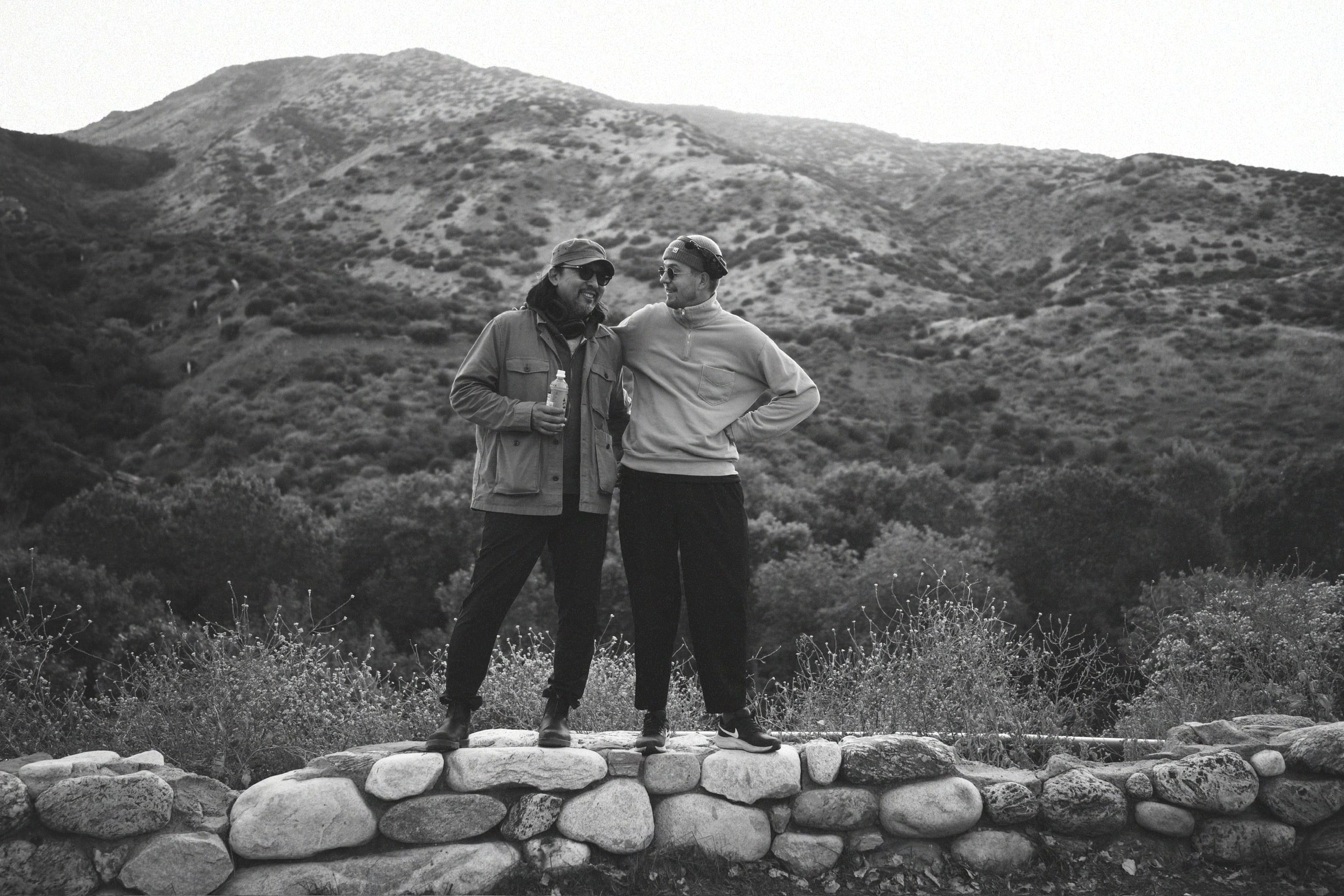
As his latest film, zi, makes its debut at Sundance Film Festival, the accomplished filmmaker and ECU alum reflects on his artistic evolution during a moment of change.
When filmmaker Benjamin Loeb (BFA 2011) sat down for a chat, he wasted no time painting a picture of an artist at a moment of transition.
His laudable filmography includes cinematographer credits on big-screen features such as Dream Scenario (2023), When You Finish Saving the World (2022) and After Yang (2021). Pieces of a Woman (2020) earned actress Vanessa Kirby an Oscar nomination partly on the strength of its virtuosic single-shot centrepiece – a 24-minute birth scene filmed by Benjamin in a single take with a camera on a gimbal.
His feature collaborations with directors including Jesse Eisenberg, Kristoffer Borgli and Kogonada have premiered at prestigious festivals such as Cannes and Sundance, and his work has earned nominations and wins from the Leos and Film Independent Spirit Awards. He is recognized as a committed and thoughtful practitioner with a deep understanding of cinematic language and a clear vision for each of his projects.
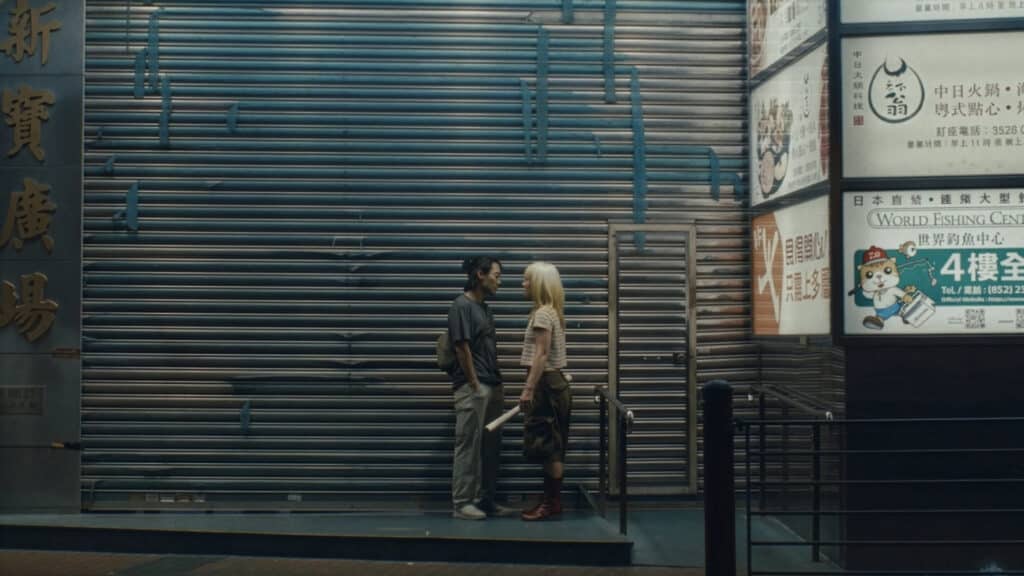
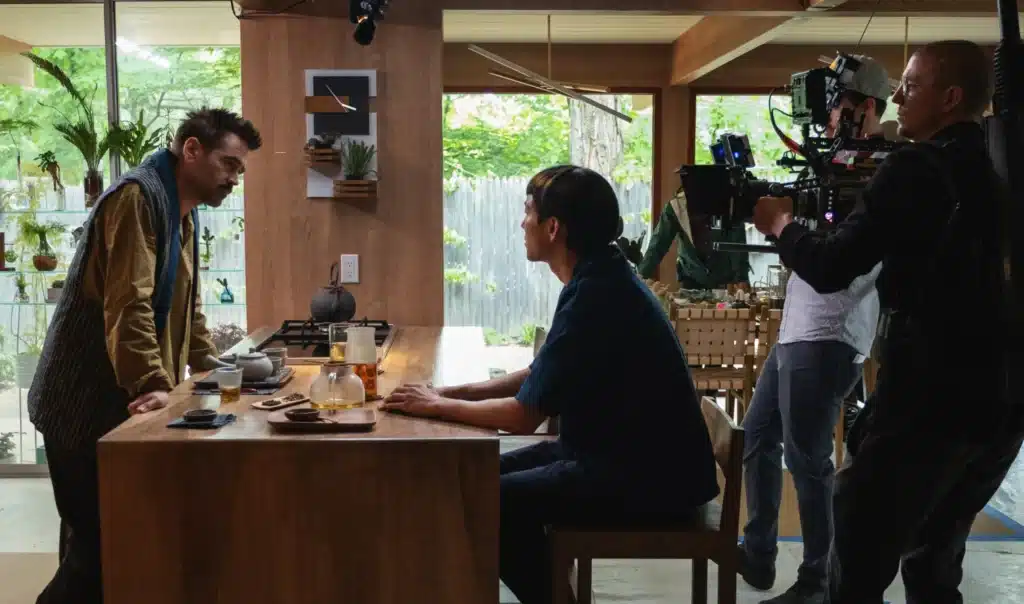
Since wrapping 2025’s A Big Bold Beautiful Journey – which starred Margot Robbie and Colin Farrell and was directed by Kogonada – he and Kogonada travelled to Hong Kong with a small group of collaborators to develop, write and shoot a new film with virtually no budget, embracing their love for the cinematic languages which shaped them.
That film, titled zi, will be making its world premiere this month at the Sundance Film Festival. At the time of this interview, however, those details were still tightly under wraps.
And while A Big Bold Beautiful Journey drew praise in large part for Benjamin’s contribution as cinematographer, before the Q&A had even begun, Benjamin said zi was filmed in part as a response to his experience on the big-budget production – an experience which had “destroyed my sense of cinema.”
This transcript picks up at that point and has been edited for length and clarity.
Are you willing to discuss your experience with ‘A Big Bold Beautiful Journey’ a little more?
Yeah, of course. For instance, Emily Carr University was and has always been an incredible, safe space for learning how to speak about your work, give criticism and explore avenues without anyone telling you what’s ‘right and wrong.’ In fact, abstract thought is encouraged. And the more I’ve paved my way into the film industry, all those things — reflecting, exploring, abstraction — are viewed as inconveniences to a system that tells you how filmmaking should work and how films are produced and made in 2025.
Now, having made 12, 13 movies and found my way into a kind of mainstream success, I’m sort of hitting myself in the head because I’m looking around thinking, there is no real creativity here. Everything is driven by marketing, sales, and corporate ideologies.
And at a certain point, you remember: back when I went to ECU, I would just grab a camera because we wanted to make something. We did it because we had the ability and desire. What has been difficult is that I never lost that ability — I just forgot how to use it. Because everybody keeps telling me you need financing and approval and all of these things. But in the end, you need no approvals to make art.
So after having made A Big Bold Beautiful Journey, I found myself asking, is this truly how this industry works? Is this what I’ve worked for 15 years to achieve? Because if this is it, I’m out.
As a reaction, I recently travelled to the other side of the planet to make a film, which is a sort of throwback to what Kevan Funk (BFA 2011) and I used to do at ECU. We would find a little money to buy tickets somewhere. We’d bring a camera, we’d cast a film from Craigslist, we’d make something for nothing, and we’d come home with work that feels invaluable.
So, I travelled last month to this new city with five friends, no plan, no script, no budget, and we made a film. I got home on Saturday and we’re submitting it to Sundance in 10 days.
How long were you there?
Three weeks. We prepped it, shot it, wrote it, and put it together on our own in three weeks.
As a response to the city?
Well, as a response to the industry at large. As directors and communicators, I think we’ve completely misunderstood our purpose. Most films today are just distractions. I believe that if we’re going to make work, it needs to say something and deal with issues and themes and stories that we as human beings can somehow use.
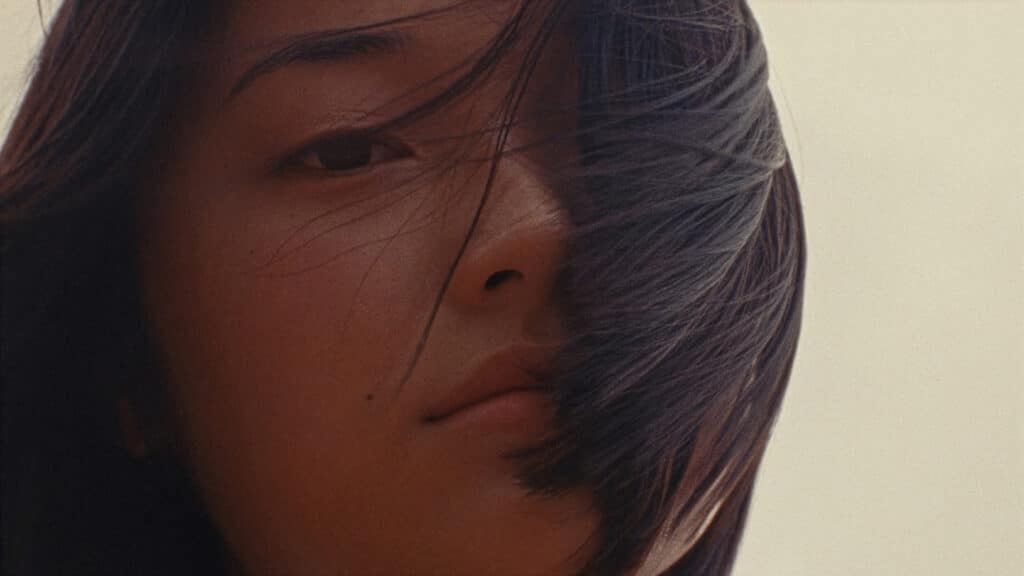
So, that brings up the idea of how filmmakers might relate to an audience, and I’ve heard you speak previously about using lighting to craft a sense of mystery or darkness and provide space for the imagination to flourish. I’ve seen shots you framed where a character is partially or even wholly obscured, and you’ve also talked about allowing abstraction into your frames. Which, to me, means refusing to manipulate the viewer into feeling specific things at specific times. Is that correct?
A hundred percent. I fundamentally believe that stories shouldn’t have one singular interpretation. When you read a book, you rely on your own mind to visualize the story. I feel the same way about filmmaking.
I’ve been told by a director, ‘This person is crying, we have to see both their eyes in order to connect with them.’ And I’m like, well, what if you see none of their eyes? If you know what’s happening and you see the back of someone’s head in a wide shot, punched over a bed, doesn’t the relationship with space mean something? Doesn’t the fact that you’re not seeing pure emotion make the viewing experience stronger because you’re being asked to participate and create the rest of the image in your mind?
When you choose to withhold something, it can be much more powerful than shoving emotion in someone’s face. Because we all know what the world feels and looks like.
I think we also live in a society where a lot of human beings are very good at shielding themselves and hiding emotions. Those people will respond to seeing characters who don’t necessarily want to be vulnerable but whose humanity can be revealed through cinema. I think there’s something revelatory in representing that behavioural complexity.
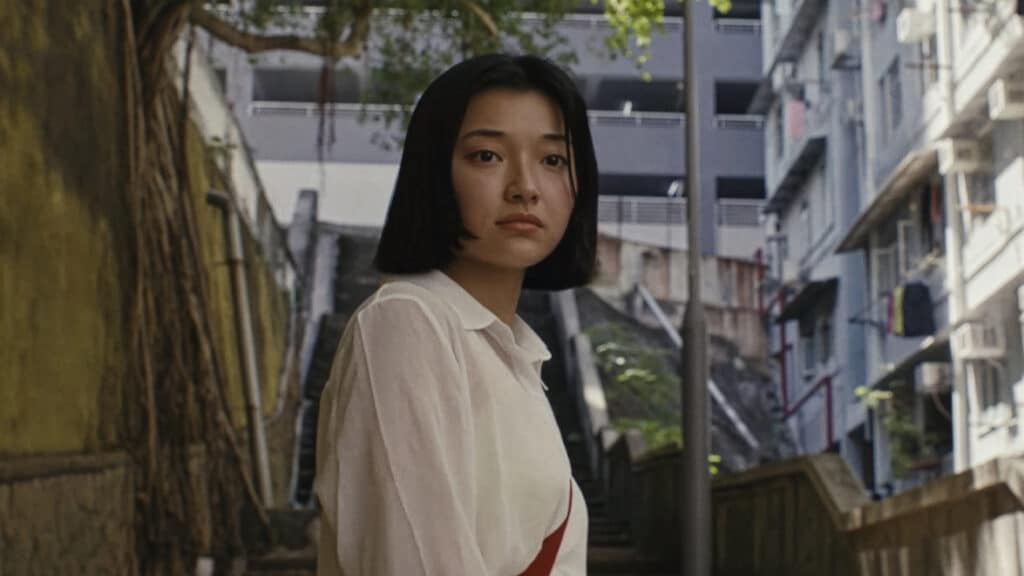
It sounds like you’re working to recognize the kinds of worlds people bring with them into the experience of viewing. There’s also something there about trust and respect – acknowledging how human complexity is real and sacred but also trusting that it won’t induce blindness. Rather, it’s going to be a portal for empathy between what’s happening on screen and what is happening in a person’s inner world. Is that right?
Absolutely. I feel like this goes back to the way Rick Rubin talks about music. If something feels good to you, if it feels right to you, then most likely it will resonate with others. This idea that we have to create something for an audience is a mistake. When you try to create a product for its own sake, you risk forgetting that it must first feel true and real to you.
Charlotte Wells wrote and directed a movie called Aftersun about a father who takes his daughter to a Turkish island on vacation, just the two of them. It was sort of autobiographical, and I once asked Charlotte, how real is this story in terms of your life? She told me, maybe 70 per cent. I told her, I can feel it. Because whatever you described in this film feels real. It’s possible to fake it, but there’s a certain sense of vulnerability that translates when it comes from lived experience. And I think there’s such value in that.
So, again, I don’t have much interest in making something for people to forget their lives and try to escape. I would rather be a part of saying something.
And now you’re going to go back to school to do your PhD in Norway?
I’ve applied for it. I’m exploring this idea of what’s more real: if you make a documentary with real people in real life trying to tell a story — which is still constructed because it’s designed and edited by someone — or a story like, for example, Aftersun, which reimagines and reconstructs parts of a true story, but is very close to an emotional truth. Is emotional resonance more important than factual truth in cinema? And how does cinematic language bind those two together? I am always one for emotional resonance. For me, if a story makes you feel, then that is the truest version.
We’re so lucky in this industry to be working in a space where language, history, philosophy, psychology, business, finance are all tied into the same thing. And when there’s harmony between all of these elements, it can create an experience that I truly believe is transcendent. It puts you in a different place.
When a movie actually hits, when something pierces your brain or your soul or your body and makes you feel something, it can change you as a human being. That potential is so powerful. So, for me now, I’m focused on working with people who are interested in asking these questions and trying to figure out a deeper meaning behind what we dedicate our lives to.
Given the arc of your career and where you find yourself now, and all of the things that you’re still learning and discovering about your desires as an artist and what feels real and right for you – and also given that, as you say, you’re coming full circle and discovering that the things that made you happy as a young artist are the things that still hold true – what would you say to an emerging filmmaker who may be looking at your filmography but may not have the insider’s view of this industry at your level?
Weirdly, I think the key is to go to therapy, learn to talk about your feelings, get to know yourself, and stay true to that version of yourself. Don’t be afraid to share whatever that is, which is you. And don’t be afraid of failure. Failure is the greatest thing in life. There is no growth without it.
100 Years of Creativity: The Stories that Shaped Us
As part of Emily Carr University’s centennial celebrations and our ‘100 Years of Creativity’ campaign, we are sharing stories that spotlight the creativity, resilience and impact of our community over the past 100 years. These stories feature the people, projects, places and ideas that have shaped ECU, reminding us of our shared legacy while inspiring the future. By revisiting past milestones and sharing new ones, we honour the many voices that built our institution and continue to guide its path forward.
For more information about ECU 100 centennial celebrations, upcoming events and stories, visit our webpage.
More About Film + Screen Arts at ECU
In ECU’s Film + Screen Arts major, aspiring filmmakers and media artists learn the fundamentals of film and media-making, from analogue and mechanical media to today’s digital tools and techniques, including virtual and augmented reality. Whether you dream of becoming a cinematographer, director, editor, set designer or sound designer, the Film + Screen Arts major will prepare you for your future as a visual storyteller.
Visit our website to learn more.
Want more stories like this one delivered twice a month to your inbox?
Subscribe to our FREE Emix newsletter today!