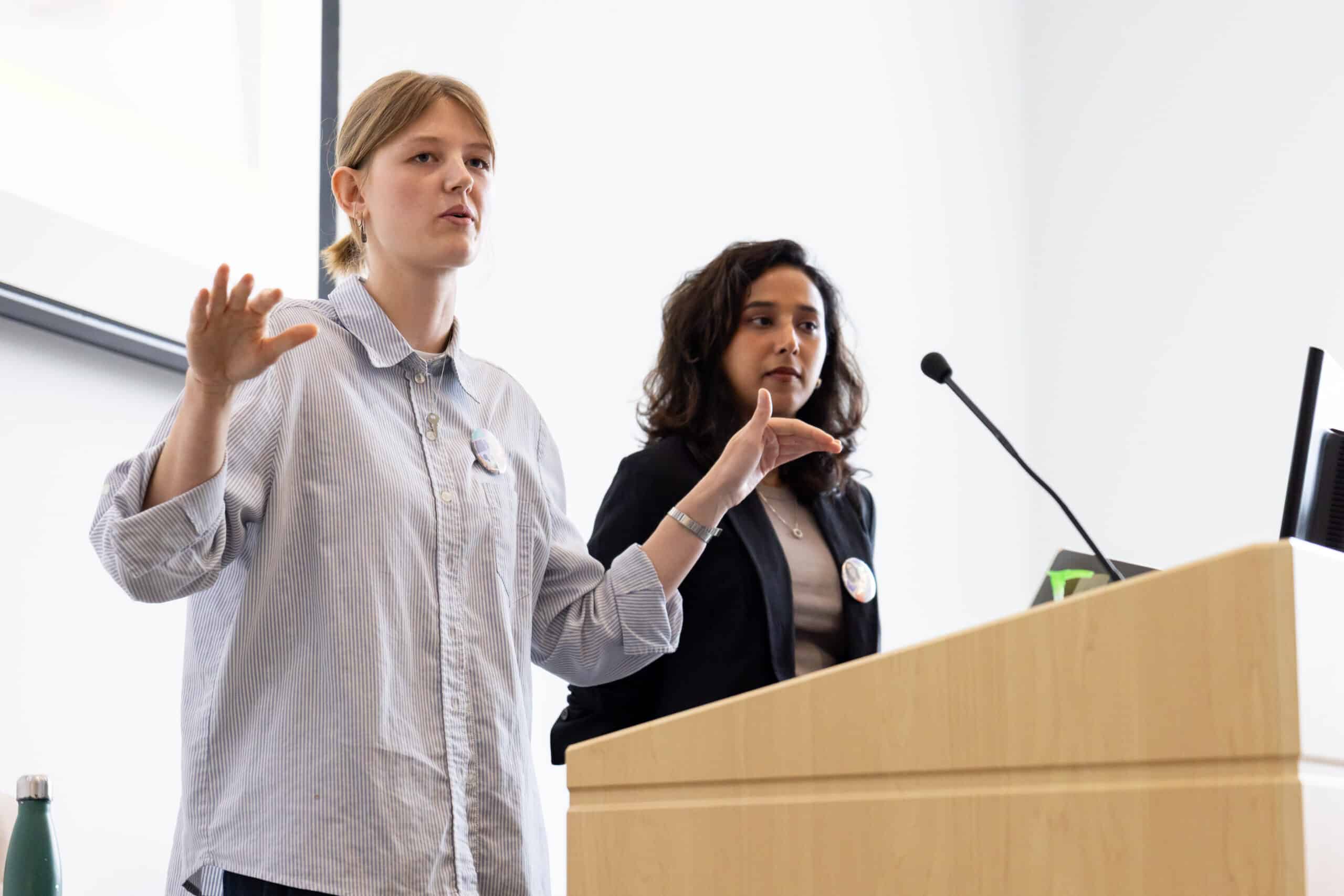
The annual event reflects on the recent output of researchers and students working at one of Canada’s only research labs dedicated to participatory health design.
Student research assistants (RAs) presented their work on projects addressing complex health challenges during the Health Design Lab’s (HDL) 2025 Showcase at Emily Carr University of Art + Design (ECU).
The RAs, whose work with the HDL is conducted in parallel with their degree studies at ECU, spoke about how their participation transformed their understanding of the role of designers in community-based work.
“When I first started, I was wondering how a designer could contribute meaningfully to this project when there were so many experts and people with lived expertise coordinating and communicating across all these different organizations,” said design researcher and HDL senior design RA Georgia McWilliams (BDes 2021) while co-presenting on Braiding Wisdoms, HDL’s collaboration with BC Children’s Hospital Social Pediatrics Program, RayCam Cooperative Centre and Raincity Housing.
“It became clear there is value in visualizing teachings from the community so they can be used as active, tangible tools for collaboration. I also learned it can be helpful to have a neutral facilitator there to take the burden from a person or organization, allowing for more true collaboration across all parties with less hierarchy and fatigue.”
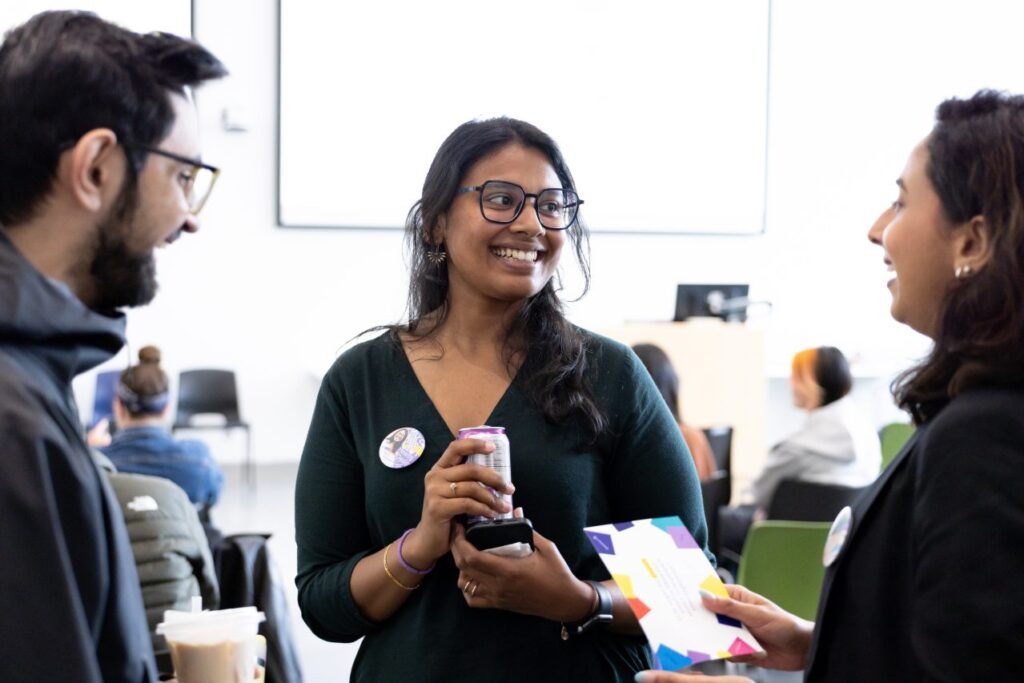
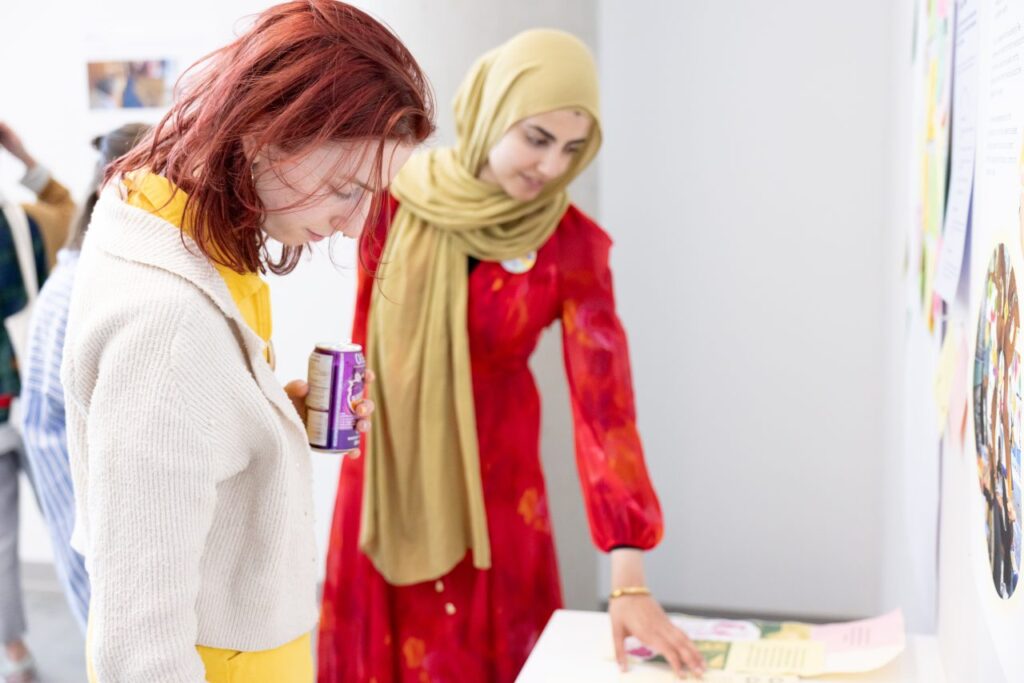
The Showcase featured eight RAs speaking on three recent HDL projects in addition to Expanding Awareness and Access, including a collaboration with Deer Crossing the Art Farm and Douglas College titled Who Cares? Developing an Emergent Model of Care on the Sunshine Coast; a collaboration with BC Mental Health and Substance Use Services titled Challenging Stigma Through Storytelling; and Expanding Awareness and Access to Supportive Care Services, the HDL’s ongoing project to deepen BC Cancer’s understanding of supportive care from the perspectives of patients and their families.
Nearly half a dozen additional projects involving a dozen more RAs were on view in displays around the lecture theatre. The HDL is one of Canada’s only research hubs dedicated to participatory health design.
In her opening remarks, HDL director Caylee Raber noted that despite the diversity of the projects’ aims, partners and areas of focus, all of them are united by their use of participatory design methods.
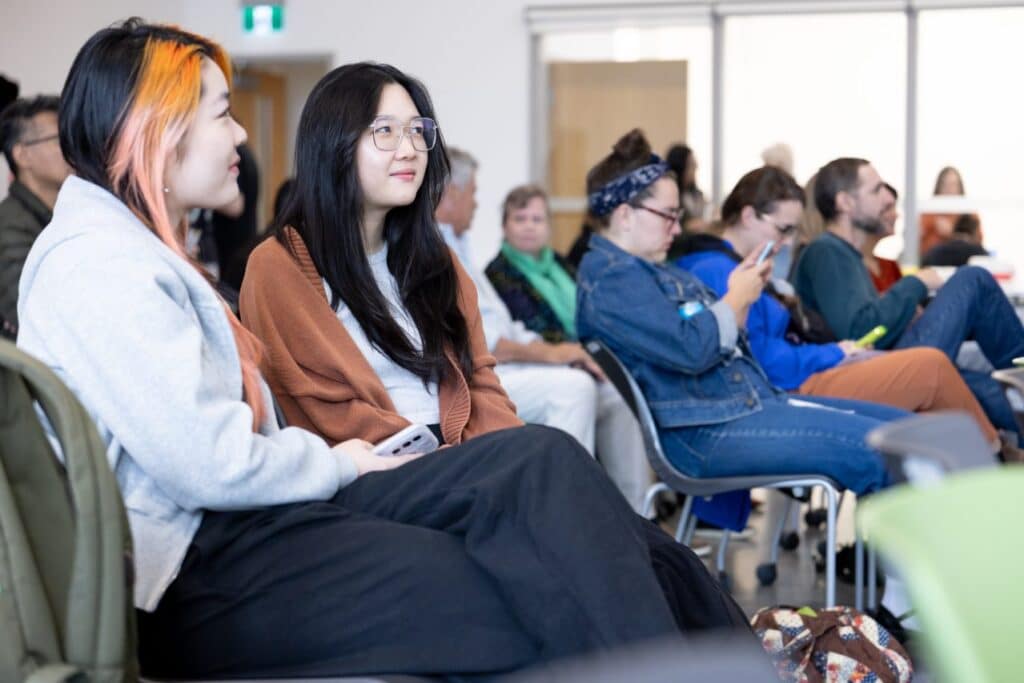
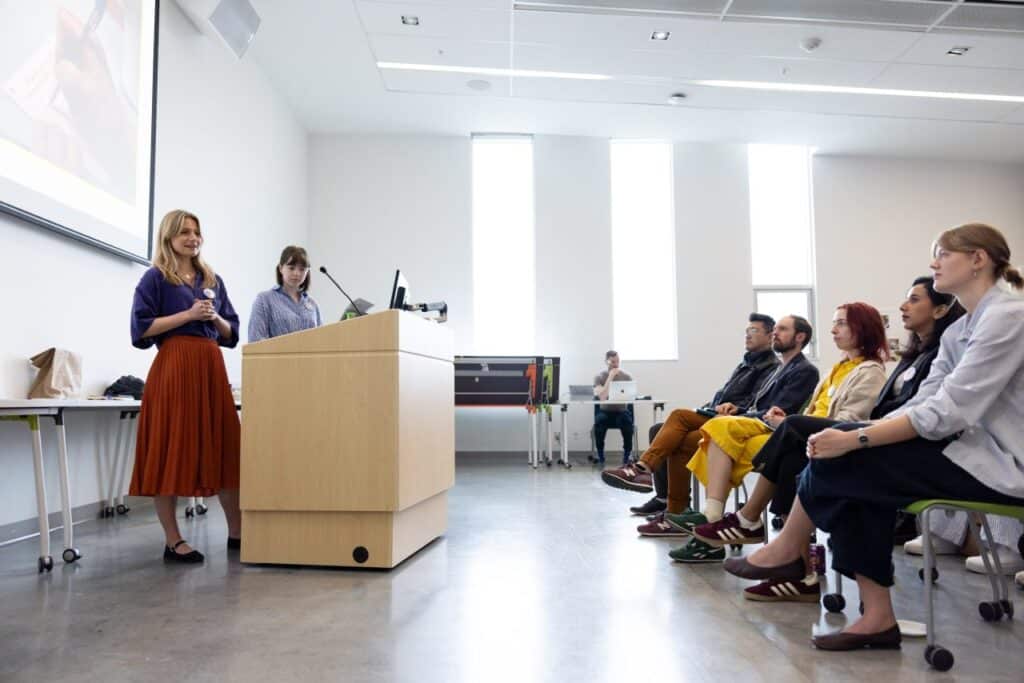
“Common across all of our projects tends to be us thinking about and responding to several questions,” she said. “How can we include people with lived experience in the design process? How can we gather deep insights through participatory means? How do we share back those insights in ways that can be meaningful and useful to others? And how can we use creativity and design skills in the way that we share insights?”
Georgia noted this approach is empowering for both researchers and participants. Working with the HDL “helped me realize that everyone is bringing their own lived experience to the table and that, as a designer, you can help facilitate people in sharing their own expertise. In the end, hopefully that will produce a better service or experience because it’s based on something real, rather than purely on principles learned from a textbook.”
Visit the Health Design Lab’s website to learn more about their programming and find out how to partner with and support the HDL.
Want more stories like this one delivered twice a month to your inbox?
Subscribe to our free Emix newsletter today!