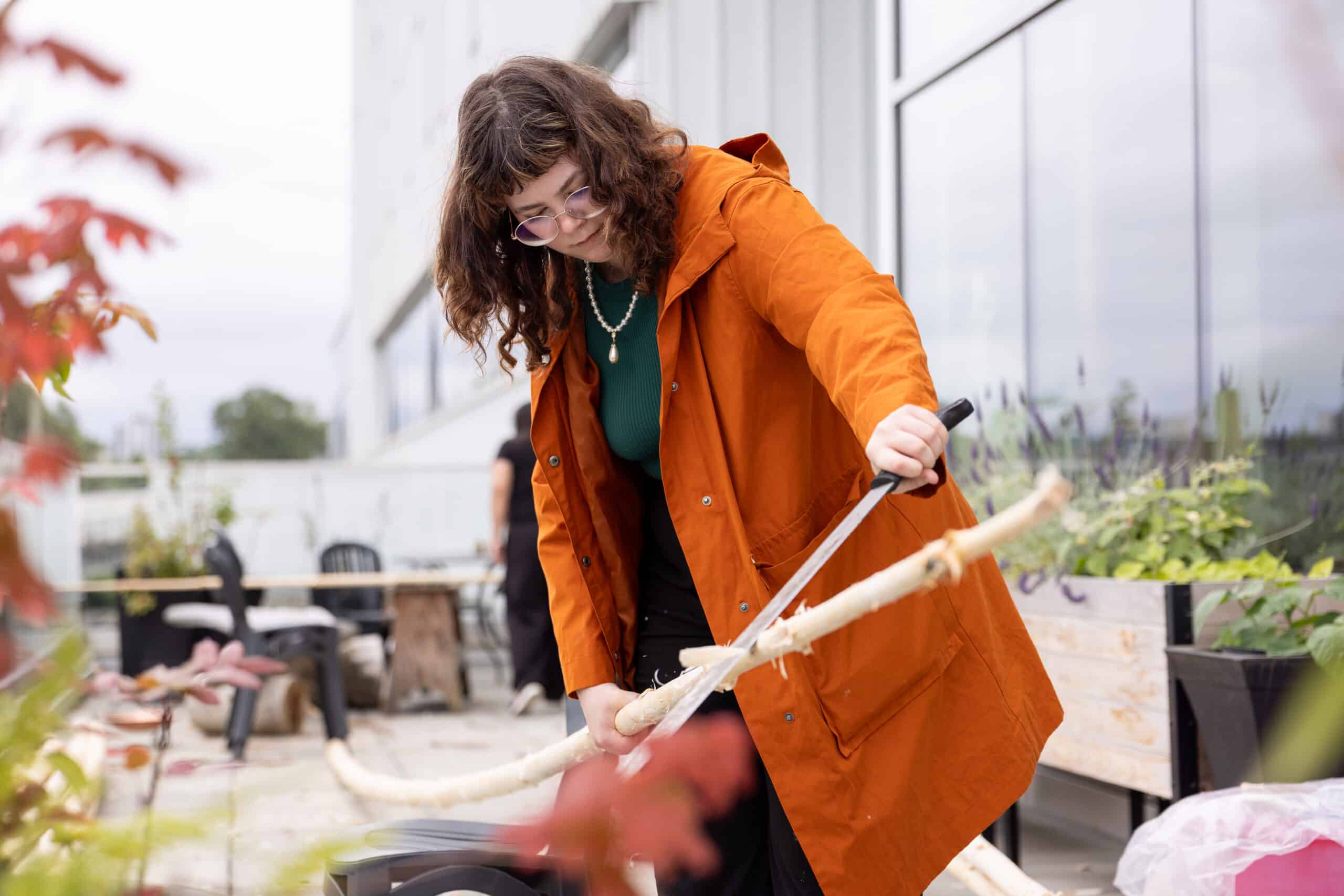
Led by “Tipi Joe” Lanceley, the week-long project saw students gather at the Aboriginal Gathering Place to learn a millennia-old Indigenous material practice.
A group of students and alums learned the art of building a traditional tipi during a recent workshop at the Aboriginal Gathering Place (AGP) at Emily Carr University of Art + Design (ECU).
Artist Isabelle Jarman, who will begin her fourth year in ECU’s Illustration program in September, says the project provided an opportunity for both personal and collective growth.
“I was surprised something like making a tipi was even possible at Emily Carr University,” Isabelle says. “I was keen to participate not only to strengthen the community within Emily Carr and the AGP, but also to find healing with myself. I needed a little healing and this project was really good medicine for me. I was thrilled to be a part of it.”
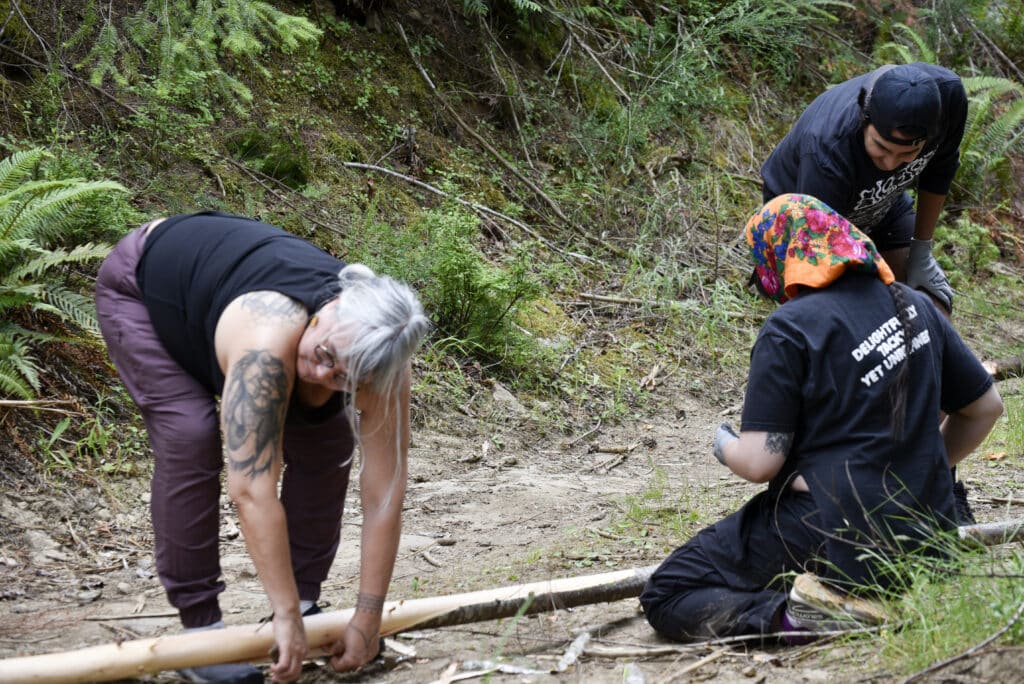
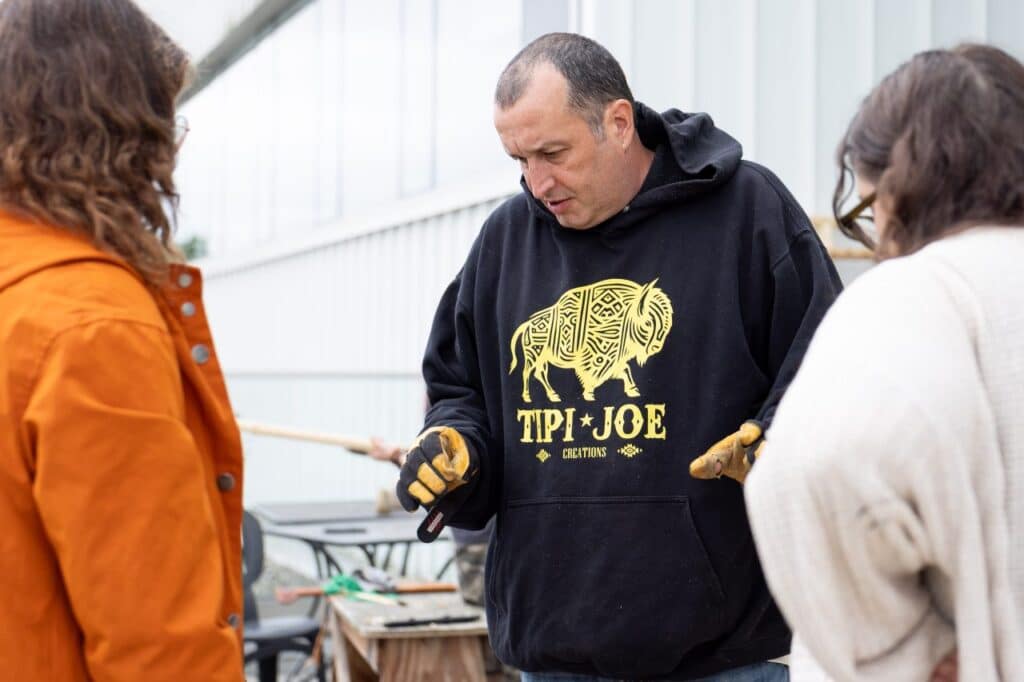
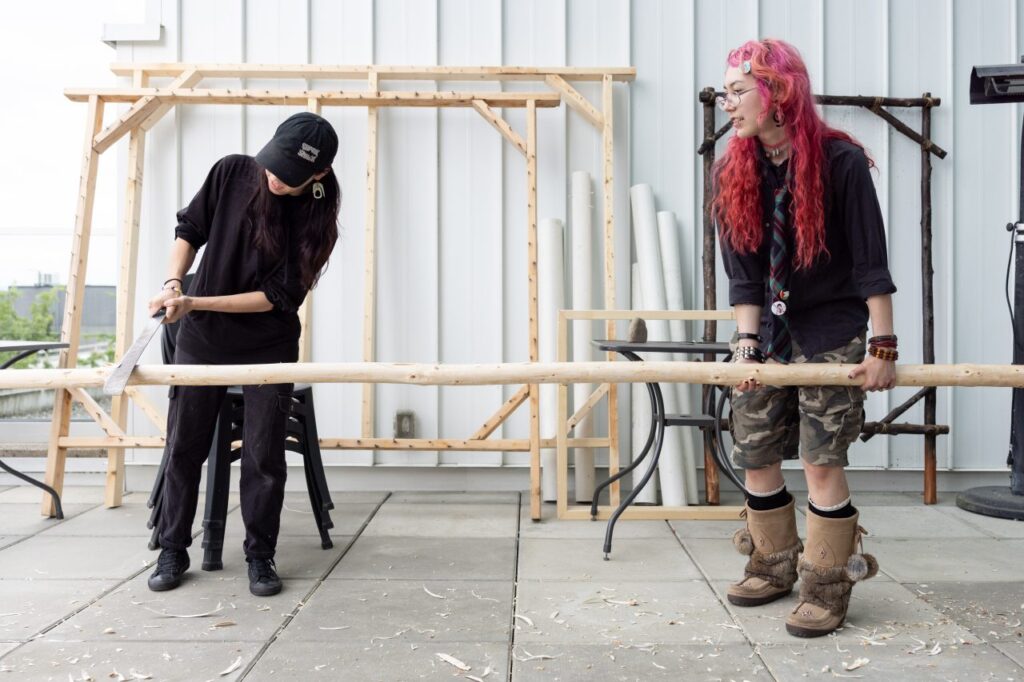
Led by Joe “Tipi Joe” Lanceley, member of Mistawasis First Nation and founder of Tipi Joe Creations , the week-long workshop covered the entire tipi-making process. In addition to Isabelle, artists Alysha Johnny Hawkins (MFA 2026), Sydney Mercredi (BFA 2026), Jennifer Mitchell (BFA 2026), Rylee Taje (BFA 2025) and Naomi Watkins (MFA 2025) participated in the workshop.
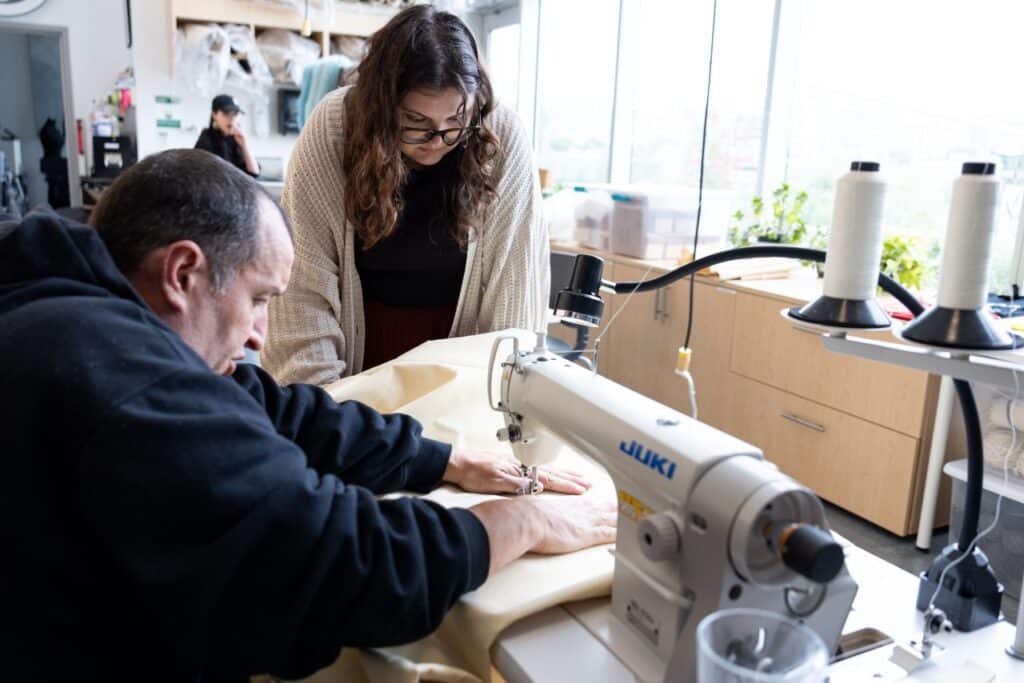
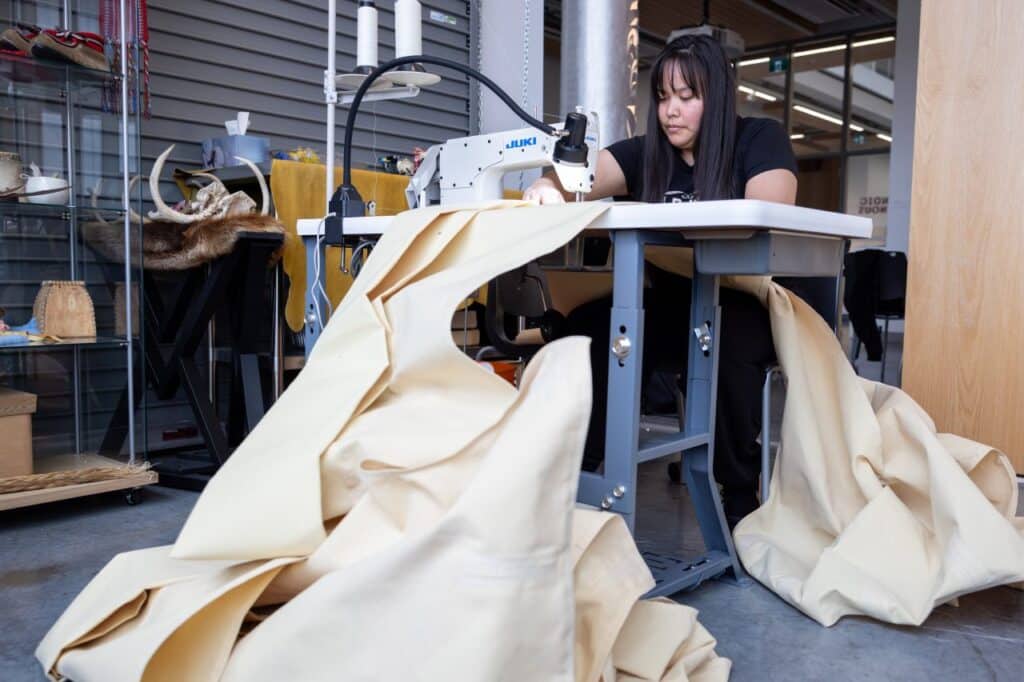
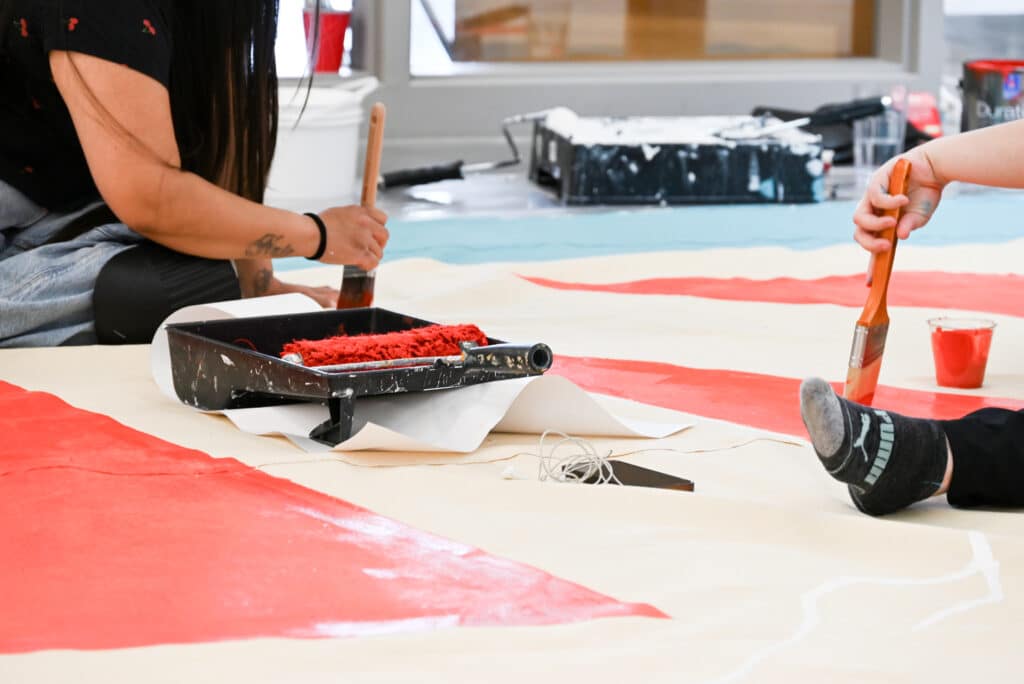
Each group member participated in every step, including travelling to Denman Island to harvest and process trees for poles, sewing and painting the canvas covering, and raising the final structure. AGP staff members Kajola Morewood, Sydney Pascal, Daina Warren, and project assistants Leanne Inuarak-Dall (BFA 2025) and Vance Wright (BFA 2024) also participated in pole harvesting alongside ECU staff member Sharon Bayly and Jennifer’s son, Talon.
TRULY PERFECT THING
Joe says the knowledge of tipi building was, until recently, on the verge of disappearing due to the broader decimation of Indigenous cultures by colonial harms including the Sixties Scoop and residential schools. But over more than three decades of practice, Joe has taught the practice to thousands of students, many of them non-Indigenous.
“It’s something I’m willing to share with anyone who wants to learn,” he says. “We often forget the tipi is found all around the world and is still in continuous use. It doesn’t just belong to us as Indigenous people, although we are the biggest users of the technology.”
Joe’s openness to knowledge-sharing is part of his broader perspective on Indigenous technologies.
“The tipi is one of the only truly perfect things you’ll encounter. It’s been in use for over 10,000 years, and you just cannot improve on it,” he says. “We’ve continuously adopted Indigenous technology because it’s superior. Everyone knows what a toboggan is, or snowshoes, kayaks or canoes. When you see a car with a kayak on top, you don’t think that person must really be into Indigenous culture. Everyone uses it because it’s so perfect. We don’t romanticize it. But for some reason, we do that with the tipi.”
IT COMES FROM ALL OF US
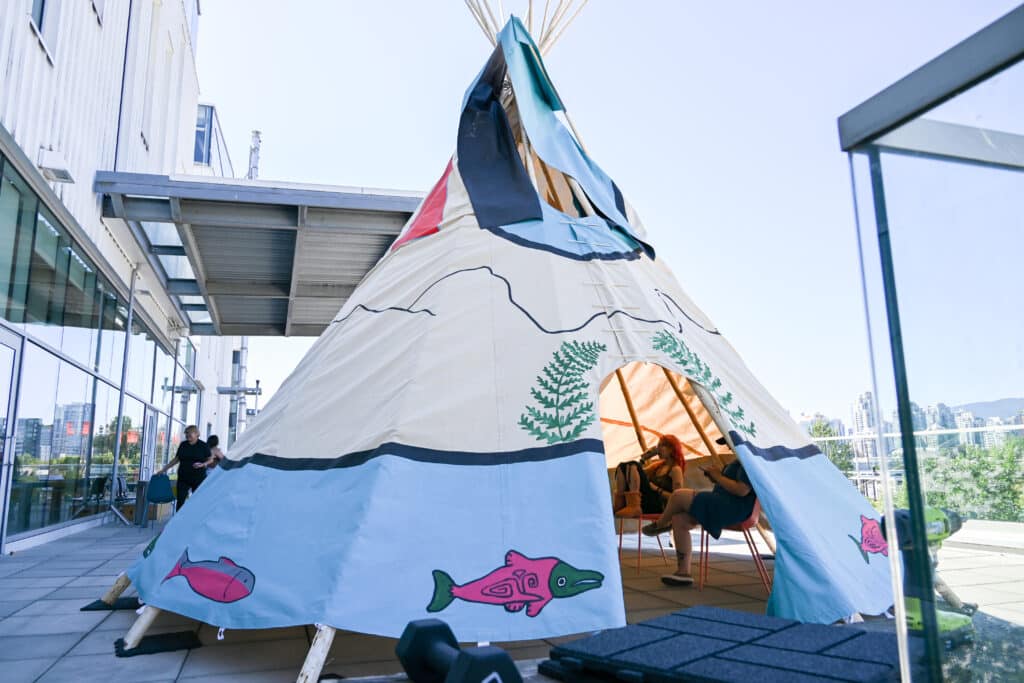
Prior to the tipi raising, the group painted its canvas covering. Isabelle says their motifs aimed to capture the artists’ many influences, as well as the character of the land on which ECU is located. Cedar, salmon and the Twin Sister mountains (Ch’ích’iyúy Elx̱wíḵn in the Squamish language, also known as The Lions) adorn the tipi alongside red triangles representing sun rays shining on the water.
Daina Warren, Executive Director, Indigenous Initiatives at ECU, says the tipi is an embodiment of the AGP’s mission. Its creation involved bringing together artists from different Nations with different practices and knowledge of diverse material traditions.
“They all bring different ways of knowing, and they’re doing the work in an urban setting and for a diverse group of people,” she says. “I loved hearing how Joe tried to get everyone to feel the immensity of this tipi. It’s special because it’s here on the West Coast, it comes from all of us, and it speaks to the urban experience of being here together and the role that ECU plays in that togetherness.”
SOMEWHERE DEEP WITHIN
Joe notes that the fact the participants comprised a group of primarily woman artists reflects an important aspect of the tipi’s history.
“In our belief system, the tipi traditionally belongs to women and embodies many teachings connected to their experiences and bodies,” he says. “It’s not my role as a man to try to teach those things, but I said to the group that they might experience an emotional response to the work, because it’s somewhere deep within them — everything we’re doing could have been part of what their ancestors experienced.”
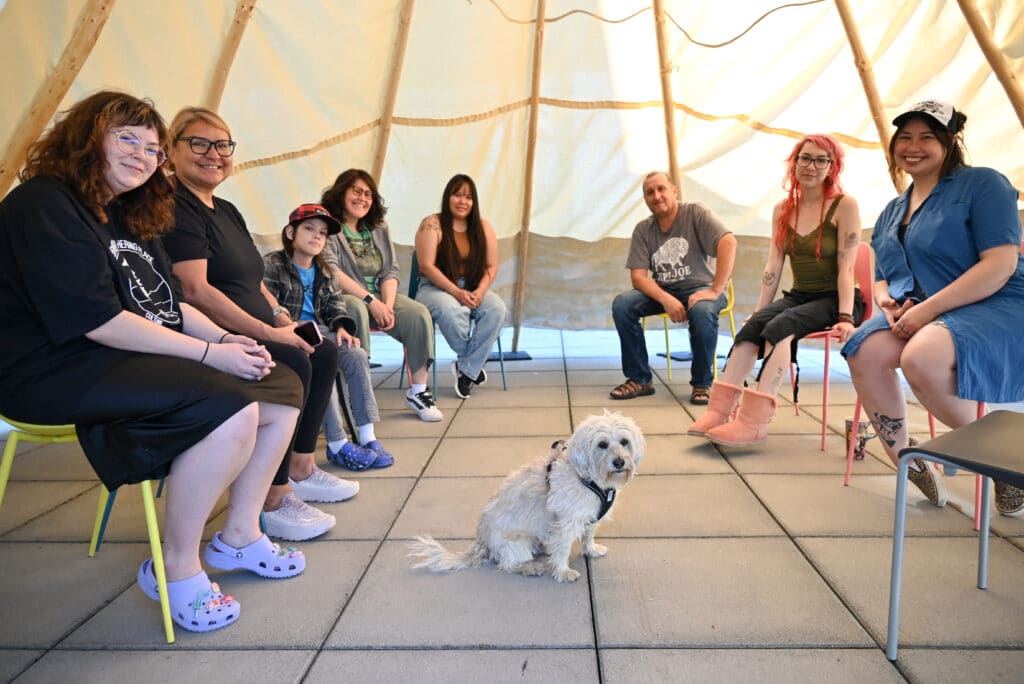
Isabelle echoes Joe’s observation, noting her own ancestors likely built and dwelled in tipis. And once she and her fellow participants had raised the finished structure on ECU’s north patio, she had a vivid recollection of a camping trip she’d taken as a youth in foster care.
“The moment I went inside, sitting in a circle with everyone, I thought, ‘Oh my goodness, this is literally what I did when I was a child. We slept in tipis like this one. This feels so right to me. This is what I was supposed to do,’” she recalls. “And I was just so glad I signed up.”
The tipi will be raised again in August 2025 for student exploration during Orientation Week. Look for it on the north patio outside the cafeteria.
More about the Aboriginal Gathering Place at ECU
The Aboriginal Gathering Place at ECU provides culturally appropriate support that encompasses both traditional and contemporary artistic and cultural expressions of Aboriginal peoples and is a valuable resource for students to access traditional materials and supplies. The Aboriginal Program team also assists with the promotion and coordination of events and workshops related to Aboriginal art and culture and is responsible for providing information regarding Aboriginal funding, scholarships and awards.
Visit their website to learn more about their programming and resources.
Want more stories like this one delivered twice a month to your inbox?
Subscribe to our free Emix newsletter today!