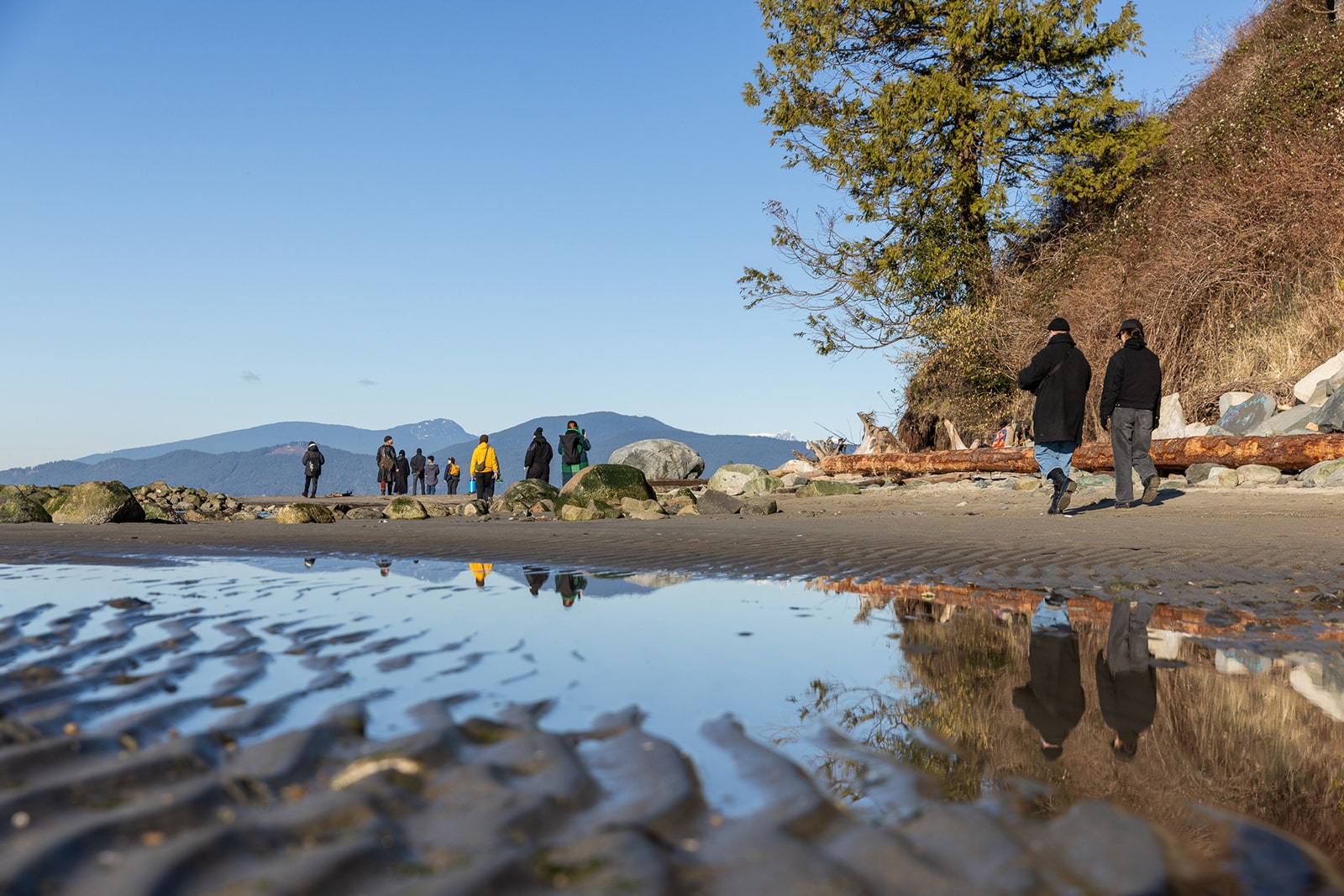
Tide Places, emerging from an ongoing collaboration between artists Laura Põld and Lou Sheppard, sparked an exchange between students from Tallinn and Vancouver around a deeper understanding of place.
A recent collaboration between artists Laura Põld, Lou Sheppard and Laura Kozak brought together installation and sculpture students from Eesti Kunstiakadeemia (EKA – Estonian Academy of Arts) with students from Emily Carr University of Art + Design (ECU) for a research residency exploring place, history and possible futures.
Tide Places considered what people can learn from “the flexibility and adaptability” of the creatures and processes of exchange in intertidal zones, a definitive ecological characteristic for both Vancouver and Tallinn.
Tide Places builds in part on Lou Sheppard’s ongoing investigation into these unique environmental areas, which likewise informs his upcoming public artwork for the Broadway Subway line’s future Great Northern Way-Emily Carr Station. The residency expands on these themes with the addition of longtime collaborator Laura Põld, her students from Tallinn, and ECU faculty and design researcher Laura Kozak.
“What stories, language, memories and futurities do these lands and waters hold?” the artists write. “How do these layers of change reflect a larger narrative about relationships in this place? What resiliencies and futures are possible here?”
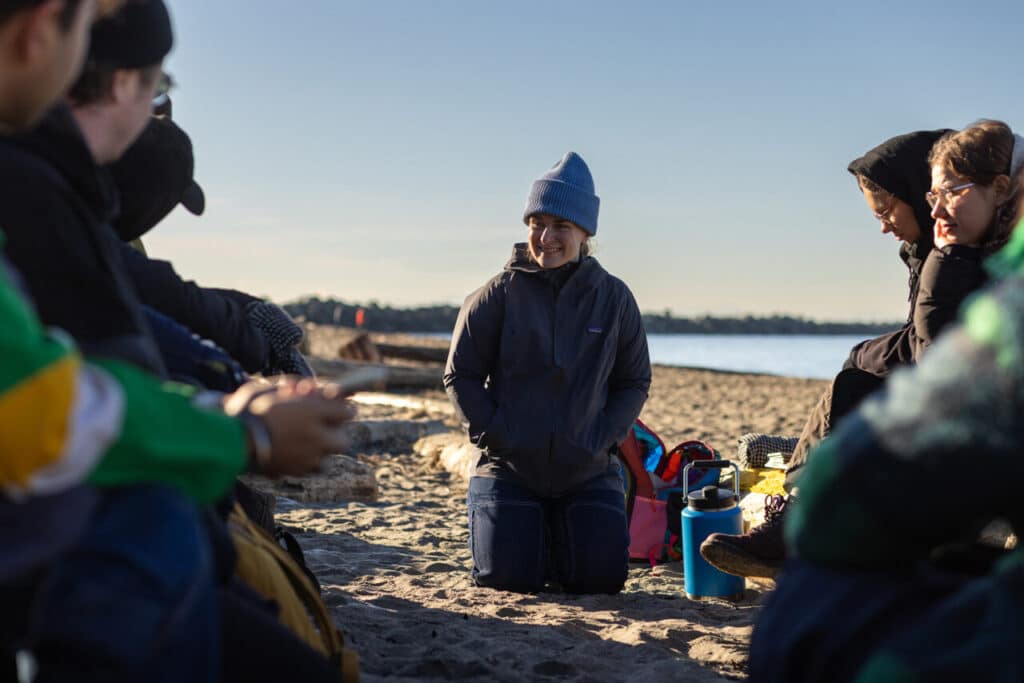
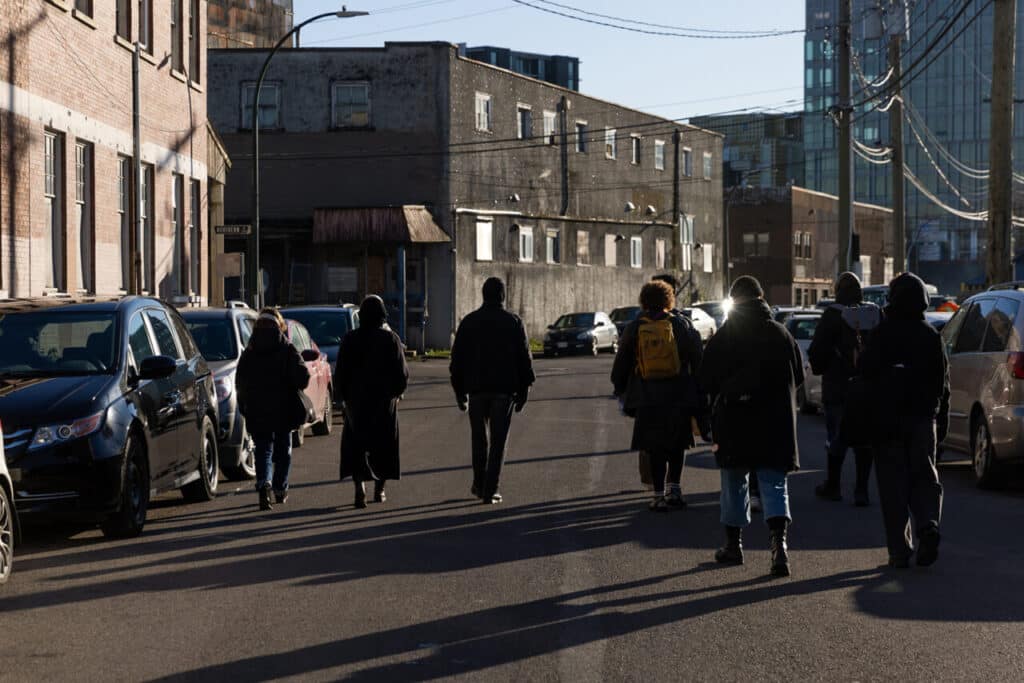
Intercultural and artistic exchange were fundamental to the project, with Laura Põld and her EKA students visiting several classes including faculty member Jean Chisholm’s third-year Visualizing Ecologies class, where they brought drawings from the Estonian shoreline to share with the community. Meanwhile, ECU students worked as research assistants (RAs) on the project, helping to develop and facilitate workshops and leading the Estonian guests on walks throughout the city.
“The involvement of EKA students meant our students became hosts and facilitators as much as researchers supporting the residency. So, we had multiple layers of exchange happening,” Laura Kozak says. “When we host people, it’s important to make space for cultural exchange and reciprocity to take place. It’s a real act of cultural diplomacy that can occur when we undertake these types of projects, and for me, it was one of the most meaningful parts of Tide Places.”
The groups worked in the studio, held dialogue circles and visited art spaces. They also visited “edge spaces,” including Skwácháy̓s (False Creek), Habitat Island and Wreck Beach, to examine how ecological forces, colonialism and industry have shaped the landscape.
Such forces are not always visible beneath the city’s gleaming veneer or even within its autobiography, Laura adds. Tide Places aims to cultivate attunement to those concealed influences.
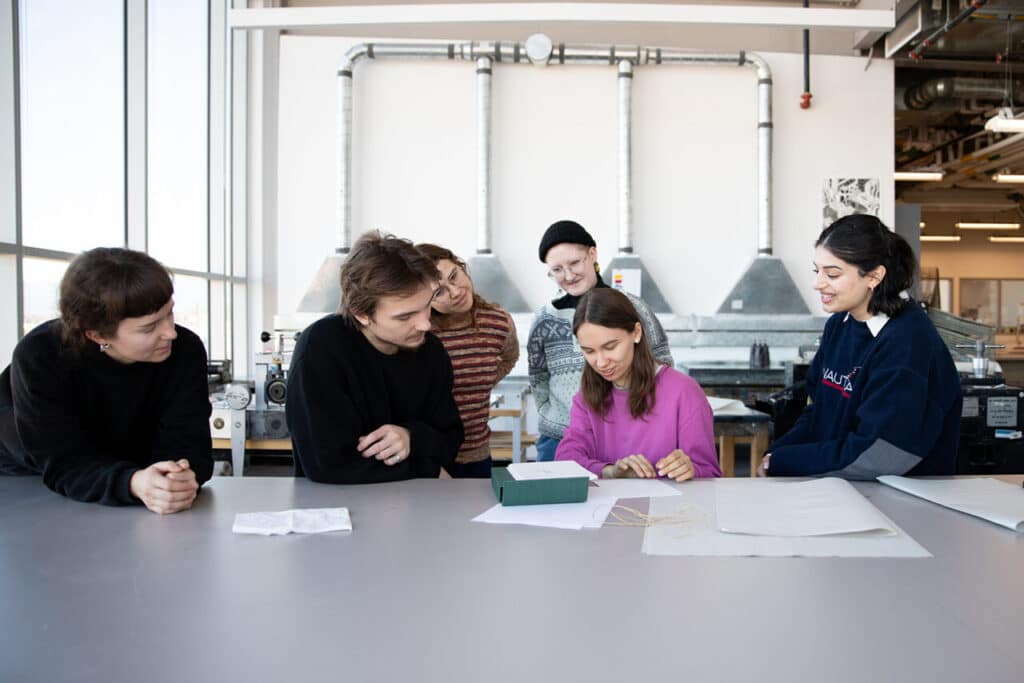
“The students involved in this project have a tremendous capacity to notice things beyond a dichotomous, simplified story of place,” Laura says. “Together, we created a forum to ask questions about how our bioregion is shaped and we responded through creative practice. Tide Places was an opportunity for students to use artistic methods to see the systems hidden all around us and to help others see them as well.”
Tide Places is organized by the Shumka Centre for Creative Entrepreneurship in collaboration with the Libby Leshgold Gallery. The project is generously supported by Peeter Wesik, with additional funding from Erasmus and EKA, Tallinn.
Fourth-year Visual Arts student Parumveer Walia, who works in photography and film, is the primary contributor of images and words for the forthcoming publication.
“The EKA students met us with a lot of curiosity, and weren’t afraid to ask questions, which was wonderful,” he says. “Ideas of unceded lands were new to them, so while there was sometimes discomfort, meeting that challenge was very fruitful. We found ways to allow these knowledges to speak through us – to find a kind of kinship through the research. And I think we were able to give one another new models for understanding.”

Fourth-year Communication Design student Sakeena Soni’s contribution to Tide Places primarily involves developing the forthcoming publication documenting the project. Sakeena’s degree includes a SPACE minor, reflecting her interest in social practice and place-based design.
“This project feels larger in scale than others I’ve worked on, involving both the Estonians and people in Vancouver,” she says. “There was a lot of learning through collaboration, which required thoughtful consideration of many aspects of the publication – including how to capture that geographical scope in terms of content, graphics and languages. This project allowed me to learn a lot about that, and it’s been great to be a part of it.”
Laura applauded the commitment her RAs demonstrated throughout the project, underscoring the importance of introducing the EKA students to a version of Vancouver most visitors never get to see.
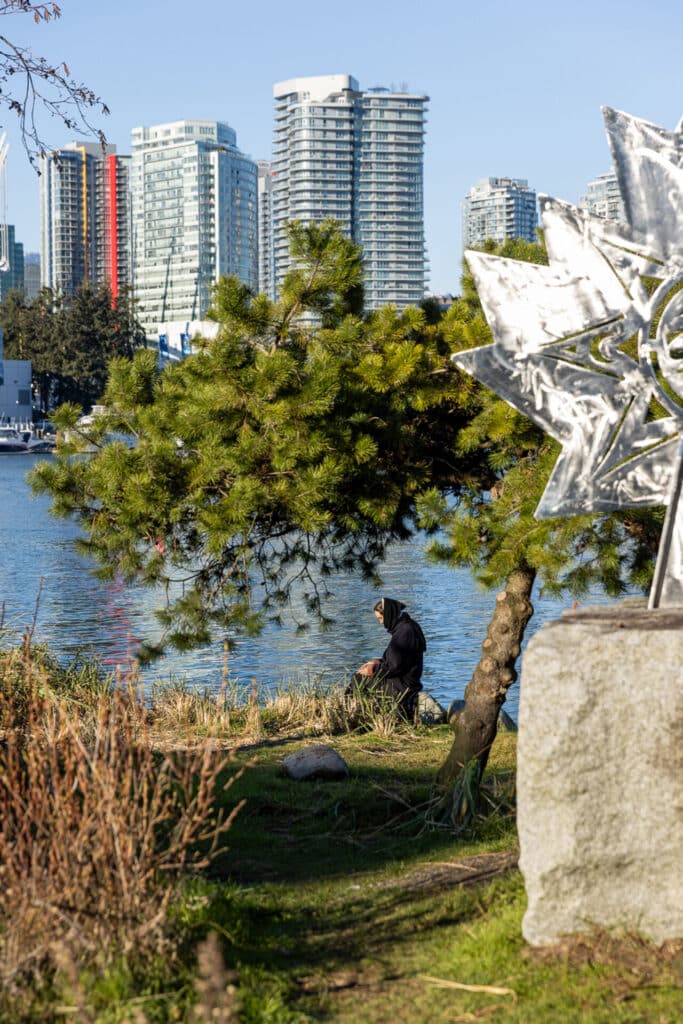
“In tourist pictures of Vancouver, you almost always see the ocean, and then a tightly clustered bouquet of buildings, and then the mountains and sky,” Laura says. “It’s an image of the city as something very pristine and beautiful. But you can’t see any of the systems supporting those elements or the implications for other cultural ways and beings. As artists and designers, our role can be to translate some of that and help others see what’s missing in those kinds of images.”
Learn more about the ECU student RAs in Shumka Centre’s Meet the Team Behind ‘Tide Places’ article.
Visit the Shumka Centre online to learn more about Tide Places. Follow them on Instagram to stay up to date on the forthcoming Tide Places publication.
More about Communication Design at ECU
The ECU Communication Design program encourages you to work collaboratively, engage with the ethical dimensions of design practice, and develop an understanding of how your practice contributes to a culture of design in everyday life.
You’ll delve into the areas of design that inspire you most — and define your own practice along the way. Upon graduation, you’ll have a strong body of original work and the skills you need to launch your design career.
Visit our website to learn more about Communication Design at ECU.
More about Visual Arts at ECU
For independent and fiercely creative students, ECU’s Visual Arts program offers exceptional freedom and choice. As you build your creative skills, you’ll develop a deep understanding of how various art forms and histories connect, intersect and inform today’s practices.
Your faculty members, practicing artists who define the Canadian creative landscape, will guide you as you refine your techniques and follow your curiosity. After graduating, you’ll have a mature and exceptional body of work to launch your career.
Visit our website to learn more.
Want more stories like this one delivered twice a month to your inbox?
Subscribe to our free Emix newsletter today!