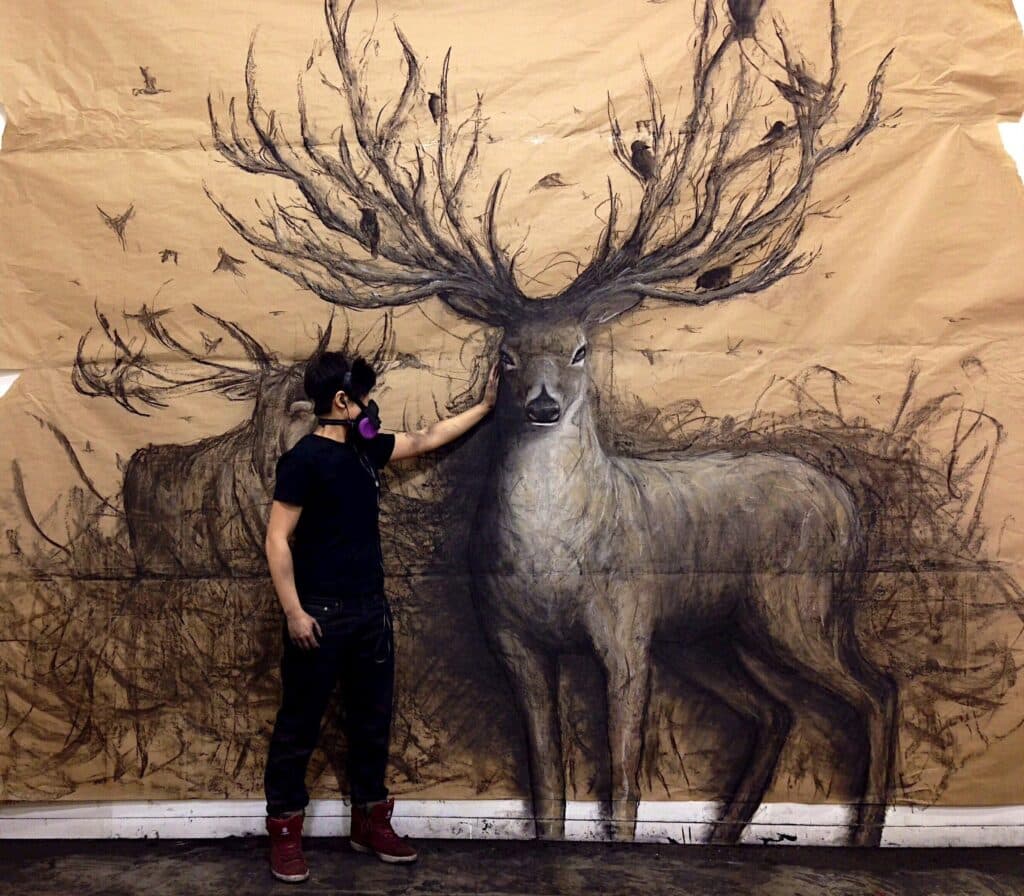
Build technical and creative skills in photography.
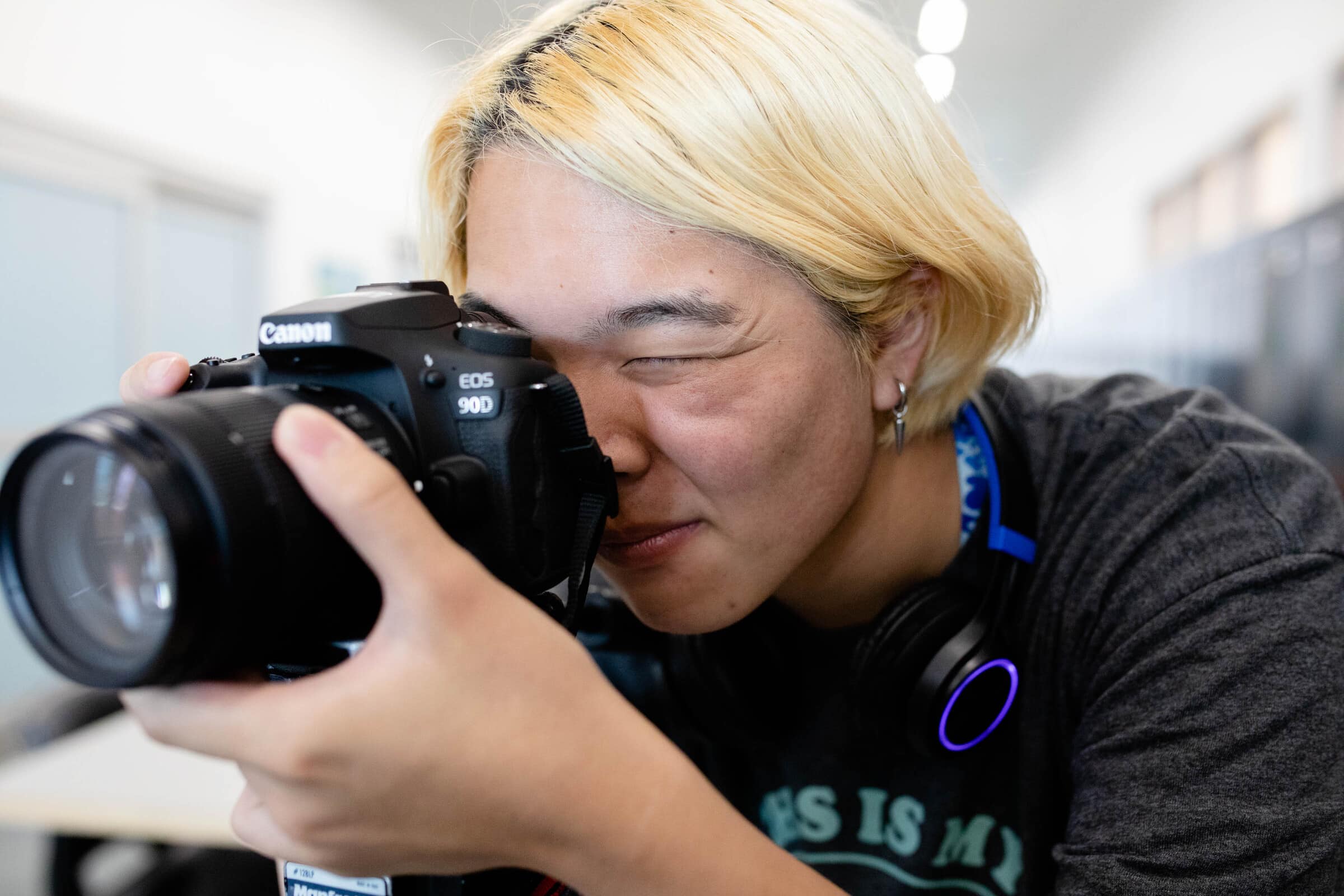
A Media Arts Certificate in the Photography stream will introduce you to foundational photographic tools, and creative techniques such as composition, lighting and editing. Explore both practical skills and critical theory to produce high-quality images that capture mood and meaning.
Develop a portfolio of photographic work and prepare for opportunities in a visual arts context as well as a business practice.
Courses in this Certificate Stream
Subject Core – Required 1 Courses
| Course Name | Course No. | Availability |
|---|---|---|
| Introductory Digital Photography | CSPH-100 | Fall 2026 |
Subject Core – Select 2 of the following 3 Courses
| Course Name | Course No. | Availability |
|---|---|---|
| Photographic Languages: Composition | CSPH-101 | Fall 2026 |
| Adobe CC for Photographers | CSPH-110 | Fall 2026 |
| Elements + Principles of Art | CSVA-100 | Fall 2026 |
Subject Electives – Select 4 of the following 6 Courses
| Course Name | Course No. | Availability |
|---|---|---|
| Photo Story: Spaces, Places + the Everyday | CSPH-010 | Fall 2026 |
| Intermediate Digital Photography | CSPH-200 | Fall 2026 |
| Studio Lighting | CSPH-201 | Fall 2026 |
| Portrait Photography | CSPH-202 | TBA |
| Commercial Photography | CSPH-203 | Fall 2026 |
| Architectural Photography: Complex Spaces | CSPH-204 | TBA |
Common Electives – Select 3 of the following 12 Courses
| Course Name | Course No. | Availability |
|---|---|---|
| Western Art History: An Introduction | CSHT-100 | Fall 2026 |
| Visual Culture | CSHT-101 | Fall 2026 |
| Colour Theory | CSHT-102 | Fall 2026 |
| Creative Writing | CSSC-100 | Fall 2026 |
| Story: An Introduction | CSSC-101 | TBA |
| Video Editing + Effects | CSFV-113 | TBA |
| Videography and Editing | CSFV-114 | TBA |
| Introductory Adobe Photoshop | CSSO-100 | Fall 2026 |
| Introductory Adobe Illustrator | CSSO-101 | Fall 2026 |
| Introductory Adobe Premiere Pro | CSSO-103 | TBA |
| Introductory Adobe After Effects | CSSO-104 | TBA |
| Adobe CC Essentials | CSSO-109 | TBA |
Extending + Enriching Electives – Select 3 of the following 10 Courses
| Course Name | Course No. | Availability |
|---|---|---|
| Teaching + Learning in Art and Design | CSED-100 | TBA |
| Portfolio Websites | CSPD-100 | TBA |
| Applications: Grants, Residencies + Exhibitions | CSPD-102 | Fall 2026 |
| Interview Preparation + Networking Skills | CSPD-104 | TBA |
| Business Planning for Creative Practitioners | CSPD-105 | Fall 2026 |
| Financial Practices for Gig Work and Independent Practitioners | CSPD-106 | Fall 2026 |
| AI + Creativity: Understanding Generative Tools and Ethical Practices | CSPD-107 | TBA |
| Workplace Culture + Community | CSPD-200 | TBA |
| Leadership Visioning | CSPD-204 | TBA |
| Effective Communications through Storytelling | CSPD-205 | Fall 2026 |
Getting Started with Flexible Learning
Browse the FAQs below for information about getting started, courses, assessments, required materials and more.
Flexible Learning Certificates FAQs
How do I get started?
You can take Continuing Studies courses on their own or as part of a Flexible Learning Certificate.
Before registering for a course, review the recommended prerequisites or self-assess your knowledge to ensure you’re ready for the course level.
Flexible Learning Certificates are open to students aged 19 or older or those who have completed Grade 12. There’s no application required, simply register for each course at your own pace.
What does self-paced learning mean?
Flexible Learning Certificates have no fixed completion timeline. You decide how many courses to take each term based on your schedule, goals, and workload.
We recommend completing your certificate within 2 to 5 years. All courses applied toward a certificate must have been completed within the past 7 years.
Most required courses are offered on evenings and weekends, making them accessible for those with work or other commitments. Browse Individual Courses and register as offerings become available each term.
Which courses should I take?
Each certificate includes a set of Subject Core, Subject Elective, Common Elective and Extending and Enriching Elective courses.
- Core and subject electives are required and cannot be substituted.
- Short-term workshops (course numbers starting with 9XX) are not eligible for certificate requirements.
Refer to the certificate webpage for the full list of courses that meet each requirement.
Still have questions? Reach out to an Advisor to book a chat.
In what order should I take courses?
If you’re new to the subject area, follow the suggested course sequence on the certificate webpage for a gradual learning path.
If you already have prior experience, you can register out of sequence. Just be sure you’ve met any recommended prerequisites. When in doubt, complete prerequisite or foundational courses first to set yourself up for success in higher-level classes.
What is the course load?
Course workload varies depending on the subject, your learning pace, and how much time you choose to invest in assignments or independent study.
As a general guide, plan for about one hour of homework for every hour of class time. Some studio-based or project courses may require additional time outside of class.
How will I be assessed?
Assessment is based on assignments, in-class participation, and project work. All Continuing Studies courses are graded Pass (P) or Fail (F).
To earn your certificate, you must achieve a Pass in all core and elective courses. If you do not pass a course, you can retake it the next time it’s offered.
Do I need to buy materials for my courses?
Most Continuing Studies courses require materials or software, which vary by course. Check the CS Materials Guide linked on each course page for specific details.
Many supplies, such as sketchbooks, essential drawing tools or digital software can be used across multiple courses so you can build a kit that supports your learning throughout the certificate.
When planning your studies, we recommend factoring supply costs into your overall budget.
Can I double-count courses if I’m complete more than one certificate?
Courses taken as a Subject Elective, Common Elective, Extending + Enriching Elective may only be applied to one certificate stream.
Only courses listed under a Subject Core requirement may be counted toward two certificates and only to fulfill the Subject Core requirement.
How do I request my certificate after completing my courses?
Once you’ve finished all required and elective courses, you can request your certificate by submitting the Continuing Studies Certificate Request Form.
Certificates are printed and mailed twice per year. Check the submission deadlines on the form to ensure your request is included in the next production cycle.
Need Help?
Book a chat with an Advisor.
Office Hours:
Monday to Friday
8:30 am – 4:30 pm (closure 12:30-1:30 pm)
Closed on statutory holidays
Career Paths
Photography skills can lead to creative, commercial and professional opportunities. This certificate develops technical expertise and artistic vision and can also serve as a stepping stone to further study.

Your career in photography may intersect with these creative disciplines and industries:
- Fine Arts
- Photo editing and production
- Wedding and event photography
- Commercial and product photography
- Creative content coordination
- Visual design and digital media
Students can also use work from this program in an admissions portfolio when applying for a degree in Fine Arts, Design or Media Arts at ECU.
Get the Latest Updates
Our Continuing Studies programs are always evolving. Sign up today to be the first in line for new courses and upcoming registration dates.