Heraldry
At Emily Carr University, our coat of arms is more than just symbolic. It reflects our spirit of embracing change and the pursuit of creative expression.
Although the coat of arms is rooted in tradition, it also speaks to the university’s connection to the community that shapes and supports us. Whether it’s on display at official events or featured in official materials, the coat of arms serves as a reminder of ECU’s legacy and the values that will continue to guide us into the future.
Emily Carr University’s coat of arms was commissioned by the Board of Governors and developed under the direction of Mr. Robert D. Watt, Chief Herald of Canada.
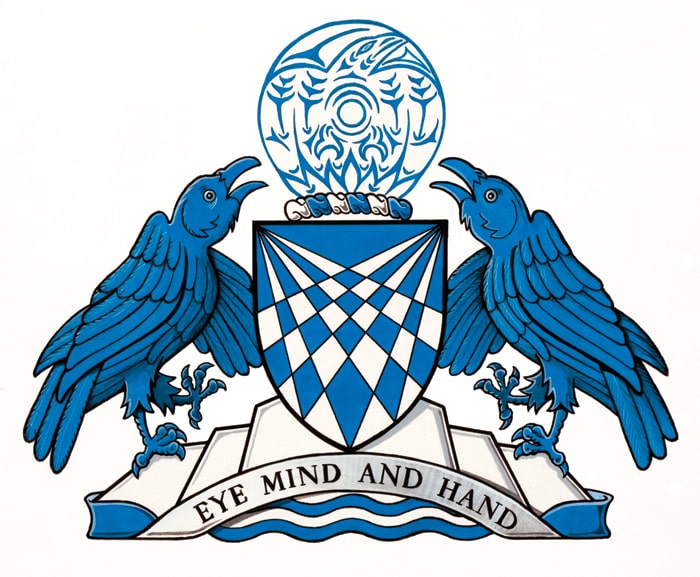
Elements of the Coat of Arms Include:
- A shield with a geometric allusion to perspective
- A crest rising from a wreath of blue and white, depicting a raven in Coast Salish style that represents transformation and cleverness
- Two crows (noted for their intelligence) who support the shield on either side and represent the university’s urban setting.
The crest was designed by Musqueam artist Susan A. Point (D. Litt), a past Board member of ECU.
Eye, Mind + Hand
The Emily Carr motto links together the notion of perception and visualization of the world through the eyes, the operation of the artist’s mind in the creative process and the use of hands to bring an idea to life.
Mace
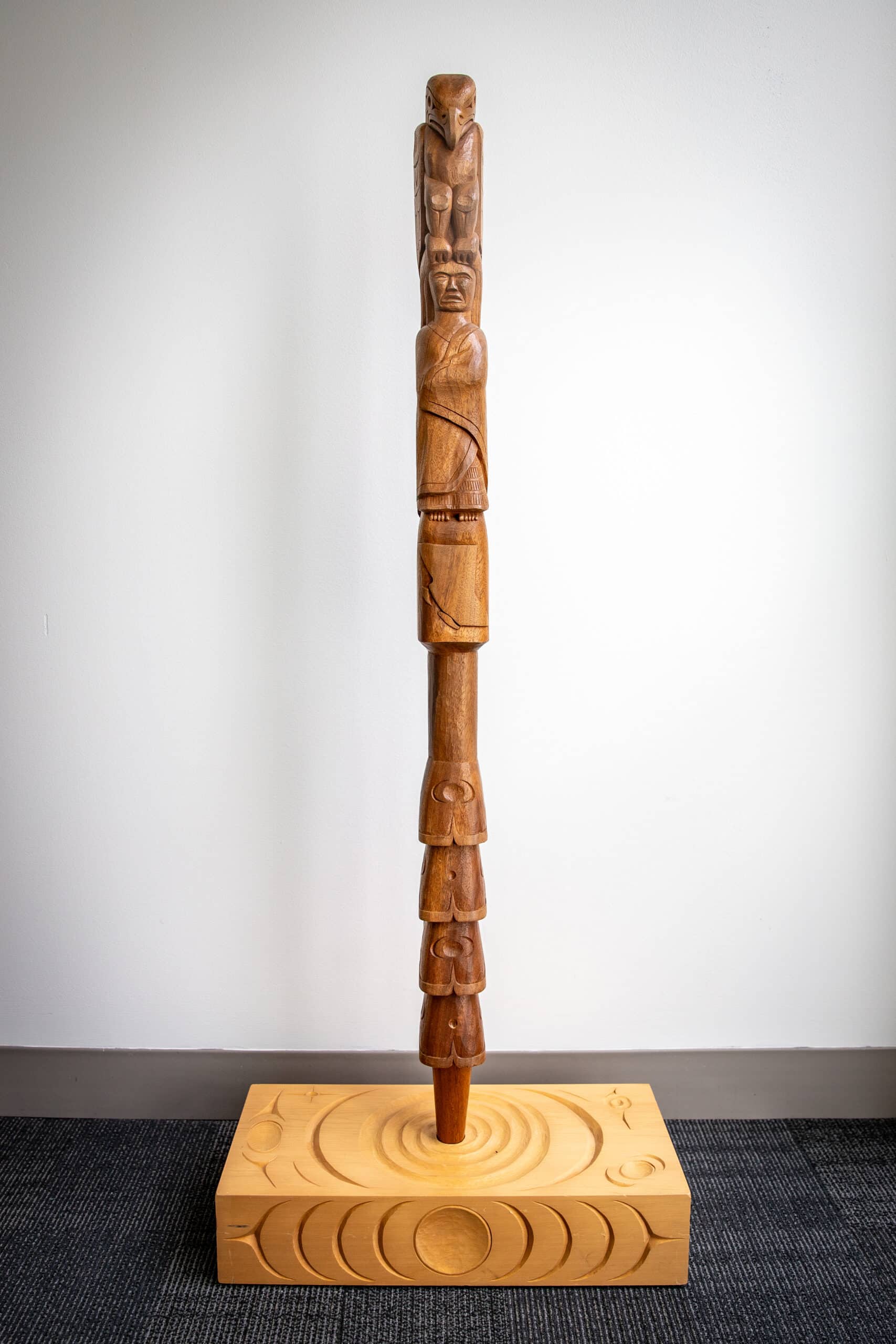
The university’s mace is a ceremonial symbol of recognition and tradition. It is most often seen at convocation, carried by the macebearer at the front of the academic processional. The mace leads the chancellor, president and other honoured guests onto the stage, marking the official start of the ceremony.
While the mace tradition comes from academic history, ECU’s version reflects something uniquely our own. Designed by Coast Salish artist and alum Xwalacktun (Rick Harry), O.B.C., it combines symbols that speak to Indigenous knowledge, local culture and a deep connection to this land.
Carved from mahogany with a base of yellow cedar, the mace includes elements such as an eagle, a human figure, a map of British Columbia and bells. Its handle represents a talking stick, used in Indigenous ceremonies for generations. At its base, an intricate swirl symbolizes the strength and significance the mace carries.
The mace is reserved for specific occasions. It appears only at important events, such as convocation or the installation of a president or chancellor. When it does, it serves as a reminder of our shared history, our relationships and the beliefs that continue to shape ECU today.