PhD, History of Art and Visual Studies, Cornell University
MA, Art History, Courtauld Institute of Art, UK
BA, Art History, McGill University
Bio
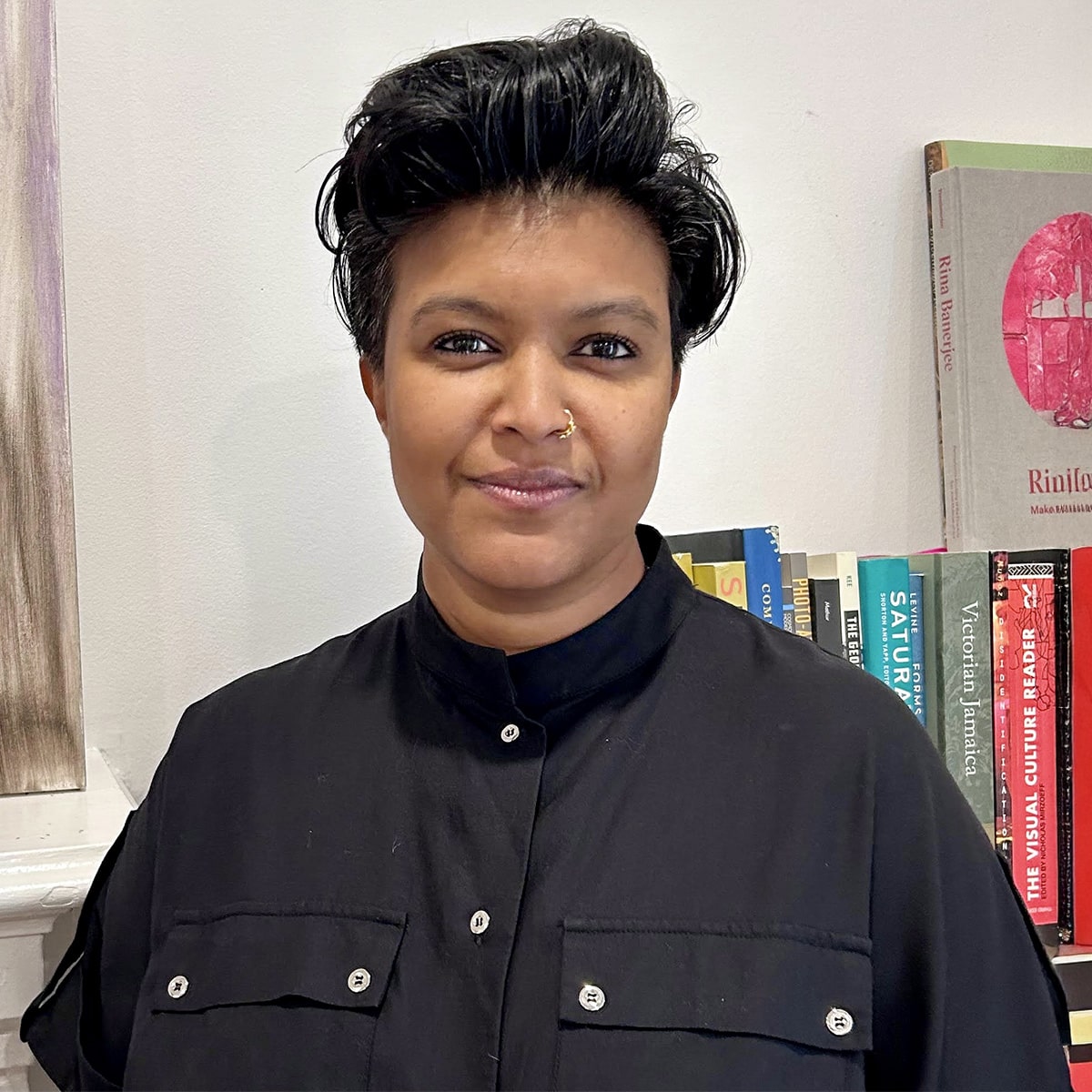
Dr. Natasha Bissonauth has taught for the Visual Art and Art History department at York University in Toronto and was Assistant Professor of Gender and Sexuality Studies at the College of Wooster in Ohio. She is Reviews Editor for the peer-reviewed journal, Asian Diasporic Visual Cultures and the Americas.
Research Interests
Natasha’s research centres queer aesthetics and archival logics across South Asia and Indian Ocean diasporas. She is currently working on a Social Sciences and Humanities Research Council funded book project that investigates collage and assemblage as a way to suture and severe across histories of immigration and indenture in more material ways. Threading ‘areas’ like South Asia, the Caribbean, and Mauritius, Black and brown seams within the art historical discipline emerge.
Natasha’s publications include “Sunil Gupta’s Sun City: An Exercise in Camping Orientalism” (Art Journal), “The Dissent of Play: Lotahs in the Museum” (South Asia) and “Surrealist Returns” (Chitra Ganesh). Their other articles examine the fabular aesthetics of gender and indenture in Kama La Mackerel’s poetry and Renluka Maharaj’s visual practice, and their exhibition catalogue essays discuss the artistic practices of Zanele Muholi and Meera Sethi. Natasha has contributed an exhibition essay for Divya Mehra, winner of the 2022 Sobey Art Award, and their artist interviews, exhibition reviews and book reviews have appeared in Art Asia Pacific, Art India, C Magazine and Women + Performance.
Courses
Course Name
Department
Course Code
Term
Humanities
HUMN 100
26/SU
Description
Focusing on issues and modes of literacy and
visual/textual analysis, this course helps
students to develop the tools necessary for
reflective and engaged looking, reading,
thinking, and writing about art, media, design,
and text.
Analysis of both visual images/objects and texts
from a variety of historical periods, from
ancient antiquity to the 15th century, will be
emphasized through shared case studies (from
Asia, the Middle East, Africa, and Europe),
keywords, and themes. Throughout, an integrated
approach to the humanities will be prioritized,
involving the development of critical thinking,
writing skills, and class participation and
engagement. Combining weekly lectures and smaller
breakout seminar sessions for art, design and
media, students will be exposed to the
specificities of a Humanities
curriculum (drawing from Art Media + Design
History, Visual Culture, English, Composition and
Rhetoric, and Cultural and Media Studies), and to
the conceptual and practical skills necessary for
further courses in Critical + Cultural Studies.
Art from the past and present will be grounded in
a broader context, with emphasis placed on
processes of perception and the cultural meaning
of images and objects. The point is to
interrogate how representation, both through its
production and reception, becomes politically
activated, and to develop the critical and
theoretical tools to begin to deconstruct and
acknowledge this process.
Pre-requisites
No prerequisites.
Humanities
HUMN 101
26/SU
Description
Continuing with the development of modes of
literacy and visual/textual analysis initiated in
HUMN 100: Academic Core I, this course will
prioritize how representation makes meaning, and
how art, media, design, and textual practices
participate in a broader social and political
sphere. Analysis of both visual images/objects
and texts from a variety of historical periods,
from the 16th century to the present day, will be
emphasized through shared case studies (from
Asia, the Middle East, Africa, Europe, and the
Americas), keywords, and themes. Throughout, an
integrated approach to the humanities will be
prioritized, involving the development of
critical thinking, writing skills, and class
participation and engagement. Combining weekly
lectures and smaller breakout seminar sessions
for art, design and media, students will be
exposed to the specificities of a Humanities
curriculum (drawing from Art Media + Design
History, Visual Culture, English, Composition and
Rhetoric, and Cultural and Media Studies), and to
the conceptual and practical skills necessary for
further courses in Critical + Cultural Studies,
as well as their subsequent studies as a whole.
As students persist in building the skill set
necessary for critical and contextual inquiry,
emphasis will be placed on
processes of visual perception, the cultural
meaning of images and objects, and their many
intersections with knowledge, power, and
technology. Throughout, students will be
encouraged to situate their own practice in
relation to a broader history of representation,
in order to articulate their own perspective on
what it means to participate in cultural
production.
Pre-requisites
No prerequisites.
Humanities
HUMN 101
26/SU
Description
Continuing with the development of modes of
literacy and visual/textual analysis initiated in
HUMN 100: Academic Core I, this course will
prioritize how representation makes meaning, and
how art, media, design, and textual practices
participate in a broader social and political
sphere. Analysis of both visual images/objects
and texts from a variety of historical periods,
from the 16th century to the present day, will be
emphasized through shared case studies (from
Asia, the Middle East, Africa, Europe, and the
Americas), keywords, and themes. Throughout, an
integrated approach to the humanities will be
prioritized, involving the development of
critical thinking, writing skills, and class
participation and engagement. Combining weekly
lectures and smaller breakout seminar sessions
for art, design and media, students will be
exposed to the specificities of a Humanities
curriculum (drawing from Art Media + Design
History, Visual Culture, English, Composition and
Rhetoric, and Cultural and Media Studies), and to
the conceptual and practical skills necessary for
further courses in Critical + Cultural Studies,
as well as their subsequent studies as a whole.
As students persist in building the skill set
necessary for critical and contextual inquiry,
emphasis will be placed on
processes of visual perception, the cultural
meaning of images and objects, and their many
intersections with knowledge, power, and
technology. Throughout, students will be
encouraged to situate their own practice in
relation to a broader history of representation,
in order to articulate their own perspective on
what it means to participate in cultural
production.
Pre-requisites
No prerequisites.
Humanities
HUMN 101
26/SP
Description
Continuing with the development of modes of
literacy and visual/textual analysis initiated in
HUMN 100: Academic Core I, this course will
prioritize how representation makes meaning, and
how art, media, design, and textual practices
participate in a broader social and political
sphere. Analysis of both visual images/objects
and texts from a variety of historical periods,
from the 16th century to the present day, will be
emphasized through shared case studies (from
Asia, the Middle East, Africa, Europe, and the
Americas), keywords, and themes. Throughout, an
integrated approach to the humanities will be
prioritized, involving the development of
critical thinking, writing skills, and class
participation and engagement. Combining weekly
lectures and smaller breakout seminar sessions
for art, design and media, students will be
exposed to the specificities of a Humanities
curriculum (drawing from Art Media + Design
History, Visual Culture, English, Composition and
Rhetoric, and Cultural and Media Studies), and to
the conceptual and practical skills necessary for
further courses in Critical + Cultural Studies,
as well as their subsequent studies as a whole.
As students persist in building the skill set
necessary for critical and contextual inquiry,
emphasis will be placed on
processes of visual perception, the cultural
meaning of images and objects, and their many
intersections with knowledge, power, and
technology. Throughout, students will be
encouraged to situate their own practice in
relation to a broader history of representation,
in order to articulate their own perspective on
what it means to participate in cultural
production.
Pre-requisites
No prerequisites.
Humanities
HUMN 101
26/SP
Description
Continuing with the development of modes of
literacy and visual/textual analysis initiated in
HUMN 100: Academic Core I, this course will
prioritize how representation makes meaning, and
how art, media, design, and textual practices
participate in a broader social and political
sphere. Analysis of both visual images/objects
and texts from a variety of historical periods,
from the 16th century to the present day, will be
emphasized through shared case studies (from
Asia, the Middle East, Africa, Europe, and the
Americas), keywords, and themes. Throughout, an
integrated approach to the humanities will be
prioritized, involving the development of
critical thinking, writing skills, and class
participation and engagement. Combining weekly
lectures and smaller breakout seminar sessions
for art, design and media, students will be
exposed to the specificities of a Humanities
curriculum (drawing from Art Media + Design
History, Visual Culture, English, Composition and
Rhetoric, and Cultural and Media Studies), and to
the conceptual and practical skills necessary for
further courses in Critical + Cultural Studies,
as well as their subsequent studies as a whole.
As students persist in building the skill set
necessary for critical and contextual inquiry,
emphasis will be placed on
processes of visual perception, the cultural
meaning of images and objects, and their many
intersections with knowledge, power, and
technology. Throughout, students will be
encouraged to situate their own practice in
relation to a broader history of representation,
in order to articulate their own perspective on
what it means to participate in cultural
production.
Pre-requisites
No prerequisites.
Search
Tip: start a search anywhere by typing — no need to click Search.