Learn at Your Own Pace
Emily Carr University is Canada’s #1 art and design university, and our Flexible Learning Certificates make that expertise accessible to everyone. These part-time programs let you set your schedule. Build a portfolio, enhance professional skills or explore a new creative practice with courses taught by practicing artists, designers and industry professionals.
How do Flexible Certificate Pathways work?
- Program Structure: Each learning certificate pathway includes
a focused set of required courses and broader electives. - Easy online registration / no need for an application: Register
and pay for individual courses. Once you have completed all the required courses in your pathway successfully, you can request your certificate from Continuing Studies. - Prior Learning: Students are recommended to take pre-requisite courses before registering for a new course. Explore the certificate pathways below to see what prior learning you will need for each course.
What is Self-Paced Learning?
- No Specific Timeline: Our certificate pathways are designed to be flexible! There are no requirements to complete certificates within a timeline.
- The number of courses you take per term is entirely dependent on your own individual schedule and workload. You can complete each certificate at your own pace.
- Convenient Schedule: Courses are scheduled during the evenings and weekends to allow for part-time study.
- Who can register? Open to all students if you are over the age of 18 and/or have completed Grade 12 or equivalent education
Flexible Learning Certificates + Subject Streams
Visual Arts Certificate
Drawing Stream
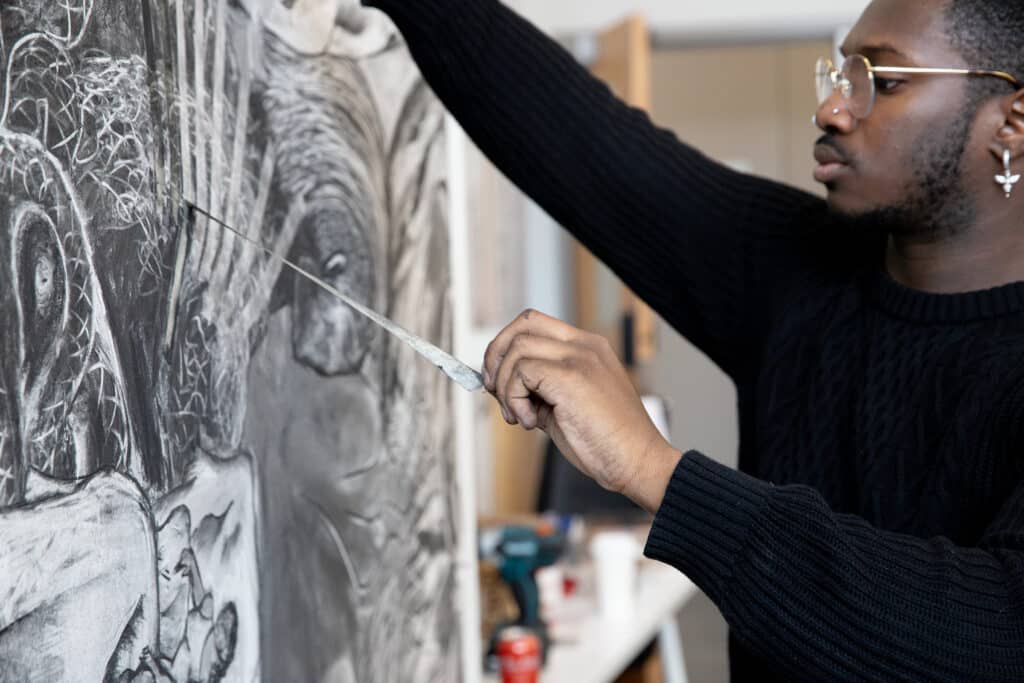
Build one of the core skills in art and design. Explore traditional and contemporary drawing methods using a range of tools and materials, from pen and ink to collage. Create a portfolio that strengthens your fundamentals or expands your existing practice.
Fine Art Stream
Explore a range of disciplines including drawing, painting, illustration and photography. Learn core skills in composition, colour and modelling while experimenting with different tools and materials. Build a versatile fine art portfolio that reflects your creative interests.

Illustration Stream
Learn to translate ideas and stories into compelling visuals for editorial, commercial or picture book projects. Work with both traditional and digital tools while developing a personal style and professional skill set. Build a portfolio that reflects both creative voice and industry standards.
Painting Stream
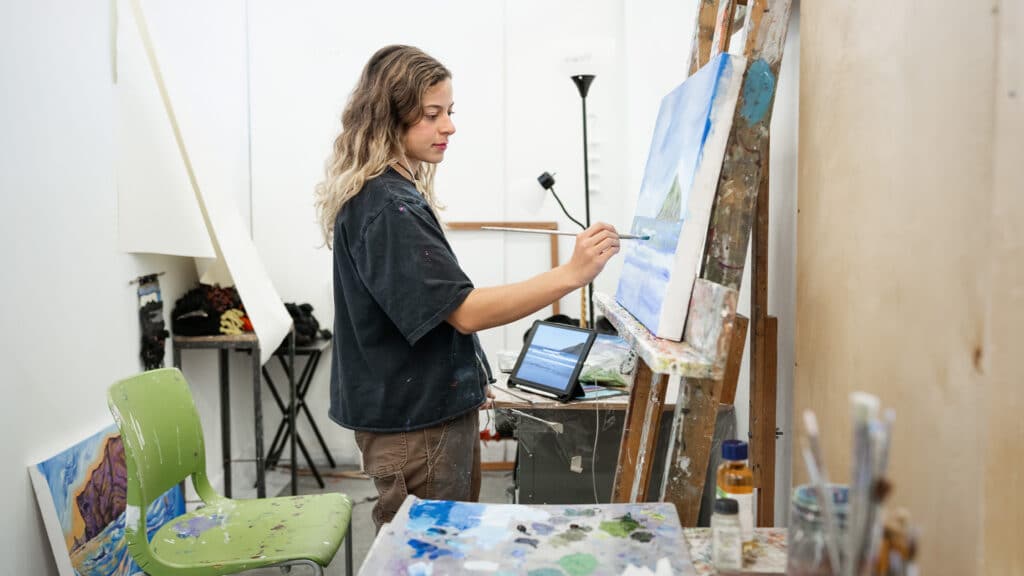
Develop your painting practice through hands-on acrylic, oil and watercolour courses. Begin with colour theory and paint application, then explore more advanced projects and experimental approaches. Build a portfolio showcasing your style and a range of contemporary techniques.
Media Arts Certificate
Photography Stream
Gain film and digital photography skills while exploring portraiture, architectural and experimental work. Learn techniques in lighting, composition, editing and file management. Build a portfolio that balances industry-standard practice with creative exploration.
Design Arts Certificate
3D Design Stream
Turn 2D sketches into 3D forms through hands-on modelling, technical drafting and design thinking. Explore product and spatial design using current tools and techniques, and build skills in rendering, scale modelling and architectural design. Develop a practice that connects ideas with form and space.
UX/UI Design Stream
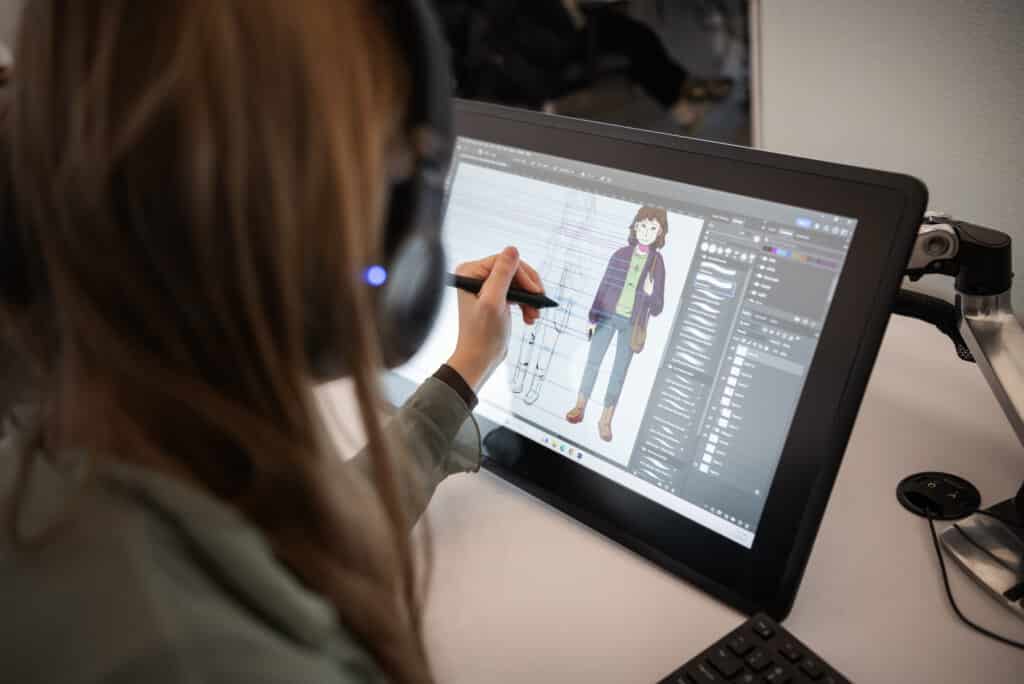
Learn the fundamentals of user experience and interface design. Develop skills in research, web design, digital tools and coding while tackling real-world design problems. Build a portfolio of screen-based projects highlighting usability, creativity and technical ability.

Visual Communications Design Stream
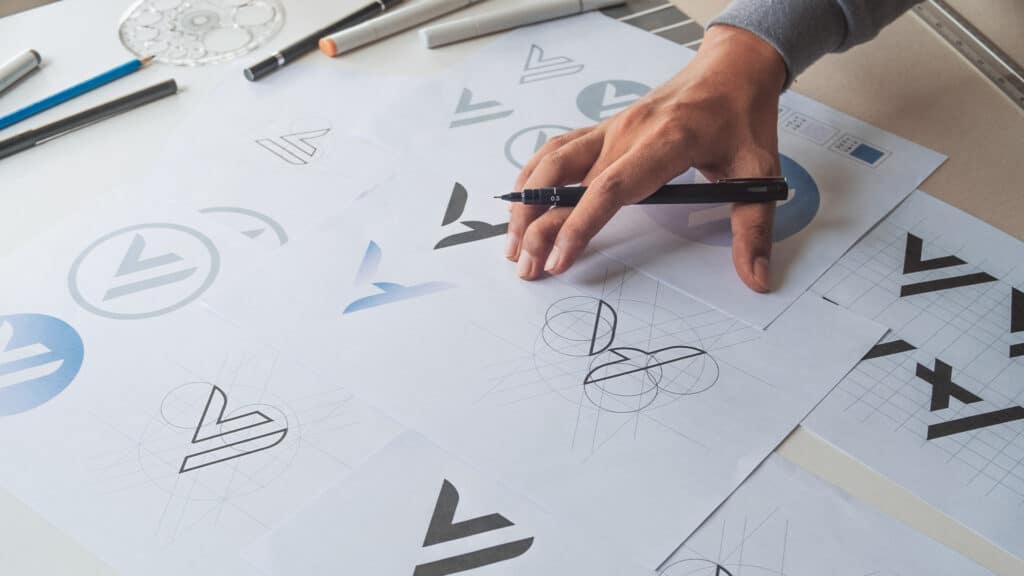
Learn how visual elements communicate ideas and information. Build skills in typography, branding, layout and digital tools while applying design principles to real-world communication challenges. Develop a portfolio of visual work that demonstrates clarity, creativity and effective communication across digital platforms.
General Certificate Structure + Naming Convention
All certificates follow the same structure. A total of 13 courses are required to attain a Flexible Learning Certificate of Completion.
Depending on which stream a student chooses, the issued certificate will be “[Certificate Name] in [Subject Stream]”. Example: Visual Arts Certificate in Illustration, or Design Arts Certificate in UX/UI Design.
| Requirements | Instructions |
| Subject Stream Core | Select 3 courses from the subject stream core list |
| Subject Stream Electives | Select 4 courses from the subject stream elective list |
| Common Electives | Select 3 courses from the common electives list, or any from the Required Core or Required Electives courses not taken from the Subject Streams. At least one must be a CSHT History + Theory course. |
Extending and Enriching Electives | Select 3 courses from any course offered in CS programming. At least one must be a CSPD Professional Practice course. |
Information Sessions
Join us for a Q&A or Information Session!
Subscribe to our newsletter to be notified of our next event. Learn about course selection, program requirements and educational pathways.
Not sure where to start?
Book a chat with an Advisor.
Office Hours:
Monday to Friday
8:30am – 4:30pm
(lunch closure 12:30–1:30pm)
Closed on statutory holidays
Get the Latest Updates
Our Continuing Studies programs are always evolving. Sign up today to be the first in line for new courses and upcoming registration dates.