Vjeko Sager

Lecturer

Availability:

Education:

BA
Master of Applied Arts (Painting)

Bio

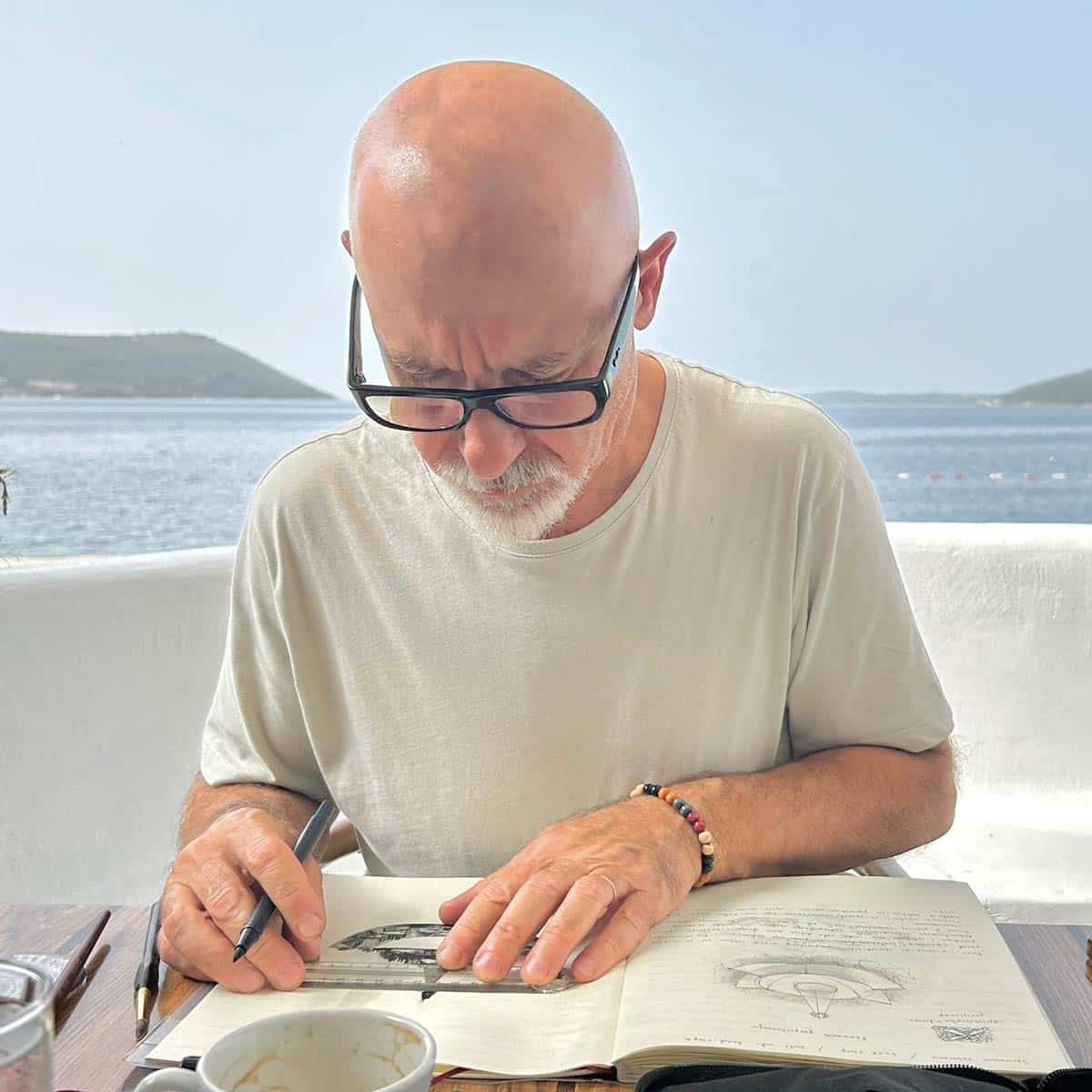
Vjeko Sager started his career as a professor in Painting Techniques at the University of Applied Arts in Belgrade, former Yugoslavia. In 1994 he moved to Canada, and in 2003 he joined ECU. He has delivered more than 70 different courses in visual arts, design, illustration, foundation and continuing studies and has participated in more than 50 international exhibitions.

Websites:


Research Interests

Vjeko Sager uses drawing to explore intersections between visual arts, philosophy and technology. His works investigate alternative creative methods and visual concepts. He facilitates the Drawing Room at ECU, which promotes drawing through a variety of methods and techniques. Vjeko’s studies on colour theory are implemented into curriculum at several universities around the world and his artworks continually inspire artists, architects and designers with a vision into the future.
24/25 Courses

Course Name Department Course Code Term
Drawing CSDR 112 CS26/SP

Description

Pursue an in-depth study of the human figure through drawing. Using both skeletal and live model sessions, you will learn to render the human anatomical structure using direct observation, measuring proportion and composition techniques. Practice different technical methods such as gesture or contour drawing to capture and convey the form, energy and emotion of various poses. In-class exercises will include short and long poses, and sketching for more complex and experimental compositions. This course is suitable for those with previous drawing experience.

Material List: Be prepared for your course. Download the material list to purchase items before your first class.

Pre-requisites

No prerequisites.

Foundation Studio Courses FNDT 155 26/SP

Description

Students in this course are introduced to diverse methods and approaches within the practice of illustration. A range of pictorial strategies will be explored in the investigation and illumination of rich cultural questions. This course balances the development of technical skills with critical engagement of complex thematic content. The strengthening of drawing abilities is of central importance. Wet, dry and digital media are explored independently and combined. Media covered may include watercolour and acrylic paints, pen and ink, coloured pencils, collage, and Adobe software. Emphasis is placed on an iterative process of learning, where students are able to return to the same challenge after the benefit of a class critique of their first attempt.

Pre-requisites

No prerequisites.

Foundation Studio Courses FNDT 155 26/SP

Description

Students in this course are introduced to diverse methods and approaches within the practice of illustration. A range of pictorial strategies will be explored in the investigation and illumination of rich cultural questions. This course balances the development of technical skills with critical engagement of complex thematic content. The strengthening of drawing abilities is of central importance. Wet, dry and digital media are explored independently and combined. Media covered may include watercolour and acrylic paints, pen and ink, coloured pencils, collage, and Adobe software. Emphasis is placed on an iterative process of learning, where students are able to return to the same challenge after the benefit of a class critique of their first attempt.

Pre-requisites

No prerequisites.

Drawing DRWG 312 26/SP

Description

A continuation of Drawing: Anatomical (DRWG 212),this course concentrates on the musculature and external form of the body in relation to human kinetics. Students will study the surface features and details that characterize individuals. Creative, personal approaches are emphasized. Slide presentations and group and individual critiques take place regularly.

This course is subject to priority rules; see here.

Pre-requisites

No prerequisites.

Drawing DRWG 212 26/SP

Description

This introductory study of the human body emphasizes the symbiotic relationship between skeleton and muscle to enhance the understanding of surface anatomy and to develop skill and confidence in drawing the figure. Practical exercises are supplemented by studies of the skeleton, individual bones, and the live figure, and by lectures and demonstrations. The study of proportion and the acquisition of anatomical terminology are linked to the creative process and the science of anatomy. Tests and assignments are a component of the course.

Pre-requisites

No prerequisites.