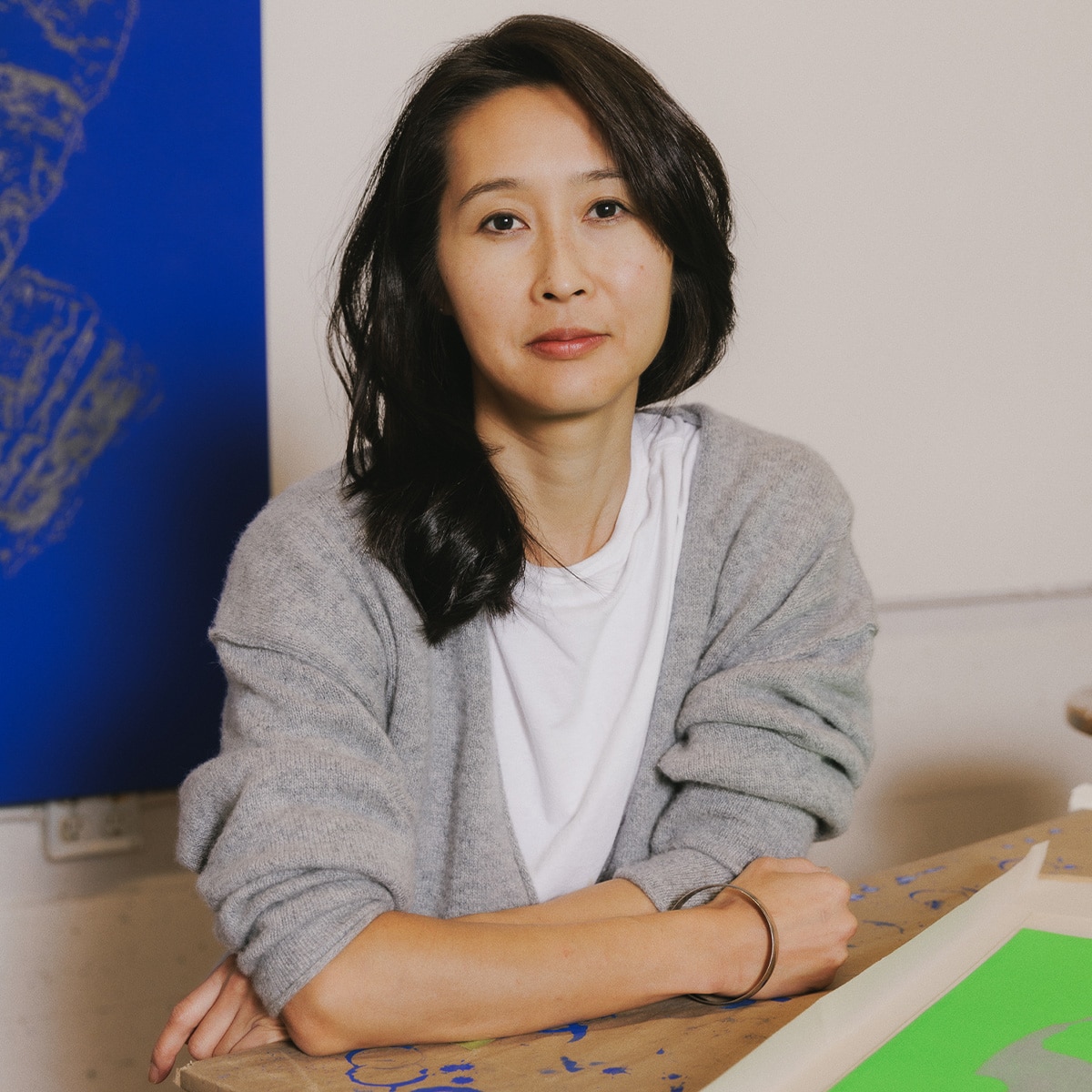
Gwenessa Lam
Education:
New York University
University of British Columbia
Bio
Gwenessa Lam has exhibited at the Bronx Museum of Art, the Queens Museum of Art, Galerie de L'Université du Québec à Montréal, the Glenbow Museum, the Alberta Biennial and more. She was artist-in-residence at the International Studio and Curatorial Program in New York, the Virginia Center for the Creative Arts, the Banff Centre for the Arts and others. Her work has been supported by the Canada Council for the Arts, the B.C. Arts Council and Alberta Foundation for the Arts. Gwenessa has taught at New York University, the University of British Columbia and the Alberta University of the Arts.
Websites:
Research Interests
Working across drawing and painting, Gwenessa’s research considers how ancient objects have the potential to disrupt cultural categorizations. Her research takes interest in understanding the psychological and social implications when these artifacts are damaged, lost or misidentified. The historical fragment acts as a framework to examine broken accounts of the past, personal and collective. She undoes the logic of a comprehensive historical account, creating visual patterns and new ancestral lineages that enliven the fragment and their unexpected fractures. What unfolds is a speculative and shifting account that forefronts the fragment as a record of rupture and erasure.
Thesis Supervision
Supervised Programs:
Courses
| Course Name | Department | Course Code | Term | ||||
|---|---|---|---|---|---|---|---|
| Visual Arts Studio | VAST 320 | 26/FA | |||||
|
|||||||
| Visual Arts Studio | VAST 420 | 26/FA | |||||
|
|||||||
| Drawing | DRWG 308 | 26/FA | |||||
|
|||||||